
全球治理

Search documents
习近平同法国总统马克龙在成都进行友好交流
证监会发布· 2025-12-05 09:14
Group 1 - The core viewpoint of the article emphasizes the importance of cultural exchange and cooperation between China and France, highlighting the historical significance of the Dujiangyan irrigation system as a symbol of human ingenuity and harmony with nature [4][6]. - Xi Jinping and Emmanuel Macron discussed the shared cultural heritage and values of both nations, stressing the need for mutual understanding and respect [4][6]. - Both leaders agreed to maintain close communication and advance the comprehensive strategic partnership between China and France [8]. Group 2 - During the visit, a joint statement was issued addressing global governance, cooperation on climate and environmental challenges, peaceful nuclear energy utilization, and agricultural and food exchanges [9]. - The leaders also touched upon current international issues, including the situations in Ukraine and Palestine, indicating a collaborative approach to global challenges [9].


中法联合声明
券商中国· 2025-12-05 09:00
Core Viewpoint - The joint statement emphasizes the commitment of China and France to strengthen global governance and multilateralism, highlighting the importance of the United Nations and the need for reforms to create a more inclusive international system [2][3]. Group 1: Multilateralism and Global Governance - China and France reaffirm their dedication to multilateralism as the cornerstone of international order, essential for promoting international cooperation and addressing global challenges [2]. - Both countries support the UN Secretary-General's "UN 80th Anniversary Reform Initiative" aimed at enhancing the representation of developing countries in governance platforms [3]. - The two nations advocate for a rules-based multilateral trading system centered around the World Trade Organization, aiming to create a free, open, transparent, and inclusive trade and investment environment [3]. Group 2: Economic Cooperation and Challenges - The statement acknowledges current global economic challenges, including insufficient growth momentum and imbalanced governance structures, calling for major economies to enhance dialogue and coordinate macroeconomic policies [3]. - France will assume the G7 presidency in 2026, while China will host the Asia-Pacific Economic Cooperation, with both countries expressing a willingness to engage in inclusive dialogue to address global governance challenges [3].
中法发表多份联合声明
财联社· 2025-12-05 07:39
Group 1: Global Governance - The joint statement emphasizes the commitment of China and France to uphold multilateralism and strengthen global governance, especially in light of the 80th anniversary of the United Nations [2][3] - Both countries support the UN Secretary-General's reform initiatives and advocate for increased representation of developing countries in governance platforms [3] - China and France call for enhanced dialogue among major economies to coordinate macroeconomic policies and reform international economic governance [4] Group 2: Climate and Environmental Challenges - China and France reaffirm their commitment to implement the 2019 Beijing Initiative on biodiversity and climate change, and other related agreements [5][6] - The two nations emphasize the importance of scientific integrity in addressing climate and environmental issues and support various international agreements like the Paris Agreement [6][7] - They aim to enhance cooperation in renewable energy deployment and commit to increasing global nuclear power capacity by threefold by 2050 [7][11] Group 3: Nuclear Energy Cooperation - The joint statement highlights the significance of nuclear energy as a clean and stable energy source in addressing global challenges [11][12] - China and France plan to continue collaboration in nuclear technology innovation and safety, including the development of small modular reactors [12][13] - Both countries express their commitment to the international non-proliferation regime and the role of the International Atomic Energy Agency [14][15] Group 4: Agricultural and Food Cooperation - The leaders of China and France recognize the importance of agriculture in bilateral relations and aim to enhance cooperation in agricultural technology and practices [16][17] - They agree to provide a fair and non-discriminatory competitive environment for agricultural enterprises and support food safety initiatives [17][18] - The two countries express their commitment to deepen cooperation in wine production and geographical indication protection [18][19] Group 5: International Peace and Security - China and France are committed to seeking constructive solutions to international security challenges based on international law [19][20] - They support efforts for a ceasefire in Ukraine and emphasize the need for conditions conducive to a two-state solution for Israel and Palestine [21][22] - The two nations stress the importance of providing humanitarian aid in conflict areas and maintaining close communication on international peace and security issues [22][23]

中法发表多份联合声明
证券时报· 2025-12-05 07:27
Core Points - The article discusses the state visit of French President Emmanuel Macron to China from December 3 to 5, 2025, at the invitation of Chinese President Xi Jinping, focusing on global governance, climate cooperation, nuclear energy, agriculture, and international conflicts [2][26]. Group 1: Global Governance and Multilateralism - Both countries reaffirm their commitment to multilateralism and the authority of the United Nations, emphasizing the need for a rules-based international system [2][3]. - China and France support the UN Secretary-General's reform initiatives and advocate for increased representation of developing countries in governance platforms [3]. - The two nations call for major economies to enhance dialogue and coordinate macroeconomic policies to address global economic challenges [4]. Group 2: Climate and Environmental Cooperation - China and France emphasize the importance of ongoing dialogue to address global climate and environmental challenges, committing to implement various international agreements [6][7]. - They aim to enhance cooperation in renewable energy deployment and support the goal of tripling global nuclear power capacity by 2050 [8][17]. - The countries recognize the interconnectedness of climate change, biodiversity loss, and pollution, committing to sustainable development and the protection of rainforests [9][10]. Group 3: Nuclear Energy Cooperation - The two nations view nuclear energy as a crucial low-carbon energy source and plan to continue collaboration in nuclear technology and safety [13][15]. - They emphasize the importance of training skilled professionals in nuclear science and engineering to support sustainable development in this sector [16]. Group 4: Agricultural and Food Cooperation - China and France highlight the significance of agriculture in their bilateral relations and commit to enhancing cooperation in agricultural technology and food safety [19][22]. - They agree to provide a fair and non-discriminatory competitive environment for agricultural enterprises and support the exchange of agricultural practices [21][24]. Group 5: International Conflicts - The two countries express their commitment to seeking constructive solutions to international security challenges, particularly regarding the Ukraine and Palestine situations [26][28]. - They support efforts for a ceasefire in Ukraine and emphasize the need for a two-state solution for Israel and Palestine [27][28].
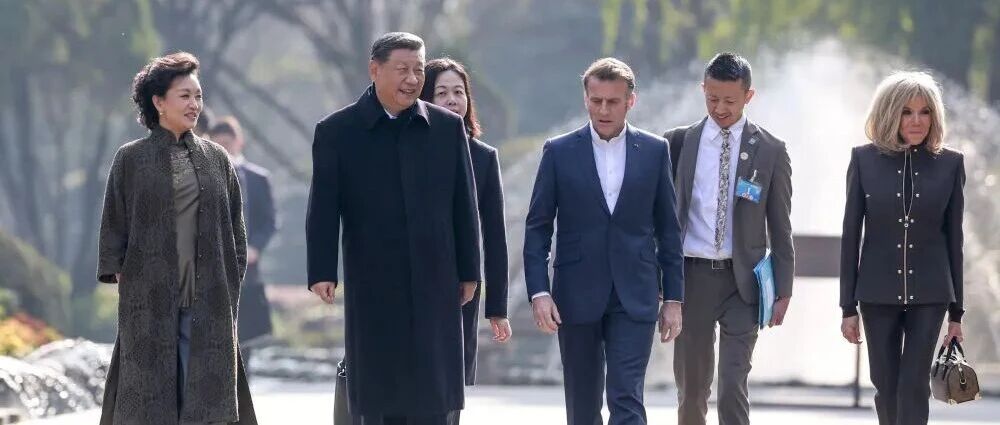
习近平同马克龙在成都进行友好交流
财联社· 2025-12-05 06:59
Group 1 - The core message of the article emphasizes the importance of cultural exchange and cooperation between China and France, highlighting the historical significance of the Dujiangyan irrigation system as a symbol of human ingenuity and harmony with nature [2][3] - Xi Jinping and Emmanuel Macron discussed the need for mutual understanding and respect between the two nations, recognizing their shared cultural heritage and the potential for collaborative development [2][3] - Both leaders agreed to maintain close communication and advance the comprehensive strategic partnership between China and France, addressing global governance, climate challenges, and regional conflicts [6]
中法发布五份联合声明
Bei Jing Ri Bao Ke Hu Duan· 2025-12-05 06:56
Group 1: Global Governance and Multilateralism - China and France reaffirm their commitment to multilateralism and the authority of the United Nations, emphasizing its role in maintaining international order and addressing global challenges [1][2] - Both countries support the UN Secretary-General's reform initiatives aimed at enhancing the representation of developing countries in governance platforms [2] - China and France agree to strengthen cooperation within the G20 framework to enhance its role as a major forum for international economic cooperation [2] Group 2: Climate and Environmental Cooperation - China and France emphasize the importance of ongoing dialogue to address global climate and environmental challenges, committing to implement previous agreements on biodiversity and climate change [3][4] - Both nations support the goals of the Paris Agreement, aiming to limit global temperature rise to below 2°C and strive for 1.5°C [6] - They recognize the need for enhanced cooperation in renewable energy deployment and aim to triple global nuclear power capacity by 2050 [6][9] Group 3: Nuclear Energy Cooperation - China and France view nuclear energy as a clean and stable energy source essential for addressing climate change and energy security [9][10] - Both countries commit to enhancing cooperation in nuclear technology innovation and safety, including the development of small modular reactors and applications of artificial intelligence [11] - They emphasize the importance of training skilled professionals in nuclear science and engineering to support sustainable development in the nuclear sector [12] Group 4: Agricultural and Food Cooperation - China and France recognize the significance of agriculture in their bilateral relations and commit to enhancing cooperation in agricultural practices and food safety [14][15] - Both countries aim to provide a fair and non-discriminatory competitive environment for agricultural enterprises [15] - They express intentions to deepen collaboration in wine production and geographical indication cooperation [16] Group 5: International Peace and Security - China and France are committed to seeking constructive solutions to international security challenges based on international law [17] - They support efforts for a ceasefire in Ukraine and the implementation of the "two-state solution" for Israel and Palestine [17][18] - Both nations emphasize the importance of humanitarian aid and support for the Palestinian Authority [18]
中法发表多份联合声明
第一财经· 2025-12-05 06:53
Group 1 - The core viewpoint of the article highlights the state visit of French President Macron to China from December 3 to 5, 2023, at the invitation of President Xi Jinping, focusing on strengthening global governance and cooperation [1] - During the visit, both China and France issued a joint statement addressing cooperation in global climate and environmental challenges, peaceful use of nuclear energy, and agricultural and food exchanges [1] - The discussions also included significant geopolitical issues such as the situation in Ukraine and Palestine, indicating a broad scope of bilateral cooperation [1]
中国和法国发布关于加强全球治理的联合声明
Xin Jing Bao· 2025-12-05 05:10
Core Points - The visit of French President Emmanuel Macron to China from December 3 to 5, 2025, is aimed at reinforcing multilateralism and global governance [1] - Both leaders reaffirmed their commitment to maintaining the authority of the United Nations and supporting its reform initiatives [1][1][1] Group 1: Multilateralism and Global Governance - China and France emphasize the importance of multilateralism as the foundation of international order, essential for international cooperation and addressing global challenges [1][1] - The two countries support the UN Secretary-General's "UN 80th Anniversary Reform Initiative" to enhance the representation of developing countries in governance platforms [1][1][1] - They advocate for a rules-based multilateral trading system centered around the World Trade Organization, aiming for a free, open, transparent, and inclusive trade environment [1][1] Group 2: Economic Cooperation - Both nations call for major economies to enhance dialogue and coordinate macroeconomic policies to promote balanced and sustainable global economic development [1][1] - France will hold the G7 presidency in 2026, while China will host the Asia-Pacific Economic Cooperation, indicating a willingness to engage in inclusive dialogue on global governance challenges [1][1][1]
中华人民共和国和法兰西共和国关于加强全球治理的联合声明。(央视新闻)
Hua Er Jie Jian Wen· 2025-12-05 04:55
中华人民共和国和法兰西共和国关于加强全球治理的联合声明。(央视新闻) 风险提示及免责条款 市场有风险,投资需谨慎。本文不构成个人投资建议,也未考虑到个别用户特殊的投资目标、财务状况或需要。用户应考虑本文中的任何 意见、观点或结论是否符合其特定状况。据此投资,责任自负。 ...
中法关系的战略意义更加凸显
Huan Qiu Wang· 2025-12-04 22:49
Core Points - The meeting between Chinese President Xi Jinping and French President Emmanuel Macron emphasizes the strategic partnership and mutual respect between China and France, highlighting their roles as independent major powers promoting global multipolarity and cooperation [1][2] - The deep friendship and strategic guidance between the two leaders provide ongoing momentum for the development of Sino-French relations, with a commitment to high-level strategic dialogue and cooperation on significant international and bilateral issues [2][3] - The strategic significance of Sino-French relations is underscored by their collaboration on global challenges such as the Ukraine crisis, climate change, and artificial intelligence governance, showcasing their responsible stance as major powers [3][4] Economic Cooperation - In the first ten months, the bilateral trade volume between China and France reached 68.75 billion USD, with cumulative mutual investment exceeding 27 billion USD, indicating robust economic ties [2] - The cooperation spans various sectors, including high-tech industries and consumer goods, demonstrating a balance between advanced and practical collaboration [2] - The visit by Macron, accompanied by ministers and business leaders, resulted in the signing of multiple cooperation agreements in nuclear energy, agriculture, education, and environmental protection, signaling a commitment to deepening strategic partnerships [4]