
核能合作

Search documents
【环球财经】匈牙利与美国签署液化天然气采购协议
Xin Hua She· 2025-12-17 05:54
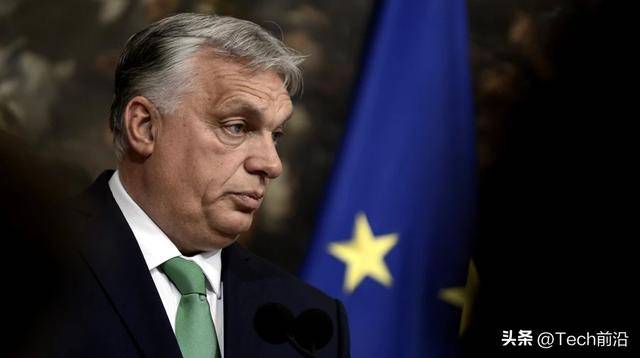
Group 1 - Hungary's Ministry of Foreign Affairs and Trade announced a liquefied natural gas procurement agreement with Chevron, totaling 2 billion cubic meters over 5 years [1] - Under the agreement, Chevron will supply Hungary's electricity company with 400 million cubic meters of liquefied natural gas annually, marking the first inclusion of U.S. LNG in Hungary's energy supply [1] - Hungary has signed contracts with Westinghouse for nuclear fuel supply for the Paks Nuclear Power Plant, with plans to start operations between 2028 and 2029 [1] Group 2 - The Paks Nuclear Power Plant, Hungary's only nuclear facility, was built by Russia and accounts for approximately half of the country's electricity generation [1] - U.S. President Trump has decided to exempt Hungary from sanctions related to energy purchases from Russia, following a commitment made by Hungarian Prime Minister Orban to purchase approximately $600 million worth of LNG from the U.S. [1] - Agreements have also been reached to utilize U.S. technology for constructing small modular reactors in Hungary [1]

中法联合声明
中国能源报· 2025-12-05 11:20
Group 1: Nuclear Energy Cooperation - The core viewpoint emphasizes the importance of nuclear energy as a clean, low-carbon, stable, and reliable energy source in addressing global challenges such as climate change and energy security [2][3] - Both countries reaffirm their commitment to ongoing cooperation in the peaceful use of nuclear energy, building on the existing agreements from 1997 and 1982 [2][3] - The collaboration will focus on areas such as the construction and management of third-generation pressurized water reactors, extending the lifespan of existing nuclear power plants, decommissioning, and radioactive waste management [3] Group 2: Technological Innovation and Safety - Both parties recognize that technological innovation is crucial for enhancing the safety and economic viability of nuclear energy, and they will continue to explore new projects in areas like small modular reactors and AI applications [3][4] - There is a mutual understanding of the importance of coordinated efforts in nuclear fuel supply, equipment manufacturing, and uranium resource security to ensure the stability of the nuclear energy supply chain [3] Group 3: Climate and Environmental Challenges - The two nations are committed to strengthening cooperation in addressing global climate and environmental challenges, reaffirming their dedication to various international agreements and frameworks [6][7] - They emphasize the importance of multilateralism and the role of scientific integrity in addressing climate issues, supporting the work of various international scientific bodies [7][8] - Both countries aim to enhance global renewable energy deployment and support the transition away from fossil fuels, with a shared goal of tripling global nuclear power capacity by 2050 [8][9] Group 4: Biodiversity and Sustainable Development - The countries recognize the interconnectedness of climate change, biodiversity loss, and pollution, committing to efforts to halt deforestation and land degradation by 2030 [9][10] - They express support for the establishment of a legally binding international instrument to end plastic pollution and encourage research into sustainable alternatives [10] Group 5: Financial Support and Capacity Building - Both nations are willing to support developing countries in achieving sustainable development and enhancing their access to climate and environmental funding [10] - They welcome initiatives like the Kunming Biodiversity Fund and reaffirm their commitment to financing goals outlined in the Kunming-Montreal Global Biodiversity Framework [10]


全文丨中法两国关于持续推进和平利用核能领域合作的联合声明
Xin Hua She· 2025-12-05 09:13
Group 1 - The core viewpoint of the joint statement emphasizes the importance of nuclear energy as a clean, low-carbon, stable baseload energy source in addressing global challenges such as climate change and energy security [2] - Both parties reaffirm their commitment to the international non-proliferation regime, particularly the Treaty on the Non-Proliferation of Nuclear Weapons, and recognize the role of the International Atomic Energy Agency in ensuring nuclear safety and security [4] - The joint statement supports the goal of tripling global nuclear power capacity by 2050 as part of efforts to achieve carbon neutrality [5] Group 2 - The two countries will continue to cooperate in areas such as the construction and operation management of third-generation pressurized water reactor nuclear power units, extending the life of existing nuclear power plants, and the decommissioning of permanently closed nuclear power plants [2] - There is a mutual recognition of the need for coordinated cooperation in nuclear fuel supply, nuclear equipment manufacturing, and uranium resource security to ensure the stability of the nuclear energy supply chain [3] - Both parties emphasize the importance of technical innovation in enhancing the safety and economic viability of nuclear energy, exploring new cooperation projects in areas such as small modular reactor development and the application of artificial intelligence [2][3] Group 3 - The joint statement highlights the significance of training skilled professionals in nuclear science and engineering, with a commitment to continue cooperation in education and training for nuclear reactor construction and operation personnel [3] - Both parties express their willingness to deepen participation in the International Thermonuclear Experimental Reactor (ITER) project, recognizing nuclear fusion energy as a vital development direction for peaceful nuclear energy utilization [3] - The commitment to support international nuclear energy development aligns with the obligations of nuclear safety, security, and non-proliferation [5]
中法发布五份联合声明
Bei Jing Ri Bao Ke Hu Duan· 2025-12-05 06:56
Group 1: Global Governance and Multilateralism - China and France reaffirm their commitment to multilateralism and the authority of the United Nations, emphasizing its role in maintaining international order and addressing global challenges [1][2] - Both countries support the UN Secretary-General's reform initiatives aimed at enhancing the representation of developing countries in governance platforms [2] - China and France agree to strengthen cooperation within the G20 framework to enhance its role as a major forum for international economic cooperation [2] Group 2: Climate and Environmental Cooperation - China and France emphasize the importance of ongoing dialogue to address global climate and environmental challenges, committing to implement previous agreements on biodiversity and climate change [3][4] - Both nations support the goals of the Paris Agreement, aiming to limit global temperature rise to below 2°C and strive for 1.5°C [6] - They recognize the need for enhanced cooperation in renewable energy deployment and aim to triple global nuclear power capacity by 2050 [6][9] Group 3: Nuclear Energy Cooperation - China and France view nuclear energy as a clean and stable energy source essential for addressing climate change and energy security [9][10] - Both countries commit to enhancing cooperation in nuclear technology innovation and safety, including the development of small modular reactors and applications of artificial intelligence [11] - They emphasize the importance of training skilled professionals in nuclear science and engineering to support sustainable development in the nuclear sector [12] Group 4: Agricultural and Food Cooperation - China and France recognize the significance of agriculture in their bilateral relations and commit to enhancing cooperation in agricultural practices and food safety [14][15] - Both countries aim to provide a fair and non-discriminatory competitive environment for agricultural enterprises [15] - They express intentions to deepen collaboration in wine production and geographical indication cooperation [16] Group 5: International Peace and Security - China and France are committed to seeking constructive solutions to international security challenges based on international law [17] - They support efforts for a ceasefire in Ukraine and the implementation of the "two-state solution" for Israel and Palestine [17][18] - Both nations emphasize the importance of humanitarian aid and support for the Palestinian Authority [18]
埃及与俄罗斯签了
中国能源报· 2025-11-20 09:34
Core Points - Egypt signed a nuclear fuel procurement and comprehensive cooperation agreement with Russia for the Dabaa nuclear power plant [1] - The agreement will supply nuclear fuel for the reactor of Unit 1 of the Dabaa nuclear power plant [1] - The cooperation includes various fields such as nuclear power and the production of medical radioactive isotopes [1] Summary by Sections - **Nuclear Fuel Procurement Agreement**: The agreement aims to provide nuclear fuel for the first reactor of the Dabaa nuclear power plant, marking a significant step in Egypt's nuclear energy development [1] - **Comprehensive Cooperation**: The comprehensive cooperation agreement encompasses collaboration in multiple areas, including nuclear power and medical isotope production, indicating a broadening of bilateral relations [1] - **Leadership Involvement**: Egyptian President Sisi and Russian President Putin witnessed the installation ceremony of the reactor pressure vessel via video link, highlighting the strategic partnership between the two nations [1] - **Educational Exchange**: Currently, 100 Egyptian students are receiving training in nuclear energy at Russian universities, showcasing the educational aspect of the cooperation [1] - **Project Timeline**: The Dabaa nuclear power plant, located in Matrouh province, is Egypt's first nuclear project, with construction of Units 1 and 2 starting in July and November 2022, respectively, and Units 3 and 4 scheduled to begin in May 2023 and January 2024 [1]
埃及与俄罗斯签署核燃料采购协议
Xin Hua She· 2025-11-20 08:21
Core Points - Egypt signed a nuclear fuel procurement and comprehensive cooperation agreement with Russia's State Atomic Energy Corporation for the Dabaa Nuclear Power Plant [1] - The procurement agreement will supply nuclear fuel for the reactor of Unit 1 of the Dabaa Nuclear Power Plant [1] - The comprehensive cooperation agreement covers collaboration in various fields, including nuclear power and the production of medical radioactive isotopes [1] Summary by Sections Agreement Details - The agreement includes the supply of nuclear fuel for the first reactor of the Dabaa Nuclear Power Plant [1] - The comprehensive cooperation will involve multiple areas of collaboration between Egypt and Russia [1] Leadership Statements - Egyptian President Sisi emphasized that the cooperation reflects a strategic and solid relationship based on mutual respect [1] - Russian President Putin noted that the collaboration opens new prospects for professional exchanges, with 100 Egyptian students currently studying nuclear energy in Russia [1] Project Background - The Dabaa Nuclear Power Plant is located in Matrouh Province and is Egypt's first nuclear project [1] - Russia and Egypt signed a contract in 2017 for the construction of all four nuclear units of the power plant [1] - Construction of Units 1 and 2 began in July and November 2022, respectively, while Unit 3 started in May 2023 and Unit 4 is set to begin in January 2024 [1]
重磅!匈牙利获美国无期限豁免,美匈签核能大单硬刚欧盟
Sou Hu Cai Jing· 2025-11-08 03:36
Core Insights - Hungary has received a waiver from the U.S. for comprehensive energy sanctions, allowing it to continue relying on Russian energy without incurring significant costs for transitioning away from it [1][2] Group 1: Energy Dependency - Hungary is the EU country most dependent on Russian energy, with 90% of its crude oil and 80% of its natural gas sourced from Russia [2] - The "Turkish Stream" pipeline is set to deliver 7.6 billion cubic meters of natural gas to Hungary in 2024, supporting its status as a "gas price haven" in Europe, with household gas costs being one-third of those in Western Europe [2] - The termination of the Russian gas transit agreement with Ukraine has made the "Turkish Stream" the sole route for Russian gas to Europe [2] Group 2: Economic Implications - Experts warn that if the pipeline were to be sanctioned and shut down, Hungary's industrial output could drop by 30%, and inflation could exceed 20% [2] - Hungary's Prime Minister emphasized that energy security is a matter of physical and mathematical necessity, stating that without Russian gas, energy security is merely a theoretical discussion [2] Group 3: U.S.-Hungary Relations - The waiver indicates a shift in U.S. policy under Trump, contrasting with the previous Biden administration, which imposed sanctions on Hungarian officials and restricted military sales [3] - Hungary's Foreign Minister stated that U.S.-Hungary relations are entering a "new golden era," with the U.S. indicating a willingness to resume military cooperation [3] Group 4: EU Policy Tensions - The waiver has further strained the EU's unified stance on Russian energy sanctions, as Hungary has repeatedly blocked EU efforts to impose a complete ban on Russian oil and gas by 2026 [5] - Slovakia has followed Hungary's lead by importing Russian gas through the "Turkish Stream," and even Ukraine has turned to Hungary for Russian gas during emergencies [5] Group 5: Future Ambitions - Hungary aims to leverage the remaining capacity of the "Turkish Stream" to supply gas to Slovakia and plans to establish a natural gas distribution center in Central Europe, potentially replacing Austria's traditional role [6] - The waiver allows Hungary to stabilize energy costs while profiting from the price differences in gas trading between the EU and Russia [6]
中泰和平利用核技术研讨会聚焦核能合作
Xin Lang Cai Jing· 2025-10-10 12:54
Group 1 - The seminar titled "Celebrating the 50th Anniversary of China-Thailand Diplomatic Relations and Peaceful Use of Nuclear Technology" was held on October 10 in Bangkok, Thailand, aimed at promoting cooperation in the nuclear energy sector between China and Thailand [1] - The event serves as a platform for dialogue and collaboration among government departments, companies, and institutions related to nuclear energy and electricity in both countries [1] - Key areas of focus include small reactor technology, project development, safety regulation, talent training, and public education, which are intended to enhance cooperation and elevate the nuclear energy partnership to a new level [1]
普京:确保核设施的安全是俄罗斯的“绝对优先事项”
Zhong Guo Xin Wen Wang· 2025-09-26 01:01
Core Points - Ensuring the safety of nuclear facilities is an "absolute priority" for Russia according to President Putin [1] - There is a need to enhance safety and reliability requirements at all stages of the nuclear cycle [1] - Nuclear regulation must balance peaceful nuclear development with strengthening non-proliferation mechanisms [1] Industry Developments - Russia aims to create stable and long-term conditions for nuclear energy cooperation projects [1] - The country is developing new technologies for the peaceful use of nuclear energy [1] - Plans to begin construction of small land-based and floating nuclear power plants are underway [1]
制裁下的豪赌!伊朗联手俄罗斯打造核能巨网,中东格局一夜变天?
Sou Hu Cai Jing· 2025-09-24 11:43
Core Insights - Iran and Russia are set to officially sign a nuclear power plant construction cooperation agreement, highlighting their strong intent to deepen collaboration in the nuclear energy sector [1] - Iran's decision to develop nuclear energy is driven by increasing domestic electricity demand and international sanctions, with a goal to reach a nuclear power generation capacity of 20,000 megawatts by 2030 [3] - The cooperation has significant geopolitical implications, especially in light of Western economic sanctions, and is supported by a comprehensive strategic partnership treaty signed earlier this year [5] Group 1 - Iran's nuclear energy cooperation with Russia is marked by the ongoing expansion of the Bushehr nuclear power plant, which has historical significance dating back to the 20th century [1] - The Iranian delegation is visiting advanced nuclear facilities in Russia, indicating a commitment to technical exchange and collaboration [1] - The upcoming Moscow World Atomic Week will serve as a platform to showcase the results of Iran-Russia nuclear cooperation and demonstrate Iran's commitment to peaceful nuclear energy use [7] Group 2 - Iran's nuclear development faces challenges related to safety standards, technology choices, and international oversight, which could impact the regional energy landscape [9] - The deep involvement of Russia in Iran's nuclear sector underscores its industrial strength and may provoke renewed discussions on nuclear non-proliferation within the international community [9] - Ongoing negotiations between Iran and European countries regarding nuclear issues remain uncertain due to significant differences over the Iran nuclear agreement [7]
