
净息差

Search documents
40多家银行扎堆推短期大额存单!利率跌破1%,你的钱还存银行吗?
Sou Hu Cai Jing· 2026-01-11 18:32
Core Viewpoint - The current interest rates for large time deposits in China have significantly decreased, with many banks offering rates below 1%, leading to concerns about the value of saving money in banks [1][11]. Group 1: Interest Rate Trends - As of January 8, over 40 banks have launched new large time deposits, primarily offering short-term products with rates for 3-month deposits dropping to 0.95% [1][3]. - The average interest rate for 3-month large time deposits is expected to be around 1.8% in 2024, indicating a significant reduction from current rates [3][6]. - One-year products from major state-owned banks are offering rates between 1.2% and 1.4%, while previously, rates could reach up to 2.25% [3][11]. Group 2: Bank Profitability and Strategy - Banks are reducing deposit rates to maintain profitability due to declining loan interest rates, with the average loan rate expected to be around 3.1% by 2025 [5][6]. - The net interest margin for commercial banks has narrowed, with state-owned banks reporting a net interest margin as low as 1.31% [5][6]. - To manage costs, banks are focusing on short-term deposits, as they require lower interest payments compared to long-term deposits [5][11]. Group 3: Investment Alternatives - For conservative investors, bank deposits remain a safe option, especially with deposit insurance covering amounts up to 500,000 [8][11]. - Alternatives such as money market funds and cash management products are recommended for those seeking better liquidity and returns, with annualized yields around 1.2% to 1.4% [8][11]. - For those willing to accept some risk for higher returns, transferable large time deposits and medium-short bond funds are suggested, with potential yields of 2.5% to 3% [8][11]. Group 4: Consumer Advice - Consumers are advised to verify the legitimacy of banks offering higher rates and to avoid blindly pursuing long-term products due to potential "interest rate inversion" [9][11]. - Diversification of deposits across different banks is recommended to enhance safety and flexibility [9][11].


新年伊始多家中小银行调整存款利率
Zheng Quan Ri Bao· 2026-01-05 16:49
Core Viewpoint - In early 2026, several small and medium-sized banks have begun adjusting their deposit interest rates, with some banks lowering rates while others are increasing them to attract deposits during the marketing season [1][2][3]. Group 1: Rate Adjustments - Puyang Zhongyuan Village Bank has reduced its deposit rates by up to 30 basis points for various term deposits starting January 1, 2026 [2]. - Anhui Xin'an Bank announced a decrease in its two-year fixed deposit rate from 2.35% to 2.25%, a reduction of 10 basis points, effective January 16, 2026 [2]. - Some banks, like Suixian Deshang Village Bank, have increased their one-year and three-year fixed deposit rates by 5 and 3 basis points respectively, indicating a mixed approach to rate adjustments [3]. Group 2: Market Dynamics - The adjustments in deposit rates reflect the varying strategies of banks based on their operational conditions and market competition, as noted by industry experts [4]. - The current marketing season has prompted some banks to raise deposit rates to enhance their appeal for attracting deposits, viewed as a temporary marketing strategy [4]. - Experts predict that the net interest margin pressure will persist, leading banks to continue managing their funding costs, with a long-term downward trend in deposit rates expected [4][5]. Group 3: Future Outlook - The net interest margin for small and medium-sized banks is anticipated to remain under pressure, with a cautious and orderly approach to deposit rate adjustments expected in 2026 [5]. - A significant simultaneous reduction in deposit rates across different types of banks is unlikely, with a trend towards differentiated and gradual adjustments [5].
东莞银行十七载IPO上市长跑遇荆棘,营收净利大幅双降
Sou Hu Cai Jing· 2026-01-05 09:48
Core Viewpoint - Dongguan Bank has faced continuous declines in revenue and net profit, raising concerns about its IPO prospects and overall financial health [2][3][4]. Financial Performance - Dongguan Bank's operating revenue for 2024 was 10.197 billion, a decrease of 3.69% year-on-year, while net profit attributable to shareholders fell to 3.738 billion, down 8.1% [2]. - In the first three quarters of 2025, the bank's operating revenue further declined to 6.918 billion, with a year-on-year drop of 9.39%, and net profit decreased by 20.69% to 2.546 billion [3]. Interest Income and Net Interest Margin - The bank's net interest income decreased by 14.57% to 7.119 billion in 2024, primarily due to a decline in loan interest income [4]. - The net interest margin fell to 1.26% in 2024 from 1.61% in 2023, and further decreased to 1.16% by June 30, 2025, significantly below the industry average of 1.37% [7]. Non-Interest Income - Non-interest income has been volatile, with investment income rising by 35.95% to 2.086 billion in 2024, but dropping by 5.25% to 1.159 billion by June 30, 2025 [8][9]. - Fee and commission income also saw a decline, with net income from this segment falling by 11.91% to 737 million in 2024 [9]. Asset Quality and Risk Management - The non-performing loan (NPL) ratio increased to 1.01% by the end of 2024 and further to 1.08% by June 30, 2025 [11]. - The bank's provision coverage ratio dropped to 212.01% in 2024 and further to 185.43% by June 30, 2025, indicating weakened risk absorption capacity [12][13]. Regulatory Compliance and Risks - Dongguan Bank has faced multiple regulatory penalties in 2025, totaling over 9 million, highlighting weaknesses in internal controls and compliance management [17][18]. - The bank's high concentration of loans in the local market, particularly in real estate, poses additional risks amid ongoing market adjustments [14][16].
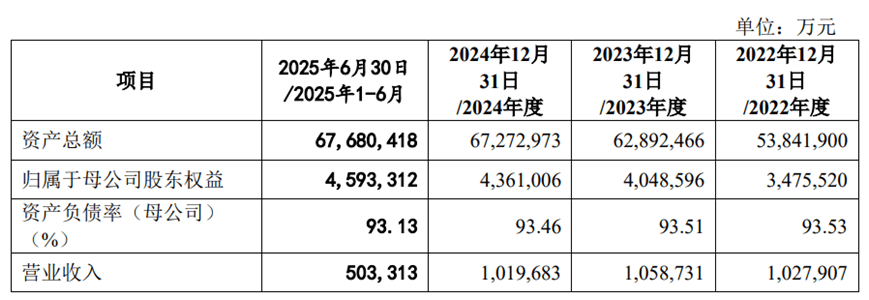
中金:料今年香港上市银行资本回报率维持10%至17%水平
Zhi Tong Cai Jing· 2026-01-05 08:58
Core Viewpoint - Hong Kong bank stocks have performed well over the past year, primarily due to an unexpected increase in return on tangible equity (ROTE) [1] Group 1: Capital Return and Dividends - CICC forecasts that the capital return rate for listed Hong Kong banks will maintain a high level of 10% to 17% until 2026, with a dividend and buyback return rate of around 7%, indicating investment value [1] Group 2: Interest Rate Outlook - The market is expected to remain in a rate-cutting cycle this year, with the Federal Reserve's dot plot indicating potential rate cuts of 1 to 2 times in 2026 and 0 to 1 time in 2027, eventually reaching a level of 3% [1] - Based on this backdrop, Hong Kong banks' net interest margin is expected to continue narrowing, but the anticipated rate cuts, combined with slight asset growth, will keep the decline in net interest income to a low single-digit percentage [1] Group 3: Wealth Management Growth - CICC estimates that Hong Kong banks' wealth management business will continue to grow this year, driven by expectations of domestic and international investment returns and global economic factors [1] - Regions such as Singapore, India, and the Middle East are experiencing rapid growth in wealth management, and the presence of Hong Kong banks in these areas will further boost revenue [1] Group 4: Credit Costs and Risk Management - It is anticipated that credit costs for Hong Kong banks may see a slight increase this year but will remain manageable within the range of 30 to 50 basis points [1] - Key areas of focus include the evolution of the real estate market in mainland China and Hong Kong, risks associated with high overseas interest rates, and potential risks arising from financial market volatility [1] - However, it is expected that the cost-to-income ratio for Hong Kong banks will continue to decline [1]
香港银行:2026年资本回报率10%-17%,或迎降息周期
Sou Hu Cai Jing· 2026-01-05 07:08
Core Viewpoint - Hong Kong bank stocks have shown strong performance over the past year, primarily due to an unexpected increase in return on tangible equity (ROTE) [1] Group 1: Performance and Projections - The capital return rate for listed Hong Kong banks is expected to remain at a high level of 10% to 17% through 2026 [1] - Dividend and buyback returns are projected to be around 7%, indicating investment value [1] Group 2: Interest Rate Outlook - The market is anticipated to remain in a rate-cutting cycle this year, with the Federal Reserve's December dot plot indicating potential rate cuts of 1 to 2 times in 2026 and 0 to 1 time in 2027, leading to a rate drop to 3% [1] - In this context, the net interest margin for Hong Kong banks may continue to narrow, but the expected decline in net interest income is likely to remain in the low single digits due to slight asset growth [1]
中金:预计今年上市香港银行资本回报率维持10%至17%水平
Sou Hu Cai Jing· 2026-01-05 06:29
Core Viewpoint - Hong Kong bank stocks have performed well over the past year, primarily due to an unexpected increase in return on tangible equity (ROTE) [1] Group 1: Performance and Projections - CICC expects the capital return rate of listed Hong Kong banks to maintain a high level of 10% to 17% by 2026, with a dividend and buyback return rate of around 7% [1] - The market is anticipated to remain in a rate-cutting cycle this year, with the Federal Reserve's dot plot indicating potential rate cuts of 1 to 2 times in 2026 and 0 to 1 time in 2027, eventually reaching a level of 3% [1] Group 2: Interest Income Outlook - Given the expected narrowing of net interest margins due to rate cuts, along with slight asset growth, the decline in net interest income is projected to remain in the low single digits [1]
中小银行存款利率调整现“温差”
Sou Hu Cai Jing· 2026-01-04 23:07
Core Viewpoint - The adjustment of deposit rates by small and medium-sized banks at the beginning of 2026 shows a clear differentiation, with some banks raising rates while others are lowering them, reflecting a strategic response to the pressures of net interest margin and the need for effective deposit acquisition strategies [1][3][6]. Group 1: Deposit Rate Adjustments - Several small and medium-sized banks have announced adjustments to their deposit rates, with some increasing rates for specific products while others adopt a "long rise, short fall" strategy [3][5]. - For instance, Shanxi Hunyuan Rural Commercial Bank raised its one-year fixed deposit rate from 1.40% to 1.45%, while Henan Rural Commercial Bank increased rates across multiple terms [3][5]. - Conversely, New An Bank announced a reduction in rates for various deposit products, with the one-year rate dropping to 1.85% [5]. Group 2: Differentiated Strategies - The differentiation in deposit rate adjustments is attributed to varying operational conditions among banks, including differences in liability structures and regional funding supply-demand dynamics [5][9]. - Some banks are raising rates to attract deposits due to competitive pressures, while others are lowering rates to manage high-cost liabilities [5][8]. - The phenomenon of interest rate inversion, where longer-term rates are lower than shorter-term rates, indicates banks' expectations of future rate declines and their strategies to manage funding costs [4][6]. Group 3: Net Interest Margin Pressure - The average net interest margin for commercial banks has stabilized at 1.42%, with significant differences observed among various types of banks [7]. - Small and medium-sized banks face greater pressure on their net interest margins due to their need to offer higher rates to attract deposits and the higher risk associated with their lending practices [7][8]. - The ongoing pressure on net interest margins is prompting banks to adopt more strategic pricing choices, particularly in a low-interest-rate environment [4][6]. Group 4: Future Outlook - The overall trend suggests that deposit rates may continue to experience downward pressure, with small and medium-sized banks likely to employ short-term rate increases to attract deposits while facing long-term challenges [6][9]. - The future of deposit rate adjustments will depend on banks' operational capabilities and their ability to differentiate services to enhance competitiveness [8][9]. - As the market for deposit rates becomes more competitive, banks will need to focus on improving customer service and leveraging digital financial technologies to manage risks and reduce costs [8][9].

定价分化凸显 中小银行存款利率现“温差”
Xin Lang Cai Jing· 2026-01-04 16:57
对此,中国(香港)金融衍生品投资研究院院长王红英表示,利率倒挂是部分商业银行对未来整体利率 水平进一步下降的一种预期。从经营角度而言,此举旨在引导更多储户转向中短期存款,以匹配银行自 身的支付结构。 "部分中小银行通过中短期负债来匹配当前的资产久期结构,对5年期这类高成本资金则保持谨慎态度, 以避免在低利率环境下长期背负高息负债压力。这也是银行的一种策略性定价选择,尤其适用于那些负 债压力较大、资产端收益弹性有限的中小银行。"苏商银行特约研究员高政扬进一步补充道。 (来源:北京商报) 2026年开年之际,中小银行存款利率调整大幕再度拉开。1月4日,北京商报记者梳理发现,山西浑源农 商行、湖北荆州农商银行、新安银行、河北望都中成村镇银行等多家中小银行密集调整存款利率,一改 此前普遍降息的态势,呈现出"上调与下调"并存的格局。从单期限的利率微涨,到多期限的全面上调, 再到"长升短降"的结构优化,不同银行的利率调整路径背后,既是年初"开门红"的揽储考量,更是净息 差收窄压力下的差异化经营抉择。 存款利率调整现分化 新年伊始,中小银行便掀起新一轮存款利率调整潮。1月4日,北京商报记者梳理发现,多家中小银行密 集公告开 ...
定价分化凸显!中小银行存款利率调整现“温差”
Bei Jing Shang Bao· 2026-01-04 12:38
Core Viewpoint - The adjustment of deposit interest rates among small and medium-sized banks at the beginning of 2026 shows a clear differentiation, with some banks raising rates while others lower them, reflecting both a strategy to attract deposits and the pressure of narrowing net interest margins [1][3][6]. Group 1: Rate Adjustments - Several small and medium-sized banks have announced adjustments to their deposit interest rates, with some increasing rates for specific products, such as Shanxi Hunyuan Rural Commercial Bank raising its one-year fixed deposit rate from 1.40% to 1.45% [3][5]. - The New Rural Commercial Bank of Henan has also raised rates across multiple terms, with one-year, two-year, three-year, and five-year rates increasing from 1.16%, 1.21%, 1.55%, and 1.35% to 1.41%, 1.43%, 1.73%, and 1.50% respectively [3][5]. - Conversely, some banks, like Xin'an Bank, have announced rate cuts for various deposit products, with three-month, six-month, one-year, two-year, and three-year rates reduced to 1.45%, 1.65%, 1.85%, 2.25%, and 2.20% respectively [5][6]. Group 2: Differentiated Strategies - The differentiation in rate adjustments is attributed to varying operational conditions among banks, including differences in liability structures and regional funding supply-demand dynamics [5][9]. - Some banks are adopting a "long rise, short drop" strategy, where they increase long-term deposit rates while reducing short-term rates, as seen with Wangdu Zhongcheng Village Bank [4][5]. - The phenomenon of interest rate inversion, where longer-term rates are lower than shorter-term rates, indicates banks' expectations of future rate declines and aims to guide depositors towards mid-term savings [4][6]. Group 3: Net Interest Margin Pressure - The average net interest margin for commercial banks has stabilized at 1.42%, with significant differences across bank types, where small and medium-sized banks face more pressure compared to larger banks [7][8]. - Small and medium-sized banks often need to offer higher rates to attract deposits due to their weaker brand influence and customer base, which increases their funding costs [7][8]. - The ongoing pressure on net interest margins is prompting banks to reconsider their pricing strategies, moving away from uniform rate adjustments to more nuanced, risk-based pricing mechanisms [9].

罚单近亿、转型之困与掉队之问:交通银行的2025年终复盘
3 6 Ke· 2025-12-31 00:49
年终岁末,银行业再次迎来巨额罚单。 12月20日,交通银行因违反多项金融监管规定,被中国人民银行处以合计6783.43万元的罚款,并没收 违法所得23.98万元。企业预警通显示,该罚单创下该行自2010年以来单笔处罚金额的最高纪录。 经查,交通银行主要存在以下12项违规行为:违反账户与清算管理规定;未落实特约商户实名制;违反 反假货币业务管理要求;占压财政存款或资金;违反国库科目设置和使用规定;违反信用信息采集、提 供、查询等相关规定;未按规定履行客户身份识别义务;未按规定保存客户身份资料和交易记录;未按 规定报送大额或可疑交易报告;与身份不明客户交易或开立匿名、假名账户等。 与此同时,该行12名相关责任人员被问责,涉及个人金融、普惠金融、风险管理、授信管理、营运渠 道、法律合规、国际业务、金融机构、网络金融、机构业务及信用卡中心等多个部门。其中,罚款金额 最高达17万元,多人被处以警告并罚款。 罚单不断、屡查屡犯:如何重塑市场信任? 巨额罚单不仅反映银行的合规漏洞,更深层地影响其品牌声誉与市场公信力。 若将时间轴拉长,交通银行近年频现高额处罚,反映出其在持续合规经营与内控机制建设上仍面临严峻 挑战: 企业预 ...
