
教育强国建设

Search documents
1222万大学生毕业!李书福:人才培养模式应是千人千面,学历不等于能力,学位不等于地位【附高等教育行业市场分析】
Qian Zhan Wang· 2025-06-20 09:17
Group 1 - The core theme of the dialogue is "Talent Development in the AI Era," emphasizing the importance of aligning personal interests with career goals for students [2] - Wang Xingxing highlights the need for students to focus on their interests and understand the job market to enhance their future growth [2] - Li Shufu discusses Geely's innovative approach to talent cultivation, advocating for a "personalized" training model rather than a one-size-fits-all approach [2][3] Group 2 - Li Shufu reflects on the current education landscape, stating that a degree does not equate to capability, and emphasizes the importance of practical experience and continuous self-improvement [3] - The number of college graduates in China has been steadily increasing, reaching 11.58 million in 2023 and projected to hit 12.22 million by 2025, intensifying competition in the job market [3][4] - There is a significant skills gap in China, with a shortage of over 19 million skilled workers in 2020, expected to rise to 30 million by 2025, particularly in fields like information technology and new materials [4] Group 3 - The traditional division of academic disciplines often leads to fragmented knowledge among students, necessitating a shift towards interdisciplinary education to solve complex societal issues [5] - The current educational reforms in China aim to build a strong education system, responding to fundamental changes in both domestic and international contexts [5]



科学把握“五个重大关系” 扎实推进教育强国建设
Xin Jing Bao· 2025-06-11 13:39
Core Viewpoint - The construction of an education powerhouse in China is a complex systemic project that requires a comprehensive understanding of the political, people-oriented, and strategic attributes of education, as well as the correct handling of five major relationships [1][2]. Group 1: Five Major Relationships - Correctly handling the relationship between supporting national strategy and meeting people's needs is crucial, as education serves as a foundation for national rejuvenation and social progress [3]. - The relationship between knowledge learning and overall development must be addressed to ensure that students grow comprehensively while acquiring knowledge [4]. - The relationship between talent cultivation and meeting social needs is essential, as education must align with the demands of economic and social development to avoid structural contradictions in employment [5][6]. - Balancing the relationship between maintaining order and stimulating vitality is necessary for effective educational governance, ensuring that reforms enhance both structure and creativity [7]. - The relationship between rooting in China and learning from international experiences is vital for improving education quality and fostering innovation through global cooperation [8]. Group 2: Practical Implications - The transition from an education powerhouse to a strong education nation requires innovative reforms and a systematic approach to address the five major relationships [9].
省委常委会召开会议学习贯彻习近平总书记近期重要讲话重要文章精神坚持严字当头整治突出问题推动学习教育走深走实严格落实带头过紧日子要求推进节约型机关建设信长星主持并讲话
Xin Hua Ri Bao· 2025-06-09 23:34
Group 1 - The meeting emphasized the importance of studying Xi Jinping's important speeches and articles, particularly regarding the construction of a strong education system and the responsibilities of youth organizations [1][2] - The meeting highlighted the need for strict implementation of the newly revised "Regulations on Saving and Opposing Waste in Party and Government Agencies," focusing on frugality and efficient use of financial resources [3] - The meeting discussed the integration of poverty alleviation efforts with rural revitalization, stressing the importance of employment and industry support policies for low-income populations [3] Group 2 - The meeting conveyed the spirit of the 2025 Yangtze River Delta Leaders' Forum, emphasizing collaboration among regions to enhance technological and industrial innovation [3] - The meeting reviewed the "14th Five-Year Plan" preparation, underscoring the need for scientific, democratic, and lawful decision-making processes [4]
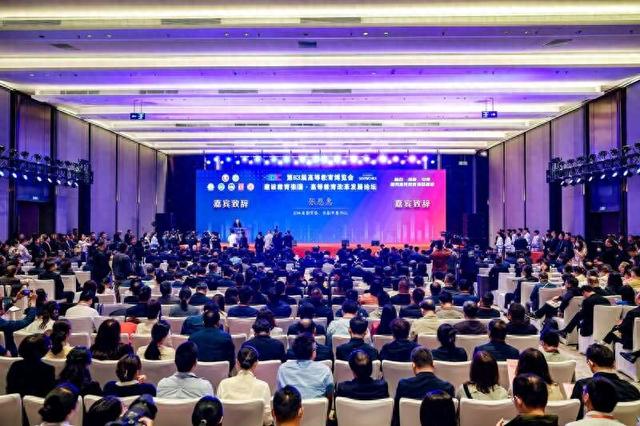
高博会“改版升级” 同期举办建设教育强国·高等教育改革发展论坛
Zhong Guo Qing Nian Bao· 2025-05-24 07:04
Core Viewpoint - The 63rd Higher Education Expo and the forum on building a strong education nation aim to enhance the role of higher education in national development and promote the integration of education, technology, and talent to support high-quality economic and social development [1][2]. Group 1: Event Overview - The theme of this year's expo and forum is "Integration, Innovation, Leadership: Serving the Construction of a Strong Education Nation" [2]. - The event features high-level universities, key research institutions, and leading enterprises, showcasing technological innovations that support economic and social development [2][4]. Group 2: Key Objectives - The expo aims for a comprehensive leap in the deep integration of higher education with economic and social development, highlighting the role of universities and enterprises in driving innovation [2]. - The forum focuses on seven major areas, including the implementation of moral education, the cultivation of innovative talents, and the optimization of higher education structure, addressing significant concerns in higher education reform [2]. - The event aligns with government work directives, providing authoritative policy guidance and strategic support for higher education reform and development [2]. Group 3: Employment and Innovation - The expo showcased advanced technologies such as satellite digital twin systems and underwater operation robots, and organized a job fair connecting over 400 quality enterprises with more than 10,000 job openings [4]. - Activities like the "Famous Teachers' Northeast Tour" were conducted to facilitate the organic connection between education, technology, industry, and talent [4].
实践与思考丨聚焦教育强国建设深化政治监督
Zhong Yang Ji Wei Guo Jia Jian Wei Wang Zhan· 2025-05-08 00:03
Core Viewpoint - The articles emphasize the importance of political supervision in higher education institutions to ensure the implementation of the fundamental task of fostering virtue and talent, aligning with the strategic goals of building an education strong nation in China [1][2][3]. Group 1: Political Supervision in Higher Education - Political supervision in higher education must focus on the political attributes of education, ensuring that institutions fulfill their mission of cultivating comprehensive socialist builders and successors [2][6]. - The supervision should be guided by Xi Jinping's thoughts on socialism with Chinese characteristics, ensuring adherence to the party's leadership in education [3][9]. - Institutions are required to enhance their political supervision mechanisms, ensuring that responsibilities are clearly defined and that there is accountability at all levels [3][10]. Group 2: Emphasis on Moral Education - The core task of fostering virtue must be integrated into all aspects of political supervision, enhancing the quality of talent cultivation [4][8]. - Political supervision should extend to various educational processes, including ideological and political education, ensuring that the fundamental task is reflected throughout [4][5]. Group 3: Awareness of Ideological Security - Higher education institutions must prioritize ideological security, maintaining a high level of political sensitivity and ensuring the implementation of responsibility systems for ideological work [5][6]. - Institutions should promote positive narratives and core socialist values among students and faculty, fostering a correct worldview and enhancing moral character [5][6]. Group 4: Addressing Corruption and Ethical Standards - There is a strong focus on addressing issues related to teacher ethics and corruption within higher education, with mechanisms established to ensure accountability and integrity [7][8]. - The supervision aims to create a clean educational environment, particularly in sensitive areas such as admissions, procurement, and research funding [8][11]. Group 5: Strategic Alignment with National Goals - Higher education institutions are seen as crucial in supporting national strategies, including the "Science and Education Empowering the Nation" strategy and the "Talent Strong Nation" strategy [9][11]. - Political supervision should ensure that educational institutions align their goals with national development needs, particularly in emerging and interdisciplinary fields [11].

“人工智能 + 教育”研训东莞启幕,共探大湾区教育新路径
Nan Fang Du Shi Bao· 2025-04-28 08:51
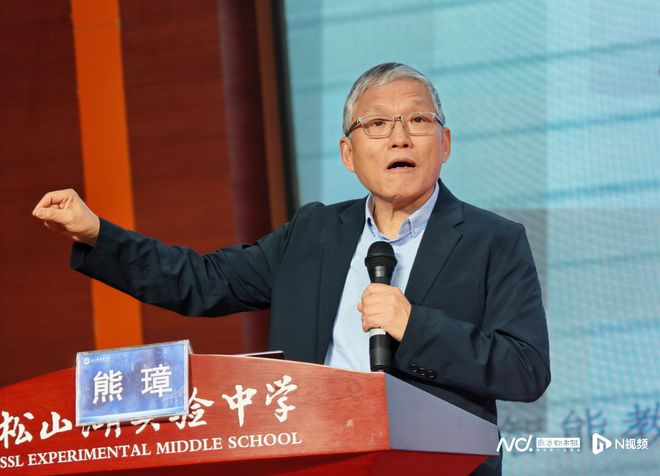
在教育数字化转型与人工智能浪潮奔涌的时代,4月27日至29日,2025"人工智能 + 教育"行动暨大湾区 教育高质量发展研训活动在广东东莞松山湖实验中学举行。 本次活动由北京教育融媒体中心主办,汇聚全国教育领域专家、学者及一线教育工作者,围绕"人工智 能推动大湾区教育高质量发展"主题,共探教育创新发展新方向,为大湾区教育协同发展及教育强国建 设注入新活力。 多元形式研讨,共话AI教育创新 教育强国建设背景下,人工智能与教育深度融合成为推动教育高质量发展的关键动力,也是本次活动核 心议题。活动通过专家报告、案例分享、课堂观摩等多种形式,深入剖析人工智能在教育领域的创新应 用与实践路径。 主旨报告环节精彩纷呈。北京航空航天大学教授、国家教材委员会科学学科专家委员会委员熊璋, 以"人工智能赋能教育强国建设"为题,凭借深厚学术造诣与丰富研究经验,指出人工智能技术可打破教 育资源时空限制,实现优质资源广泛共享,为不同地区学生提供公平优质教育机会,在教学模式创新与 教育评价体系改革方面潜力巨大。 东莞松山湖作为活动举办地,正借AI东风积极探索大湾区教育新模式。东莞松山湖教育管理中心主任 唐维伦在现场致辞中表示,松山湖作为 ...
清华大学成立教育学院,将培养一流教育学者与卓越教育领导者
Xin Jing Bao· 2025-04-21 23:11
清华大学党委书记邱勇在讲话中指出,在外部环境深刻变化、科学技术突飞猛进的当下,清华大学成立 教育学院,就是要应教育强国建设之需,为国家培养具有家国情怀、全球视野、专业能力和创新精神的 一流教育学者与卓越教育领导者,努力打造全球顶尖的教育研究重镇和教育思想中心。"面向未来,教 育学应该承担起更大的责任,要持续探索教育的新思想新理念,在传承优秀传统文化中激发创新活力, 直面并回应教育强国建设中的重大关系问题,为建设高等教育强国提供理论支撑,为提高教育质量、实 现教育的高质量发展提供理论指引。" 中国高等教育学会副会长管培俊表示,希望清华大学教育学院以学术创新服务高质量教育发展,努力推 动中国教育学自主知识体系构建;落实立德树人根本任务,打造中国特色、世界一流的教育人才培养高 地;通过协同创新合作发展,在教育战略研究、政策咨询和国际交流中持续贡献清华智慧。 新京报讯(记者冯琪)4月21日,清华大学宣布成立教育学院,更好地服务教育强国建设,进一步加快高 层次人才培养,加强教育学科建设。记者获悉,新成立的清华大学教育学院为学校实体教学科研机构, 同时撤销清华大学教育研究院建制。 1926年,作为最早设立的17个学系之一 ...