
长江经济带发展

Search documents
坚定信心 鼓足干劲 狠抓落实
Su Zhou Ri Bao· 2025-12-29 00:29
"十五五"征程即启。2026年,苏州将以何种姿态、状态,做好经济工作,不辱"在江苏推进中国式 现代化走在前、做示范中勇挑大梁"重大使命?昨日(12月28日)召开的市委经济工作会议,对标对表 中央经济工作会议明确的"八个坚持"重点任务,落实省委经济工作会议部署,以"三个突出""四个稳"和 八个方面的重点工作任务,勾画了科学清晰的奋进路径。我们要深刻领悟中央精神和省委部署要求,准 确领会市委决策意图,坚定信心、鼓足干劲、狠抓落实,以实际行动坚决扛起"挑大梁"责任,奋力实 现"十五五"开好局、起好步。 信心是干事创业的精神支柱。坚定"挑大梁"信心,源于坚实根基与战略机遇。回顾即将过去的一 年,全市上下把学习贯彻习近平总书记对江苏、苏州工作重要讲话重要指示精神作为主线,统筹推 进"一统领三稳三新三保",顺利完成全年和"十四五"发展各项目标任务,经济大市"压舱石"作用更加凸 显,为迈步新征程奠定了坚实基础。展望未来,坚定信心更有深厚源泉。从发展基础看,苏州经过数十 年接续奋斗,经济体量、产业竞争力、开放程度、县域经济活力、城乡协调水平、文化底蕴与社会治理 等方面形成显著优势。从战略机遇看,长三角一体化、长江经济带发展等 ...
聚焦区域特色高成长主体 新华长江经济带成长领先指数发布
Xin Hua Cai Jing· 2025-12-23 11:57
新华财经上海12月23日电 12月23日,新华长江经济带成长领先指数正式上线发布。作为长江经济带主 题的衍生策略,该指数关注区域内各省份50家盈利增长超预期且趋势稳定的上市公司证券,帮助市场结 合区域特色追踪稳定成长型企业的投资机遇。 据了解,该指数梳理并整合运用上市企业季度营收、预期营收、季度净利润等指标值及同比增速,聚焦 样本区域内"营收超预期""净利润增长力强"的上市公司,助力投资者捕捉企业稳定成长的投资机遇。 目前,指数覆盖35个申万二级行业,体现了区域经济的完整产业链和多元化发展格局。同时,指数前三 大权重行业为电力、工程机械、电网设备,涉及基础工业和装备制造领域,体现长江经济带在能源保 障、重大工程建设等方面的核心优势。 截至12月23日,长江经济带成长领先指数收于2600.88点,过去三年累计涨幅47%,年化收益9.37%,年 化波动率23.84%。 (文章来源:新华财经) 《中共中央关于制定国民经济和社会发展第十五个五年规划的建议》提出,"建设现代化产业体系,巩 固壮大实体经济根基"。长江经济带连接11省市,区域经济规模突出,传统产业基础实力雄厚,新兴产 业和未来产业活力强劲。特别是长江经济带 ...
省内“一盘棋” 省外“强联动”
Jiang Nan Shi Bao· 2025-12-22 06:39
Core Insights - Jiangsu has made significant progress in constructing a new regional development pattern during the "14th Five-Year Plan" period, with its economic total accounting for over 40% of the Yangtze River Delta region and all 13 prefecture-level cities entering the national top 100 [1][2] Economic Performance - Jiangsu's economic total accounts for over 40% of the Yangtze River Delta and 22% of the Yangtze River Economic Belt [2] - All 13 prefecture-level cities in Jiangsu are among the national top 100, with five cities having an economic total exceeding 1 trillion yuan [4] - The coastal economic belt contributes 18.1% to the province's economic growth [4] Infrastructure Development - Jiangsu has strengthened its transportation infrastructure, with highway mileage reaching 5,232 kilometers and high-speed rail totaling 2,594 kilometers by the end of 2024 [3] - The Yangtze River section in Jiangsu handles about 70% of the total cargo volume along the river, with significant improvements in ecological protection [3] Innovation and Collaboration - Jiangsu has led the establishment of 44 national key laboratories and implemented 28 joint fund projects for basic research in the Yangtze River Delta [2] - The province has formed various innovation cooperation centers, enhancing its influence in national and regional development strategies [7] Urban and Rural Development - The gap between the urbanization rates of permanent residents and registered residents in Jiangsu has narrowed to 5.36 percentage points, making it one of the provinces with the smallest gap in the country [5] - Jiangsu has built 1,739 million mu of high-standard farmland and established 2,280 livable and workable villages [6] Strategic Positioning - Jiangsu aims to play a leading role in national development, leveraging its strategic advantages and contributing to regional coordination and common prosperity [8]
太仓市坚持提速扩量、提质增效
Su Zhou Ri Bao· 2025-12-20 23:50
Core Viewpoint - The Taicang Municipal Committee has approved the proposal for the 15th Five-Year Plan, aiming to unify thoughts, clarify tasks, and stimulate motivation for future development [1] Group 1: Economic Development - Taicang has achieved a new enhancement in comprehensive strength, ranking 7th among the top 100 counties in China and maintaining the top position in the list of the most livable county-level cities for 10 consecutive years [1] - From January to November, Taicang introduced 431 new industrial projects with a total investment of 59 billion yuan, including several projects exceeding 1 billion yuan [1] - The completion rate for 195 key projects reached 122.7%, with 116 projects valued over 100 million yuan completed and put into operation [1] Group 2: Business Environment - Taicang has implemented a "1+10" talent policy and the "Qing Ten Articles," introducing innovative measures such as city experience benefits and talent housing vouchers [1] - The city has launched a youth talent community and improved the functionality of enterprise service centers at both municipal and town levels [1] - The enterprise (project) lifecycle management platform has been recognized as a typical experience by the General Office of the State Council [1] Group 3: Strategic Opportunities - Looking ahead to the 15th Five-Year Plan, Taicang will focus on accelerating growth and improving quality, leveraging multiple strategic opportunities such as the integration of the Yangtze River Delta and the development of the Yangtze Economic Belt [1] - The city aims to fully utilize its advantageous location near the river, Shanghai, and the sea, enhancing hard connectivity and soft integration with Shanghai [1] - Taicang is committed to becoming a national logistics hub city and a national-level platform for cooperation with Germany [1]
江苏13个设区市全部跻身全国百强 5个设区市经济总量过万亿
Zheng Quan Shi Bao Wang· 2025-12-19 12:02
Group 1 - Jiangsu Province emphasizes integration, service, and collaboration to advance the Yangtze River Delta integration and the Yangtze River Economic Belt development strategy, with the province's economic output accounting for over 40% of the Yangtze River Delta and 22% of the 11 provinces and cities in the Yangtze River Economic Belt [1] - Jiangsu has established a network of key laboratories, leading the construction of 44 national key laboratories and implementing 28 joint basic research projects in the Yangtze River Delta, enhancing cross-regional collaboration in the sci-tech industry [1] - The province has formed the Yangtze River Delta Advanced Manufacturing Cluster Alliance and is promoting various innovation platforms, accelerating the agglomeration effect of sci-tech resources [1] Group 2 - All 13 prefecture-level cities in Jiangsu have entered the national top 100, with five cities exceeding a GDP of 1 trillion, and the per capita GDP gap among functional areas narrowing to around 1.8 [2] - The Yangtze River Delta urban agglomeration has achieved a GDP of 10.51 trillion yuan, accounting for 76.7% of the province's total, with Nanjing and Suzhou urban circles included in the national modernization urban circle cultivation project [2] - The coastal economic belt has contributed 18.1% to the province's economic growth, with 270 high-tech enterprises and 786 specialized small and medium-sized enterprises, while the marine equipment value added accounts for one-fourth of the national total [2] Group 3 - Jiangsu has strengthened cooperation with major national strategies, enhancing cross-regional resource sharing in sci-tech, industry, and talent, and improving collaborative development effectiveness [3] - The province has deepened connections with the Beijing-Tianjin-Hebei region and the Guangdong-Hong Kong-Macao Greater Bay Area, establishing four national key laboratories in collaboration with Beijing educational institutions and promoting seven project implementations [3] - Jiangsu has 55 companies listed on the Beijing Stock Exchange, the highest in the country, and 136 companies listed on the Hong Kong Stock Exchange, accounting for over 70% of the province's overseas listed companies [3]
步调一致绘蓝图 因地制宜启新篇——多省份“十五五”规划建议观察
Shang Hai Zheng Quan Bao· 2025-12-10 17:57
◎新华社北京12月10日电 党的二十届四中全会审议通过的《中共中央关于制定国民经济和社会发展第十五个五年规划的建议》, 为"十五五"时期我国经济社会发展擘画了宏伟蓝图。 截至12月上旬,围绕《建议》提出的主要目标和战略任务,先后已有20余个省份审议通过了地方"十五 五"规划建议,其中大多省份对外公布了地方"十五五"规划建议。 新的历史征程即将开启。在以习近平同志为核心的党中央坚强领导下,各省份深入贯彻落实党的二十届 四中全会精神,更好发挥国家发展规划的战略导向作用,紧密结合自身发展实际,作出新一轮战略部 署,为"十五五"乃至未来更长时期高质量发展打下坚实基础、开创崭新局面。 锚定长远目标,凝心聚力谋篇未来发展 11月14日,浙江杭州,《中共浙江省委关于制定浙江省国民经济和社会发展第十五个五年规划的建议》 审议通过。 作为最早一批出台的地方"十五五"规划建议,这份文件提出"到2030年,我省经济实力、科技实力、综 合竞争力大幅跃升,人均地区生产总值接近发达经济体水平",经济大省浙江在谋划未来五年发展上迈 出关键一步。 在国家发展大局中找准定位,在新起点新征程担当作为。 广东提出"'百县千镇万村高质量发展工程'取 ...
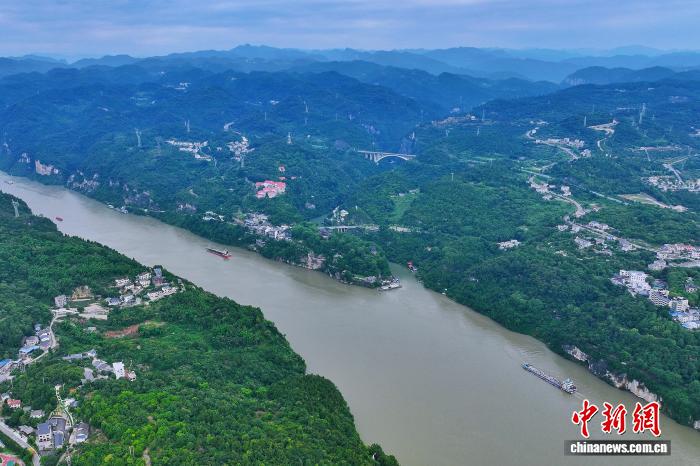
长江“水上高速公路”正加快形成
Zhong Guo Xin Wen Wang· 2025-12-08 12:17
来往如梭的船舶行驶在长江宜昌段(资料图)。周星亮 摄 2014年4月,湖北省向交通运输部提请建设"安庆至武汉6米水深、武汉至宜昌4.5米水深航道"(简称"645 工程")。2016年,"645工程"作为建设目标,被列入国家《长江经济带发展规划纲要》。 2024年9月,长江中游荆江河段航道整治二期工程开工,今年底实现4.5米水深初通宜昌,5000吨级船舶 可通行重庆;长江中游荆江河段航道整治二期工程建成后可与已建成投运的武汉至安庆段6米水深航道 衔接,实现《全国港口与航道布局规划》中的既定目标。 长江"水上高速公路"正加快形成 货船有序通过葛洲坝船闸(资料图)。周星亮 摄 中新网宜昌12月8日电 (董晓斌 王银环 杨漪)记者从湖北宜昌8日举行的"决胜收官'十四五',谋篇布局'十 五五'"交通运输篇新闻发布会上获悉,长江荆江段航道整治、长江宜昌段4.5米水深航道疏浚即将完 工。届时,5000吨级船舶可以从武汉畅行至宜昌,形成长江"水上高速公路"。 长江宜昌段至武汉段航道全长约627公里,上连三峡库区,下接下游深水航道,是推动长江上、中、下 游地区协调发展的核心通道。但该航道蜿蜒曲折、滩多水浅,影响了长江黄金水道综 ...

长沙六个区级国土空间总体规划获批 标志着长沙中心城区及重点片区未来发展蓝图正式落地
Chang Sha Wan Bao· 2025-12-06 03:27
Core Viewpoint - The Hunan Provincial Government has officially approved the overall land space planning for six districts, marking a significant step in the construction of the land space planning system for Changsha, which aligns with national strategies and local development goals [1][2]. Group 1: Approval of Planning - The approval includes the overall land space planning for Hunan Xiangjiang New Area, Furong District, and four other districts, covering the period from 2021 to 2035 [1]. - This is a follow-up to the State Council's approval of the overall land space planning for Changsha, indicating a structured approach to urban development [2]. Group 2: Strategic Alignment - The planning is guided by Xi Jinping's thoughts on socialism with Chinese characteristics for a new era, aiming to integrate with national strategies such as the development of the Yangtze River Economic Belt and the rise of the central region [2]. - The plans emphasize differentiated development positioning and collaborative spatial patterns based on the resource endowments and industrial foundations of the six districts [2].
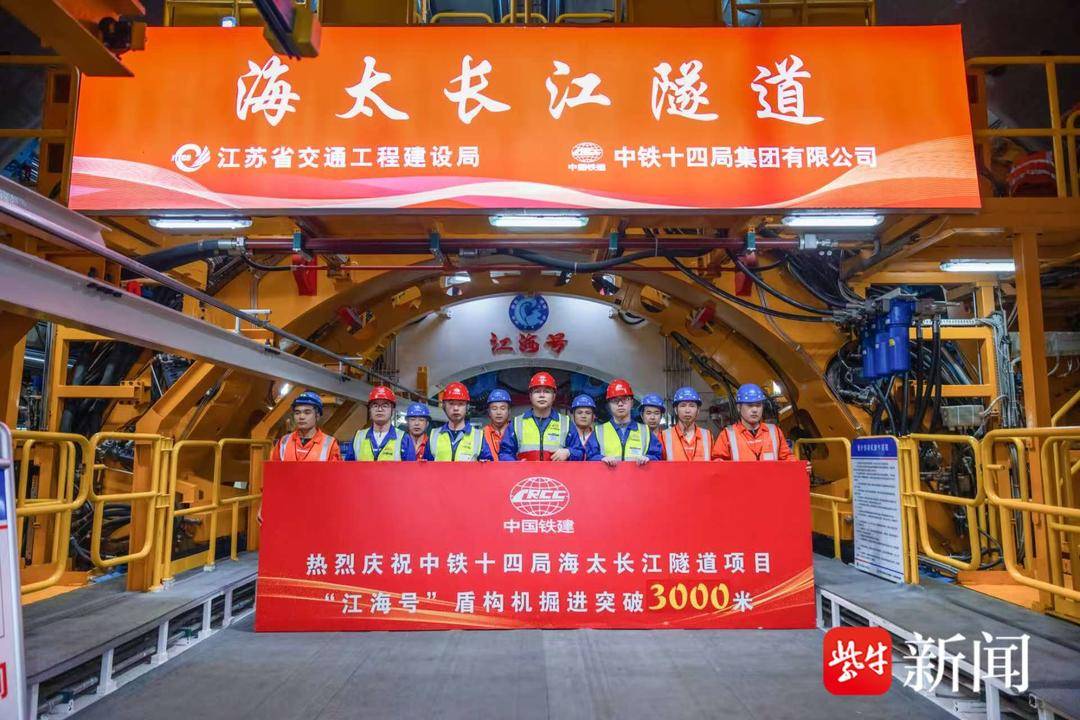
突破3000米!海太长江隧道掘进任务完成近三分之一
Yang Zi Wan Bao Wang· 2025-12-03 06:53
Core Insights - The construction of the Haitai Yangtze River Tunnel, undertaken by China Railway 14th Bureau, has achieved a significant milestone with the "Jianghai" shield machine surpassing 3,000 meters of excavation, completing nearly one-third of the total excavation task, marking a phase victory for the project [1] Group 1: Project Overview - The Haitai Yangtze River Tunnel stretches 39.07 kilometers, with an underwater section of 11.185 kilometers, making it the world's longest underwater highway shield tunnel [3] - The project faces challenges such as ultra-long distances, large diameters, high water pressure, deep burial, and complex working conditions, with a shield excavation diameter exceeding 16.6 meters and a maximum burial depth of 75 meters [3] Group 2: Technical Achievements - Since the start of excavation in April 2025, the project team has utilized their extensive experience in large shield tunnel construction, achieving a steady excavation rate of 16 meters per day and 480 meters per month at a depth of 52 meters [4] - The team has implemented a "Digital Shield Intelligent Control Center" for 24-hour monitoring of excavation parameters, grouting quality, and equipment status, leveraging big data for intelligent decision-making and precise construction [4] Group 3: Strategic Importance - The construction of the Haitai Yangtze River Tunnel is crucial for the integrated development of the Yangtze River Delta region and the national strategy for the Yangtze Economic Belt, optimizing the layout of river-crossing channels and promoting urban integration in the Yangtze River Delta [5] - The project is expected to be completed and opened to traffic by 2028, significantly reducing the travel time from Nantong to Suzhou and Shanghai from 1 hour to 10 minutes, thereby alleviating traffic pressure on the Sutong Yangtze River Bridge and accelerating the formation of the "1-hour economic circle" in the Yangtze River Delta [5]
4000万标准箱!宁波舟山港年集装箱吞吐量新突破
Xin Hua Wang· 2025-12-02 09:06
Core Insights - Ningbo-Zhoushan Port has achieved a significant milestone by surpassing an annual container throughput of 40 million TEUs for the first time, marking a rapid growth trajectory in recent years [1][2] - The port has maintained its position as the world's largest in terms of cargo throughput for 16 consecutive years, with container business growing from 20 million TEUs in 2015 to 40 million TEUs in 2023 [1] - The port plays a crucial role in national strategies such as the Belt and Road Initiative and the development of the Yangtze River Economic Belt, enhancing its strategic importance [1] Group 1 - The annual container throughput at Ningbo-Zhoushan Port has increased from 10 million to 20 million TEUs in 7 years, from 20 million to 30 million TEUs in 6 years, and from 30 million to 40 million TEUs in just 4 years [1] - The port has over 210 berths capable of handling vessels of 10,000 tons and above, with more than 135 berths for vessels of 50,000 tons and above, making it one of the ports with the most large and super-large deep-water berths globally [1] Group 2 - Ningbo-Zhoushan Port has established a maritime trade network connecting over 600 ports in more than 200 countries and regions, with around 300 vessels operating daily, ranking second globally in port connectivity index [2] - Zhejiang Province is actively promoting the construction of a world-class strong port, implementing a comprehensive plan from 2023 to 2027 to enhance the port's core competitiveness and support capabilities [2] - The overall planning for Ningbo-Zhoushan Port has been revised and approved, optimizing the port's functional layout and resource allocation to support strong port construction [2]