循环经济

Search documents
万物新生(爱回收)财报:二季度营收49.9亿元,二手商品交易单量破千万
Jing Ji Wang· 2025-08-21 07:30
Core Insights - The company reported a record high total revenue of 4.99 billion yuan for Q2 2025, representing a year-on-year growth of 32.2% [1] - Non-GAAP operating profit exceeded 120 million yuan in Q2 2025, with a year-on-year increase of 28.9% [1] - The company plans to return at least 60% of annual non-GAAP net profit to shareholders from 2025 to 2027 through dividends and buybacks [3] Revenue Breakdown - Revenue from self-operated (1P) product sales reached 4.56 billion yuan, up 34% year-on-year, contributing significantly to overall revenue growth [1] - Platform (3P) service revenue was 430 million yuan, reflecting a year-on-year growth of 15.4% [1] - The total transaction volume of second-hand goods on the platform reached 10.3 million orders, a year-on-year increase of 22.6% [1] Profitability - Non-GAAP net profit for Q2 2025 was 99.91 million yuan, marking a year-on-year growth of 24.1% [1] - For the first half of 2025, the company achieved a non-GAAP operating profit of over 230 million yuan, up 33.8% year-on-year [1] - GAAP operating profit and net profit for Q2 were 91.07 million yuan and 72.34 million yuan, respectively [1] Operational Expansion - As of the end of Q2 2025, the company had 2,092 offline stores across 291 cities, enhancing customer convenience for in-store delivery [2] - The self-operated on-site team grew to 1,160 members, improving fulfillment capabilities and efficiency [2] - The multi-category recycling service generated a GMV of 1.87 billion yuan, with a year-on-year growth exceeding 110% [2] Market Trends - The consumer electronics market benefited from trade-in policies, with significant growth in C2B recycling performance driven by national subsidies and e-commerce promotions [2] - The recovery in gold prices led to a 118% year-on-year increase in gold recycling GMV, while luxury goods recycling GMV grew by 63% [2] Strategic Outlook - The company aims to enhance its front-end scenarios and improve delivery experiences to increase recycling penetration rates [3] - The management emphasizes the importance of leveraging unique business models to create innovative benchmarks in the industry [3]

行业报告解析:脱碳混凝土市场规模约1525百万美元
Sou Hu Cai Jing· 2025-08-21 04:36
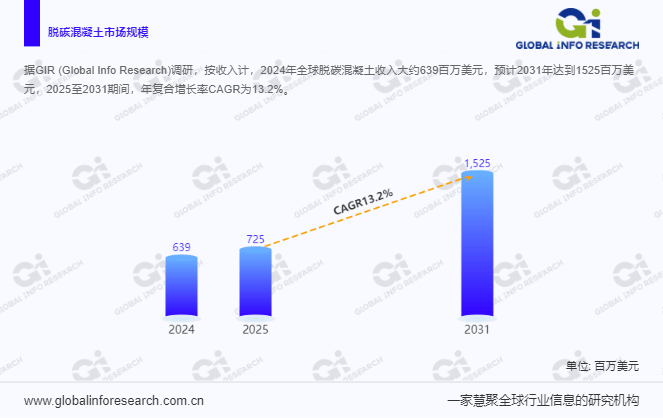
Group 1: Market Overview - The global decarbonized concrete market is projected to generate approximately $639 million in revenue in 2024, with expectations to grow to $1.525 billion by 2031, reflecting a compound annual growth rate (CAGR) of 13.2% from 2025 to 2031, indicating strong growth potential [1] - In terms of production, the global output of decarbonized concrete is expected to reach approximately 26.5 million tons in 2024, with an average selling price of $234.33 per ton [3] Group 2: Product Characteristics and Technology - Decarbonized concrete is defined as an innovative building material aimed at reducing CO₂ emissions during traditional concrete production by utilizing low-carbon raw materials, optimizing production processes, and integrating carbon capture technologies [3] - Key technological approaches include CO₂ mineralization, alternative clinker materials, and the development of completely cement-free geopolymers or biological methods, which not only reduce environmental impact but also enhance structural strength and durability [3] Group 3: Competitive Landscape - Major companies in the global decarbonized concrete market include CarbonCure Technologies, CarbiCrete, Brimstone, Sublime Systems, Hoffmann Green, C-Crete, Solidia Technologies, CarbonBuilt, Oxara, Blue Planet Systems, LafargeHolcim, Buzzi Unicem, Geopolymer Solutions, Heidelberg, and Cemex [4] - The market can be segmented into carbon-negative cement and cement-free concrete, with core applications in infrastructure, residential and commercial buildings, marine engineering, and other related fields [4] Group 4: Historical and Forecast Data - Historical data from 2020 to 2024 includes industry status, competitive landscape, production expansion, mergers and acquisitions, and market data segmented by product type, application field, and region [4] - Forecast data from 2025 to 2031 will cover industry status predictions, market size, product pricing, market share, growth rates, and competitive trends [5]

博苑股份2025年中报简析:增收不增利
Zheng Quan Zhi Xing· 2025-08-20 22:41
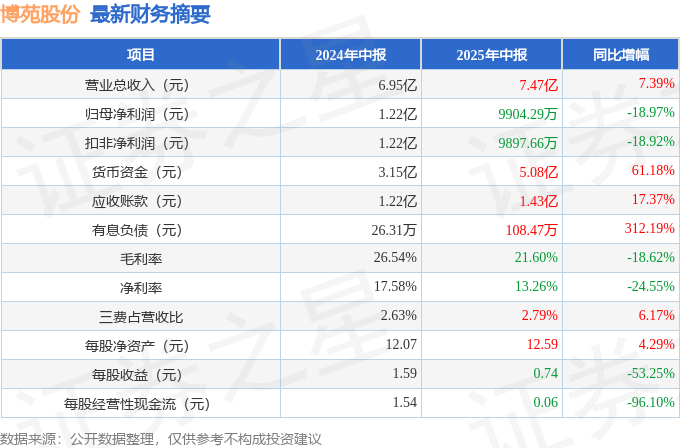
证券之星价投圈财报分析工具显示:业务评价:公司去年的ROIC为17.02%,资本回报率强。去年的净 利率为16.05%,算上全部成本后,公司产品或服务的附加值高。从历史年报数据统计来看,公司上市 以来中位数ROIC为25.15%,投资回报也很好,其中最惨年份2024年的ROIC为17.02%,投资回报也很 好。公司历史上的财报较为好看(注:公司上市时间不满10年,上市时间越长财务均分参考意义越 大。)。偿债能力:公司现金资产非常健康。 最近有知名机构关注了公司以下问题: 据证券之星公开数据整理,近期博苑股份(301617)发布2025年中报。根据财报显示,博苑股份增收不增 利。截至本报告期末,公司营业总收入7.47亿元,同比上升7.39%,归母净利润9904.29万元,同比下降 18.97%。按单季度数据看,第二季度营业总收入4.27亿元,同比上升10.07%,第二季度归母净利润 4996.54万元,同比下降29.71%。 本次财报公布的各项数据指标表现一般。其中,毛利率21.6%,同比减18.62%,净利率13.26%,同比减 24.55%,销售费用、管理费用、财务费用总计2086.4万元,三费占营收比2. ...
万物新生(爱回收)二季度营收近50亿元超指引区间高端,线下门店突破2000家
IPO早知道· 2025-08-20 10:24
Core Viewpoint - The company, Wanwu Xinxing (Aihuishou), reported strong financial performance in Q2 2025, with total revenue reaching 4.99 billion yuan, a year-on-year increase of 32.2%, exceeding the high end of its revenue guidance and setting a historical record [2][11]. Revenue Composition - The revenue from 1P (self-operated) product sales was 4.56 billion yuan, up 34.0% year-on-year [4][6]. - The revenue from 3P (platform) services was 430 million yuan, reflecting a year-on-year growth of 15.4% [4][6]. Transaction Volume and Profitability - The total transaction volume for second-hand goods across all platforms reached 10.3 million orders, marking a year-on-year increase of 22.6% [4][6]. - The non-GAAP operating profit for Q2 was 120 million yuan, a year-on-year increase of 28.9%, with a non-GAAP operating profit margin of 2.4% [4][6]. Cash Position - As of the end of Q2 2025, the company had a total of 2.35 billion yuan in cash and cash equivalents, restricted funds, short-term investments, and third-party payment platform account balances, ensuring stable operations [6]. Infrastructure and Service Expansion - The company has strengthened its offline recycling infrastructure, with 2,092 stores covering 291 cities nationwide by the end of Q2 2025 [6]. - The number of self-operated on-site teams reached 1,160, enhancing delivery efficiency and coverage [6]. Multi-category Recycling Growth - The company has expanded its multi-category recycling services, with 804 stores offering such services, resulting in a GMV of 1.87 billion yuan, a year-on-year increase of over 110% [7]. - Notable growth was observed in gold and luxury goods recycling, with gold recycling GMV increasing by 118% and luxury goods by 63% [7]. C2B Recycling Performance - The C2B recycling segment maintained rapid double-digit growth, supported by national subsidies and e-commerce promotions [9]. - The platform "Paijitang" registered over 1.16 million signed merchants, achieving healthy double-digit growth [9]. ESG Initiatives - The company set carbon reduction targets, aiming to reduce greenhouse gas emissions intensity by 35% for scopes 1 and 2 and 50% for scope 3 by 2030 [10]. - In 2024, the company responsibly disposed of 137,000 old electronic devices, reducing electronic waste pollution by 21.92 tons [10]. Shareholder Return Plan - The company announced a three-year shareholder return plan, committing to return at least 60% of annual non-GAAP net profit to shareholders through dividends or buybacks from 2025 to 2027 [11].
为什么冰杯爆火,为重用循环杯带来了商机?
3 6 Ke· 2025-08-20 10:12
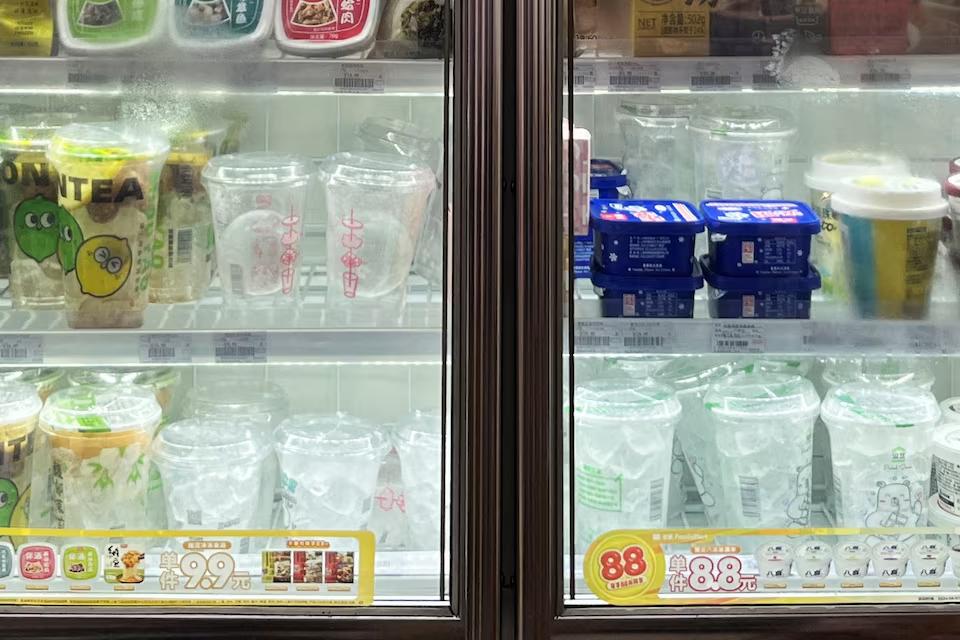
Core Insights - The article discusses the rising trend of the "ice economy" in China, driven by high temperatures and consumer demand for ice products, particularly in urban areas [1][2] - Major retail players like 7-Eleven and Sam's Club are capitalizing on this trend, with ice cup sales experiencing over 300% growth for two consecutive years [1][2] - The cost structure of ice products reveals significant hidden costs, particularly related to packaging and environmental impact, raising questions about sustainability [4][5][6] Cost Analysis - The production cost of 1 kg of ice is estimated to be between 1.6 to 2 yuan, translating to approximately 0.3 yuan for a typical 160-gram ice cup [5] - Transportation costs for ice are high due to the need for cold chain logistics, adding an estimated 0.2 to 0.3 yuan per cup [5] - Packaging costs are substantial, with the cost of a single-use ice cup being around 0.6 to 0.7 yuan, which can exceed the cost of the ice itself [5][6] Environmental Impact - The environmental costs associated with single-use ice cups are significant, with lifecycle carbon emissions for a typical plastic cup estimated at 70-100 grams of CO₂e [7][8] - The recycling challenges posed by multi-material ice cups complicate waste management, leading to increased costs for waste collection and sorting [8][9] - The extended producer responsibility (EPR) framework is pushing brands to take accountability for the entire lifecycle of their packaging, including waste management [9] Sustainable Alternatives - The article highlights emerging models like "circular cups," which aim to reduce packaging waste through deposit and return systems, as seen in Taiwan's FamilyMart [10][12] - These models not only address environmental concerns but also create new business opportunities by transforming the consumer experience and brand engagement [13][14] - The shift towards reusable packaging is supported by government policies promoting sustainable practices, indicating a growing market for circular economy solutions [20][21] Industry Trends - The trend towards "circular+" models in the ice beverage sector is seen as a potential growth area, particularly in urban environments with high consumer traffic [14][19] - Companies are encouraged to innovate in their service models, moving from selling products to offering services that incorporate sustainability [19][20] - The article emphasizes the importance of aligning business strategies with environmental goals to gain competitive advantages in the evolving market landscape [20][21]
塑料“变废为油”转化效率超95%
Zhong Guo Xin Wen Wang· 2025-08-20 05:45
Core Insights - The global plastic industry has produced over 10 billion tons of plastic, with approximately 80% ending up as waste, leading to significant resource wastage and environmental crises [1] - A breakthrough in plastic waste management has been achieved through a novel room-temperature catalytic conversion technology developed by a collaborative team of international researchers, enabling the conversion of mixed waste plastics into high-value fuels with over 95% conversion efficiency [1][3] Group 1: Plastic Waste Management Challenges - China, as the largest producer and consumer of plastics, faces severe challenges in waste plastic management, with domestic waste plastic stock exceeding 1 billion tons and an annual increase of over 6 million tons [2] - The composition of waste plastics shows that PE and PP account for 50%, while PVC accounts for 10%, indicating significant recycling potential [2] - Traditional waste plastic treatment methods, primarily landfilling and incineration, pose environmental risks, including soil and groundwater contamination and toxic emissions [2] Group 2: Innovative Recycling Technology - The new "plastic catalytic cracking-alkylation coupling reaction" concept integrates traditional oil refining processes, achieving three major innovations: reducing conversion temperature to room temperature, integrating multiple steps into a single process, and utilizing petrochemical by-products as reaction media [3] - This technology significantly lowers energy consumption by over 70% compared to traditional methods and enhances the economic viability of plastic recycling [3] Group 3: Industrial Application and Benefits - The new technology is highly compatible with existing refining processes, featuring low energy consumption, simple equipment, and high conversion efficiency, making it suitable for promotion in current refining facilities [4] - The use of ionic liquids as catalysts allows for nearly complete conversion of mixed waste plastics into high-quality fuels, effectively blocking chlorine pollution and converting it into harmless hydrochloric acid [4] - The technology transforms the economic value of waste plastics from negative returns associated with landfilling or incineration to positive returns, truly achieving the concept of "turning waste into treasure" [4]
国际塑料污染条约谈判未达成共识
Zhong Guo Hua Gong Bao· 2025-08-20 03:10
Core Points - The fifth session of the Intergovernmental Negotiating Committee on plastic pollution (INC-5.2) failed to reach a consensus on a legally binding international treaty after 10 days of negotiations, leading to an early adjournment on August 15 [1][2] - Significant divisions among UN member states were evident, with industry associations like the World Plastics Council (WPC) and Plastics Europe urging continued efforts towards a final agreement [1][2] - UNEP Executive Director Inger Andersen highlighted the need for more time to achieve a comprehensive consensus on key issues such as plastic production, product management, funding mechanisms, and voting procedures [1] - The INC chair expressed that the lack of agreement should not be discouraging but rather a motivation to reaffirm commitments and unify visions for future negotiations [1][2] Industry Reactions - The WPC called for "pragmatic collaboration" to facilitate the treaty, expressing regret over the failure to reach an agreement but remaining optimistic about a future accord [2] - WPC emphasized the importance of recognizing the different challenges and perspectives faced by various countries and regions, urging negotiators to focus on waste management capabilities and circular models [2] - The European Plastics Association expressed disappointment over the lack of agreement but appreciated the political will to continue negotiations and build a global consensus [3] - The association supports the inclusion of mechanisms for promoting sustainable production and consumption, effective waste management, and a just transition to a circular economy in the final agreement [3] China's Involvement - China actively participated in discussions on all key issues, proposing bridging solutions and receiving positive evaluations from various parties [3] - China shared its experiences in reducing plastic usage at the source, waste collection and disposal, and cleaning up plastic waste in water bodies, emphasizing the urgent and complex nature of plastic pollution as a global environmental challenge [3]
国际塑料污染条约谈判未达成共识
Zhong Guo Hua Gong Bao· 2025-08-20 02:21
Core Points - The fifth session of the Intergovernmental Negotiating Committee on plastic pollution (INC-5.2) failed to reach a consensus on a legally binding international treaty after 10 days of negotiations, leading to an early adjournment on August 15 [1][2] - The United Nations Environment Programme (UNEP) highlighted significant divisions among member states on key issues such as plastic production, product management, funding mechanisms, and voting procedures [1][3] - Industry associations, including the World Plastics Council (WPC) and Plastics Europe, urged continued efforts towards a final agreement and emphasized the need for a global consensus to combat plastic pollution [1][2][3] Group 1 - The INC-5.2 attracted over 2,600 participants, including more than 1,400 government representatives from 183 countries and nearly 1,000 observers from over 400 organizations [2] - WPC expressed disappointment over the lack of agreement but remained optimistic about a future treaty, urging negotiators to focus on waste management capabilities and circular economy models [2][3] - The European Plastics Association called for a swift restart of multilateral efforts and the establishment of a global consensus and policy framework [3] Group 2 - The draft treaty released earlier in the week did not include controversial provisions such as limits on plastic production or restrictions on additives, which were significant points of contention during the negotiations [3] - China actively participated in discussions, proposing bridging solutions and sharing experiences in plastic pollution management, emphasizing the urgent need for a collaborative approach to tackle this global environmental challenge [3]
万物新生上涨2.16%,报4.495美元/股,总市值9.88亿美元
Jin Rong Jie· 2025-08-19 14:09
Core Viewpoint - The company, 万物新生 (RERE), has shown a positive financial performance with significant revenue and profit growth, and is set to release its mid-year financial report soon [1]. Financial Performance - As of March 31, 2025, 万物新生 reported total revenue of 4.653 billion RMB, representing a year-on-year increase of 27.45% [1]. - The net profit attributable to the parent company reached 42.8 million RMB, marking a substantial year-on-year growth of 146.09% [1]. Stock Performance - On August 19, the stock price of 万物新生 increased by 2.16%, closing at $4.495 per share, with a trading volume of $2.9886 million and a total market capitalization of $988 million [1]. Company Overview - 万物新生 is a Cayman Islands-registered holding company that operates primarily through its domestic subsidiary, 上海万物新生环保科技集团有限公司 [1]. - Established in 2011, the company positions itself as a "Internet + Environmental Protection" circular economy enterprise, focusing on sustainability and social responsibility [1]. - The company operates four main business lines: 爱回收, 拍机堂, 拍拍, and overseas business AHS Device [1].
刘宁徐令义到卫辉市辉县市调研
He Nan Ri Bao· 2025-08-19 10:39
Group 1: Industry Development - The Henan Yinjinda Holding Group Co., Ltd. in Weihui City is involved in functional films and polyester recycling, holding multiple technology patents and exporting products globally [1] - The local government emphasizes the importance of deepening product processing and creating a green low-carbon circular economy model to promote integrated development of domestic and foreign trade [1] - The construction of the largest pumped storage power station in Henan Province, located in Huixian City, aims to enhance renewable energy consumption capacity and build a clean energy system [2] Group 2: Governance and Community Engagement - Local officials are encouraged to continuously carry out activities that help enterprises overcome development bottlenecks and ensure the implementation of policies that benefit businesses [1] - The "Three Connections and One Standard" model is being utilized to enhance grassroots governance and encourage community participation in rural development [1] - The integration of ecological protection with rural revitalization is highlighted, aiming to develop cultural tourism as a pillar industry while promoting green development [2] Group 3: Educational Initiatives - The New Xiang City has implemented a series of special actions focusing on learning, checking, and improving, which aims to drive changes in work style and promote development [3] - Continuous efforts are being made to deepen understanding of key speeches by national leaders and to ensure effective implementation of educational initiatives [3]