
双碳

Search documents
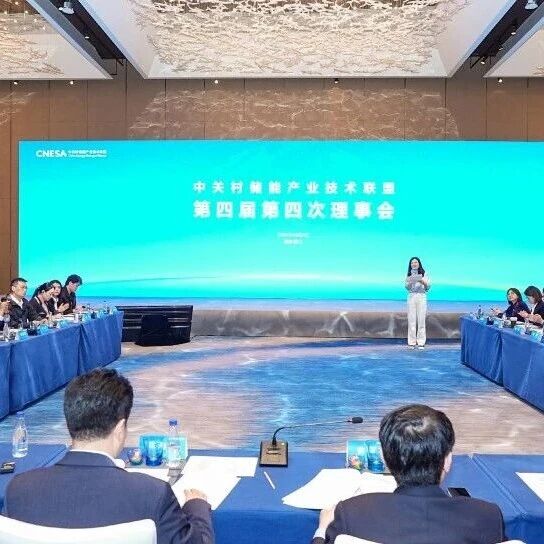
中关村储能产业技术联盟第四届第四次理事会在厦门召开
中关村储能产业技术联盟· 2025-12-04 15:22
Core Viewpoint - The meeting of the Zhongguancun Energy Storage Industry Technology Alliance highlighted the dual benefits of policy and market for the energy storage industry under the "dual carbon" goals, emphasizing the need for collaboration and strategic planning for future development [6][13]. Group 1: Meeting Overview - The fourth meeting of the fourth council of the Zhongguancun Energy Storage Industry Technology Alliance was held in Xiamen, Fujian, where the 2025 and 2026 work plans were discussed and approved [2][4]. - Key figures from various member companies attended, including leaders from Tianhe Energy, State Grid Technology, BYD, and others, showcasing a strong representation from the industry [4]. Group 2: Work Plans and Achievements - The 2025 work plan focuses on multiple breakthroughs in industry services, including participation in the "14th Five-Year" energy storage planning, supporting policy assessments, and leading national key research projects [8]. - The alliance aims to publish the "Energy Storage Industry Research White Paper 2025" and has initiated eight new group standards, along with hosting significant events like the 13th International Energy Storage Summit [8]. - For 2026, the alliance plans to deepen its core business areas, enhance international influence, and officially restart the Global Energy Storage Alliance (GESA 2.0) [8]. Group 3: Membership Changes - The council approved the addition of nine new members to the executive council, including companies like Goldwind Zero Carbon Energy and Huizhou Yiwei Lithium Energy, reflecting the growing collaboration within the industry [10]. Group 4: Future Directions - The successful hosting of the council meeting clarified future directions and consensus for the alliance, emphasizing its role as a bridge among industry players to contribute to the high-quality development of the global energy storage sector [13].

环保监测设备龙头,“摘帽”!
Zhong Guo Zheng Quan Bao· 2025-12-04 15:03
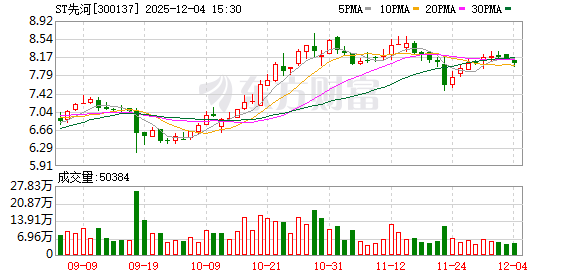
Group 1 - The company ST Xianhe announced that its stock will be suspended from trading on December 5 and will resume trading on December 8, with the stock name changing from "ST Xianhe" to "Xianhe Environmental" [2] - The company received an administrative penalty notice from the Hebei Securities Regulatory Bureau on November 8, 2024, indicating that its 2022 annual report contained false records, leading to a risk warning on its stock starting November 12, 2024 [2] - The company has developed into a comprehensive service provider in environmental monitoring, management, and governance, offering products and services such as ecological environment monitoring and big data analysis [3] Group 2 - For the first three quarters of 2025, ST Xianhe reported revenue of 628 million yuan, a year-on-year increase of 4.71%, and a net profit attributable to shareholders of 5.5342 million yuan, up 2.68% year-on-year [4] - As of December 4, the stock price of ST Xianhe was 8.04 yuan per share, with a market capitalization of 4.3 billion yuan [4]

发布多个数智化成果 业内人士共话人工智能与能源电力深度融合的创新实践与发展方向
Zhong Guo Jin Rong Xin Xi Wang· 2025-12-04 13:36
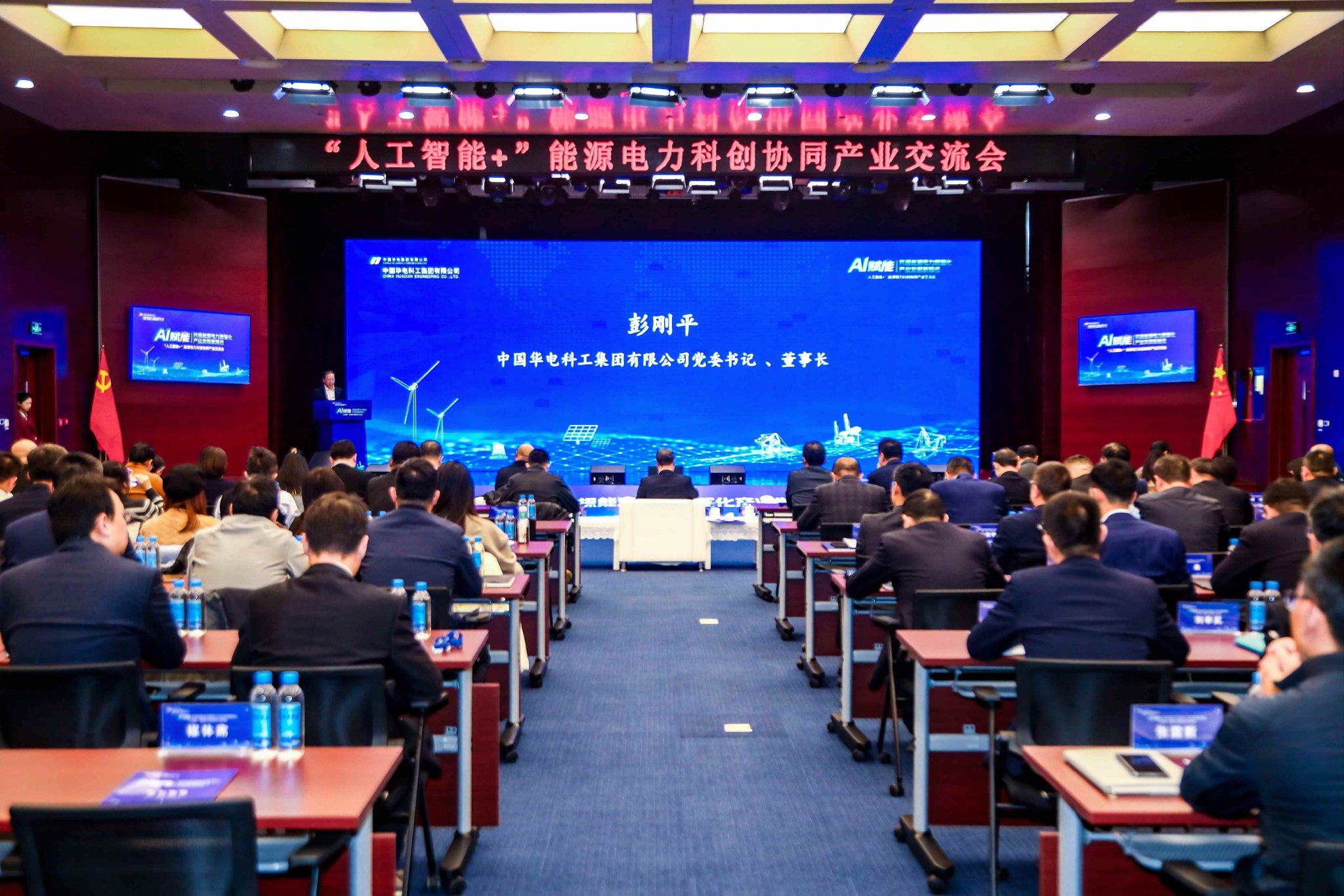
Core Viewpoint - The conference focused on the integration of artificial intelligence (AI) with the energy and power sector, emphasizing the importance of AI in achieving carbon neutrality goals and enhancing energy security [1][2]. Group 1: AI Empowerment in Energy Sector - The integration of AI technology is seen as a key measure for building new power systems and addressing industry development bottlenecks [1]. - China Huadian Corporation is accelerating the development of the "AI+" industry, aiming to create a deep integration innovation ecosystem in the power sector [1][2]. Group 2: Collaborative Efforts and Core Areas - Huadian Science and Technology is actively promoting the "AI+" initiative in the energy sector, establishing a regular cooperation mechanism with universities, research institutions, and industry partners [2]. - The focus is on five core areas: planning and design, engineering construction, production operation and maintenance, equipment manufacturing, and safety management [2]. Group 3: Latest Achievements and Innovations - The latest smart achievements include the "Zhikun" series development platform and the "Yuanchu" series digital tools, which cover 90% of Huadian's main business areas [4]. - These innovations incorporate advanced technologies such as natural language processing, computer vision, and generative AI to support the digital transformation of energy and power enterprises [4]. Group 4: Establishment of AI Laboratory - The establishment of the Huadian AI Laboratory marks a significant step in building a high-level AI research and development system [4]. - The laboratory will focus on the deep integration of AI core technologies with energy and power business scenarios, conducting forward-looking and leading technology research [4]. Group 5: Industry Consensus and Future Direction - The conference served as an efficient platform for industry collaboration, fostering consensus on digital transformation and injecting new momentum into the high-quality development of the power industry [4]. - Huadian aims to be a leader in the digital transformation of the energy and power sector, focusing on technology frontiers and scene innovation [4].
绿色智造 双碳引领 数智未来-全国炊具行业第三十届信息交流会暨第五届中国炊具技术大会召开
Xin Lang Cai Jing· 2025-12-04 10:01
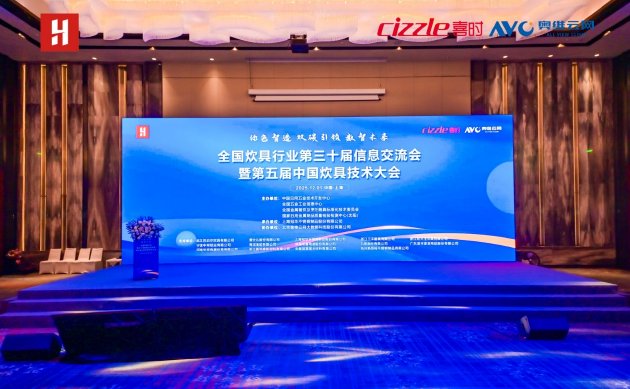
Core Insights - The conference focused on the theme "Green Manufacturing, Dual Carbon Leadership, and Intelligent Future," aiming to explore new paths for the transformation and upgrading of the cookware industry [1] Group 1: Leadership Addresses - The Deputy Mayor of Chongming District, Xu Huiquan, highlighted the importance of light industrial kitchenware in Chongming's advanced manufacturing system and invited entrepreneurs to collaborate in talent cultivation and technological innovation [3] - Huang Yong, General Manager of Shanghai Guanhua Stainless Steel Products Co., emphasized the significance of green manufacturing and the need for industry consensus during the transformation period [5] - Guo Meide, President of Beijing Aowei Cloud Network, noted the industry's shift from functional satisfaction to experiential upgrades, driven by health concepts and policy guidance [7][8] Group 2: Industry Insights and Trends - Bi Zhitao, Director of the China Daily Hardware Technology Development Center, stated that the cookware industry has reached a scale of one trillion yuan and is at a critical juncture for green and digital transformation [10] - Jin Lixin, Vice President of the China Hardware Products Association, reported that the industry output value for 2023 is 100.51 billion yuan, with exports in the first three quarters of 2025 reaching 10.383 billion USD, a year-on-year increase of 1.09% [13] - Yu Ying, an industry researcher, projected the industry output value to reach 104.7 billion yuan in 2024, with a growth rate of 4%, and highlighted the challenges of high labor costs and market homogenization [15] Group 3: Corporate Practices and Innovations - Chen Helin, Chairman of Aishida Co., shared insights on the industry's evolution from "Made in China" to "Intelligent Manufacturing," urging companies to focus on innovation and quality standards [22] - Wang Zhenhua, General Manager of Zhejiang Supor Co., analyzed market trends and emphasized the need for differentiated innovation to meet new consumer demands [24] - Huang Huafeng, Chairman of Shanghai Guanhua, discussed the importance of integrating environmental concepts into the entire production process for sustainable development [27] Group 4: Technological Empowerment - Shan Zhihua, Deputy Secretary-General of the National Standardization Technical Committee, introduced the development of various national and industry standards to support the cookware sector [29] - Shang Guiqin, a member of the Food Safety National Standard Review Committee, emphasized the importance of compliance management for food contact materials [31] - Wang Yuru, from Gansu Jiuquan Steel Group, highlighted the innovative applications of 400 series stainless steel in the cookware industry, focusing on antibacterial and environmentally friendly materials [34] Group 5: Conclusion and Future Directions - Zhang Dongli, Chairman of the China Hardware Products Association, recommended that companies strengthen their domestic market presence while exploring emerging overseas markets in Southeast Asia and the Middle East [39] - The conference concluded with a call for collaboration among industry associations, manufacturers, and testing institutions to foster a healthy market ecosystem and seize future development opportunities [40]

奥飞数据:公司始终关注数据中心绿色节能技术的发展和应用
Zheng Quan Ri Bao Wang· 2025-12-04 09:42
Core Viewpoint - The company is committed to the development and application of green energy-saving technologies in data centers, aiming to enhance energy efficiency and promote carbon neutrality goals [1] Group 1 - The company actively monitors advancements in green energy-saving technologies for data centers [1] - The company adapts energy-saving technologies and equipment based on its actual situation and customer needs [1] - The focus is on improving data center efficiency while supporting the "dual carbon" objectives [1]

冰轮环境(000811) - 000811冰轮环境投资者关系管理信息20251204-1
2025-12-04 08:56
Group 1: Business Overview - The company focuses on providing advanced system solutions and lifecycle services in the energy and power sectors, with products including compressors and heat exchangers, managing temperature control and energy efficiency across a range of -271°C to 200°C [3] - Key applications of the company's products span various industries, including food processing, cold chain logistics, industrial cooling systems, and commercial air conditioning [3] Group 2: Financial Performance - The low-temperature refrigeration segment experienced a slight decline in revenue during the first three quarters, with the decrease narrowing each quarter; however, the special air conditioning and thermal management segments showed year-on-year growth [4] Group 3: Data Center Applications - The company’s subsidiaries provide cooling equipment for data centers, including liquid cooling systems, with notable projects in China and partnerships in North America, Australia, Southeast Asia, and the Middle East [4][6] - The Dunham-Bush company has a 131-year history and offers products recognized in the national green data center technology catalog [4] Group 4: Nuclear Power Industry - The company is actively involved in the nuclear power sector, focusing on core applications such as nuclear island cooling and heat recovery, with innovative technologies developed for safe and efficient energy use [6][7] - Recent projects include serving multiple nuclear power stations across China and developing technologies for small modular reactors [7] Group 5: Thermal Management and Carbon Neutrality - The company is committed to thermal management solutions, particularly through its subsidiary, which has been recognized as a national-level "little giant" enterprise, holding 96 patents and 33 software copyrights [8] - The company’s technologies, including heat recovery and high-temperature heat pumps, are positioned to support carbon reduction initiatives, aligning with national policies on carbon neutrality [8]

宁波世茂能源股份有限公司关于2025年第三季度业绩说明会召开情况的公告
Zhong Guo Zheng Quan Bao - Zhong Zheng Wang· 2025-12-04 08:36
Core Viewpoint - The company reported a decline in financial performance for the first three quarters of 2025, with a focus on future industry development prospects in the context of global carbon neutrality and energy transition initiatives [2][4]. Financial Performance - For the first three quarters of 2025, the company achieved operating revenue of 234.99 million yuan, a year-on-year decrease of 12.38% - The net profit attributable to the parent company was 117.16 million yuan, down 5.89% year-on-year - The net profit after deducting non-recurring gains and losses was 78.53 million yuan, a significant decline of 29.51% year-on-year, primarily due to decreased demand from surrounding heating users and a drop in steam sales volume [2][4]. Industry Development Outlook - The company highlighted several key points regarding the future of the industry: 1. Promotion of clean and efficient coal utilization and acceleration of green and low-carbon energy transition 2. Development of new productive forces and transformation of renewable energy towards combined heat and power generation 3. Construction of a new power system to achieve clean and low-carbon energy transition [3][4]. Company Operations and Strategy - The company operates as a combined heat and power generation enterprise, primarily using municipal waste and coal as raw materials to provide industrial steam and electricity - The company emphasizes technological innovation and management model innovation to reduce costs and improve efficiency, aiming for high-quality development while ensuring safe and environmentally friendly production [5]. Shareholder Information - As of the end of the third quarter of 2025, the company had a total of 9,804 shareholders [4].

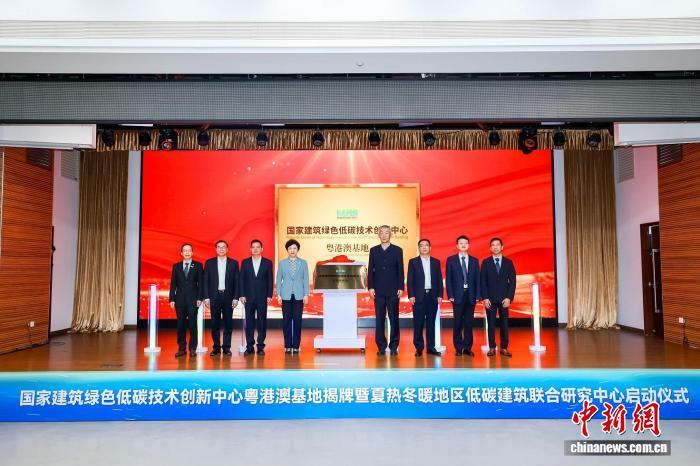
“国字号”双平台落地广东 助大湾区壮大绿色建筑产业链
Zhong Guo Xin Wen Wang· 2025-12-04 07:27
Core Points - The establishment of the Guangdong-Hong Kong-Macao Base of the National Green Low-Carbon Technology Innovation Center marks a significant step in promoting low-carbon transformation in the construction sector within the Guangdong-Hong Kong-Macao Greater Bay Area [3][4] - The center aims to create a high-level research platform focusing on key technological breakthroughs, resource sharing, and achievement transformation to support the low-carbon transition in the construction industry [3][4] Group 1 - The Guangdong-Hong Kong-Macao Base is the first national-level technology innovation center in China's "dual carbon" field [3] - The base is co-established by the National Innovation Center and the Guangdong Provincial Academy of Building Sciences, emphasizing collaboration in research and development [3][4] - The launch of the Joint Research Center is a crucial step in connecting national strategies with regional practices and industrial implementation in green low-carbon construction [4] Group 2 - The Joint Research Center is led by Guangdong JianKe Energy Conservation and Environmental Protection Technology Co., Ltd., in collaboration with nine other institutions from the Guangdong-Hong Kong-Macao and Fujian-Guangxi regions [4] - The initiative aims to build a national green low-carbon technology innovation network characterized by national platform leadership, regional platform collaboration, and industrial platform transformation [4] - The two platforms are expected to foster a competitive advantage in the Greater Bay Area's green low-carbon construction sector, focusing on technological leadership, unified standards, and industrial clustering [4]

云南能投:已投产发电新能源总装机容量达259.49万千瓦
Zhong Zheng Wang· 2025-12-04 05:18
Core Viewpoint - Yunnan Energy Investment (002053) has successfully achieved full-capacity grid connection for multiple wind power expansion projects, enhancing its renewable energy capacity and contributing to local economic development and carbon neutrality goals [1][2]. Group 1: Project Details - The total installed capacity of Yunnan Energy Investment's renewable energy projects has reached 2.5949 million kilowatts, comprising 2.4189 million kilowatts of wind power and 176,000 kilowatts of solar power [1]. - The Yongning Wind Power Expansion Project (Luxi Area) has a total installed capacity of 235,000 kilowatts, with an expected annual grid electricity generation of 51,806 million kilowatt-hours and an equivalent full-load hours of 2,205 hours [1]. - The Yongning Wind Power Expansion Project (Mile Area) has a total installed capacity of 230,000 kilowatts, with an expected annual grid electricity generation of 52,900 million kilowatt-hours and an equivalent full-load hours of 2,300 hours [1]. - The Tongquan Wind Power Expansion Project has a total installed capacity of 131,250 kilowatts, with an expected annual grid electricity generation of 30,349 million kilowatt-hours and an equivalent full-load hours of 2,312 hours [2]. Group 2: Strategic Implications - The full-capacity grid connection of these projects aligns with national and provincial energy development strategies, promoting the establishment of a new power system dominated by renewable energy [2]. - This expansion is expected to strengthen the company's core business in renewable energy, enhancing its competitiveness and positively impacting its operating performance in 2025 [2]. - The projects are also anticipated to contribute to local economic development and support Yunnan Province's carbon neutrality goals [2].

上海开展绿色外债业务试点 3家“双碳”重点企业率先签约“绿色外债”
Jin Rong Shi Bao· 2025-12-04 03:12
据了解,绿色外债业务试点政策优化了符合条件非金融企业的跨境融资宏观审慎管理,允许专项用于绿 色发展或低碳转型项目的外债资金在统计跨境融资余额时,可占用更少的外债额度,精准支持企业借用 外债扩大投资绿色发展或低碳转型项目,提升全球资源要素在我国绿色低碳发展领域的配置效能。 记者了解到,为下好绿色外债业务试点"先手棋",国家外汇管理局上海市分局前期充分发挥"外汇局+银 行+企业"合力,夯实管理基础,提高宣传质效,并主动对接"双碳"产业融资需求,提前做好绿色外债项 目储备,引导企业用好用足试点政策,实现跨境融资降本增效。该局还将不断拓展绿色外债的产品分 类,支持银行和企业向绿色债券、绿色银团等多层次、多元化的绿色金融产品体系发展,丰富试点政策 业务内涵,并不断总结试点经验,稳妥有序增量扩面,以惠企利民的实际行动为上海"双碳"产业高质量 发展注入绿色金融新动能。 在首批试点业务中,中国银行上海市分行为上海某智能供应链企业完成1500万美元绿色外债签约登记, 企业所借资金用于建立华东运营总部绿色仓储项目,该项目将提升长三角科创走廊智慧供应链产业发展 水平。企业从申请到办结绿色外债签约登记并实现提款,在一个工作日内全部完 ...