
价值创造

Search documents
五步组合论:更适合中国商业的管理智慧
Sou Hu Cai Jing· 2025-10-04 11:54
Core Insights - The essence of leadership lies in the ability to inspire and energize a team, creating a palpable change in the atmosphere without the need for extensive verbal communication [4][8]. - The "Five-Step Combination Theory" is a management methodology tailored for the Chinese business context, emphasizing the importance of people in the management process [5][6]. Group 1: Leadership and Management - Leadership is characterized by a unique energy that can transform the environment, influencing team morale and direction [8]. - The Five-Step Combination Theory focuses on human elements, starting with selecting the right managers and extending to team building, strategy development, market competitiveness, and value creation [9][11]. Group 2: Importance of Selection - Selecting the right individuals is more critical than merely managing them; a cohesive team is essential for success [11]. - The selection criteria for managers should encompass ten dimensions, with a particular emphasis on "learning self-reflection" and "passionate pursuit" as core attributes [11][12]. Group 3: Strategic Foundations - True strategy is rooted in values and beliefs rather than just documents and numbers; it is essential for leaders to understand the mission and purpose of their organization [13][14]. - The execution of strategy is closely tied to the people chosen to implement it, making human selection a pivotal factor in strategic success [14]. Group 4: Market Competitiveness - Modern market competitiveness is increasingly driven by technology and innovation, rather than traditional cost advantages or differentiation alone [16][17]. - Companies must leverage technological capabilities in various operational aspects, such as supply chain management and customer engagement, to maintain a competitive edge [18][19]. Group 5: Innovation and Culture - A culture that allows for trial and error is essential for fostering true innovation; failure should be viewed as a learning opportunity rather than a setback [20]. - Entrepreneurial spirit involves a balance of realistic problem assessment and optimistic leadership to navigate challenges [20]. Group 6: Value Creation - Value creation extends beyond financial metrics to include contributions to society, employee satisfaction, and customer experiences [22]. - The ultimate goal of the Five-Step Combination Theory is to achieve holistic value creation that enhances the well-being of all stakeholders involved [22]. Conclusion - The Five-Step Combination Theory represents a flexible mindset rather than a rigid process, emphasizing the importance of starting with people and ending with value [24]. - Effective leadership is defined by the ability to inspire voluntary followership, creating a dynamic and motivated team environment [25].

国务院国资委:国资央企要着力抓好稳健经营
Xin Hua She· 2025-10-04 03:55
Core Viewpoint - The State-owned Assets Supervision and Administration Commission (SASAC) emphasizes the importance of maintaining strategic focus and enhancing five key values to support stable employment, enterprises, markets, and expectations [1][2]. Group 1: Five Key Values - SASAC has introduced the concept of "five key values" which include increasing value-added, functional value, economic value-added, revenue and value-added from strategic emerging industries, and brand value [1]. - The aim is to establish a clear direction for value creation and accelerate the development of central enterprises with higher quality, efficiency, and contributions [1]. Group 2: Operational Strategies - Central enterprises are encouraged to optimize operational strategies, focus on internal potential, and strive for cost reduction and efficiency improvement [1]. - There is a strong emphasis on optimizing investment structures to lead high-value growth through quality investments [1]. Group 3: Competitive Landscape - SASAC calls for a resolute stance against "involutionary" competition, advocating for differentiated development and brand competition to guide the industry towards healthy, positive, and sustainable growth [1]. Group 4: Risk Management - The importance of strengthening risk prevention measures is highlighted, including the establishment of a regular risk monitoring and early warning mechanism, and effective management of key business risks [1]. Group 5: Economic Performance - Central enterprises have effectively responded to various risks and challenges this year, with steady improvements in value creation, enhanced development momentum, and strong supply guarantees, leading to a stable and positive economic performance [2].
Irenic Issues Presentation Detailing Multiple Pathways to Reverse Underperformance and Accelerate Value Creation at Workiva
Businesswire· 2025-09-29 19:03
Core Insights - Irenic Capital Management, LP, a significant shareholder of Workiva, Inc., has approximately 2% of the Company's outstanding shares and has issued a presentation with actionable recommendations to address the Company's significant share price underperformance relative to peers [1] Group 1 - Irenic Capital Management believes that Workiva is a high-quality business with market-leading products [1]

中电工程稳居“中国工程设计企业60强”榜首
Zheng Quan Ri Bao Wang· 2025-09-29 07:45
Core Insights - China Electric Power Engineering Consulting Group Co., Ltd. (referred to as "China Electric Engineering") ranked first in the "Top 60 Engineering Design Enterprises in China" for the sixth consecutive year [1] - In the "Top 80 Contractors in China," China Electric Engineering improved its ranking to ninth place, with its subsidiaries also making notable appearances in the rankings [1] - The company ranked first in the "2025 Most Internationally Expansive Engineering Design Enterprises" and fourth in the "2025 Most Internationally Expansive Contractors" [1] Group 1 - China Electric Engineering has implemented the directives from the State-owned Assets Supervision and Administration Commission, focusing on optimizing industrial layout and enhancing technological innovation [1] - The company aims to achieve steady growth in quality, efficiency, and effectiveness, laying a solid foundation for the completion of the 14th Five-Year Plan and the initiation of the 15th Five-Year Plan [1] - The subsidiaries of China Electric Engineering, including Northwest Institute, Guangdong Institute, Central South Institute, Southwest Institute, and Jiangsu Institute, ranked 40th, 45th, 61st, 67th, and 74th respectively in the "Top 80 Contractors in China" [1] Group 2 - The company is committed to foundational stability through "integrity," innovation for structural support, practical efforts for quality and efficiency improvement, and proactive development [2] - China Electric Engineering aims to lead in technological innovation and value creation while addressing the energy revolution [2] - The company is focused on achieving its dual business and innovation goals to contribute significantly to building a world-class enterprise [2]

山东能源望田煤业:以思想破冰 引领全员创效
Zhong Guo Neng Yuan Wang· 2025-09-24 05:10
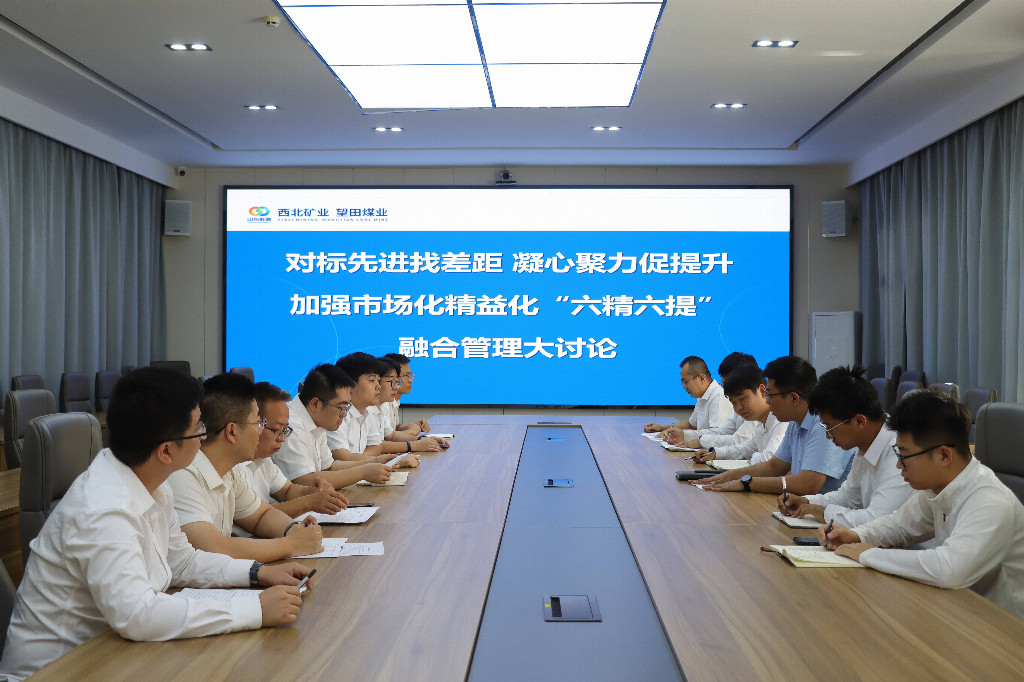
Core Insights - The company is focusing on transforming advanced management experiences into practical outcomes to enhance efficiency and break through existing bottlenecks [1][3] - A discussion on benchmarking against advanced practices is being held to identify gaps and promote a proactive mindset towards value creation [3][4] Management Optimization - The company is addressing key issues such as "insufficient benchmarking and limited thinking" through self-analysis and advanced comparisons, aiming to find breakthrough points for management optimization and efficiency enhancement [4] - Specific improvement directions include optimizing transportation costs and enhancing equipment efficiency, with a commitment to implement at least one lean improvement project per quarter and collect a minimum of 20 self-improvement suggestions monthly [4][6] Implementation of Lean Management - The company is actively converting improvement ideas into actions, focusing on upgrading transportation systems and optimizing resource utilization, with significant expected savings and revenue increases from specific projects [6][10] - For instance, the centralized transportation system in the second mining area is projected to save 2,188 meters in transportation distance and reduce costs by over 900,000 yuan, while another project is expected to recover 57,000 tons of coal and generate an additional revenue of over 3 million yuan [6] Employee Engagement and Performance - The company emphasizes the integration of the "Six Precision and Six Enhancements" management approach into frontline production to achieve cost reduction and efficiency improvement through full employee participation [7][10] - Employees are incentivized based on their work output, with potential earnings increasing significantly through enhanced productivity measures [8] Continuous Improvement and Benchmarking - The company is committed to continuous improvement by optimizing work processes and enhancing operational efficiency, achieving a 10% increase in work efficiency and a 28.6% improvement in excavation efficiency through the use of advanced machinery [10] - Leadership stresses the importance of deep benchmarking against industry leaders to uncover not just surface-level differences in technology and efficiency, but also deeper issues in thinking patterns, management philosophies, and execution capabilities [10]
围裙CEO的商业智慧:从一盘猪头肉看京东的本地生活突围
Sou Hu Cai Jing· 2025-09-17 07:40
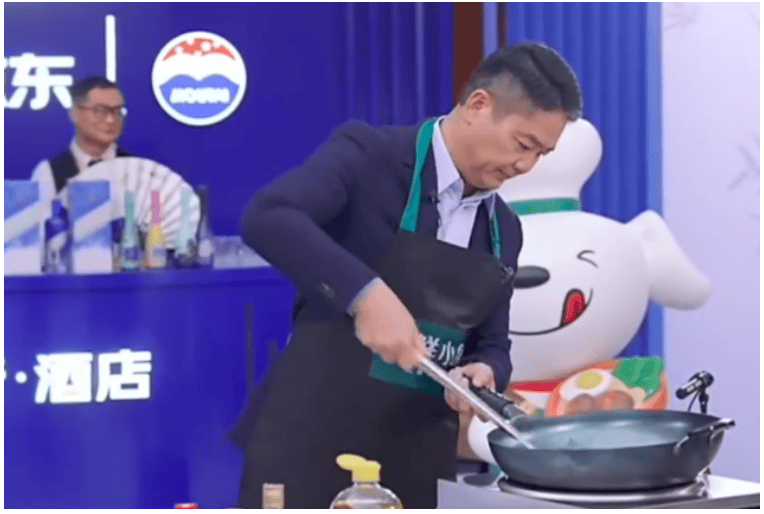
Core Insights - The live cooking event featuring Liu Qiangdong is a strategic move by JD.com to enhance its local lifestyle services, blending user engagement, ecosystem building, and strategic differentiation [1][3]. Group 1: Cultural Integration and Brand Strategy - The choice of "Huang Gou Zhutou Rou," a traditional dish with a 300-year history, reflects JD.com's deep understanding of local culture and its commitment to integrating cultural elements into its business model rather than engaging in price wars [3]. - Liu Qiangdong's humorous remarks during the event highlight JD.com's ability to maintain a relaxed and humorous brand image amidst fierce competition, emphasizing the importance of personalized brand representation over cold commercial declarations [3][4]. Group 2: Differentiation in Business Strategy - JD.com’s declaration of not engaging in price wars reveals its differentiated strategy in the hotel and travel sector, focusing on long-term ecological balance rather than short-term profit maximization through squeezing hotel operators [3]. - The "Seven Fresh Kitchen" initiative connects JD.com's 800 million high-spending users with the primary clientele of four-star hotels, creating a virtuous cycle of "food attraction to travel conversion," which is more persuasive than traditional advertising [3]. Group 3: Humanized Brand Communication - Liu Qiangdong's appearance as a chef breaks down barriers between corporate leaders and consumers, fostering a sense of relatability and human connection, which is essential for modern business leaders [4]. - The event signifies a shift in commercial competition from mere price battles to a focus on value creation, as more business leaders engage authentically with users [4].

刘强东直播炒菜,并喊话:企业家不要变成仇人
2 1 Shi Ji Jing Ji Bao Dao· 2025-09-16 14:44
Group 1: Core Insights - Liu Qiangdong emphasized the importance of maintaining healthy competition among private enterprises, advocating for collaboration and mutual respect rather than personal animosities [1] - The launch of "Qixian Xiaochu" is expected to enhance consumer trust and increase order volumes in the local restaurant industry, with daily orders reaching at least 1,500 within a two-month period [3] - The company aims to address the high commission rates of 25% charged by existing delivery platforms, which can compromise food safety and profitability for restaurants [3] Group 2: Business Model and Strategy - Liu Qiangdong reflected on his early entrepreneurial experiences, highlighting the need for transparency in business practices, which led to the establishment of a new pricing model for products [2] - The company transitioned from being a major seller of computers and accessories to becoming the largest home appliance retailer in China by 2016, despite initial resistance from the board [2] - The focus on quality and fair pricing is seen as a way to uplift the industry, with a call for platforms to share profits more equitably with stakeholders [1]
金洲管道:公司始终坚持以价值创造为核心
Zheng Quan Ri Bao Wang· 2025-09-15 13:45
证券日报网讯 金洲管道(002443)9月15日在互动平台回答投资者提问时表示,公司始终坚持以价值创 造为核心,专注发展当前主业,并积极寻找合适的投资机会,以开拓新的增长点,构建第二增长曲线。 目前,公司已组建专项团队,就第二主业的发展规划开展深入研究,正在进一步完善相关规划纲要。待 方案成熟后,公司将及时提交董事会审议,并严格按照规定履行信息披露义务。 ...

金洲管道:公司会始终以价值创造为核心导向
Zheng Quan Ri Bao Wang· 2025-09-15 13:41
证券日报网讯金洲管道(002443)9月15日在互动平台回答投资者提问时表示,公司会始终以价值创造 为核心导向,聚焦当前主营业务,寻找适当投资机会,开辟新的增长点构建第二增长曲线;公司确实已 组织专门团队对第二主业的发展规划进行研究,并正在完善相关发展规划纲要,待完善好后会及时汇报 董事会审议,并严格履行信息披露义务。 ...
浙江工商大学伍蓓:从“流量内卷”转向“价值创造”的破局之道
Sou Hu Cai Jing· 2025-09-11 03:41
Core Viewpoint - The platform economy is currently facing challenges such as "low-price competition" and "subsidy wars," necessitating a comprehensive investigation to promote healthy development in the sector [1]. Group 1: Investigation and Analysis - The "anti-involution" investigation action initiated by the Digital Economy New Media & Think Tank aims to address the issues within the platform economy [1]. - The investigation involves collaboration with experts from various fields, including professors, analysts, and investors, to deeply analyze the "involution-style" competition in the platform economy [8][24]. Group 2: Characteristics of Involution in Platform Economy - Involution in the platform economy manifests in three main aspects: 1. Homogeneous price wars leading to a sharp decline in industry profit margins, creating a dilemma for merchants [13]. 2. Rising customer acquisition costs, with some sellers spending up to 35% of sales on advertising while conversion rates decline [13]. 3. Loss of brand value due to over-reliance on low-price strategies, resulting in poor supply chain quality and insufficient innovation [13]. Group 3: Solutions to Break the Involution - The platform economy must shift from a "traffic algorithm" to an "industry algorithm," focusing on digitalizing industry capabilities and improving supply chain efficiency [15]. - The proposed solutions include: 1. **Technical Drive**: Emphasizing innovation and increasing investment in emerging technologies like big data and AI [16]. 2. **Integrated Development**: Enabling platforms to empower small and medium-sized enterprises by lowering digitalization barriers and fostering collaborative models [17]. 3. **Global Openness**: Expanding international markets and establishing trade standards to facilitate cross-border data flow and compliance [19]. Group 4: Focus Areas of the Investigation - The investigation will focus on various types of platforms, including: 1. Retail e-commerce platforms such as JD.com, Taobao, Pinduoduo, and Douyin [30]. 2. Local life (instant retail) platforms like Meituan and Ele.me [30]. 3. Cross-border e-commerce platforms including Amazon and SHEIN [30]. 4. Ride-hailing platforms such as Didi and Cao Cao [30]. 5. Online travel platforms like Ctrip and Qunar [30].
