债券收益率

Search documents
欧债收益率普遍下行,英国10年期国债收益率下行3.5个基点
Sou Hu Cai Jing· 2025-08-28 23:48
Core Viewpoint - European bond yields generally declined on August 28, with notable decreases in various countries' 10-year government bonds [1] Group 1: Bond Yield Changes - The UK 10-year government bond yield decreased by 3.5 basis points to 4.698% [1] - The French 10-year government bond yield fell by 4.1 basis points to 3.475% [1] - The German 10-year government bond yield dropped by 0.7 basis points to 2.691% [1] - The Italian 10-year government bond yield declined by 3.6 basis points to 3.535% [1] - The Spanish 10-year government bond yield decreased by 2.5 basis points to 3.292% [1]
经济学家:特朗普解雇美联储理事库克可能打乱美国政府预算
Sou Hu Cai Jing· 2025-08-26 02:31
Core Insights - The independence of central banks has been a cornerstone of the global financial system since the early 1990s, and attempts to undermine the Federal Reserve's independence are concerning [1] Group 1 - The potential dismissal of Federal Reserve Governor Cook and the subsequent appointment of a new governor directly influenced by the President could negatively impact financial markets [1] - Such changes may lead to an increase in bond yields, which are crucial for managing U.S. government debt [1]


德国债券下跌,10年期国债收益率上涨5个基点至2.77%
Mei Ri Jing Ji Xin Wen· 2025-08-25 11:06
Group 1 - German bonds experienced a decline on August 25, with the 10-year government bond yield rising by 5 basis points to 2.77% [1]
信用分析周报:利差调整后,或存补涨机会-20250825
Hua Yuan Zheng Quan· 2025-08-25 01:45
Report Industry Investment Rating - The report does not explicitly mention the industry investment rating [1][2][3] Core Viewpoints - The report continues to expect the 10Y Treasury yield to range between 1.6% - 1.8% in the second half of 2025. Currently, the 10Y Treasury yield is close to 1.8%, presenting high cost - effectiveness. It anticipates the 10Y Treasury yield to return to around 1.65% in the next six months and the 5Y national and joint - stock second - tier capital bonds to fall below 1.9%. The growth of wealth management scale is favorable for medium - and short - term credit bonds [3][40] - In 2025, the bond market lacks a trend - based market. In the bond market oscillation during the low - interest - rate era, investment is challenging, and it is necessary to seize band opportunities on the left side. When the stock market adjusts, bond yields may decline rapidly, and right - side investment also has high difficulty [3][40] Summary by Directory 1. Primary Market 1.1 Net Financing Scale - This week, the net financing of traditional credit bonds (excluding asset - backed securities) was 1435 billion yuan, a week - on - week increase of 1298 billion yuan. The total issuance was 3967 billion yuan, up 764 billion yuan week - on - week, and the total repayment was 2531 billion yuan, down 535 billion yuan week - on - week. The net financing of asset - backed securities was 132 billion yuan, a week - on - week decrease of 167 billion yuan [8] - By product type, the net financing of urban investment bonds was 402 billion yuan, up 72 billion yuan week - on - week; the net financing of industrial bonds was - 256 billion yuan, down 428 billion yuan week - on - week; the net financing of financial bonds was 1289 billion yuan, up 1654 billion yuan week - on - week [8] - In terms of issuance and redemption quantity, the issuance of urban investment bonds increased by 15 and the redemption decreased by 6 this week; the issuance of industrial bonds decreased by 4 and the redemption increased by 7; the issuance of financial bonds increased by 17 and the redemption decreased by 9 [9] 1.2 Issuance Cost - The weighted average issuance rates of AA industrial bonds and AA+ financial bonds decreased this week, while the issuance costs of other bonds with different ratings and types increased. Specifically, the issuance rate of AA - rated industrial bonds decreased by 46BP compared with last week, mainly due to the low - rate issuance of "25 Ningbo Construction SCP001" and "25 Beijing Electronic City SCP002". The issuance costs of AA and AA+ urban investment bonds and industrial bonds increased by more than 10BP compared with last week, and the issuance rates of other bonds with different ratings and types increased by no more than 10BP [15] 2. Secondary Market 2.1 Trading Volume - The trading volume of credit bonds (excluding asset - backed securities) increased by 811 billion yuan week - on - week. Among them, the trading volume of urban investment bonds was 2439 billion yuan, up 269 billion yuan week - on - week; the trading volume of industrial bonds was 2926 billion yuan, down 489 billion yuan week - on - week; the trading volume of financial bonds was 4876 billion yuan, up 1031 billion yuan week - on - week. The trading volume of asset - backed securities was 257 billion yuan, up 74 billion yuan week - on - week [16] 2.2 Turnover Rate - The turnover rate of credit bonds fluctuated this week. The turnover rate of urban investment bonds was 1.56%, up 0.17 pct week - on - week; the turnover rate of industrial bonds was 1.61%, down 0.27 pct week - on - week; the turnover rate of financial bonds was 3.25%, up 0.66 pct week - on - week; the turnover rate of asset - backed securities was 0.71%, up 0.21 pct week - on - week [17] 2.3 Yield - The yields of credit bonds with different maturities increased to varying degrees this week, and the adjustment range of some credit bond yields exceeded 10BP. For example, the yields of AA, AAA - and AAA+ credit bonds with maturities within 1Y increased by 4BP each; those with maturities of 3 - 5Y increased by 9BP, 7BP and 7BP respectively; those with maturities over 10Y increased by 5BP, 7BP and 9BP respectively [22] - Taking AA+ - rated 5Y bonds of each type as an example, the yields of different types of bonds increased to varying degrees. The yields of private - placement industrial bonds and perpetual industrial bonds increased by 6BP each; the yield of AA+ - rated 5Y urban investment bonds increased by 9BP; the yields of commercial bank ordinary bonds and second - tier capital bonds increased by 6BP and 8BP respectively; the yield of AA+ - rated 5Y asset - backed securities increased by 6BP [23] 2.4 Credit Spreads - Generally, the credit spreads of bonds with different industries and ratings mostly adjusted by no more than 5BP this week, and the credit spreads of a few industries compressed. Specifically, the credit spreads of AA - rated media and AAA - rated household appliances widened by 5BP each compared with last week; the credit spreads of AA+ - rated leisure services and machinery decreased by 5BP and 6BP respectively [23] 2.4.1 Urban Investment Bonds - In terms of maturity, the credit spreads of urban investment bonds with different maturities all adjusted this week. The credit spreads of 0.5 - 1Y, 1 - 3Y, 3 - 5Y, 5 - 10Y and over - 10Y urban investment bonds widened by less than 1BP, 3BP, 6BP, 7BP and 3BP respectively compared with last week [28] - By region, the credit spreads of urban investment bonds in most regions widened to varying degrees this week. For example, the credit spreads of AA - rated urban investment bonds in Shanxi and Anhui widened by 6BP each; the credit spread of AA+ - rated urban investment bonds in Inner Mongolia widened by 12BP; the credit spreads of AAA - rated urban investment bonds in Liaoning and Shaanxi widened by 7BP and 6BP respectively [29] 2.4.2 Industrial Bonds - This week, the industrial bonds with different maturities and ratings mostly adjusted, and the credit spreads of 3Y private - placement industrial bonds performed well and compressed. Specifically, the credit spreads of 3Y AAA -, AA+ and AA private - placement industrial bonds compressed by 4BP, 5BP and 2BP respectively compared with last week; the credit spreads of 10Y AAA -, AA+ and AA private - placement industrial bonds widened by 2BP, 4BP and 1BP respectively; the credit spreads of 3Y AAA - and AA+ perpetual industrial bonds widened by 3BP and 4BP respectively, and the credit spread of AA perpetual industrial bonds compressed by 2BP [32] 2.4.3 Bank Capital Bonds - This week, the credit spreads of 3Y bank Tier 2 and perpetual bonds compressed significantly, while the spreads of other maturities mostly widened slightly. Specifically, the credit spreads of 1Y AAA -, AA+ and AA second - tier capital bonds widened by 4BP, 4BP and 5BP respectively; the credit spreads of 3Y AAA -, AA+ and AA second - tier capital bonds compressed by 3BP, 2BP and 1BP respectively; the credit spreads of 1Y AAA -, AA+ and AA bank perpetual bonds compressed by 3BP each; the credit spreads of 3Y AAA -, AA+ and AA bank perpetual bonds compressed by 4BP each [34] 3. Bond Market News - This week, the implied ratings of 97 bond issues of 11 entities were downgraded. Among them, Zhuhai Gree Group Co., Ltd. involved 29 issues, CCCC Real Estate Group Co., Ltd. involved 17 issues, Shanghai Zhangjiang Hi - Tech Park Development Co., Ltd. involved 14 issues, Shenye Group Co., Ltd. involved 13 issues, and Shanghai Lujiazui (Group) Co., Ltd. involved 12 issues [2][37] 4. Investment Recommendations - This week, a total of 711.8 billion yuan of reverse repurchases and 220 billion yuan of treasury cash fixed - term deposits matured in the open market. The central bank carried out 2.077 trillion yuan of reverse repurchase operations, achieving a net injection of 1.2652 trillion yuan for the whole week. The DR001 closed at 1.45% on Friday, the same as the closing price on Monday. The yield of the 10 - year Treasury bond active bond continued to adjust under pressure from 1.7465% at the close last Friday to 1.78% at the close on 8/22, and the yield of credit bonds also adjusted under pressure [5][39] - Generally, the credit spreads of bonds with different industries and ratings mostly adjusted by no more than 5BP this week, and the credit spreads of a few industries compressed. The credit spreads of urban investment bonds with different maturities all adjusted; the industrial bonds with different maturities and ratings mostly adjusted, and the credit spreads of 3Y private - placement industrial bonds compressed; the credit spreads of 3Y bank Tier 2 and perpetual bonds compressed significantly, while the spreads of other maturities mostly widened slightly [5][39]
日债又陷抛售潮
Sou Hu Cai Jing· 2025-08-21 13:55
Core Viewpoint - Japan's bond market is experiencing a sell-off due to concerns over fiscal conditions and persistent inflation, leading to a surge in long-term government bond yields to their highest levels in a decade [1][3]. Group 1: Bond Yield Trends - The yield on Japan's 10-year government bonds rose to 1.61%, the highest since October 2008, while the 20-year yield reached 2.655%, the highest since 1999, and the 30-year yield climbed to 3.18%, nearing the historical high of 3.2% set in July [1][2]. - As of 8 PM Beijing time, the 10-year yield was reported at 1.611%, the 20-year yield at 2.645%, and the 30-year yield at 3.191% [1]. Group 2: Factors Influencing Bond Yields - The primary driver for the rise in long-term bond yields is investor expectations of new fiscal stimulus measures following the ruling coalition's loss in the July Senate elections, which will increase Japan's already high debt levels [2][3]. - Persistent inflation in Japan has raised the likelihood of interest rate hikes by the Bank of Japan, further pushing up bond yields [3][6]. Group 3: Foreign Investment Trends - In July, net purchases of Japanese government bonds by foreign investors dropped to 480 billion yen (approximately 3.3 billion USD), only one-third of the amount purchased in June [3][4]. - Despite high yields, foreign investor demand for Japanese bonds has waned since July, reflecting concerns over fiscal imbalances and the Bank of Japan's gradual exit from the bond market [6][8]. Group 4: Market Dynamics and Future Outlook - The bond market is facing a significant demand drop, described as "catastrophic," due to rising inflation and potential fiscal stimulus, which increases the burden on Japan's already high leverage [3][7]. - Experts suggest that if the sell-off continues, the Bank of Japan may intervene to stabilize the market, potentially through liquidity injections or adjustments to its monetary policy [8][9].

日债又陷抛售潮
21世纪经济报道· 2025-08-21 13:47
Core Viewpoint - Japan's bond market is experiencing a sell-off due to concerns over fiscal conditions and persistent inflation, leading to a surge in long-term government bond yields to their highest levels in a decade [1][3]. Group 1: Bond Yield Trends - On August 21, Japan's 10-year government bond yield rose to 1.61%, the highest since October 2008, while the 20-year yield reached 2.655%, a record since 1999, and the 30-year yield climbed to 3.18%, nearing the historical high of 3.2% set in July [1][2]. - As of 8 PM Beijing time, the 10-year yield was reported at 1.611%, the 20-year yield at 2.645%, and the 30-year yield at 3.191% [1]. Group 2: Factors Influencing Yield Increases - The primary driver for the rise in long-term bond yields is investor expectations of new fiscal stimulus measures following the ruling coalition's losses in the July Senate elections, which will increase Japan's already high debt levels [2][5]. - Persistent inflation in Japan has raised the likelihood of interest rate hikes by the Bank of Japan, further pushing up bond yields [3][5]. Group 3: Foreign Investment Trends - In July, net purchases of Japanese government bonds by foreign investors dropped to 480 billion yen (approximately 3.3 billion USD), only one-third of June's total, indicating a significant decline in demand [3][6]. - Despite earlier strong demand, the trend has shifted due to concerns over inflation exceeding targets and potential fiscal imbalances, compounded by the Bank of Japan's gradual exit from the bond market [6][8]. Group 4: Market Dynamics and Future Outlook - The bond market has faced a significant drop in demand, described as "disastrous," with both yield levels and bidding multiples reflecting this trend [5]. - Analysts suggest that the long-term outlook for Japanese government bond yields remains upward, influenced by the Bank of Japan's reduced bond purchases and the normalization of monetary policy [9][10]. - If the decline in bond prices continues, intervention from the Bank of Japan is likely, potentially through liquidity injections or adjustments to monetary policy [9][10].

周五晚上,他或许以一声巨响谢幕
凤凰网财经· 2025-08-21 12:54
Core Viewpoint - The upcoming Jackson Hole speech by Federal Reserve Chairman Jerome Powell is highly anticipated, as it marks his eighth and final address at this significant event, with potential implications for financial markets [1][4]. Group 1: Market Reactions to Past Speeches - Historical data indicates that after Powell's previous seven speeches at Jackson Hole, the average increase in the 10-year U.S. Treasury yield was 21 basis points, while the S&P 500 index averaged a decline of nearly 2% [1]. - In 2022, following Powell's speech warning about the potential "pain" from tightening policies, the S&P 500 index plummeted by 12%, the dollar surged by 5%, and the 10-year Treasury yield skyrocketed by 75 basis points [1]. - Significant increases in bond yields were also observed after speeches in 2018, 2021, and 2023, with the 2023 speech leading to a rise of over 20 basis points in yields [3]. Group 2: Current Economic Context - Market expectations for the Fed's September monetary policy are intensifying, with an 85% probability of a 25 basis point rate cut, despite inflation remaining approximately 1 percentage point above the Fed's 2% target [4]. - The theme of this year's Jackson Hole conference focuses on the labor market's transformation, with analysts noting that a low unemployment rate does not necessarily indicate a hawkish stance from the Fed [4]. - Historical trends suggest that a rising unemployment rate could prompt the Fed to shift towards a more accommodative policy quickly [4]. Group 3: Powell's Final Address - This speech is significant as it is Powell's last before his term ends in May next year, occurring during a tumultuous period for the Fed [4][5]. - There is speculation that Powell may use this opportunity to reflect on his tenure and the lessons learned from the pandemic, particularly regarding inflation control [5][7]. - The pressure from former President Trump regarding interest rate cuts adds complexity to Powell's potential messaging during this farewell address [5][7].

日本10年期国债收益率创2008年来新高,日央行或出手干预
2 1 Shi Ji Jing Ji Bao Dao· 2025-08-21 11:42
Core Viewpoint - Japan's bond market is experiencing a significant sell-off due to concerns over fiscal conditions and persistent inflation, leading to a surge in long-term government bond yields to their highest levels in a decade [1][2]. Group 1: Bond Yield Trends - On August 21, Japan's long-term government bond yields rose sharply, with the 10-year yield reaching 1.61%, the highest since October 2008 [1]. - The 20-year bond yield hit 2.655%, the highest since 1999, while the 30-year yield approached its historical high of 3.2% [1]. - As of 6 PM Beijing time, the 10-year yield was at 1.616%, the 20-year yield at 2.649%, and the 30-year yield at 3.197% [1]. Group 2: Factors Influencing Bond Yields - The primary driver behind the rising yields is investor expectations of new fiscal stimulus measures following the ruling coalition's loss in the July Senate elections, which will increase Japan's already high debt levels [1][2]. - Persistent inflation in Japan has raised the likelihood of interest rate hikes by the Bank of Japan, further pushing up bond yields [2]. - A significant drop in demand for Japanese bonds has been noted, with net purchases of 10-year and longer bonds by overseas investors falling to 480 billion yen (approximately 3.3 billion USD) in July, just one-third of June's purchases [2][3]. Group 3: Market Sentiment and Future Outlook - The bond market is facing a "disastrous" situation due to a substantial decline in demand, as indicated by both yield levels and bid-to-cover ratios [2]. - Analysts suggest that the combination of rising inflation and potential fiscal stimulus will increase the burden on Japan's already high leverage, contributing to the upward pressure on long-term bond yields [2]. - The current market sentiment reflects a preference for Japanese equities over bonds, indicating a shift in investor confidence amid concerns about fiscal risks [3]. Group 4: Central Bank's Role and Potential Interventions - The Bank of Japan's gradual exit from bond purchases has created a demand gap in the bond market, exacerbating the pressure on yields [2][5]. - Experts believe that if the sell-off continues, the Bank of Japan may intervene to stabilize the market, potentially through liquidity injections or adjustments to its monetary policy stance [6]. - Future movements in long-term bond yields will depend on the Bank of Japan's monetary policy direction, fiscal expansion pace, and global interest rate environment [6].
美股周二收盘点评:投资人谨慎选择,科技股领跌
Sou Hu Cai Jing· 2025-08-19 20:40
Group 1 - The core viewpoint is that Federal Reserve Vice Chair Bowman is considering succeeding Chairman Powell after his term ends next year and supports at least three interest rate cuts this year in response to President Trump's call to lower borrowing costs [1] - Interest rate futures indicate that the Federal Reserve is expected to cut rates twice this year, each by 25 basis points, with the first cut anticipated in September [1] - A key event this week is the Federal Reserve's annual symposium in Jackson Hole, Wyoming, from August 21 to 23, where Chairman Powell's remarks will be closely analyzed for insights on the economic and monetary policy outlook [1] Group 2 - Bond yields have decreased, while the dollar has seen a slight increase [1]
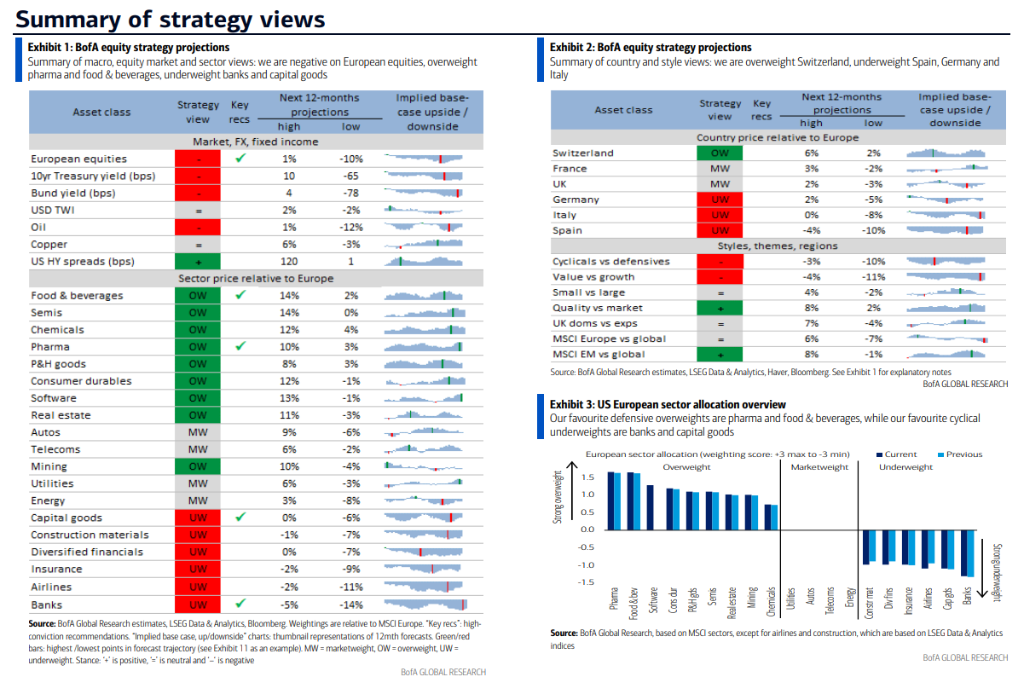
衰退式降息阴云笼罩,欧股牛市逻辑面临重估?
Hua Er Jie Jian Wen· 2025-08-18 06:38
Group 1 - The U.S. labor market is significantly slowing down, with the average employment growth over the past three months dropping to only 35,000, well below last year's levels, raising concerns about the Federal Reserve potentially implementing "bad rate cuts" in response to labor market deterioration rather than inflation decline [1] - European equities are expected to face approximately a 10% correction pressure, with defensive sectors likely to benefit from this environment [1] - The decline in bond yields is anticipated to lead to downward adjustments in earnings expectations and valuation multiples, resulting in a stock market downturn amid slowing economic growth [1] Group 2 - If central banks adopt a more dovish stance due to falling inflation ("good rate cuts"), the decline in risk-free rates may not lead to a corresponding rise in risk premiums, thus supporting market growth [5] - Conversely, if rate cuts are in response to labor market and broader economic weakness ("bad rate cuts"), risk premiums are likely to rise, leading to a decrease in stock market valuations during economic slowdowns [5] - The global composite PMI new orders are projected to decline from the current 52 points to 49 points by the first quarter of next year, indicating rising risk premiums and downward adjustments in EPS expectations [5][6] Group 3 - The Stoxx 600 index is projected to face about a 10% downside, potentially dropping to 490 points by early next year, with a year-end target of 520 points [8][14] - European cyclical sectors are expected to decline relative to defensive sectors, with value stocks projected to underperform growth stocks by about 10% [8] - The pharmaceutical and food & beverage sectors are viewed positively, while the banking and capital goods sectors are expected to lag due to their recent strong performance [17]