
全国统一电力市场体系

Search documents
全国电力市场交易机制灵活高效 交易电量规模再创新高
Jing Ji Ri Bao· 2026-02-02 00:10
在推动能源绿色转型方面,现货、中长期市场价格信号反映了不同时段、不同区域的电力供需关系,让 新能源在电力供应充足时段的环境价值、高峰时段的保供价值得到充分体现;辅助服务市场则进一步完 善了调节资源的价值实现机制,激励调节资源积极参与系统调节。 2025年,跨电网经营区常态化电力交易机制建立,在国家电网、南方电网分别组织电力交易的基础上, 建立了"网上电力商城",保障全国统一电力市场体系高效运行。迎峰度夏期间,南方区域首次送电支援 上海、浙江、安徽;10月,国家电网与南方电网首次以现货交易形式实现跨区电力调配。 三是绿色电力交易电量迅猛增长,达3285亿千瓦时,同比增长38.3%,规模达到2022年的18倍,多年期 绿电协议成交电量达600亿千瓦时,跨经营区常态化交易机制首次实现大湾区用户用上内蒙古绿电、长 三角用户引入广西绿电。同时,新能源全面参与市场,在交易中心注册的经营主体数量突破100万家。 全国统一电力市场体系为推进新型电力系统建设和经济社会发展提供了重要支持,发挥了多重作用。在 跨地区资源优化方面,西部丰富的清洁能源、北部充足的火电资源能够精准对接东部沿海、南部负荷中 心的用电需求,有效缓解了不同地 ...



能源供应保障能力有效提升(锐财经)
Ren Min Ri Bao Hai Wai Ban· 2026-02-01 22:56
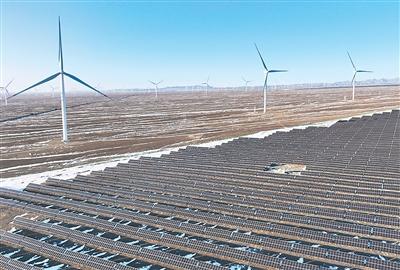
图为新疆生产建设兵团第六师北塔山牧场风光电场。近年来,当地深挖资源优势,利用荒山坡地大力发 展风光电产业,有力推动新能源产业高质量发展。 李华北摄(人民视觉) 国家能源局近日举行新闻发布会,介绍2025年全国能源形势。国家能源局发展规划司副司长邢翼腾在会 上表示,2025年,我国能源供应保障能力有效提升,供需总体宽松,多项重要政策举措密集出台,行业 健康有序发展,新型能源体系建设基础持续夯实,助力我国经济持续回升向好。 绿色低碳转型步伐加快 谈及2025年能源行业,邢翼腾重点介绍了3方面成效: 能源安全保障有力有效。2025年是"十四五"以来能源保供成效最好的一年。原煤生产保持稳定,规上工 业原煤产量同比增长1.2%。油、气产量双创历史新高,规上工业原油产量同比增长1.5%,规上工业天 然气产量同比增长6.2%。电力供应平稳有序,一批特高压直流输电工程投产送电,电力系统互补互济 水平持续提升。 绿色低碳转型步伐加快。有关部门制定出台新能源集成融合发展、促进新能源消纳和调控等一系列政策 措施,助力新能源发展提质增效。全年风电光伏新增装机超过4.3亿千瓦、累计装机规模突破18亿千 瓦,可再生能源发电装机占比超过六 ...
人民日报丨2025年全国电力市场交易电量达6.6万亿千瓦时
国家能源局· 2026-01-28 12:18
Core Viewpoint - The article highlights the growth and development of China's electricity market, projecting significant increases in electricity trading volume and the establishment of a unified national electricity market system by 2025 [2][3]. Group 1: Electricity Market Trading Volume - By 2025, the cumulative electricity trading volume in China is expected to reach 66,394 billion kilowatt-hours, representing a year-on-year growth of 7.4% and accounting for 64% of the total electricity consumption, an increase of 1.3 percentage points year-on-year [2]. - Within the trading scope, the intra-provincial trading volume is projected to be 50,473 billion kilowatt-hours, up by 6.2% year-on-year, while the inter-provincial and inter-regional trading volume is expected to be 15,921 billion kilowatt-hours, reflecting an 11.6% year-on-year increase [2]. Group 2: Trading Types and Mechanisms - The long-term trading volume is anticipated to be 63,522 billion kilowatt-hours, with spot trading volume at 2,872 billion kilowatt-hours. Green electricity trading is expected to reach 3,285 billion kilowatt-hours, showing a substantial year-on-year growth of 38.3% [3]. - A normalized electricity trading mechanism across power grid operating areas will be established by 2025, including the creation of an "online electricity mall" to ensure the efficient operation of the national unified electricity market system [3].

2025年电力市场交易电量达6.6万亿千瓦时
Ren Min Ri Bao Hai Wai Ban· 2026-01-26 23:45
2025年,跨电网经营区常态化电力交易机制建立,在国家电网、南方电网分别组织电力交易的基础上, 建立了"网上电力商城",保障全国统一电力市场体系高效运行。迎峰度夏期间,南方区域首次送电支援 上海、浙江、安徽;10月,国家电网与南方电网首次以现货交易形式实现跨区电力调配。 从交易范围看,省内交易电量50473亿千瓦时,同比增长6.2%;跨省跨区交易电量15921亿千瓦时,同 比增长11.6%,其中跨电网经营区交易电量34亿千瓦时。 从交易品种看,中长期交易电量63522亿千瓦时;现货交易电量2872亿千瓦时。绿电交易电量3285亿千 瓦时,同比增长38.3%。 本报北京1月26日电(记者丁怡婷)国家能源局近日发布数据显示,2025年,全国累计完成电力市场交 易电量66394亿千瓦时,同比增长7.4%,占全社会用电量比重64%,同比提高1.3个百分点。 ...
电力市场交易电量达6.6万亿千瓦时
Ren Min Ri Bao· 2026-01-26 21:47
本报北京1月26日电(记者丁怡婷)国家能源局近日发布数据显示,2025年,全国累计完成电力市场交易 电量66394亿千瓦时,同比增长7.4%,占全社会用电量比重64%,同比提高1.3个百分点。 从交易品种看,中长期交易电量63522亿千瓦时;现货交易电量2872亿千瓦时。绿电交易电量3285亿千 瓦时,同比增长38.3%。 2025年,跨电网经营区常态化电力交易机制建立,在国家电网、南方电网分别组织电力交易的基础上, 建立了"网上电力商城",保障全国统一电力市场体系高效运行。迎峰度夏期间,南方区域首次送电支援 上海、浙江、安徽;10月,国家电网与南方电网首次以现货交易形式实现跨区电力调配。 从交易范围看,省内交易电量50473亿千瓦时,同比增长6.2%;跨省跨区交易电量15921亿千瓦时,同 比增长11.6%,其中跨电网经营区交易电量34亿千瓦时。 ...

《电力中长期市场基本规则》解读:筑统一市场之基,行绿色发展之实
Zhong Guo Dian Li Bao· 2026-01-12 00:23
筑统一市场之基,行绿色发展之实 ——《电力中长期市场基本规则》解读 山西风行测控股份有限公司董事长 梁耀军 相关阅读 两部门发布《电力中长期市场基本规则》 不再人为规定分时电价水平和时段! 一、前言:新阶段、新规则、新格局 为深入贯彻落实党中央、国务院关于加快建设全国统一电力市场体系的决策部署,国家发展改革委、国 家能源局于近期正式印发《电力中长期市场基本规则》(以下简称"新规则"),自2026年3月1日起施 行,有效期5年。新规则全面替代了2020年发布的《电力中长期交易基本规则》及2024年发布的《绿色 电力交易专章》,是我国电力市场体系建设进入全面深化、提质增效新阶段的标志性文件。新规则不仅 是对原有规则的简单修订,更是站在构建新型电力系统、服务"双碳"目标的战略高度,对电力中长期市 场进行的一次系统性、前瞻性的顶层设计,旨在为未来五年乃至更长时期电力市场中长期交易的健康、 有序、高效发展绘制清晰的蓝图。 二、核心突破与重大改进:对比旧规则与专章的全面升级 (一)体系性重构:从"交易"到"市场"的维度跃升 改进点:新规则的名称从《电力中长期交易基本规则》变为《电力中长期市场基本规则》,虽仅一词之 差,但 ...
两部门明确:不再人为规定分时电价水平和时段
中国有色金属工业协会硅业分会· 2026-01-05 02:12
Core Viewpoint - The article discusses the newly released "Basic Rules for the Medium and Long-term Electricity Market," which aims to establish a unified national electricity market, regulate medium and long-term trading behaviors, and adapt to the needs of electricity reform and development [3]. Group 1: Market Structure and Trading Mechanism - The medium and long-term electricity market prices will be determined by market participants without third-party interference, except for government-regulated prices [29]. - The rules promote the integration of medium and long-term electricity markets with spot markets, ensuring a smooth connection in trading sequences, clearing, and market settlement [12]. - The market will allow for flexible and continuous trading to accommodate the volatility of renewable energy outputs and promote long-term power purchase agreements [12][29]. Group 2: Market Participants and Rights - All electricity users participating in the medium and long-term market can purchase their entire electricity volume through wholesale or retail markets, but cannot participate in both simultaneously [2]. - The rights of power generation companies include participating in the market according to rules, signing contracts, and receiving fair access to grid services [16]. - Electricity users have the right to participate in the market, sign contracts with power generation companies, and receive fair grid access services [20]. Group 3: Pricing Mechanism - The pricing mechanism for the medium and long-term market will be based on market formation, with no artificial price levels set for peak and valley periods for direct market participants [30]. - Green electricity trading prices will consist of energy prices and green environmental values, with specific regulations on how these values are treated in pricing [29]. - The government will set upper and lower limits on reported prices to prevent market manipulation and unhealthy competition [30]. Group 4: Transaction Organization and Execution - Cross-grid medium and long-term transactions will be organized by designated electricity trading centers, with a focus on integrating provincial and cross-regional trading [32]. - The trading platform will support continuous operations and must meet the requirements for daily trading activities [41]. - Transactions must be announced in advance, with specific timelines for different types of trading [43]. Group 5: Contract Management and Settlement - Market participants must sign medium and long-term trading contracts, which will serve as the basis for execution [64]. - The settlement process will occur monthly, with daily clearing and reference points established for market transactions [72]. - Green electricity trading will involve separate settlements for energy and environmental values, ensuring clarity in financial transactions [78].
《电力中长期市场基本规则》解读之三︱深化电力市场衔接与协同 推动全国统一电力市场体系建设
国家能源局· 2025-12-31 06:57
Core Viewpoint - The article discusses the revision and implementation of the "Basic Rules for the Medium and Long-term Electricity Market," which aims to enhance the construction of a unified national electricity market system, addressing issues such as market connectivity and coordination [3][4]. Group 1: Objectives and Achievements - The unified electricity market is a key component of deepening electricity system reform and building a new power system, with significant progress made in market construction, supply stability, and price mechanisms [4]. - The market has seen record trading volumes and compliance rates, with market prices becoming more market-driven, and various regions have implemented plans for integrating renewable energy [4]. Group 2: Institutional Innovations - The new rules categorize market participants, including distributed energy sources and virtual power plants, clarifying their rights and obligations throughout the trading process [5]. - A unified technical standard system is established to support data integration and facilitate cross-regional trading [5]. - The rules also standardize trading timelines, enhancing the efficiency of market operations by coordinating long-term and spot market transactions [5]. Group 3: Spatial and Temporal Mechanisms - The rules address the challenges of market segmentation by establishing a trading system that connects inter-provincial and intra-provincial markets, promoting resource sharing and flexible adjustments [6]. - A comprehensive market mechanism is created to accommodate the volatility of renewable energy output, enhancing the stability and liquidity of market operations [7]. Group 4: Collaborative Operations of Trading Varieties - The rules define green electricity trading as a distinct category, emphasizing the traceability of environmental value alongside electricity trading [8]. - There is a focus on integrating the medium and long-term electricity market with the spot market, establishing a price transmission and settlement mechanism to prevent market arbitrage [9]. Group 5: Summary and Future Outlook - The revision of the rules signifies a new phase in the standardized, systematic, and collaborative development of the medium and long-term electricity market [10]. - Future efforts should focus on further integrating market designs and enhancing the operational mechanisms among various market segments to support energy security and the achievement of carbon neutrality goals [10].

国家发改委、国家能源局重磅发布!
中国能源报· 2025-12-26 12:45
Core Viewpoint - The article discusses the release of the "Basic Rules for the Medium and Long-term Electricity Market" by the National Development and Reform Commission and the National Energy Administration, emphasizing the need for a unified national electricity market and the importance of balancing long-term supply and demand in the electricity sector [1][2]. Group 1: General Principles - The rules aim to accelerate the construction of a unified national electricity market system, standardize medium and long-term trading behaviors, and protect the legitimate rights and interests of market participants [5]. - The medium and long-term electricity market is defined as a market where registered entities conduct electricity trading for future delivery periods, including various time dimensions such as years, months, and weeks [5][6]. Group 2: Overall Requirements - The rules promote the integration of medium and long-term electricity markets with spot markets, ensuring smooth transitions in trading sequences, clearing, and market settlements [8]. - There is a focus on adapting to the volatility of renewable energy output, enabling flexible continuous trading, and promoting long-term power purchase agreements to stabilize consumption [8]. Group 3: Market Participants - Market participants include generation companies, electricity users, and new types of operators, all of whom must adhere to market rules and avoid manipulating prices [12][15]. - Generation companies have rights to participate in the market, sign contracts, and receive fair access to grid services [13]. Group 4: Trading Types and Price Mechanism - Medium and long-term trading includes various delivery periods, with different trading methods such as centralized trading and bilateral negotiations [25][30]. - The pricing mechanism for the medium and long-term market is determined by market forces, with specific provisions for green electricity trading [29][30]. Group 5: Trading Organization - Cross-regional electricity trading will be organized by designated electricity trading centers, with a focus on ensuring continuous operation and timely publication of trading calendars [32][34]. - The rules stipulate that key parameters for trading must be clearly defined before trading begins, and adjustments cannot be made during the trading process [44]. Group 6: Contract Management - All market participants must sign medium and long-term trading contracts, which serve as the basis for execution and help stabilize market expectations [64]. - Green electricity trading contracts must specify the traded electricity volume and pricing, including the environmental value of green electricity [66]. Group 7: Measurement and Settlement - The settlement of the medium and long-term market will generally occur on a monthly basis, with provisions for different types of settlements [72][76]. - Green electricity trading will involve separate settlements for energy and environmental value, ensuring compliance with sustainability pricing mechanisms [78]. Group 8: Information Disclosure - Market information will be disclosed periodically, with a retention period of at least two years, ensuring transparency for all market participants [81][83]. Group 9: Technical Support System - The electricity trading platform must include various functional modules to support market operations, ensuring interoperability and data exchange among different systems [84][88].
两部门发文优化集中式新能源发电企业市场报价
Ren Min Ri Bao· 2025-12-22 05:58
国家能源局有关负责人表示,将密切关注电力市场建设情况和新能源参与市场情况,根据新形势、新要 求动态修订通知,持续健全和完善电力市场相关政策,加快建设全国统一电力市场体系。 国家发展改革委、国家能源局近日印发《关于优化集中式新能源发电企业市场报价的通知(试行)》 (以下简称《通知》),推动构建符合新能源发电特性、分布格局、经营现状的市场报价方式,规范电 力市场运行秩序,提升电力资源优化配置效率。 相较于传统火电厂,新能源场站规模较小、布局分散、位置偏远、人员配置少。去年以来,新能源发电 企业通过多种渠道反映有关诉求,希望适度放开集中报价限制,更好适应新能源全面入市要求。《通 知》在遵循电力市场运行基本规则、不新增经营主体等前提下,逐步放开集中式新能源发电企业报价限 制,允许多个场站在同一固定场所提交报价信息。 《通知》一方面完善"疏"的方式条件,规范有序放开限制。首先是方式上允许集中报价,明确了集中报 价的定义、适用范围和相关要求等内容。其次是规模上加以必要限制,在多种方案测算基础上,确定集 中报价限制规模;另一方面,健全"堵"的机制手段,强化报价行为监管。主要包括健全事前备案机制、 完善事中监测手段、强化事后 ...