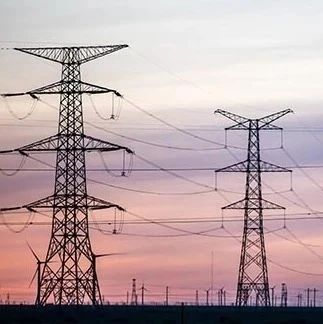
西电东送

Search documents
两部门推动光伏“反内卷”,国家重点专项支持全固态 | 投研报告
Zhong Guo Neng Yuan Wang· 2025-09-08 02:58
Group 1: Market Performance - The electric equipment and new energy sector increased by 7.39% this week, ranking first in terms of growth, outperforming the Shanghai Composite Index [1][2] - The solar index saw the largest increase of 14.51%, while the nuclear power index experienced the largest decline of 2.17% [1][2] Group 2: New Energy Vehicle Sales - In August 2025, new energy vehicle sales showed strong performance, with Li Auto achieving a record high of 57,066 units delivered, and a total of over 320,000 units delivered from January to August [3] - NIO delivered 31,305 units in August, marking a 49% month-on-month increase, while XPeng Motors also reached a historical high with 37,709 units delivered [3] - BYD maintained its market leadership with 373,626 units delivered in August and over 2.86 million units delivered from January to August [3] Group 3: Policy and Industry Development - The Ministry of Industry and Information Technology and the State Administration for Market Regulation issued a plan to promote stable growth in the electronic information manufacturing industry, targeting an annual revenue growth of over 5% in the photovoltaic sector from 2025 to 2026 [4] - The plan emphasizes the need to eliminate low-price competition in the photovoltaic industry and to guide local governments in orderly layout and capacity management [4] Group 4: Infrastructure Development - The Jinshang-Hubei ±800 kV UHVDC project has successfully completed a 168-hour trial run and is now operational, capable of transmitting 4 million kilowatts of electricity to Hubei [5][6] - Once fully operational, the project is expected to deliver approximately 40 billion kilowatt-hours of electricity annually [6]
走近大国工程丨塞上“风光”点亮三湘灯火探访我国首个获得核准的“沙戈荒”新能源外送工程
Zhong Yang Ji Wei Guo Jia Jian Wei Wang Zhan· 2025-09-08 00:24
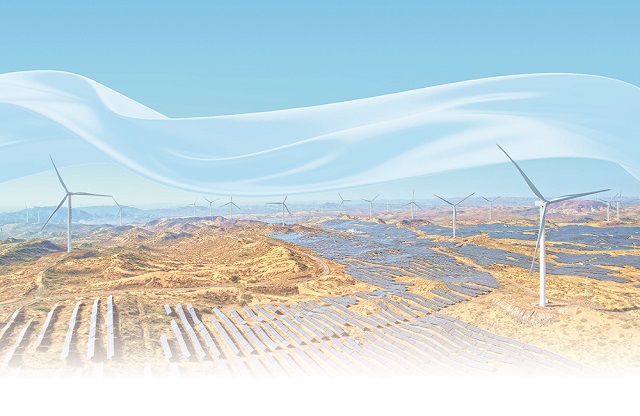
Core Viewpoint - The "Ningdian Ruxiang" project is China's first approved "desert and Gobi" renewable energy transmission project, which will deliver over 36 billion kilowatt-hours of electricity annually from Ningxia to Hunan, meeting the annual electricity needs of over 10 million households [6][17]. Group 1: Project Overview - The "Ningdian Ruxiang" project is a ±800 kV UHVDC transmission line that spans 1616 kilometers, connecting Ningxia with Hunan and crossing multiple provinces [8][9]. - The project is a key initiative under China's 14th Five-Year Plan for power development, with a total investment exceeding 380 billion yuan for UHV projects [8][9]. - The project aims to enhance the capacity for "West-to-East" electricity transmission and optimize the allocation of clean energy resources [6][8]. Group 2: Technical Aspects - The UHVDC transmission line has a capacity of 8 million kilowatts and a transmission loss rate of approximately 4% to 5%, significantly lower than conventional transmission lines [9][10]. - The project involves overcoming various technical challenges, including diverse geological conditions and the need for customized solutions for different terrains [10][11]. - All equipment for the project is domestically manufactured, with advanced technologies implemented to enhance efficiency and reliability [11][12]. Group 3: Renewable Energy Integration - The project has an installed capacity of 17.64 million kilowatts, with 13 million kilowatts coming from renewable sources, including 4 million kilowatts from wind and 9 million kilowatts from solar energy [14]. - Over 50% of the electricity transmitted to Hunan will be from renewable sources, contributing to a reduction of 16 million tons of carbon dioxide emissions annually [14][15]. - The integration of renewable energy faces challenges due to the variability of wind and solar output, necessitating the use of traditional power sources for balancing [15]. Group 4: Environmental Considerations - The project incorporates measures to minimize environmental impact, including wastewater treatment and noise reduction strategies [16]. - Construction has been carefully planned to avoid sensitive ecological areas and water source protection zones, with a focus on ecological restoration [16][17]. - The project has successfully passed the summer peak electricity demand test, demonstrating its capability to provide stable power supply during high-demand periods [17].

金上—湖北±800千伏特高压直流输电工程正式开始向湖北送电
Xin Hua She· 2025-09-05 01:38
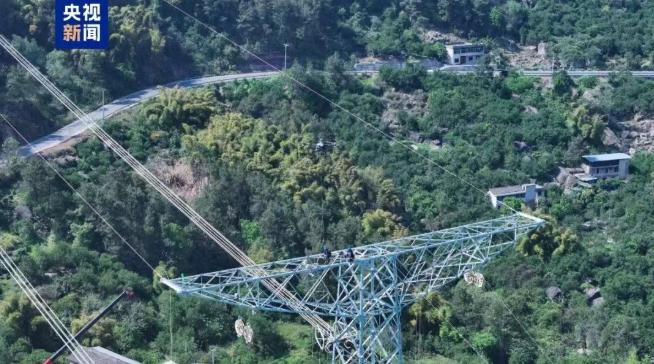
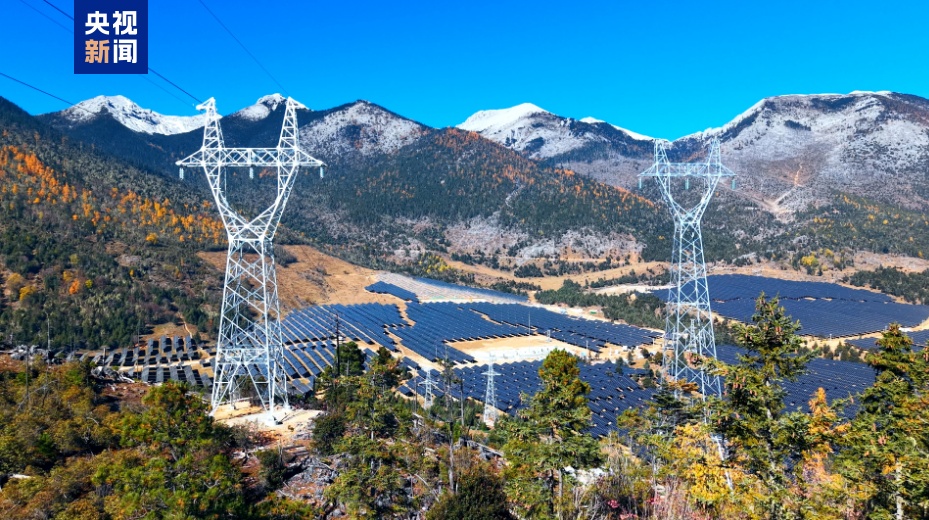
9月3日,金上—湖北±800千伏特高压直流输电工程完成168小时试运行,具备400万千瓦送电能力,正 式开始向湖北送电。 金上—湖北特高压工程是我国"西电东送"大动脉之一,也是目前世界上海拔最高的特高压直流输电工 程。工程整体建成后年输送电量可达400亿千瓦时。 ...
金上至湖北±800千伏特高压直流输电工程正式向湖北送电
Xin Hua She· 2025-09-04 09:43
Core Viewpoint - The completion of the 168-hour trial operation of the Jinshang to Hubei ±800 kV UHVDC project marks a significant milestone in China's "West-to-East Power Transmission" initiative, enhancing the country's electricity distribution capabilities [1] Group 1: Project Overview - The Jinshang to Hubei UHVDC project has a transmission capacity of 4 million kilowatts [1] - It is recognized as the highest UHVDC project in the world in terms of elevation [1] - Once fully operational, the project is expected to deliver an annual electricity transmission volume of 40 billion kilowatt-hours [1]
金上—湖北±800千伏特高压直流输电工程正式向湖北送电
Xin Hua Wang· 2025-09-04 03:13
Core Viewpoint - The Jinshang-Hubei ±800 kV UHVDC project has completed a 168-hour trial operation and is now capable of delivering 4 million kW of electricity to Hubei, marking a significant milestone in China's "West-to-East Power Transmission" initiative and establishing itself as the highest UHVDC project in the world [1] Group 1 - The Jinshang-Hubei UHV project is one of the major arteries for China's "West-to-East Power Transmission" [1] - The project has a total annual electricity transmission capacity of 40 billion kWh upon full completion [1] - The project officially began delivering electricity to Hubei after the successful trial operation [1]
中国黄河干流装机最大水电站单日发电量创新高
Zhong Guo Xin Wen Wang· 2025-09-03 15:23
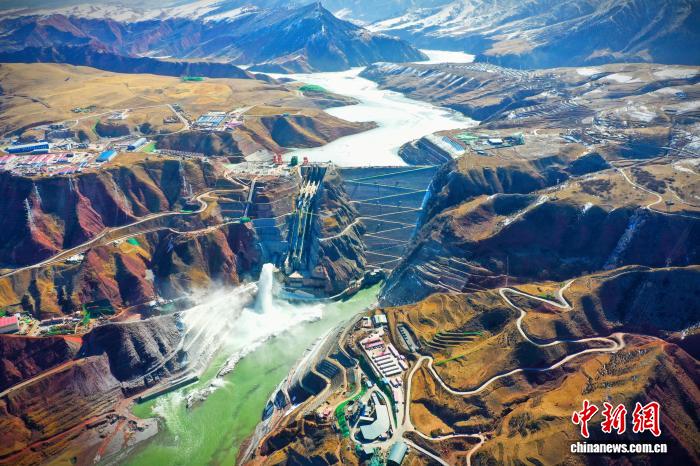
Core Insights - The Malda Dam Hydropower Station has reached a peak generation period in September due to abundant water flow from the Yellow River, achieving a record daily output of 40.28 million kilowatt-hours on September 2, with an average load factor of 80% and a water utilization rate of 100% [1][3] Company Overview - The Malda Dam Hydropower Station, located in the Guoluo Tibetan Autonomous Prefecture of Qinghai Province, has a total installed capacity of 2.32 million kilowatts, making it the highest and largest hydropower station on the Yellow River [3] - It is a key project for China's "West-to-East Power Transmission" and "Qinghai Electricity into Henan" initiatives, serving as a backbone power source [3] Operational Strategy - The station has closely coordinated with the power grid, meteorological, and water resources departments to accurately predict water trends and dynamically optimize generation plans, maximizing water resource potential and fully releasing the station's capacity [3] - Maintenance of generation and transformation equipment, stability control systems, and grid connection lines has been prioritized to ensure operational efficiency during peak demand and flood season [3] Performance Metrics - As of now, the cumulative generation of the Malda Dam Hydropower Station has exceeded 3.2 billion kilowatt-hours in 2025, and since the first unit was connected to the grid on April 1, 2024, the total generation has surpassed 6.1 billion kilowatt-hours, all of which is 100% green energy [3]
宁夏电力外送电量连续两月破百亿千瓦时
Zhong Guo Dian Li Bao· 2025-09-03 05:25
Core Insights - In August, Ningxia's electricity export reached 10.9 billion kilowatt-hours, marking a 19% year-on-year increase and setting a new monthly record for the region [1] - This achievement signifies the first time in history that Ningxia has exported over 100 billion kilowatt-hours for two consecutive months, contributing significantly to national electricity supply stability [1] Electricity Export Developments - The Ningxia to Hunan UHVDC project began operations on June 29, facilitating a stable maximum output of 4 million kilowatts and enabling a cumulative electricity export of 3.7 billion kilowatt-hours to Hunan during the peak summer demand period [1] - The project plays a crucial role in ensuring electricity supply during high-demand periods, particularly amid rising temperatures and increased electricity consumption [1] Long-term Growth and Infrastructure - Since initiating electricity exports in 2010, Ningxia has developed a robust multi-point transmission network covering 18 provinces, establishing itself as a key player in the "West-to-East Power Transmission" initiative [1] - As of August, Ningxia's total electricity export volume reached 855.3 billion kilowatt-hours, with renewable energy exports accounting for 120.9 billion kilowatt-hours, highlighting the region's commitment to green and low-carbon energy solutions [1]
云南“西电东送”累计送电量突破2万亿千瓦时
Yang Shi Xin Wen Ke Hu Duan· 2025-08-28 08:14
Core Insights - Yunnan's "West-to-East Power Transmission" has delivered over 2 trillion kilowatt-hours of electricity, saving approximately 665 million tons of standard coal and reducing carbon dioxide emissions by about 1.728 billion tons, contributing significantly to regional development and the national new energy system [1][5][7] Group 1 - The first step of Yunnan's "West-to-East Power Transmission" was marked by the successful commissioning of the 220 kV line from Rubugao to Tianshengqiao in August 1993, leading to 32 years of development [3] - Yunnan has established a 500 kV main grid framework characterized by "provincial AC and DC parallel operation, long-distance high-capacity transmission within the country, and multiple international transmission directions" [3] - The Yunnan Power Grid Company has been promoting large-scale cross-provincial and cross-regional transmission projects, achieving key equipment localization [5] Group 2 - Yunnan's green electricity production has exceeded 90%, leveraging the region's abundant wind, solar, and hydro resources [5] - During the recent high-temperature conditions in southern China, Yunnan's power generation companies increased output to ensure a steady supply of green electricity to eastern provinces, supporting the power needs of the Guangdong-Hong Kong-Macao Greater Bay Area [7] - Yunnan aims to enhance its dynamic balance capabilities and optimize resource allocation to further support the sustainable development of the "West-to-East Power Transmission" initiative [7]
电力供应格局变了
Di Yi Cai Jing Zi Xun· 2025-08-21 04:02
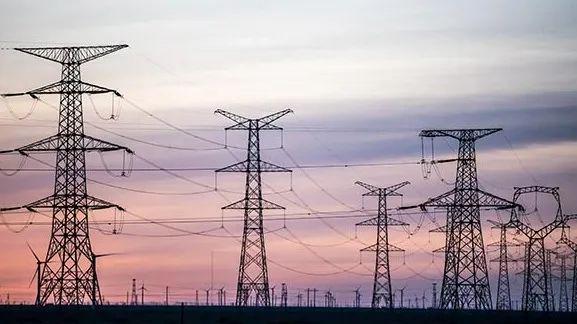
Core Insights - The "West-East Power Transmission" initiative has evolved over 20 years, with Sichuan province transitioning from being an "energy exporter" to a "dual supply and demand" model, while regions like Tibet, Xinjiang, and Inner Mongolia continue to increase their electricity exports [2][4]. Group 1: Sichuan's Electricity Demand and Supply - Sichuan's maximum electricity load reached 74.19 million kilowatts, marking a 7% increase from last year's peak load of 69.29 million kilowatts and a 25.5% increase from the 2022 summer peak of 59.10 million kilowatts [3]. - Since the 14th Five-Year Plan, Sichuan's electricity load and consumption have grown by over 47% and 40% respectively, supporting the province's GDP growth, which ranks fifth nationally [3]. - The province has adjusted its power grid planning post-2022 heatwave, with total installed capacity nearing 150 million kilowatts and significant enhancements to its power supply capabilities [3][4]. Group 2: Changes in Energy Development - Sichuan's energy development has shifted from a "tight balance" of electricity supply to a "dual shortage" scenario, moving from a focus on hydropower to a more integrated approach involving wind and solar energy [4]. - To address the growing electricity demand, Sichuan is actively purchasing power from outside the province, including from regions like Gansu and Hubei [4]. Group 3: Future Electricity Demand and Supply Sources - Nationally, electricity demand is expected to grow at a rate of approximately 5.6% during the 14th Five-Year Plan and around 4.3% in the subsequent plan [6]. - The introduction of new energy sources, such as hydrogen production and electric vehicles, is projected to contribute over 2.5 trillion kilowatt-hours to electricity demand over the next decade, accounting for 40% of the growth [6]. Group 4: Electricity Export Growth in Western Regions - Inner Mongolia is the largest electricity producer in China, with a projected total generation of 817.97 billion kilowatt-hours in 2024, while Xinjiang is expected to generate approximately 531.32 billion kilowatt-hours [7]. - By 2024, Inner Mongolia's electricity exports are anticipated to exceed 640 billion kilowatt-hours, and Xinjiang's exports are expected to surpass 126.4 billion kilowatt-hours, driven primarily by renewable energy sources [7]. - Tibet has also seen significant growth in electricity exports, with cumulative clean energy exports reaching 15.79 billion kilowatt-hours since 2015, generating over 4.2 billion yuan in economic benefits [8].
电力供应格局变了
第一财经· 2025-08-21 03:48
Core Viewpoint - The article discusses the transformation of China's electricity supply landscape, particularly focusing on the "West-East Power Transmission" project, highlighting the shift in energy dynamics in regions like Sichuan, Tibet, Xinjiang, and Inner Mongolia over the past 20 years [3]. Group 1: Sichuan's Electricity Demand - Sichuan's maximum electricity load reached 74.186 million kilowatts, marking a 7% increase from last year's peak load of 69.29 million kilowatts and a 25.5% increase from the 2022 summer peak of 59.1 million kilowatts [5]. - Since the 14th Five-Year Plan, Sichuan's electricity load and consumption have grown by over 47% and 40% respectively, supporting the province's GDP growth, which ranks fifth nationally [6]. - The province's energy development has shifted from a "tight balance" to a "dual shortage" scenario, necessitating increased electricity imports from other provinces [6][7]. Group 2: Electricity Supply from Western Regions - The electricity export from Inner Mongolia and Xinjiang has significantly increased, with Inner Mongolia's total power generation reaching 817.97 billion kilowatt-hours in 2024, accounting for 8.69% of the national total [11]. - Xinjiang's electricity export volume exceeded 126.4 billion kilowatt-hours in 2024, marking a historical high, with renewable energy generation being a major contributor [11]. - The development of large-scale renewable energy projects in Inner Mongolia aims to add 40 million kilowatts of new energy capacity and exceed 100 billion kilowatt-hours in electricity exports [12]. Group 3: Future Electricity Demand and Supply - Nationally, electricity demand is expected to grow at a rate of approximately 5.6% during the 14th Five-Year Plan and 4.3% during the 16th Five-Year Plan, driven by factors such as energy transition and technological advancements [9]. - The anticipated increase in electricity demand will be supported by new industries driven by electric power, which are expected to contribute over 2.5 trillion kilowatt-hours to the national electricity consumption [9]. - The article emphasizes the need for a balanced approach to energy supply and demand, addressing challenges such as energy security and the integration of energy systems [7].