
特高压输电通道

Search documents
草原“绿”动 电启新程
Xin Lang Cai Jing· 2026-02-01 19:21
Core Viewpoint - The news highlights the strategic initiatives and developments of State Grid Inner Mongolia Electric Power Company in promoting energy transition and ensuring energy security in Inner Mongolia, emphasizing the construction of high-voltage transmission lines and the integration of renewable energy sources into the grid [4][6][9]. Group 1: Energy Infrastructure Development - The commencement of the Mengxi–Beijing-Tianjin-Hebei ±800 kV UHVDC project on December 30, 2025, marks a significant step in enhancing energy supply from Inner Mongolia to major load centers [5]. - By the end of 2025, the company plans to have constructed 12 UHV transmission lines, with a total new line length exceeding 4,400 kilometers, aiming for a total transmission capacity of 96.7 million kW [8]. - The company has successfully built and put into operation eight UHV transmission corridors, delivering over 830 billion kWh of electricity, thus supporting national energy supply security [6][8]. Group 2: Renewable Energy Integration - The company is actively supporting the development of the "Shage Desert" large-scale wind and solar base, with a planned total installed capacity of 72 million kW [9]. - The 500 kV renewable energy gathering and transmission project in Hulunbuir is expected to deliver 4.488 billion kWh of green electricity annually, significantly contributing to regional economic development [9]. - The company has implemented 24 measures to enhance the efficient utilization of renewable energy, facilitating the integration of renewable sources into the power market [11]. Group 3: Service and Support for Economic Development - The company has introduced 20 measures to support the development of private enterprises and 10 initiatives for large customers, enhancing the electricity supply service [13]. - The company has saved customers 2.24 billion yuan in electricity connection costs during the 14th Five-Year Plan period, improving the overall electricity access experience [13]. - The company is committed to improving living standards by ensuring reliable electricity supply for residential heating and supporting rural revitalization through enhanced electricity services [15][16].

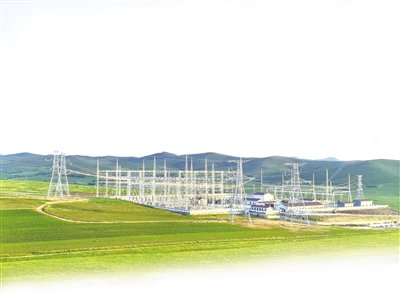
2025年全国重点能源项目投资首破3.5万亿元,新一年投资方向明确
第一财经· 2026-01-30 15:18
Core Viewpoint - Energy investment is accelerating to become a new growth point for domestic economic development, with significant increases in investment in key energy projects and a focus on green energy transition [3][5]. Investment Trends - In 2025, national energy key projects' investment exceeded 3.5 trillion yuan, marking an 11% year-on-year increase, outpacing infrastructure and manufacturing growth by 12.9 and 10.1 percentage points respectively [3]. - Major regions for energy investment include Inner Mongolia, Xinjiang, Shandong, Guangdong, and Jiangsu, each surpassing 200 billion yuan in investment [3]. Green Energy Transition - The investment in green energy transition is solid, with new wind and solar power installations exceeding 430 million kilowatts in 2025, and cumulative installations surpassing 1.8 billion kilowatts [6]. - Investment in new energy storage and hydrogen industries doubled compared to the previous year, with renewable hydrogen production capacity exceeding 250,000 tons per year by the end of 2025 [6]. Energy Security Investments - Investments in coal power and conventional hydropower are also on the rise, with ongoing construction of hydropower projects in major southwestern river basins [6]. - The national grid investment remains stable, with the construction of cross-provincial transmission channels accelerating, enhancing energy resource complementarity [7]. Private Sector Involvement - Private sector investment in the energy field grew rapidly, with key projects seeing a 12.9% year-on-year increase, outpacing the national growth rate by approximately 2 percentage points [7]. - Key areas of private investment include solar power, wind power, and coal mining, with significant growth in onshore wind and distributed solar sectors [7]. Challenges and Future Directions - The development of renewable energy faces challenges such as the need for improved real-time balancing and consumption capabilities for large-scale variable energy sources [9]. - Future energy development should focus on integrating renewable energy with various industries and systems to enhance market competitiveness [9][10]. Policy Support and Market Mechanisms - The National Energy Administration is enhancing policy support to stimulate market vitality and optimize the development environment for energy investments [3][12]. - Initiatives include a three-year plan to double electric vehicle charging infrastructure, aiming for 28 million charging facilities by 2027, which is expected to drive over 200 billion yuan in investment [12]. - The administration is also working to eliminate institutional barriers and create a favorable investment environment for private capital in nuclear power, oil and gas reserves, and new energy storage projects [12].
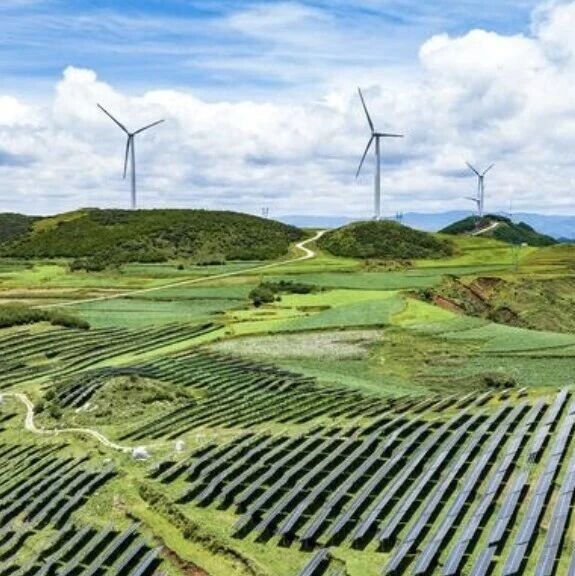
2025年全国重点能源项目投资首破3.5万亿元,新一年投资方向明确
Di Yi Cai Jing· 2026-01-30 13:29
Group 1 - The core viewpoint is that "integrated development of new energy" will become an important direction for future investments, with energy investment accelerating as a new growth point for the domestic economy [1][5] - The National Energy Administration reported that by 2025, the investment in key energy projects nationwide will exceed 3.5 trillion yuan, marking an increase of nearly 11% year-on-year, which is higher than the growth rates of infrastructure and manufacturing [1] - Key regions for energy investment include Inner Mongolia, Xinjiang, Shandong, Guangdong, and Jiangsu, each exceeding 200 billion yuan in completed investments [1] Group 2 - The investment in energy green transition has accelerated, with a solid momentum towards "green and new" investments, including over 430 million kilowatts of new wind and solar power installations by 2025 [2] - The investment in new energy storage and hydrogen industries is expected to double compared to the previous year, with renewable hydrogen production capacity exceeding 250,000 tons per year by the end of 2025 [2] - The investment in coal power and conventional hydropower is also showing good growth, with ongoing projects in the southwestern river basins [2] Group 3 - The cumulative operational capacity of 45 ultra-high voltage transmission channels has reached 340 million kilowatts, with cross-regional electricity trading reaching a historical high of 1.59 trillion kilowatt-hours, a year-on-year increase of 11.6% [3] - Private sector investment in the energy field has maintained rapid growth, with key projects seeing a year-on-year increase of 12.9%, particularly in solar power, wind power, and coal mining [3] Group 4 - The development of new energy faces challenges, including the need for improved real-time balancing and consumption capacity for large-scale fluctuating renewable energy [4] - Future development should focus on integrating new energy with various industries and systems to enhance market competitiveness and development autonomy [4][5] Group 5 - The National Energy Administration plans to deepen the integration of new energy into buildings, transportation, and rural revitalization, creating diverse development scenarios [5] - Initiatives include a three-year action plan to double the capacity of electric vehicle charging facilities by 2027, expected to drive over 200 billion yuan in investment [6] - The goal is to achieve a new installed capacity of 180 million kilowatts for new energy storage by 2027, driving approximately 250 billion yuan in investment [6]
40000亿!为什么大搞电力建设?
债券笔记· 2026-01-20 10:33
Core Viewpoint - The State Grid of China plans to invest 4 trillion yuan in the power grid during the 14th Five-Year Plan period, representing a 40% increase compared to the previous plan, aimed at addressing the growing electricity demand and enhancing the power transmission system [3][10]. Group 1: Electricity Demand Growth - The increasing electricity demand in China is likened to a "big eater" that requires more resources, driven by high-energy consumption sectors such as AI computing, electric vehicles, and data centers [5][6]. - By July 2025, China's monthly electricity consumption is expected to exceed 1 trillion kilowatt-hours, equivalent to the annual output of 1.3 Three Gorges power stations, with projections indicating total electricity consumption will surpass 13 trillion kilowatt-hours by 2030 [6][10]. Group 2: Renewable Energy Challenges - Renewable energy sources like wind and solar power are inconsistent, leading to inefficiencies in electricity generation, particularly in western regions where utilization rates are significantly low [7][8]. - The need for a more efficient power transmission system is emphasized, with plans to increase cross-regional transmission capacity by over 30%, akin to expanding a two-lane road to an eight-lane highway [9][10]. Group 3: Investment Implications - The 4 trillion yuan investment is viewed as a comprehensive upgrade of China's power system, aiming to create a smarter, greener, and more efficient electricity network [10][11]. - This investment is crucial for ensuring that the power system can meet future demands, particularly as new technologies and electric consumption patterns emerge, positioning electricity as the "oxygen" of modern society [11].
氢能、核能、新型储能写入规划 “十五五”能源产业要怎么干?
2 1 Shi Ji Jing Ji Bao Dao· 2025-10-30 23:08
Core Insights - The "14th Five-Year Plan" has significantly advanced China's energy transition, with a focus on enhancing energy supply capacity, accelerating green transformation, and optimizing energy layout [1] - The "15th Five-Year Plan" aims to achieve carbon peak targets and establish a clean, low-carbon, safe, and efficient new energy system [1] Energy Sector Development - The "15th Five-Year Plan" emphasizes the cultivation of emerging and future industries, particularly in new energy, new materials, aerospace, and low-altitude economy [2] - New energy is recognized as a key component of strategic emerging industries, with a shift towards improving industry quality and efficiency during the "15th Five-Year Plan" [2] - Hydrogen energy and nuclear fusion are highlighted as future industries, with plans to explore diverse technological routes and applications [2] Hydrogen Energy and Nuclear Fusion Progress - By the end of 2024, China's hydrogen production capacity is expected to exceed 50 million tons per year, with over 600 renewable energy hydrogen production projects planned [3] - The country has promoted 28,000 fuel cell vehicles and built over 500 hydrogen refueling stations, leading in the commercial vehicle sector [3] Modern Infrastructure Development - The "15th Five-Year Plan" calls for the construction of a modern infrastructure system, optimizing energy backbone channel layouts and enhancing new energy infrastructure [4] - Significant projects include high-voltage transmission channels and natural gas pipeline networks to support clean energy development [4][5] National Unified Market and Competition - The plan aims to eliminate barriers to building a national unified market and address "involution" competition, promoting a healthy market order [6] - The establishment of a unified electricity market is crucial for energy transition and resource optimization [6] New Energy System and Carbon Peak Goals - The plan focuses on building a new energy system, increasing the share of renewable energy, and ensuring the orderly replacement of fossil fuels [7] - By mid-2025, China's renewable energy installed capacity is projected to reach 2.159 billion kilowatts, accounting for 59.2% of total installed capacity [7][8] - The nuclear power sector is also expanding, with operational capacity reaching 60.91 million kilowatts, making China the world leader [8]
走近大国工程丨塞上“风光”点亮三湘灯火探访我国首个获得核准的“沙戈荒”新能源外送工程
Zhong Yang Ji Wei Guo Jia Jian Wei Wang Zhan· 2025-09-08 00:24
Core Viewpoint - The "Ningdian Ruxiang" project is China's first approved "desert and Gobi" renewable energy transmission project, which will deliver over 36 billion kilowatt-hours of electricity annually from Ningxia to Hunan, meeting the annual electricity needs of over 10 million households [6][17]. Group 1: Project Overview - The "Ningdian Ruxiang" project is a ±800 kV UHVDC transmission line that spans 1616 kilometers, connecting Ningxia with Hunan and crossing multiple provinces [8][9]. - The project is a key initiative under China's 14th Five-Year Plan for power development, with a total investment exceeding 380 billion yuan for UHV projects [8][9]. - The project aims to enhance the capacity for "West-to-East" electricity transmission and optimize the allocation of clean energy resources [6][8]. Group 2: Technical Aspects - The UHVDC transmission line has a capacity of 8 million kilowatts and a transmission loss rate of approximately 4% to 5%, significantly lower than conventional transmission lines [9][10]. - The project involves overcoming various technical challenges, including diverse geological conditions and the need for customized solutions for different terrains [10][11]. - All equipment for the project is domestically manufactured, with advanced technologies implemented to enhance efficiency and reliability [11][12]. Group 3: Renewable Energy Integration - The project has an installed capacity of 17.64 million kilowatts, with 13 million kilowatts coming from renewable sources, including 4 million kilowatts from wind and 9 million kilowatts from solar energy [14]. - Over 50% of the electricity transmitted to Hunan will be from renewable sources, contributing to a reduction of 16 million tons of carbon dioxide emissions annually [14][15]. - The integration of renewable energy faces challenges due to the variability of wind and solar output, necessitating the use of traditional power sources for balancing [15]. Group 4: Environmental Considerations - The project incorporates measures to minimize environmental impact, including wastewater treatment and noise reduction strategies [16]. - Construction has been carefully planned to avoid sensitive ecological areas and water source protection zones, with a focus on ecological restoration [16][17]. - The project has successfully passed the summer peak electricity demand test, demonstrating its capability to provide stable power supply during high-demand periods [17].
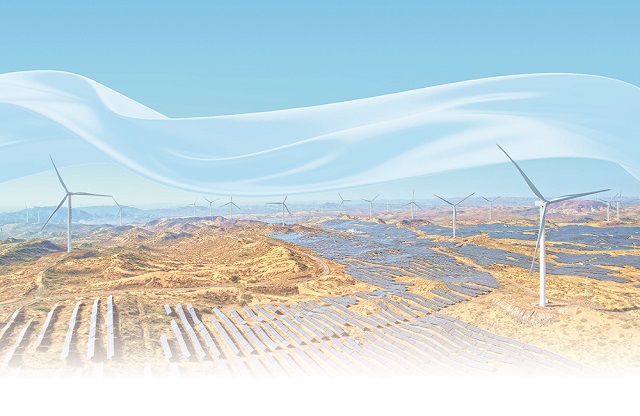
中阿能源合作开拓新领域
Xin Hua Wang· 2025-08-31 01:22
Core Viewpoint - The seventh China-Arab States Expo was held in Yinchuan, Ningxia from August 28 to 31, focusing on clean energy and exploring new opportunities in the energy sector [1] Group 1: Event Overview - The expo featured a clean energy exhibition area and hosted events such as the China-Arab New Energy Industry High-Quality Development Exchange Promotion Conference and the China-Arab Green Low-Carbon Products Matching Exchange Conference [1] - The discussions aimed to explore new opportunities, paths, and models for the development of the new energy industry [1] Group 2: Energy Cooperation Expansion - China-Arab energy cooperation is expanding from traditional areas like wind and solar power to include energy storage, hydrogen energy, smart energy, and ultra-high voltage transmission channels [1]
特高压建设持续推进,固态电池产业化加速
HUAXI Securities· 2025-06-08 13:25
Investment Rating - Industry Rating: Recommended [5] Core Insights - The humanoid robot industry is accelerating its commercialization, with tactile sensor technology being a key factor for safe interaction and intelligent control. Companies with technological and cost advantages are expected to benefit significantly as humanoid robots enter mass production [1][12][13] - The solid-state battery industrialization process is progressing, driven by the need for battery technology upgrades. Solid-state batteries are seen as the next-generation technology due to their high energy density and safety. Companies with technological advantages and early orders are expected to see growth [2][17][19] - The UK government has announced the indicative timeline for the seventh round of Contracts for Difference (CfD) auctions, with offshore wind auctions expected to start in August. This round is anticipated to have the highest auction capacity in history, supporting the growth of renewable energy, particularly offshore wind [3][24][25] Summary by Sections 1. Humanoid Robots - Tactile sensing technology is crucial for ensuring safe interaction between humanoid robots and their environment. The market is currently dominated by foreign companies, but domestic firms are making progress [1][12] - The commercialization of humanoid robots is expected to accelerate, with significant opportunities arising from advancements in AI and supportive policies. Key players in the supply chain are likely to benefit [13][16] 2. New Energy Vehicles - The solid-state battery technology is gaining traction, with significant milestones achieved in production capacity. The industry is expected to see continuous upgrades across the entire supply chain [2][17] - The growth of the new energy vehicle sector is supported by the introduction of high-performance models and advancements in battery technology, which are expected to enhance cost-effectiveness [18][19] 3. Renewable Energy - The UK government is set to launch the seventh round of CfD auctions, with a significant number of offshore wind projects expected to participate. This is part of a broader strategy to achieve a nearly fully clean power system by 2030 [3][24][25] - The renewable energy sector is anticipated to continue its growth trajectory, with a focus on offshore wind development and the establishment of a clean energy system [26][27] 4. Power Equipment & AIDC - The construction of ultra-high voltage transmission projects is set to advance, with several key projects approved for construction in 2025. This is expected to provide substantial support for core ultra-high voltage equipment manufacturers [4][7][8] - The demand for virtual power plants is expected to rise as new power system construction accelerates, benefiting companies actively involved in this sector [8]
国网蒙东电力:今年力争再增新能源并网装机4000万千瓦
Zhong Guo Dian Li Bao· 2025-04-17 05:38
Core Insights - Inner Mongolia is a traditional energy region that is also rapidly developing as a new energy and green energy hub, with significant growth in renewable energy capacity and generation expected in 2024 [1] Group 1: Renewable Energy Development - In 2024, Inner Mongolia plans to add 41 million kilowatts of new installed renewable energy capacity, bringing the total to 135 million kilowatts, with an expected generation of 200 billion kilowatt-hours [1] - The region is implementing multiple new energy projects, including the second and third batches of large-scale renewable energy bases, which require expedited grid connection [1][3] Group 2: Infrastructure and Grid Connection - The construction of the Bayannaoer–Victory 500 kV transformer project is underway, which will enhance the transmission efficiency of clean energy and meet the demand for an additional 1 million kilowatts of wind power [2] - The first batch of large wind and solar base projects includes three major projects, all of which are operational, demonstrating rapid project execution [2][3] Group 3: Power Transmission and Delivery - As of March 23, 2024, the ±800 kV HVDC project from Xilingol to Taizhou has delivered over 11 billion kilowatt-hours, contributing to a cumulative delivery of 605.27 billion kilowatt-hours from Inner Mongolia [4] - The region has established eight HVDC transmission corridors to various provinces, facilitating a steady increase in power delivery [4] Group 4: Future Plans and Collaborations - A memorandum of cooperation was signed between State Grid Corporation and Inner Mongolia for the "Shagao Desert" base, accelerating the preliminary work for HVDC projects [5] - The company is committed to advancing the second round of HVDC development and expediting the approval and construction of multiple HVDC projects [6]