
金上—湖北±800千伏特高压直流输电工程

Search documents
超级工程重塑四川经济地理
Zhong Guo Fa Zhan Wang· 2026-01-16 06:26
Core Viewpoint - The completion of several major infrastructure projects in Sichuan by the end of 2025 marks a significant advancement in the region's transportation and energy capabilities, enhancing its economic geography and strategic importance in national development [5][20]. Infrastructure Development - The Jinshang-Hubei ±800 kV UHVDC project, completed on December 18, 2025, enables clean electricity to be transmitted 1,900 kilometers to East China in just 6 milliseconds, setting a record for the highest altitude UHV project [1]. - The Leshan-Xichang Expressway, which opened on December 31, 2025, features a high bridge-tunnel ratio of 82% and incorporates innovative heating systems to address winter snow challenges [3]. - Sichuan has invested nearly 8.8 trillion yuan in over 1,600 key provincial projects during the 14th Five-Year Plan, with over 4 trillion yuan already completed, focusing on transportation, energy, water resources, and new infrastructure [5]. Energy Sector Advancements - By December 19, 2025, Sichuan's hydropower installed capacity surpassed 100 million kilowatts, making it the first province in China to reach this milestone, capable of supplying electricity for approximately 500 million people annually [17]. - The province's total power generation capacity exceeded 150 million kilowatts by the end of 2025, marking significant progress in transitioning to a clean energy structure [18]. Transportation Network Expansion - The completion of the Chengdu-Yibin high-speed railway and the operation of the Yuxi-Kunming high-speed railway have significantly improved connectivity in the region, with the Chengdu-Yibin line alone transporting over 29 million passengers in two years [9][11]. - Sichuan's highway network has expanded by over 3,000 kilometers in five years, connecting 15 previously isolated counties to national transportation arteries [12]. Economic Impact - The development of these infrastructure projects is expected to stimulate local economies, with increased tourism evidenced by over 7 million visitors to Jiuzhaigou in 2025, a 27% increase year-on-year [14]. - The establishment of the Chengdu-Europe Railway Express has facilitated the export of various goods, including agricultural products, to over a hundred cities globally, enhancing Sichuan's role in international trade [15]. Environmental Considerations - Infrastructure projects in Sichuan are increasingly incorporating green development principles, such as the relocation of power lines to protect migratory bird pathways and the successful transplantation of endangered plant species [22].

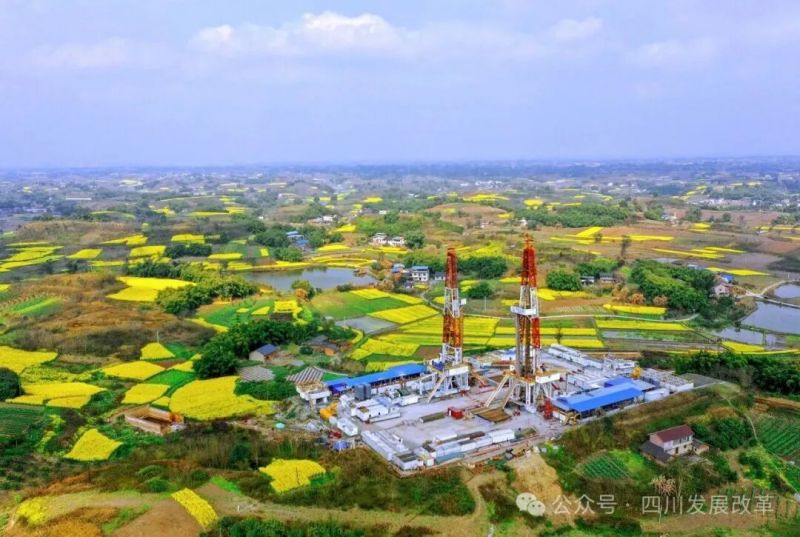
超级工程 重塑四川经济地理
Xin Lang Cai Jing· 2026-01-03 22:19
Core Viewpoint - Sichuan is undergoing a significant transformation through the implementation of over 1,600 key projects during the "14th Five-Year Plan" period, with a total investment of nearly 8.8 trillion yuan, reshaping its economic geography and enhancing its infrastructure capabilities [4][16]. Infrastructure Development - The completion of the Jinshajiang-Hubei ±800 kV UHVDC project allows clean energy to be transmitted over 1,900 kilometers in just 0.006 seconds, marking a milestone in energy transmission [3]. - The Leshan to Xichang expressway, which opened on December 31, 2025, features a high bridge-tunnel ratio of 82% and incorporates innovative snow-melting technology for high-altitude sections [3]. - Sichuan has built over 3,000 kilometers of new expressways in the past five years, connecting 15 previously isolated counties to national transport networks [7]. Transportation Achievements - The province's railway network has expanded significantly, with over 7,000 kilometers of operational railways, including the newly opened Chengdu-Yibin high-speed railway, which has transported over 29 million passengers in two years [6][8]. - The total length of highways in Sichuan has surpassed 11,000 kilometers, ranking third nationally, while the overall transportation network reaches 443,000 kilometers, the largest in the country [7]. Energy Sector Advancements - Sichuan has become the first province in China to exceed 100 million kilowatts in hydropower installed capacity, equivalent to 4.5 Three Gorges dams, capable of supplying electricity to approximately 500 million people [11]. - The province's clean energy initiatives include the completion of major hydropower projects and the establishment of new energy transmission corridors, enhancing its role in national energy security [11][12]. Economic Impact - The construction of these mega-projects has stimulated the development of Sichuan's equipment manufacturing and construction industries, with local firms expanding their operations internationally [16]. - Sichuan's strategic location and infrastructure improvements are expected to facilitate greater integration into national and international markets, enhancing its economic competitiveness [9][10].
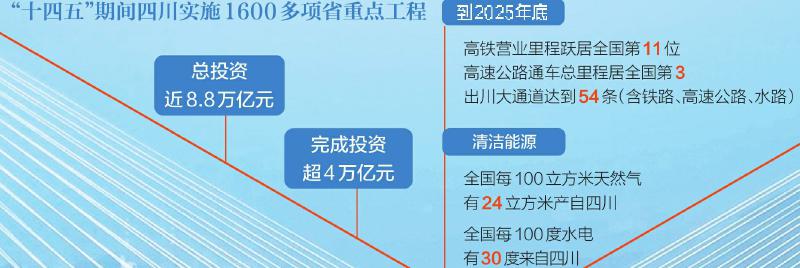
2025年终经济观察丨激活有效投资 打开经济发展新空间
Xin Hua Wang· 2025-12-24 14:18
Group 1 - Investment is both current demand and future supply, and expanding effective investment is a strategic move to promote high-quality development [2] - The recent Central Economic Work Conference emphasized the need to combine investment in physical assets and human capital [2] - Major projects across various regions, such as the Huatanzi Reservoir in Guizhou and the world's largest green hydrogen ammonia integrated project, are progressing well, supporting stable investment [3] Group 2 - In the first 11 months of the year, fixed asset investment in China decreased by 2.6%, influenced by local government debt pressures and long-term economic transitions [4] - Excluding real estate development, project investment increased by 0.8%, with key sectors maintaining growth and emerging fields showing positive trends [4] - The "Two Heavy" construction initiative allocated 800 billion yuan to support 1,459 projects, effectively driving investment growth in related industries [4] Group 3 - New infrastructure is a strategic foundation for developing new industries and services, and it plays a crucial role in expanding effective investment [5] - Key new infrastructure projects, including low-altitude economy and AI, are progressing, contributing to high-quality development [6] - China's per capita infrastructure capital stock is only 20% to 30% of that of developed countries, indicating significant investment potential in water conservancy and municipal infrastructure [6] Group 4 - Investment in human capital is being prioritized, with projects like new school constructions in Hunan and regional medical centers in Hebei aimed at enhancing human welfare [7] - In the first 11 months, investments in electricity and water transportation sectors grew by 12.5% and 8.9%, respectively, while internet services saw a 20.7% increase [7] - The focus on human capital investment aims to drive economic growth and improve living standards through enhanced education, employment, and healthcare [7] Group 5 - The "Fifteen Five" plan anticipates constructing over 700,000 kilometers of underground pipelines, with an investment demand exceeding 5 trillion yuan [8] - The aging population and childcare services present significant investment opportunities, with the silver economy projected to exceed 30 trillion yuan by 2035 [9] - Investment in skills training and human resource development is expected to grow, as the demand for skilled labor remains high [9] Group 6 - The Central Economic Work Conference outlined key tasks for the upcoming year, emphasizing the importance of domestic demand and effective investment [11] - Local governments are actively planning major projects to lay a foundation for future investments, with a focus on optimizing resource allocation and project scheduling [11] - Measures to stimulate private investment include establishing project reserves and addressing concerns of private enterprises to enhance investment activity [12]
各地一批重大工程迎来新进展 为高质量发展夯实基础
Yang Guang Wang· 2025-12-19 02:13
Group 1 - The completion of the North Line of the Yanhan-Jiwei Phase II project marks a significant milestone, with a total length of 89.54 kilometers, laying a solid foundation for the water supply to the Weibei region by 2026 [1] - The Yanhan-Jiwei project is a crucial part of the national water network, capable of annual water regulation of 1.5 billion cubic meters, benefiting over 14 million people across major cities like Xi'an, Xianyang, Weinan, and Yangling [1] - The project aims to address water resource shortages in the Weibei "dry belt" and will facilitate water rights exchange to provide water indicators for water extraction from the Yellow River, supporting ecological protection and high-quality development in the Yellow River basin [1] Group 2 - The commissioning of the Jinshang-Hubei ±800 kV UHVDC transmission project enables the transmission of clean electricity from the upper reaches of the Jinsha River to Hubei over nearly 1,900 kilometers, delivering approximately 40 billion kilowatt-hours of clean energy annually [2] - This project is expected to replace about 12 million tons of standard coal and reduce carbon dioxide emissions by approximately 30 million tons, promoting the large-scale development of hydropower and wind-solar integration in Sichuan [2] - The project has innovatively developed and applied a full range of high-altitude specialized equipment, marking a significant advancement in China's UHV transmission technology in complex plateau environments [2]

国家电网:金上—湖北±800千伏特高压 直流输电工程建成投运
新华网财经· 2025-12-19 01:55
Core Viewpoint - The completion and operation of the Jinshang-Hubei ±800 kV UHVDC project is a significant milestone for China's energy transition, enhancing the optimization of clean energy distribution and ensuring energy security [2][3]. Group 1: Project Overview - The Jinshang-Hubei project spans approximately 1900 kilometers, connecting the upper reaches of the Jinsha River in Tibet and Sichuan to Hubei, with a total capacity of 8 million kilowatts [3]. - It is the first UHVDC project to be implemented in high-altitude areas, overcoming numerous technical and logistical challenges [3][5]. Group 2: Strategic Importance - This project serves as a crucial channel for the "West-to-East Power Transmission" strategy, significantly improving the ability to balance power supply and demand across regions [4]. - It supports the development of a new energy system and aligns with national strategies for high-quality development in central China and the western region [4]. Group 3: Environmental Impact - The project is expected to deliver approximately 40 billion kilowatt-hours of clean electricity annually, replacing about 12 million tons of standard coal and reducing carbon dioxide emissions by around 30 million tons [4]. - It plays a vital role in promoting the large-scale development and efficient utilization of renewable energy resources [4]. Group 4: Technological Innovations - The project introduces a pioneering site-separated cascading technology, enhancing operational flexibility and marking a significant advancement in UHV technology [5]. - It has developed specialized equipment for high-altitude conditions, achieving world-leading standards in UHV transmission technology [5]. Group 5: Future Outlook - The State Grid Corporation plans to continue enhancing grid construction and resource optimization to support high-quality economic development and modernization efforts in China [6].

西藏首个特高压工程投运
Ren Min Ri Bao Hai Wai Ban· 2025-12-19 01:30
Group 1 - The core point of the news is the successful commissioning of the Jinshang-Hubei ±800 kV UHVDC transmission project, marking the entry of Tibet into the "UHV era" for clean energy transmission [1] - The project, which spans approximately 1900 kilometers, utilizes ±800 kV rated voltage and has a capacity of 8 million kW, connecting regions from Tibet to Hubei [1] - Upon operation, the project is expected to deliver around 40 billion kWh of clean electricity annually, equivalent to replacing approximately 12 million tons of standard coal and reducing CO2 emissions by about 30 million tons [1] Group 2 - State Grid has completed a total of 42 UHV projects, with a cross-regional and cross-provincial transmission capacity of 370 million kW, forming a backbone network across East, North, Central, and Southwest China [2] - The company continues to enhance the capacity and reliability of cross-regional transmission channels, facilitating efficient delivery of clean energy from the western and northern regions to the eastern and central load centers [2]
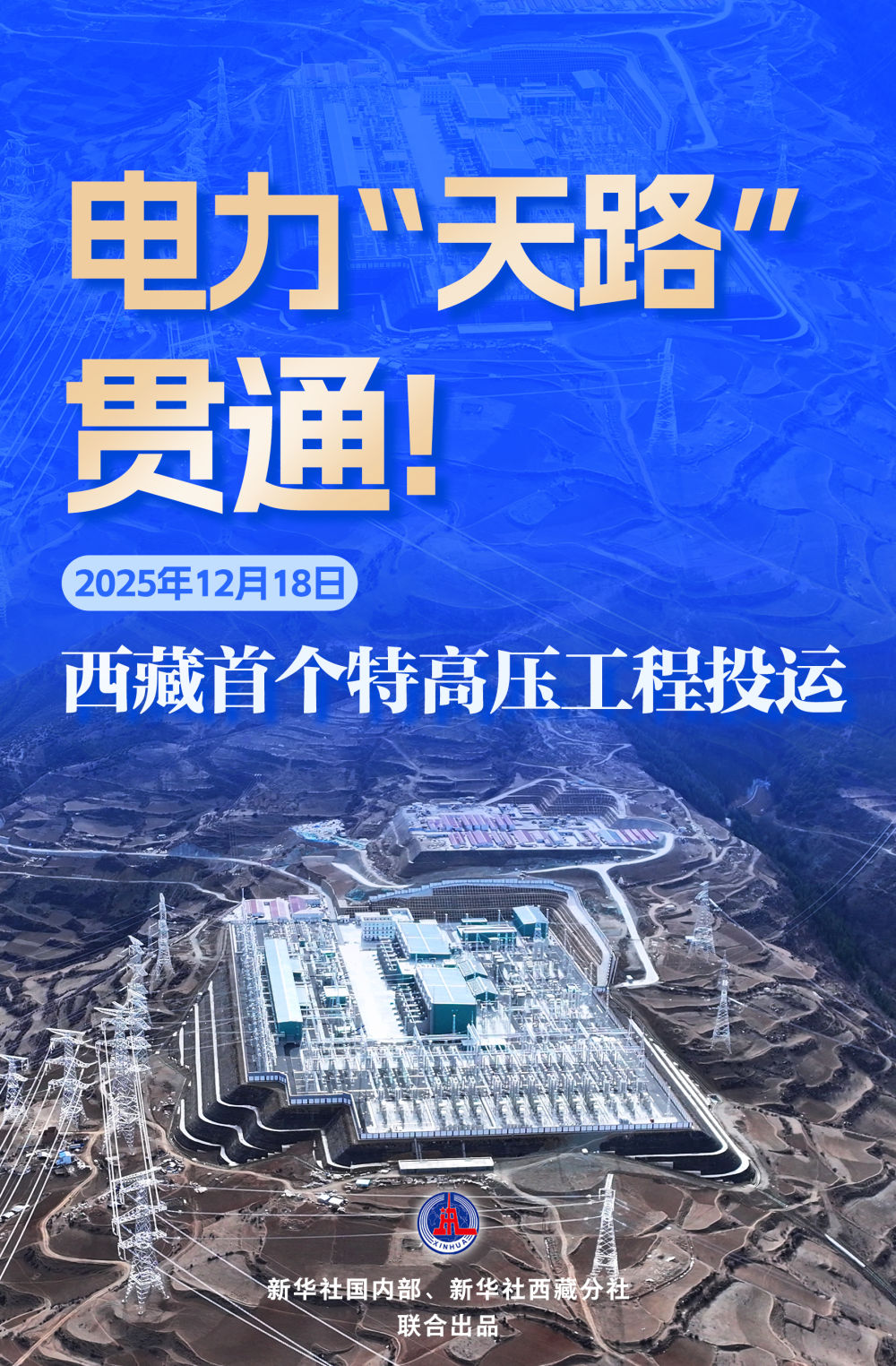
新华鲜报|电力“天路”贯通!西藏首个特高压工程投运
Xin Hua She· 2025-12-18 12:04
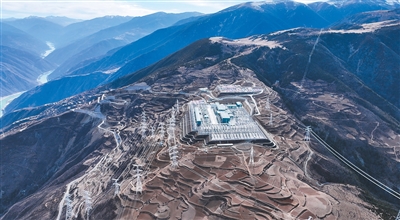
Core Viewpoint - The successful commissioning of the Jinshang-Hubei ±800 kV UHVDC transmission project marks the beginning of a new era for the large-scale delivery of clean energy from Tibet, enhancing the region's energy export capabilities and contributing significantly to environmental benefits [1][5][6]. Group 1: Project Overview - The project officially commenced operations on December 18, with the Kamei converter station completing a 168-hour trial run [1]. - The Kamei converter station, located at an altitude of approximately 3720 meters, is the highest UHV converter station in the world [3]. - The total investment for the Jinshang-Hubei project is approximately 34.3 billion yuan, with a rated voltage of ±800 kV and a capacity of 8 million kW [5]. Group 2: Technical Innovations - The project employs the first domestic "site-level cascading" UHVDC technology to address challenges in high-altitude environments [5]. - Innovations include systematic enhancements to insulation distances to cope with the thin air at high altitudes, which affects the insulation performance of key equipment [5]. Group 3: Environmental and Economic Impact - The design annual electricity transmission capacity is 40 billion kWh, which is expected to replace approximately 12 million tons of coal annually and reduce carbon dioxide emissions by about 30 million tons [5]. - The project has created over 3000 auxiliary and service jobs annually for local farmers and herdsmen, contributing to an income increase of 425 million yuan over five years [6]. Group 4: Operational Efficiency - The Kamei converter station is equipped with over 2000 cameras and automated inspection robots to enhance operational efficiency and reduce the workload on staff [8]. - The project integrates Tibet more deeply into the national energy framework, supporting the optimization of the national energy structure and aiding in achieving carbon neutrality goals [8].
中国“西电东送”再添能源动脉 金上—湖北工程建成投运
Zhong Guo Xin Wen Wang· 2025-12-18 05:09
Core Viewpoint - The completion and operation of the Jinshang-Hubei ±800 kV UHVDC project is significant for promoting the cross-regional optimization of clean energy, facilitating the green and low-carbon transformation of energy, and enhancing national energy security [1][2] Group 1: Project Overview - The Jinshang-Hubei project is the first UHVDC project to penetrate deep into the Tibetan Plateau, starting from the upper reaches of the Jinsha River and passing through Tibet, Sichuan, Chongqing, and Hubei [1] - The project utilizes ±800 kV rated voltage and an 8 million kW rated capacity, with a transmission distance of nearly 1900 kilometers [1] - It is the world's first UHVDC project successfully applying site-level cascading technology at high altitudes [1] Group 2: Environmental Impact - The project is expected to deliver approximately 40 billion kWh of clean electricity annually, equivalent to replacing about 12 million tons of standard coal and reducing carbon dioxide emissions by approximately 30 million tons [1] Group 3: Strategic Importance - The Jinshang-Hubei project adds a new energy artery to the "West-to-East Power Transmission" initiative and is the second UHVDC project to bring external electricity into Hubei [2] - It will significantly enhance the mutual assistance of power supply and demand, promote resource optimization, and support the large-scale development of renewable energy [2] - The State Grid has built and put into operation 42 UHV projects, achieving a cross-regional transmission capacity of 370 million kW [2]

首条深入川藏高原腹地的特高压建成投运
中国能源报· 2025-12-18 03:49
Core Viewpoint - The completion and operation of the Jinshang-Hubei ±800 kV UHVDC project is a significant milestone for China's clean energy transition and energy security, facilitating the optimization of energy resources across regions and supporting the country's green low-carbon transformation [1][3]. Group 1: Project Overview - The Jinshang-Hubei project is the first UHVDC project to penetrate the Tibetan Plateau, with a transmission distance of nearly 1900 kilometers and a rated capacity of 8 million kilowatts [3][4]. - The project connects the clean energy resources from the upper reaches of the Jinsha River in Tibet and Sichuan to Hubei, enhancing the power supply and energy security in the region [3][6]. Group 2: Strategic Importance - This project serves as a crucial addition to the "West-to-East Power Transmission" strategy, significantly improving the ability to balance power supply and demand across regions [6][7]. - It supports the high-quality development of the central region and the construction of a new development pattern in China, providing robust power support for national strategies [6][7]. Group 3: Environmental Impact - The project is expected to deliver approximately 40 billion kilowatt-hours of clean electricity annually, replacing about 12 million tons of standard coal and reducing carbon dioxide emissions by around 30 million tons [7][8]. - It promotes the large-scale development and efficient utilization of renewable energy, contributing to the achievement of carbon reduction goals and the construction of an ecological civilization [7][8]. Group 4: Technological Innovations - The project introduces a pioneering site-separated cascading technology for UHVDC, enhancing operational flexibility and marking a significant breakthrough in high-altitude UHV technology [8][10]. - It has developed specialized equipment for high-altitude conditions and successfully implemented rapid circuit breakers that meet extreme environmental requirements, showcasing China's leadership in UHV transmission technology [8][10]. Group 5: Construction Challenges - The project faced significant challenges due to its high-altitude construction environment, including harsh weather, complex geology, and logistical difficulties [10][11]. - A comprehensive safety and ecological protection system was established to address these challenges, achieving a record of zero accidents during construction [10][11].
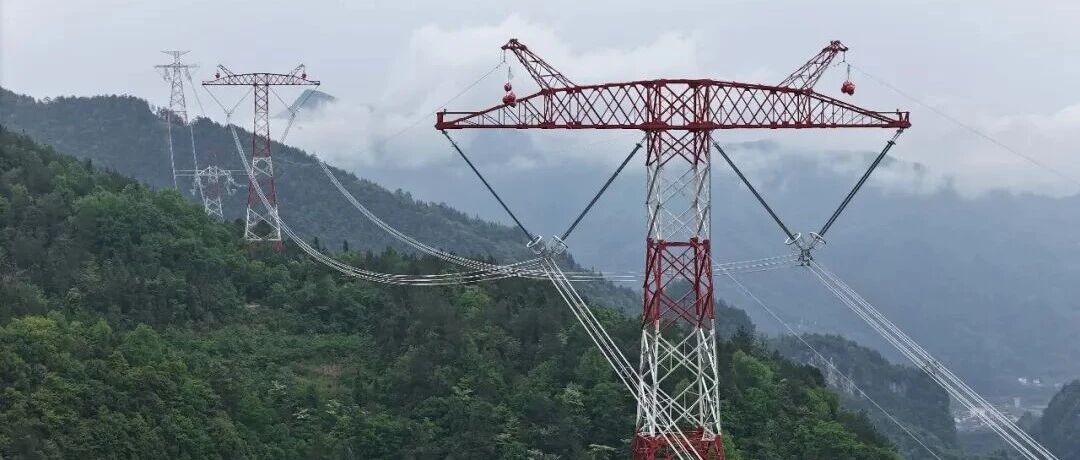
金上—湖北±800千伏特高压直流输电工程建成投运
Xin Hua She· 2025-12-17 23:29
Core Viewpoint - The State Grid announced the completion and operation of the Jinshang-Hubei ±800 kV UHVDC transmission project, marking a significant advancement in clean energy transmission and national energy security [1] Group 1 - The Jinshang-Hubei project is the first UHVDC transmission project to penetrate deep into the Sichuan-Tibet Plateau [1] - This project is expected to promote the cross-regional optimization of clean energy allocation [1] - It plays a crucial role in facilitating the green and low-carbon transformation of energy [1] Group 2 - The project enhances the national energy security assurance capability [1]