
金融服务实体经济

Search documents
内蒙古银行精准注入15亿元金融活水 全力护航中盐吉兰泰盐化集团产业升级
Jin Rong Jie· 2025-12-18 03:42
Core Viewpoint - Inner Mongolia Bank focuses on serving the real economy by providing efficient approval and comprehensive services, exemplified by a 1-year, 1.5 billion yuan credit approval to China Salt Jilantai Salt Chemical Group Co., Ltd., supporting its operational needs and material procurement [1] Group 1: Credit Approval and Financial Support - The credit approval structure is tailored to meet the diversified operational needs of the group, with a total of 1.5 billion yuan scientifically allocated [2] - 500 million yuan is provided as a working capital loan to the parent company, ensuring smooth operational cash flow, while 400 million yuan is allocated to its listed subsidiary for raw material procurement [2] - Additional loans of 500 million yuan and 100 million yuan are provided to other subsidiaries, with guarantees from a strong parent company, enhancing internal credit resource utilization [2] Group 2: Efficient Collaboration and Strategic Alignment - The collaboration was facilitated by high-level strategic alignment and rapid execution, with the bank's leadership identifying a significant investment opportunity in a 20 billion yuan integrated natural soda project [3] - A dedicated service team was established, and a green approval channel was opened, allowing the credit to be successfully disbursed within one month [3] - The client expressed high satisfaction with the bank's understanding, responsiveness, and favorable terms, which provided solid financial support for seizing market opportunities [3] Group 3: Comprehensive Financial Services - Inner Mongolia Bank aims to evolve from a simple trust relationship to a comprehensive strategic partnership, offering tailored cash management and investment services to address the client's complex financial needs [4] - The bank will continue to support various financing needs, including project and acquisition loans, particularly for significant investments like the natural soda project [4] - Additional services include multi-currency international settlement and risk management to facilitate the client's "going out" strategy, as well as expanding into supply chain finance and personal financial services for employees [4] Group 4: Commitment to Local Economic Development - The collaboration with China Salt Jilantai Salt Chemical Group reflects Inner Mongolia Bank's commitment to serving local economies and small to medium enterprises [5] - The bank aims to optimize financial supply structures and support the transformation and innovation of leading enterprises in the region [5] - Inner Mongolia Bank is dedicated to continuously providing financial resources to quality market entities, embodying its principle of "deepening local roots and adhering to innovation" [5]

苦练内功 锻造服务实体硬实力
Qi Huo Ri Bao Wang· 2025-12-18 01:15
Core Insights - The Dalian Commodity Exchange (DCE) hosted a training program aimed at enhancing the service capabilities of futures practitioners, focusing on the growing demand for refined and professional derivative tools in the real economy [1][2] - The training emphasized the integration of futures and spot markets, with the launch of the "Futures to Spot" platform being a key highlight, facilitating personalized delivery needs for enterprises [2][3] - The introduction of monthly average price futures for chemical products is expected to provide pricing references and risk management tools for the plastics industry, addressing challenges such as supply-demand imbalances and export risks [3] Group 1: Training Program Overview - The training combined online and offline participation, attracting representatives from 72 futures institutions and over 2,300 practitioners nationwide [1] - DCE's initiative is part of a broader strategy to transition the futures industry from a "channel service" model to a "comprehensive risk management solution provider" [1][2] Group 2: Policy and Market Environment - The regulatory environment for derivatives has improved, with 1,503 listed companies expected to issue hedging announcements in 2024, reflecting a 15.7% year-on-year increase in the first seven months of the year [2] - Futures companies play a crucial role in connecting futures and spot markets, directly influencing the effectiveness of risk management tools [2] Group 3: Risk Management Tools - Options are becoming essential for enterprises to manage risks dynamically, with strategies like buying put options and selling call options being highlighted [5] - DCE plans to launch a series of options contracts in February 2026, providing more precise short-term risk management tools for industries [5] Group 4: Delivery System Enhancements - The training covered differentiated delivery systems, including a digitalized process for live pig delivery and a network for grain and oil products that lowers participation barriers for enterprises [6] - Adjustments to delivery units for certain futures contracts aim to enhance accessibility for small and medium-sized enterprises [6] Group 5: Compliance and Risk Control - Risk control and compliance management were emphasized throughout the training, with a focus on preventing market manipulation and ensuring transparent operations [7] - Companies are encouraged to establish independent risk control departments and implement integrated management systems to track overall risk exposure [7] Group 6: Service Model Evolution - Futures companies are shifting from merely being transaction channels to becoming solution providers, offering tailored services like "insurance + futures" and basis pricing [9] - The training received positive feedback for its blend of policy insights and practical applications, indicating a successful initiative in enhancing industry capabilities [9]
浙商证券:“十四五”以来坚持服务实体经济,成为省内规模最大证券经营机构
Zhong Guo Ji Jin Bao· 2025-12-17 08:52
"十四五"以来,浙商证券从中型券商发展成为中型券商领头羊和浙江省规模最大的本土券商,其高质量 发展实践为行业提供了"浙商样本"。作为浙江省首家省属国有上市券商,浙商证券始终锚定"深耕浙 江、服务浙商、走向全国"的战略,以高质量发展为主线,扎实做好金融"五篇大文章",在服务实体经 济、推动产业升级、助力共同富裕方面交出亮眼答卷。 深耕浙江 服务实体 金融"活水"精准滴灌经济毛细血管 近年来,浙商证券始终将服务实体经济作为一切业务的出发点和落脚点。"十四五"以来,积极参与浙江 省"凤凰行动"计划,通过打造"凤凰50指数"、开展走进上市公司等活动,系统性挖掘和培育浙商浙企的 投资价值。 当前,浙商证券已经在浙江省内编织了一张深入全省经济毛细血管的金融服务网络。在融资端,公司投 行业务股债双驱,"十四五"以来至今年9月,浙商证券完成股权、债券主承销项目近1300单,融资总规 模超5600亿元,其中债券承销规模超5300亿元,公司债承销排名在浙江省内稳居榜首,为浙江产业转型 升级注入了强劲的资本动能。 在服务中小企业与科技创新上,浙商证券构建了"投早、投小、投科技"的生态链。通过设立浙江省专精 特新母基金等工具,与产业 ...

徽商期货合肥分公司走进寿县三关村开展“保险+期货”助农培训活动
Xin Lang Cai Jing· 2025-12-17 08:04
(图/文 李义伦) 新浪合作大平台期货开户 安全快捷有保障 徽商期货合肥分公司走进寿县三关村开展"保险+期货"助农培训活动 12月12日,徽商期货合肥分公司原油事业部秉持"金融服务实体经济、助力乡村振兴"的初心,走进淮南 市寿县炎刘镇三关村,开展"保险+期货"知识专题培训活动。 深入调研三关村产业痛点,量身定制培训内容,以直白通俗的语言拆解"保险+期货"模式的核心逻辑, 重点阐释该模式如何通过保险与期货工具的协同发力,为农产品价格、产量筑起"双重防护墙",让在场 农户听得懂、能领会、用得上。在场农户纷纷表示,通过培训弄懂了原本觉得"高深"的金融知识,感受 到了金融助农的诚意,希望今后能多开展此类实用培训。 此次培训活动的成功举办,不仅搭建起金融机构与基层农户的沟通桥梁,更将专业的风险管理知识和金 融服务送到了农户家门口,为三关村特色农业产业高质量发展注入了强劲金融动能,也为寿县推进乡村 振兴先行镇战略提供了可复制、可推广的有益经验。下一步,徽商期货合肥分公司将继续坚守金融初 心,深耕助农一线,以更多务实举措赋能乡村振兴,书写金融服务"三农"的新篇章! 责任编辑:戴明 SF006 12月12日,徽商期货合肥分公 ...


交通银行“蕴通万里行”系列活动2025年圆满收官 打通金融服务实体经济的“最后一公里”
Shang Hai Zheng Quan Bao· 2025-12-16 18:42
Core Insights - The article emphasizes the role of financial services as a core engine for high-quality development of the real economy, with the Bank of Communications (BoCom) launching the "Yun Tong" initiative to enhance corporate financial management and support state-owned enterprises [2][3]. Group 1: Brand Initiatives and Services - BoCom has introduced the "Yun Tong Treasury" brand service, targeting state-owned enterprises and large corporate groups with a "1+3+N" smart treasury service system, which includes a comprehensive financial service plan, three system service platforms, and various product combinations [3]. - The "Yun Tong Treasury Management System (Cloud Cross-Bank 3.0)" was launched to enhance financial resource management capabilities, allowing direct connections with over 220 domestic and international banks for improved global account management and payment solutions [4]. Group 2: Collaborative Financing Solutions - In collaboration with local governments, BoCom has developed financing ecosystems that combine policy support, credit enhancement, and data empowerment, exemplified by the "Jike Points Loan" in Hebei, which uses innovation points for credit assessment [6]. - The "Cloud Electric Quick Loan" in Yunnan analyzes electricity usage to assess corporate vitality, providing credit support based on stable electricity consumption patterns [7]. Group 3: Digital Tools and Innovations - BoCom has launched the "Yun Tong Account Management" payment settlement solution to address issues like complex settlement tools and low reconciliation efficiency, offering integrated services for payment, reconciliation, and fund supervision [8]. - The bank aims to embed financial technology deeply into corporate operations, facilitating a new digital financial ecosystem that supports future growth [8]. Group 4: Future Directions - The "Yun Tong Ten Thousand Miles Journey" series of activities has concluded successfully, with BoCom planning to continue these initiatives to enhance resource allocation and financial integration with the real economy, contributing to regional high-quality development and modernization efforts in China [8].

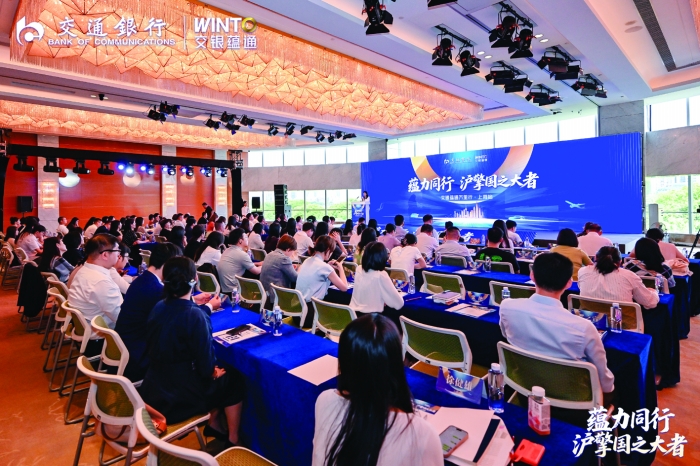
交通银行“蕴通万里行”系列活动2025年圆满收官,打通金融服务实体经济的“最后一公里”
第一财经· 2025-12-16 08:47
Core Viewpoint - The article emphasizes the role of financial services in driving high-quality development of the real economy, highlighting the initiatives of the Bank of Communications (BoCom) in enhancing corporate financial management and innovation through its "Yun Tong" brand activities [1][3]. Group 1: Financial Services Initiatives - BoCom has launched the "Yun Tong Treasury" brand service, offering a "1+3+N" smart treasury service system to nearly 4,000 central state-owned enterprises and over 10,000 companies, facilitating comprehensive financial resource management [3]. - The "Yun Tong Treasury Management System (Cloud Cross-Bank 3.0)" was introduced to enhance financial management capabilities, allowing direct connections with over 220 domestic and international banks, thus improving corporate financial resource management [4]. Group 2: Collaborative Financing Ecosystem - BoCom collaborates with local governments to create a financing ecosystem that combines policy support, credit enhancement, and data empowerment, exemplified by the "Jike Points Loan" in Hebei, which uses innovation points for credit assessment [6][7]. - The "Kechuang Cloud Guarantee Loan" in Yunnan provides up to 10 million yuan in pure credit loans for qualified tech enterprises, lowering financing barriers and supporting the expansion of tech finance [7]. Group 3: Scenario-Based Financial Innovation - BoCom has developed the "Electric Grid Pass" comprehensive financial service plan, which covers various financial needs across the electric power industry, and has upgraded to "Electric Grid Pass 2.0" to include services for new energy charging stations [9]. - The "Yun Electric Quick Loan" in Yunnan uses electricity consumption data to assess corporate vitality, offering credit support based on stable electricity usage patterns [10]. Group 4: Digital Tools and Efficiency Enhancement - The "Yun Tong Accounting" payment settlement solution was launched to address issues like complex settlement tools and low reconciliation efficiency, providing integrated services for enterprises [12]. - BoCom aims to embed financial technology deeply into corporate operations, facilitating a new digital financial ecosystem that promotes data connectivity and integrated management systems [12]. Group 5: Future Directions - The "Yun Tong Wanli Xing" series of activities has concluded successfully, with BoCom planning to continue these initiatives to enhance resource allocation and financial integration with the real economy, supporting regional high-quality development and modernization efforts [13].

银海租赁发行重庆市首单中小微企业支持债券
Zhong Zheng Wang· 2025-12-16 06:33
Core Viewpoint - Chongqing Yinhai Financing Leasing Co., Ltd. has issued a 1 billion yuan bond to support small and micro enterprises, marking the first such bond in Chongqing [1][2] Group 1: Company Overview - Yinhai Leasing was established in 2005 and is the first domestic pilot financing leasing company in Southwest China [1] - The company is the president unit of the Chongqing Financing Leasing Industry Association and the vice president unit of the China Foreign Investment Leasing Committee [1] - Yinhai Leasing focuses on its core business of financing leasing, offering four main product categories: direct leasing, sale-leaseback, operational leasing, and commercial factoring [1] - The company primarily operates in five sectors: advanced manufacturing, aircraft logistics, energy and environmental protection, cultural tourism integration, and public health [1] - Yinhai Leasing has served over 300 clients, providing nearly 35 billion yuan in financing leasing funds and completing around 350 projects [1] Group 2: Bond Issuance and Impact - The bond proceeds will be directed towards financing leasing projects for small and micro enterprises in manufacturing, cultural tourism, and energy and environmental protection sectors [2] - This initiative aligns with national policies aimed at supporting the real economy and will effectively alleviate the issues of "difficult and expensive financing" for enterprises [2] - Guotai Junan emphasizes its commitment to serving the real economy by creating a comprehensive financial service system that promotes the deep integration of capital and industry for sustainable economic development [2]
工行南通如东支行喜获“持续突出贡献金牛企业”称号
Jiang Nan Shi Bao· 2025-12-15 13:51
Core Insights - The article highlights the recognition of Nantong Rudong Branch as a "Sustained Outstanding Contribution Golden Bull Enterprise," reflecting its significant tax contributions and role in local economic development [1][4] - The branch has been actively supporting small and medium-sized enterprises (SMEs) through innovative financial products and optimized credit approval processes, addressing the challenges of financing [2][3] Group 1: Awards and Recognition - The 17th Rudong Coastal Economic Development Zone Cooperation Negotiation Conference awarded the "Golden Bull Award" to 40 outstanding enterprises, with Nantong Rudong Branch being a repeat winner for its contributions exceeding 50 million yuan in annual taxes [1] - The award aims to encourage entrepreneurs to strive for excellence in the innovation and development of the real economy [4] Group 2: Financial Services and Support - Nantong Rudong Branch focuses on serving the real economy by offering tailored financial products like "Inclusive Specialized and New Loans" and "Easy Loans," effectively addressing the financing difficulties faced by enterprises [2] - The branch has successfully disbursed 170 million yuan in microloans and 104.5 million yuan in "Ruyi Insurance," utilizing diverse financial tools to support stable growth for businesses [2] Group 3: Organizational Development and Governance - The branch emphasizes political construction and has conducted numerous theoretical learning sessions to align with the spirit of the 20th National Congress of the Communist Party of China [2] - It has established a comprehensive grassroots structure with 13 branches covering all service points, enhancing its operational effectiveness and governance [2] Group 4: Risk Management and Future Strategy - The branch employs a proactive risk management approach, including the establishment of mechanisms to prevent illegal fundraising and monitor abnormal activities [3] - It aims to contribute to local economic stability and industrial upgrades by continuously engaging in community financial education and providing flexible financial solutions [3][4]

河南鲁山:金融活水精准“滴灌”乡村特色产业
Zhong Guo Jing Ji Wang· 2025-12-15 13:18
Core Insights - The article highlights the successful financial initiatives in Lushan County, Henan Province, which have been recognized as a "Local Financial Ecological Demonstration County" for their role in promoting rural revitalization through high-quality financial services [1] Group 1: Financial Performance - As of October 2025, Lushan County's financial institutions reported a total deposit balance of 50.671 billion yuan, with a year-on-year growth rate of 8.89% [1] - The total loan balance reached 22.923 billion yuan, showing a year-on-year growth rate of 22.22%, indicating that loan growth significantly outpaces deposit growth [1] Group 2: Financial Support Initiatives - Lushan County has established a "government-bank-enterprise connection" leadership group to facilitate financial support for local businesses, conducting 58 connection events that benefited over 67,000 market entities [1][2] - The county has issued loans totaling 8.753 billion yuan to 1,366 enterprises and over 66,000 individual businesses and farmers, with agricultural loans amounting to 11.47 billion yuan, reflecting an average growth rate of 12.09% over the past five years [2] Group 3: Innovative Financial Products - The county has developed over 20 specialized loan products, such as "Mushroom Loan" and "Pear Loan," with a total of 1.619 billion yuan issued to support local industries [3] - Green finance initiatives have led to a total of 1.496 billion yuan in "green credit," supporting ecological agriculture projects [3] Group 4: Disaster Response and Risk Management - Financial institutions in Lushan County have quickly responded to natural disasters, completing crop insurance claims totaling 27.9452 million yuan, benefiting 23,800 farmers [3] Group 5: Future Plans - The county aims to enhance its financial services for the real economy, encourage key enterprises to go public for direct financing, and strengthen local financial regulatory systems to further develop its financial ecosystem [4]
渤海银行债券承销规模首次突破2000亿元大关——以债券之笔书写“五篇大文章” 为实体经济注入强劲“渤海动能”
Jin Rong Jie Zi Xun· 2025-12-15 07:48
Core Insights - Bohai Bank has positioned its bond underwriting business as a key driver for regional economic development, achieving a record bond underwriting volume exceeding 200 billion yuan this year, marking a 32% year-on-year increase, leading among national joint-stock commercial banks [1][2] Group 1: Bond Underwriting Performance - The bank's bond underwriting volume has seen a significant increase, achieving approximately 800 billion yuan in 2023, surpassing 1 trillion yuan in 2024, and exceeding 2 trillion yuan this year, demonstrating a "triple jump" in scale [2] - Bohai Bank's market share in bond underwriting has risen to 2.14%, ranking it 7th among joint-stock commercial banks, showcasing its strong growth trajectory [1][2] Group 2: Support for the Real Economy - The bank has assisted around 300 enterprises in bond financing this year, covering key sectors such as manufacturing, technology innovation, green low-carbon initiatives, private economy, and small and micro enterprises [2] - The bond financing is effectively channeling funds into critical areas of economic development, from technology innovation labs to manufacturing facilities and rural construction [2] Group 3: Innovative Financial Products - Bohai Bank has integrated the "Five Major Articles" of finance into its bond underwriting practices, creating impactful benchmark cases across various sectors [3] - In the technology finance sector, the bank has underwritten over 70 technology innovation bonds this year, with a total underwriting scale nearing 20 billion yuan [3] - The bank has also made strides in green finance, issuing bonds that support enterprises in their green transformation and energy-saving initiatives [3] Group 4: Regional Development Focus - As the only national joint-stock commercial bank headquartered in Tianjin, Bohai Bank prioritizes supporting Tianjin's high-quality development, aligning its bond business with the city's modern industrial system [5][6] - The bank has underwritten over 60 bonds for leasing companies this year, with a total scale exceeding 25 billion yuan, facilitating the flow of financial resources to the leasing industry and further supporting the manufacturing sector [6] Group 5: Future Outlook - As Bohai Bank celebrates its 20th anniversary, it aims to leverage its bond underwriting achievements as a starting point for a new journey, continuing to focus on serving the real economy and contributing to China's modernization efforts [7]