
Premiumization

Search documents
Can Diageo Sustain Its Premiumization Momentum Amid Global Headwinds?
ZACKS· 2025-07-09 17:26
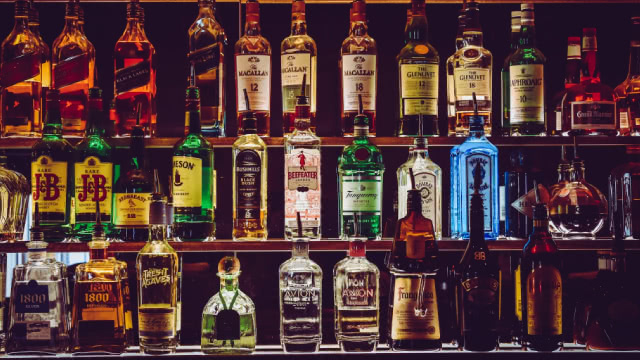
Core Insights - Diageo plc's third-quarter fiscal 2025 results highlight a strong commitment to premiumization, with organic net sales growth of 5.9% and a positive price/mix contribution of 3.1% [1][9] - The company is focusing on higher-end offerings, particularly in tequila and Guinness variants, which has allowed it to maintain revenue growth despite softer consumer demand in some markets [1][2] Regional Performance - North America experienced a 6.2% organic net sales increase, driven by strong demand for tequila and favorable mix effects [2][9] - In Europe, double-digit growth in Guinness and pricing strength helped offset declines in spirits, indicating effective brand-led premium execution [2] - Asia Pacific faced pressure on price/mix due to downtrading and an unfavorable market mix, showing sensitivity to regional economic shifts [2] Strategic Initiatives - Diageo's "Accelerate" program aims to save $500 million over three years, with funds allocated for brand-building and innovation, reinforcing its premiumization strategy [3] - The company is strategically divesting lower-margin assets and focusing on core premium brands to prioritize high-margin growth [3] Market Challenges - Ongoing 10% tariffs on U.K. and European spirits imported into the U.S. present a challenge, but Diageo's premiumization strategy provides some buffer against these cost pressures [4] - Higher-end brands like Don Julio and Johnnie Walker maintain strong brand equity, allowing Diageo to pass on some increased costs to consumers without significantly eroding demand [4] Valuation - Diageo shares are currently trading at a forward 12-month price-to-earnings (P/E) multiple of 15.61X, which is below the industry's average of 17.58X [7]


Pomerantz Law Firm Announces the Filing of a Class Action Against Petco Health and Wellness Company, Inc. and Certain Officers - WOOF
Prnewswire· 2025-07-07 17:58
Core Viewpoint - A class action lawsuit has been filed against Petco Health and Wellness Company, Inc. for alleged violations of federal securities laws during the Class Period from January 14, 2021, to June 5, 2025, claiming damages for misleading statements regarding the company's business and financial performance [1][7]. Company Overview - Petco is a specialty retailer offering a variety of pet products and services, including consumable and non-consumable products, in-store veterinary, and grooming services [3]. - The company emphasizes comparable sales as a key business metric, measuring period-over-period net sales changes from physical and digital locations [3]. Financial Performance and Misrepresentation - Petco claimed to benefit from pandemic-related tailwinds, citing increased pet adoption rates and a transformation into a health-focused pet company, capitalizing on trends of "pet humanization" and "premiumization" [4]. - However, as these pandemic-related benefits waned, Petco's sales and profitability began to decline significantly, with notable financial performance deterioration starting in mid-2023 [5]. - Despite worsening financial conditions, Petco's management continued to assert the viability of its business model centered on premium pet products, issuing optimistic financial guidance for FY 2023 [6]. Class Action Allegations - The lawsuit alleges that Petco's executives made materially false and misleading statements about the sustainability of its business model and the strength of its product strategy, downplaying the severity of issues affecting the company [7]. - Specific allegations include the unsustainability of pandemic-related growth, overstated product strategy strength, and failure to disclose the true scope of financial challenges [7]. Stock Price Impact - Following a negative revision of FY 2023 financial guidance on August 24, 2023, Petco's stock price fell by $1.35 per share, or 20.64%, closing at $5.19 [9]. - A further revision on November 29, 2023, led to a stock price drop of $1.11 per share, or 28.91%, closing at $2.73 [11]. - After disclosing a GAAP net loss of $1.3 billion and acknowledging the unsustainability of its premium product focus on March 12, 2024, Petco's stock fell by $0.50 per share, or 19.53%, to $2.06 [12][13]. Recent Developments - On June 5, 2025, Petco reported a 1.3% year-over-year decline in comparable sales, which was worse than Wall Street's expectations, resulting in a stock price drop of $0.84 per share, or 23.2%, to $2.78 [16][17].


Should You Consider Ralph Lauren Stock Despite Its Elevated Valuation?
ZACKS· 2025-06-27 17:30
Valuation and Performance - Ralph Lauren Corporation (RL) is trading at a forward 12-month price-to-earnings (P/E) ratio of 19.54x, significantly higher than the industry average of 11.2x, indicating strong investor confidence in the company's brand equity and strategic execution [1] - In the past year, RL's shares have increased by 55.5%, outperforming the industry, which declined by 13.5%, as well as the broader sector and the S&P 500 index, which grew by 19.8% and 10.8%, respectively [5][9] - Peers such as Duluth Holdings, Guess? Inc., and Gildan Activewear have lower forward P/E ratios of 7.59x, 7.59x, and 13.21x, reflecting their company-specific challenges [3] Strategic Growth and Digital Transformation - Ralph Lauren's digital transformation is a key growth driver, with direct-to-consumer (DTC) channels now accounting for two-thirds of the business, and digital comps growing in double digits globally [11] - The company has added nearly 6 million new DTC consumers in fiscal 2025, with growth primarily from younger, female, and less price-sensitive demographics [11] - Innovations such as predictive buying and AI-enabled planning are enhancing inventory efficiency and responsiveness [12] Brand and Product Strategy - Ralph Lauren's multi-year strategy focuses on brand elevation, driving core products, and winning in key cities, resulting in low double-digit growth for core products, which represent about 70% of the business [13] - Strategic pricing actions and product elevation have driven average unit retail growth while reinforcing luxury and value perceptions [14] - The company is making investments in prime real estate, such as acquiring its Polo flagship in SoHo, to support its DTC-led growth strategy [14] Earnings Estimates and Market Sentiment - The Zacks Consensus Estimate for earnings per share has seen upward revisions, with estimates rising to $13.69 for 2026 and $15.03 for 2027, indicating expected year-over-year growth rates of around 11% and 9.8% for those years [15] - Despite strong performance, Ralph Lauren faces challenges from a volatile global macroeconomic environment, with consumer sentiment pressured by inflation and geopolitical tensions [18] Investment Outlook - Ralph Lauren is viewed as a compelling investment due to its strong brand positioning, lifestyle-driven product strategy, and expanding global footprint [19] - The company's focus on premiumization and disciplined execution supports consistent performance across regions and channels [19] - However, the stock's premium valuation reflects high investor expectations, which may be tested amid ongoing macroeconomic uncertainty [20]


Will Constellation Brands' Focus on Core Brands Deliver in 2025?
ZACKS· 2025-06-27 15:36
Core Insights - Constellation Brands, Inc. (STZ) is a significant player in the alcoholic beverage industry, focusing on premiumization, brand strength, and portfolio optimization as key growth strategies [1][4] - The company has a diverse portfolio of leading brands, including Modelo Especial, Corona Extra, and Robert Mondavi Winery, positioning it well to meet changing consumer preferences [1] Beer Segment - STZ is concentrating on high-performing core brands in the beer category, which constitutes approximately 83% of total sales [2] - The company is benefiting from favorable trends in the U.S. beer market, particularly the increasing demand for Mexican imports and premium beers, with Modelo being the top-selling beer in the U.S. [2] - For fiscal 2026, STZ anticipates sales growth of 0-3% in the beer segment [2][10] Wine and Spirits Segment - The wine and spirits portfolio is shifting towards higher-end offerings, with brands like The Prisoner and Kim Crawford driving growth [3] - STZ is investing in innovation and omnichannel capabilities to engage younger consumers, while divesting lower-performing assets to enhance margins [3] Competitive Landscape - A comparison with peers such as Anheuser-Busch InBev (BUD), Boston Beer Company (SAM), and Molson Coors (TAP) reveals a focus on premiumization and brand development across the industry [5] - BUD is leveraging consumer demand for its premium beer offerings, while SAM is diversifying into "Beyond Beer" products [6][7] - Molson Coors is also pursuing growth through innovation and premiumization strategies [8] Financial Performance - STZ's forward price-to-earnings ratio is 12.34X, lower than the industry average of 15.23X, indicating potential valuation opportunities [11] - The Zacks Consensus Estimate for STZ's fiscal 2026 earnings suggests a year-over-year decline of 7.9%, with a projected growth of 8.5% for fiscal 2027 [12]


Coca-Cola Pushes for Premiumization: Is This Strategy Working?
ZACKS· 2025-06-26 17:55
Core Insights - The Coca-Cola Company is implementing a premiumization strategy to enhance growth in global markets, focusing on brand innovation and a diverse pricing spectrum [1][3] - Despite macroeconomic challenges, Coca-Cola achieved strong organic revenue growth and expanded margins, demonstrating resilience in adapting to market dynamics [1][3] Product Innovation and Marketing - Coca-Cola's premiumization strategy is highlighted by successful higher-end products like Fairlife and Coca-Cola Zero Sugar, with Fairlife being the top dollar-contributing brand in U.S. retail [2][8] - The return of the "Share a Coke" campaign and digital customization efforts aim to elevate brand engagement and perceived value, supporting the premiumization strategy [2][8] Competitive Landscape - Competitors like PepsiCo and Keurig Dr Pepper are also focusing on premiumization to capture a larger share of the high-margin beverage market [4][5][6] - PepsiCo is transforming its portfolio with premium offerings and strategic acquisitions, while Keurig is expanding its premium coffee segment [5][6] Financial Performance - Coca-Cola's shares have increased by approximately 11.8% year to date, outperforming the industry's growth of 5.8% [7] - The company trades at a forward price-to-earnings ratio of 22.58X, significantly higher than the industry average of 17.59X [9] - The Zacks Consensus Estimate for Coca-Cola's EPS indicates year-over-year growth of 3.1% for 2025 and 8.2% for 2026, with recent estimates showing slight upward movement [10]

DECK vs. UAA: Which Footwear Brand is the Smarter Investment Now?
ZACKS· 2025-06-26 15:26
Core Insights - Deckers Outdoor Corporation (DECK) is experiencing significant growth driven by its brands HOKA and UGG, while Under Armour, Inc. (UAA) is transforming into a premium athletic brand [1] - The competitive landscape raises questions about which stock offers better upside potential for investors [1] Deckers Outdoor Corporation (DECK) - Deckers is focusing on high-margin markets, with fiscal 2025 net sales reaching $4.98 billion, a 16.3% year-over-year increase [2] - Projected first-quarter revenues for fiscal 2026 are between $890 million and $910 million, with HOKA expected to grow in low-double digits and UGG in mid-single digits [2] - Product innovation is key, with strong demand for updated HOKA models and new UGG hybrid products [3] - The company is expanding its omni-channel presence, balancing growth between wholesale and direct-to-consumer (DTC) channels, with international markets outperforming [4] - Despite record results in fiscal 2025, DECK faces challenges from new tariffs potentially adding costs of up to $150 million in fiscal 2026 [5] - Gross margin is expected to decline from 57.9% in fiscal 2025, with a projected contraction of 210 basis points for fiscal 2026 [6] - SG&A costs are anticipated to grow faster than revenues, leading to a decline in earnings per share to 62-67 cents from 75 cents in the prior year [8] - DECK's stock has dropped 13.6% over the past three months due to margin pressures and cautious guidance [20] Under Armour, Inc. (UAA) - Under Armour is enhancing its DTC channel by focusing on premium pricing, resulting in double-digit growth in average unit retail in fiscal 2025 [10] - The brand's loyalty program, with 28 million members, significantly contributes to U.S. DTC revenues [11] - EMEA region is a strong performer, with plans for expansion into France, Spain, and Germany in fiscal 2026 [12] - UAA recorded a 170-basis-point increase in gross margin in fiscal 2025, with expectations for further margin gains in fiscal 2026 [13][14] - The company is targeting $75 million in annualized savings by the end of fiscal 2026 through cost optimization [15] - Despite expected revenue declines of 4-5% in the first quarter of fiscal 2026, UAA is focused on long-term brand elevation and operational discipline [16][17] - UAA's stock has gained 5.5% over the past three months, driven by improving margins and premiumization efforts [20] Comparative Analysis - The Zacks Consensus Estimate for DECK suggests a 7.6% growth in sales but a 4.4% decline in earnings per share for fiscal 2026 [18] - UAA's estimates indicate a 2.1% decline in sales but a 9.7% growth in earnings per share for fiscal 2026 [19] - DECK is trading at a forward P/S multiple of 2.77, while UAA's is at 0.57, indicating UAA may offer better value [22] - Under Armour is viewed as a better investment case due to its strategic shift towards premiumization and disciplined cost control [25][26]


AB InBev Strengthens U.S. Manufacturing Investment in Houston Brewery
ZACKS· 2025-06-18 15:41
Core Insights - Anheuser-Busch InBev (AB InBev) announced a $17 million investment in its Houston brewery as part of its Brewing Futures program, which includes a total commitment of $300 million for facility investments across the U.S. by 2025 [1][9] - The investment aims to enhance brewing excellence and improve transportation capabilities, ensuring efficient product delivery throughout Texas, building on over $50 million already invested in the Houston site in the past three years [2][4] - AB InBev's Brewing Futures initiative focuses on creating a sustainable workforce, supporting job creation, and advancing opportunities for veterans in the manufacturing sector [3] Investment and Economic Impact - The Houston brewery has been a key operational hub for nearly 60 years, with AB InBev and its distributor partners investing over $2.3 billion in capital projects in Texas to date [4] - The company employs nearly 1,000 individuals across four facilities in Texas, significantly contributing to the local economy and the American brewing industry [4] - Nationally, AB InBev operates over 100 facilities and employs 65,000 Americans, having invested nearly $2 billion in facility upgrades over the past five years [5] Growth Strategy - AB InBev is experiencing strong revenue momentum driven by consumer demand for its diverse brand portfolio and strategic pricing initiatives [7] - The company is focusing on expanding its premium and super-premium beer offerings, with brands like Corona and Stella Artois performing well internationally [8] - AB InBev is also diversifying into new categories such as ready-to-drink beverages and hard seltzers, while enhancing its digital platforms for better customer engagement [10]

小米-2025 年投资者日要点
2025-06-09 01:42
Xiaomi Investor Day 2025 Summary Company Overview - **Company**: Xiaomi - **Event**: Investor Day held on June 3, 2025 - **Current Price**: HK$53.20 - **Price Target**: HK$60.00 by December 31, 2025 Key Highlights Financial Targets - Xiaomi targets over 40% adjusted net profit growth and over 30% revenue growth for 2025, aligning with market expectations [4][4][4] - Expected smartphone unit growth of 4-7% and average selling price (ASP) increase of 3-5% [4][4] - Gross margins (GMs) projected to remain between 12-12.5% despite component price volatility [4][4] Electric Vehicle (EV) Strategy - EV delivery target set at 350,000 units with a potential breakeven in the second half of 2025 [4][4] - YU7 pre-orders are three times higher than SU7, indicating strong market interest [4][4][18] - Management emphasizes premiumization in the EV segment to compete against aggressive pricing in China [4][4] Premiumization Strategy - Continued focus on premiumization across all product categories, including smartphones, AIoT, home appliances, and EVs [4][4] - Xiaomi aims to increase its share in the premium smartphone segment, currently holding 17% in the RMB 4,000-6,000 range [4][4] International Business Growth - Xiaomi expects to double its international business revenue in the next three years, driven by smartphone share gains and AIoT product proliferation [4][7] - Plans to expand premium product shipments internationally, targeting significant growth in markets like Africa and Europe [7][7] Research and Development (R&D) Investments - Committed to investing RMB 200 billion over five years in R&D, focusing on AI, chip design, and automotive technologies [8][8] - Over 90% of the AI budget is allocated to large language model (LLM) development, with significant investments in GPU technology [8][8] Market Position and Competition - Xiaomi holds the No. 1 smartphone market share in China at 18.8% and aims to reach the top 2 globally [4][4] - The company has seen a net inflow of 13 million new smartphone users in 2024, with a strong brand recall and premiumization strategy [4][4][28] - Xiaomi's smartphone market share in China has increased from 10.5% in 2020 to 18.8% in 2025 [28][28] IoT and Home Appliances - IoT revenue growth is expected to exceed 30% in 2025, with gross margins expanding by 2.5% year-over-year [4][11] - Xiaomi plans to expand its Mi Home stores to 30,000 in China and 10,000 overseas by 2025 [18][18] Challenges and Risks - Despite positive growth projections, the company may face short-term profit-taking due to the lack of incremental catalysts to lift street estimates [4][4] - The competitive landscape in the smartphone and EV markets remains intense, with ongoing price wars impacting margins [4][4][21] Conclusion - Overall, Xiaomi's Investor Day presented a positive outlook for the company's growth trajectory, particularly in the EV and premium segments, while emphasizing the importance of R&D and international expansion. However, potential risks related to market competition and pricing strategies could impact short-term performance [4][4][4]
重庆啤酒_消费与休闲企业日_在趋势平淡背景下,非即饮渠道持续高端化
2025-06-09 01:42
Summary of Chongqing Brewery Corporate Day Company Overview - **Company**: Chongqing Brewery (600132.SS) - **Industry**: Consumer & Leisure Key Takeaways Recent Updates - The company reported a soft recovery in on-trade channels after a brief uptick in January-February due to Chinese New Year (CNY) celebrations - The channel mix for 1Q remained stable at 45:55 for on-trade/off-trade - Year-to-date (YTD) performance for Carlsberg/Tuborg brands aligns with 1Q results, while 1664/Red Wusu show strong performance in off-trade channels [2][3] Premiumization Strategy - Chongqing Brewery aims to outperform the industry in volume by 2025, focusing on premiumization in off-trade channels - The ratio of canned beer in 1Q grew by 2-3 percentage points year-over-year (yoy) to reach 29-30% - The company plans to accelerate the growth of premium canned products to enhance average selling price (ASP) and gross profit margin (GPM), particularly with continued double-digit percentage (DD%) growth in canned 1664 [2][3][7] Margin Outlook - The company expects cost benefits to persist in 2025 due to locked barley prices, although this will be partially offset by increased depreciation and amortization (D&A) from the Foshan factory - Efforts are being made to maintain a stable selling expense ratio in 2025, with more investments directed towards off-trade channels [2][3] Instant Delivery - Management views instant delivery services as advantageous for market expansion and new product launches - Partnerships with delivery platforms are typically initiated by headquarters and executed by local distributors [2][8] Beyond Beer Vision - The company is expanding into soft drinks, leveraging its beer distribution network and production capabilities - New products include the energy drink "Dianchi" and soda drink "Tianshan Fresh Fruit Village," with a focus on increasing presence in dining channels [2][9] Financial Projections - The 12-month price target is set at Rmb53.6, based on a 19.0x 2026E P/E ratio, reflecting a neutral rating - Revenue projections for 2025 are Rmb15,155.9 million, with EBITDA expected to reach Rmb3,930.1 million [10][13] Risks - Potential risks include slower or faster-than-expected growth of the Wusu brand, fluctuations in ASP, and variations in cost trends [10] Additional Insights - The company is actively exploring new product categories, including tea-flavored beer under the Dali brand - Management believes that the impacts of channel mix shifts and reduced consumption frequency are outweighed by the positive results from product and channel strategies [2][7] This summary encapsulates the key points from the conference call regarding Chongqing Brewery's current performance, strategic initiatives, and future outlook.

Colgate-Palmolive Company (CL) 2025 Conference Transcript
2025-06-04 13:00
Colgate-Palmolive Company (CL) 2025 Conference Summary Industry Overview - The consumer environment in early 2025 is characterized by competing pressures affecting both consumers and retail partners, particularly in the US [5][12] - Inflationary pricing in 2023 and 2024 has led to a cautious consumer mindset, resulting in a slowdown in purchasing patterns [7][12] - Global performance varies, with some regions showing improvement while others remain volatile [8][11] Key Insights on Consumer Behavior - The US market has seen a decline in 12 categories in February, with some recovery in March and April, but overall consumer caution persists [8][12] - Europe is experiencing share growth despite muted category volume, while Latin America remains consistent with slight improvements in Mexico and softness in Brazil [9][10] - In Asia, India shows a slowdown in urban markets but growth in rural areas, while China remains unpredictable [11][66][68] - Africa is performing well, showing better results than in the first quarter [11] Retail Dynamics - Retail inventory levels in the US have not seen major changes, with retailers managing working capital cautiously [14][15] - Internationally, retail environments are improving, with a focus on growth and innovation [16][17] Market Share and Competitive Position - Colgate-Palmolive is satisfied with its market share trends, particularly in Western Europe, where oral care market share is at record levels [18][19][64] - The company has seen strong volume shares and penetration across global markets, despite some mix effects [20] Tariff and Supply Chain Management - The company is actively managing tariff impacts and optimizing its global supply chain for efficiency [22][23] - Investments in productivity and growth initiatives are ongoing, with a focus on maintaining dollar-based earnings growth despite external pressures [24][30] Strategic Growth Initiatives - The 2025 strategic plan emphasizes consistent top-line and bottom-line growth, focusing on selective growth opportunities and innovation [25][26] - The company is leveraging multiple brands and equities in different markets to drive growth, particularly in oral care and pet nutrition [27][28] Digital Transformation and AI Integration - Colgate-Palmolive has integrated its IT organization into its growth strategy, enhancing decision-making capabilities through technology [49][50] - Investments in AI and data analytics are aimed at improving operational efficiency and marketing effectiveness [51][52] Future Outlook and Innovations - The company anticipates modest category improvements in the second half of 2025, driven by strong market share and innovation [58][59] - Key advertising campaigns and product innovations, such as the relaunch of Colgate Total and new equity campaigns for Hill's, are expected to drive growth [60][61] Regional Performance Insights - The success in Europe is attributed to consistent strategy execution, innovation, and effective pricing mechanisms [62][64] - India is viewed as a long-term growth opportunity due to its expanding middle class, despite recent urban market slowdowns [66][68] Hill's Business Performance - Hill's is performing well, growing market share across all segments despite category slowdowns [72][74] - The transition away from private label capacity is nearing completion, expected to enhance margins significantly [77][78] M&A Strategy - The company is not reliant on M&A for growth but remains open to strategic acquisitions that complement its existing portfolio [86][87] Leadership Changes - Recent leadership changes aim to enhance operational efficiency and drive growth, with a focus on leveraging talent from both inside and outside the organization [88][90] Investment Opportunity Summary - Colgate-Palmolive emphasizes durability and predictability in its growth strategy, focusing on organic growth and innovation to drive shareholder value [103][104]
