
制度型开放

Search documents
商务部:重点推进企业、群众急需的试点举措落地见效 释放制度型开放红利
news flash· 2025-07-04 07:22
商务部:重点推进企业、群众急需的试点举措落地见效 释放制度型开放红利 智通财经7月4日电,商务部部长助理唐文弘7月4日在国务院政策例行吹风会上表示,商务部将重点推进 企业和群众急需的试点举措落地见效,在更大范围内推动规则规制、管理标准相通相融,充分释放制度 型开放红利。《关于做好自由贸易试验区全面对接国际高标准经贸规则推进高水平制度型开放试点措施 复制推广工作的通知》近日对外发布。《通知》明确将向全国或其他自贸试验区复制推广总计77条试点 措施,涵盖服务贸易、货物贸易、数字贸易、知识产权保护、政府采购改革、"边境后"管理制度改革、 风险防控等7个方面。 ...
(年中经济观察)多重压力下,中国外贸“稳住阵脚”
Zhong Guo Xin Wen Wang· 2025-07-04 07:21
Core Viewpoint - China's foreign trade has shown a clear upward trend in the first half of the year despite multiple pressures, with cumulative import and export growth gradually increasing from a decline of 1.2% in the first two months to 2.5% in the first five months [1] Group 1: Economic Performance - In the first quarter, the growth rate of imports and exports turned positive, reaching 2.4% in the first four months [1] - The positive performance is supported by factors such as better-than-expected exports, optimized trade structure, and effective policies [1] Group 2: Challenges Ahead - Despite the positive trends, significant pressures remain, particularly from the uncertain trade policies of the United States, which could impact China's exports [1][2] - The global economic growth momentum is weakening, leading to a slowdown in external demand that further compresses China's export space [1] Group 3: Strategic Responses - China is leveraging its advantages in product structure and trade networks to withstand external shocks, with a clear trend towards high value-added and high-tech products [2] - The diversification of markets is accelerating, with increasing trade with emerging and developing economies contributing to foreign trade growth [2] - The government is actively implementing measures to enhance the foreign trade environment and improve enterprise competitiveness [2] Group 4: Policy Impact - A series of high-level institutional opening measures are being introduced to counter external uncertainties, including the expansion of cross-border e-commerce pilot zones [2] - The Ministry of Commerce plans to assist more enterprises in integrating foreign and domestic trade operations, with over 330 foreign trade promotional events scheduled for the second half of the year [2][3] Group 5: Future Outlook - As policy effects gradually manifest, the vitality of China's foreign trade is expected to strengthen [3] - A recent HSBC survey indicates that global companies are adjusting their trade strategies, with China being the most favored market for increasing trade [3] - China's reliance on its full industrial chain advantages and optimized product and market structures is anticipated to create new comparative advantages and growth spaces [3]
77条,复制推广,更大范围释放制度创新红利 高水平开放打出“组合拳”
Yang Shi Wang· 2025-07-04 02:43
Core Viewpoint - The State Council of China has announced the replication and promotion of 77 pilot measures aimed at aligning with international high-standard economic and trade rules, covering various sectors including service trade and goods trade [1][3]. Group 1: Pilot Measures Overview - The 77 pilot measures will be replicated and promoted across a broader scope, encompassing seven major areas: service trade, goods trade, digital trade, and intellectual property, among others [3]. - The measures are designed to address both traditional topics such as trade and investment, as well as new issues including intellectual property protection, environmental standards, labor protection, state-owned enterprise reform, government procurement, digital trade, and finance [5]. Group 2: Implementation Strategy - The replication and promotion of these measures will occur in two tiers: some will be implemented nationwide, while others will be limited to free trade zones [5]. - Local regions and departments are instructed to balance openness and security, ensuring that risk prevention measures are in place while implementing these initiatives [5]. Group 3: Expected Outcomes - The pilot measures are expected to significantly lower institutional transaction costs and yield positive economic and social effects [5]. - The replication of these measures is anticipated to enhance market vitality by addressing areas with strong demand for reform, such as intellectual property and digital cross-border flows [7].

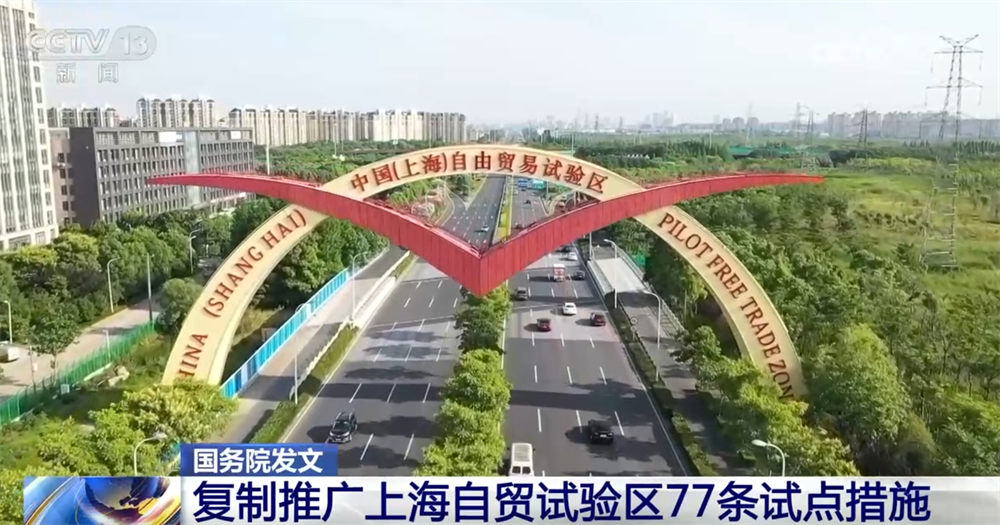
国务院发布相关《通知》 复制推广77条“上海经验” 推进高水平制度型开放
Zheng Quan Shi Bao· 2025-07-03 18:50
Core Viewpoint - The State Council has issued a notification to replicate and promote a total of 77 pilot measures from the Shanghai Free Trade Zone across the country and other free trade zones, focusing on high-standard international trade rules and institutional openness [1][2]. Group 1: Key Measures - The 77 measures cover seven areas including service trade, goods trade, digital trade, intellectual property protection, government procurement reform, "post-border" management reform, and risk prevention [1]. - Among the measures, 34 will be promoted to other free trade zones, including innovations in digital renminbi applications and cross-border fund management for multinational companies [1][2]. - The remaining 43 measures will be implemented nationwide, such as enhancing cross-border electronic payment applications and promoting data security management certification [1][2]. Group 2: Focus Areas - The notification emphasizes the importance of "implementing high-standard digital trade rules" and "advancing government procurement reform," with 15 specific measures in these areas [2]. - Key digital trade measures include provisions for data transfer to foreign entities under national security requirements and the establishment of a digital identity certification system [2]. - In government procurement reform, many measures will continue to be tested within the free trade zone before broader implementation [2]. Group 3: Service Trade and Financial Risk - Service trade is highlighted as a key area for institutional openness, with measures to support the introduction of foreign electronic payment institutions and data transmission for financial institutions [3]. - Financial risk prevention measures include enhanced data collection and innovative regulatory mechanisms like "sandbox regulation" to ensure effective risk isolation [3].
国务院:此次复制推广的77条试点措施 涵盖服务贸易、货物贸易等7个方面
news flash· 2025-07-03 11:22
金十数据7月3日讯,日前,国务院印发《关于做好自由贸易试验区全面对接国际高标准经贸规则推进高 水平制度型开放试点措施复制推广工作的通知》。此次复制推广的77条试点措施,涵盖服务贸易、货物 贸易、数字贸易、知识产权保护、政府采购改革、"边境后"管理制度改革、风险防控等7个方面。其 中,加强数字人民币试点应用场景创新、优化跨国公司跨境资金集中运营管理政策、制定数据出境负面 清单、推动电子提单等电子单据应用、健全协调劳动关系三方机制等34条措施复制推广至其他自贸试验 区;推进电子支付跨境应用、鼓励采信商用密码检测认证结果、实施数据安全管理认证制度、有序推进 政务数据开放、提升政府采购平台数字化水平等43条措施复制推广至全国。 国务院:此次复制推广的77条试点措施 涵盖服务贸易、货物贸易等7个方面 ...
★五部门推动南沙加快建设跨境资管中心
Zheng Quan Shi Bao· 2025-07-03 01:56
Core Viewpoint - The People's Bank of China, along with other financial regulatory bodies, has issued a set of 30 key measures to enhance financial support for the development of Nansha and the Guangdong-Hong Kong-Macao Greater Bay Area, focusing on innovation in financial services and cross-border financial cooperation [1][2][3] Group 1: Financial Support for Innovation and Entrepreneurship - The measures aim to support the development of technology innovation, high-end manufacturing, digital industries, marine industries, and future industries, as well as youth entrepreneurship [1] - New business models such as "loans + external direct investment" will be explored, and insurance institutions will be encouraged to invest in venture capital funds or directly in tech enterprises [1] - Qualified manufacturing and tech enterprises in Nansha will be supported in issuing tech bonds and exploring mixed financing models [1] Group 2: Enhancing Cross-Border Financial Services - The measures will facilitate cross-border payment services and credit financing, and expand the pilot program for Hong Kong and Macao residents to open bank accounts [2] - There will be a focus on developing a cross-border asset management center in Nansha and encouraging multinational companies to establish regional headquarters [2] - The initiative includes the promotion of cross-border wealth management services and the simplification of application processes for cross-border equity investments [2] Group 3: Opening Up the Financial Sector - The measures propose the establishment of an international commercial bank in the Greater Bay Area and the introduction of diverse investment institutions such as sovereign wealth funds and venture capital [3] - There will be an emphasis on aligning with international high-standard regulatory frameworks and exploring pilot programs for institutional openness in the financial sector [3] - The initiative supports the participation of qualified foreign institutions in financial business trials, aiming to streamline restrictive measures [3]
★中国资本市场将为全球投资者提供不可替代投资机遇
Zheng Quan Shi Bao· 2025-07-03 01:56
Group 1 - The core message emphasizes that China's capital market will provide irreplaceable investment opportunities for global investors due to the high-quality development of the Chinese economy and the release of reform vitality [1][2] - The Chinese economy is characterized by a robust industrial system, comprehensive infrastructure, vast market scale, and a stable social environment, contributing to its role as a major contributor to global GDP growth [1][2] - The A-share market has seen significant participation from foreign investors, with a stable market capitalization of around 3 trillion yuan, and a net inflow of over 200 billion yuan from long-term funds such as social security and insurance this year [2][3] Group 2 - A significant portion of A-share listed companies have maintained resilience, with three-quarters achieving profitability and half experiencing profit growth, reflecting the strength of innovation and technological advancement [3][4] - The proportion of high-tech enterprises among newly listed companies has exceeded 90%, indicating a strong focus on advanced manufacturing, digital economy, and green low-carbon sectors [3] - A-share companies have set historical records in shareholder returns, with total dividends reaching 2.4 trillion yuan and share buybacks at 147.6 billion yuan, enhancing the stability and predictability of returns for investors [3][4] Group 3 - The China Securities Regulatory Commission (CSRC) plans to continue guiding listed companies to enhance investment value through cash dividends, share buybacks, and mergers and acquisitions [4][5] - The CSRC aims to create a better ecological environment for foreign investment through systematic openness, focusing on market-oriented, legal, and international directions [4][5] - Future initiatives will include improving transparency and predictability of regulations, enhancing communication with international investors, and strengthening cross-border regulatory cooperation [5]
山东出台20条高含金量举措稳外资
Da Zhong Ri Bao· 2025-07-03 01:07
Core Viewpoint - Shandong Province has introduced a comprehensive action plan to stabilize foreign investment, featuring 20 high-quality measures aimed at enhancing the investment environment and promoting foreign capital inflow [2][3] Group 1: Measures to Expand Openings - The plan aims to leverage the new round of service industry expansion pilot in Qingdao, focusing on breakthroughs in cultural sectors such as film production [2] - It supports foreign enterprises in participating in segmented production of biological products and encourages clinical trials for overseas-listed cell gene drugs in Shandong [2] - The plan includes a "three-channel" approval process for registered applications of overseas-produced drugs transitioning to production in Shandong [2] Group 2: Investment Promotion Strategies - Shandong will create a matrix of major events, including the Qingdao Summit for multinational company leaders and various trade weeks, to enhance international influence [3] - The province will target major investment sources such as Europe, Singapore, Japan, South Korea, and Hong Kong, utilizing national platforms like "Invest in China" and the China International Import Expo for precise investment attraction [3] - Collaboration with central enterprises will be deepened to promote profit reinvestment, cross-border mergers and acquisitions, and innovative foreign investment methods in new energy and finance [3] Group 3: Enhancing Open Platform Efficiency - The province will implement a high-quality development action plan for development zones, focusing on precise investment attraction and monitoring of foreign capital operations [3] - A "Bonded+" new business model will be promoted in comprehensive bonded zones to strengthen the main battleground for utilizing foreign capital [3] - A regular scheduling mechanism for major foreign investment projects will be established, ensuring comprehensive tracking and support for projects with over $100 million in planned investment [3]
制造业锚定产能高地 金融业抢滩开放红利
Zheng Quan Shi Bao· 2025-07-01 19:14
Group 1: Tesla's Energy Business Expansion - Tesla's Shanghai energy factory, the second of its kind globally, has been operational for over four months, producing Megapack energy storage systems that exceed 3.9 MWh, sufficient to power 3,600 households for one hour [1] - The factory has not only supplied the Chinese market but has also exported hundreds of Megapack units to various countries in Europe and Oceania [1] - The factory covers approximately 200,000 square meters, equivalent to 30 standard football fields, with an annual production capacity planned for 10,000 Megapacks [1] Group 2: Strategic Projects and Investments - The first grid-side energy storage project in China, with a total investment of 4 billion yuan, has been signed in Shanghai, expected to stabilize power grid fluctuations by storing energy during low demand and releasing it during peak times [2] - The project aims for a storage capacity at the gigawatt level, with the first phase expected to be operational this year, providing 300 MWh of storage [2] Group 3: Foreign Investment Trends in China - Many foreign manufacturing companies are deepening their presence in the Chinese market, as evidenced by Henkel's acquisition of a factory in Suzhou to enhance production capabilities for its consumer brands [3] - Foreign financial institutions are also accelerating their entry into the Chinese market, with several firms recently establishing operations in Shanghai [3] Group 4: China's Economic Landscape and Foreign Investment - The number of newly established foreign-invested enterprises in China increased by 10.4% year-on-year from January to May, with 24,000 new companies registered [5] - A significant percentage of British and German companies in China plan to maintain or increase their investments by 2025, indicating strong confidence in the market [5] - China is viewed as a critical market for global companies, with its robust industrial chain and supply chain providing a competitive advantage [4][5]

探索科技创新与产业创新融合发展新路子
Xin Hua Ri Bao· 2025-06-30 20:33
Core Viewpoint - The article emphasizes the importance of integrating technological innovation with industrial innovation as a key strategy for Jiangsu province to contribute to national development, highlighting the need for a collaborative ecosystem that fosters innovation across various sectors [2][3][4]. Group 1: Technological and Industrial Innovation - Jiangsu province aims to enhance the vitality of enterprises in technological innovation by optimizing the business environment and establishing a robust incentive system for innovation [2]. - The province plans to simplify R&D tax deduction procedures and increase tax incentives for innovation, encouraging enterprises to boost their R&D investments [2][4]. - Collaboration between state-owned and private enterprises is essential for fostering innovation, with state-owned enterprises focusing on major research and core technology breakthroughs, while private enterprises drive market-oriented innovation [3]. Group 2: Innovation Ecosystem - The article advocates for the construction of a complementary and interactive innovation ecosystem, promoting collaboration between high-tech parks and educational institutions to facilitate organized research and industrialization [3][4]. - The integration of new technologies and business models with specific industrial needs is crucial, with a focus on creating new innovation scenarios and platforms [4]. Group 3: Financial Support for Innovation - The article highlights the need for a healthy interaction between finance, technology, and industry, emphasizing the role of modern technologies like big data and AI in transforming traditional finance [4]. - Encouragement of various types of investment, including angel funds and venture capital, is necessary to support the development of modern technology industries [4]. Group 4: Education and Talent Development - The article stresses the importance of high-level education and skilled talent as foundational supports for modernization, advocating for a dynamic optimization of talent training structures based on industry needs [5]. - The government is encouraged to enhance its service quality and improve the relationship between government and enterprises to foster a conducive environment for innovation [5]. Group 5: Open Innovation and Global Integration - Jiangsu province is urged to deepen its institutional openness and align with national strategies such as the Beijing-Tianjin-Hebei coordinated development and the Guangdong-Hong Kong-Macao Greater Bay Area [6]. - The province should also actively participate in the high-quality construction of the Belt and Road Initiative, focusing on digital economy and green development [6].
