数字贸易规则

Search documents
陆家嘴财经早餐2026年3月29日星期日
Wind万得· 2026-03-28 22:24
Group 1 - The Houthis in Yemen have launched military actions against Israel, indicating a new front in the Iran conflict and exposing the Bab-el-Mandeb Strait to risks [4] - Following military actions against Venezuela and Iran, US President Trump has threatened Cuba, stating it is next on the list [4] - Energy prices are rising, leading to inflation expectations and forcing central banks to reconsider interest rate cuts, negatively impacting stocks, bonds, and gold [4] Group 2 - The State Council's Food Safety Office has held discussions with local government officials in Chengdu and Chongqing regarding food safety issues exposed during the CCTV "3.15" gala [5] - The Ministry of Commerce announced a temporary implementation arrangement for the WTO e-commerce agreement, aiming to promote inclusive and sustainable digital trade development [6] - China's central fiscal childcare subsidies for 31 provinces have been disclosed, with significant funding allocated to several provinces [7] Group 3 - Major Chinese banks, including ICBC and CCB, reported steady growth in asset quality and profitability, with a combined net profit exceeding 900 billion yuan [8] - A subsidiary of Xilinmen, a leading mattress company, is facing internal issues with illegal fund misappropriation amounting to 100 million yuan [8] - Sanhua Intelligent Controls received attention from 284 institutions, indicating strong interest in its prospects in the global electric vehicle market [8] Group 4 - China's innovative drug transactions exceeded $60 billion in Q1, nearing half of the expected total for 2026 [9] - A significant breakthrough in nuclear medicine has been achieved with the production of medical-grade alpha isotopes in China [9] - Shanghai aims to become a leading city for developers, showcasing advancements in AI and smart technology [9] Group 5 - The global shipping industry has faced increased fuel costs due to the ongoing conflict in the Middle East, with additional costs exceeding 4.6 billion euros since February [13] - Russia plans to ban gasoline exports starting April 1 to stabilize domestic prices amid market turmoil [13] - The new Noida International Airport in India has officially opened, with an investment of approximately $1.18 billion [13] Group 6 - Thailand is negotiating with Iran to ensure safe passage for oil tankers through the Strait of Hormuz amid rising domestic oil prices [14] - The Philippines government has approved a price cap on imported rice to mitigate rising food costs due to the conflict [14] - 7-Eleven Japan is launching a new service allowing customers to order freshly cooked food via smartphone [15]


关税威胁真解除了?印度炼厂急躲俄油,就为保住那18%税率!
Sou Hu Cai Jing· 2026-02-13 23:04
Core Viewpoint - The recent trade agreement between the US and India marks a significant reduction in tariffs, facilitating deeper economic cooperation and market access for both nations [1][2][3]. Group 1: Tariff Adjustments - The US has implemented an 18% "reciprocal tariff rate" on Indian-origin goods, a substantial decrease from previous rates that could reach 50% or more [3][21]. - India has committed to significantly lowering tariffs on a range of US industrial and agricultural products, including specific items that benefit US agricultural states and manufacturing hubs [4][5][6]. Group 2: Non-Tariff Barriers - India has agreed to address long-standing non-tariff barriers that have hindered US companies, including the import licensing process for medical devices and market access restrictions for ICT products [7][8]. - The agreement includes a commitment from India to evaluate the adoption of US standards or international testing requirements within six months of the agreement's effectiveness [9]. Group 3: Strategic Goals - The US aims to expand exports, deepen market access, and strengthen regulatory frameworks, seeking not only to sell more products but also to lower entry barriers for US workers and producers in India [13][14][15]. - The agreement reflects a broader strategy where both countries are positioning themselves for future economic and technological collaboration, moving beyond mere tariff reductions [12][32]. Group 4: Procurement Commitments - A notable aspect of the agreement is the procurement commitment of $500 billion over five years, which includes high-value items such as energy, aircraft parts, and technology products [26][27]. - This procurement list is seen as a means to translate political agreements into tangible business contracts, particularly in the technology sector [28][29]. Group 5: Energy and Geopolitical Considerations - The agreement subtly ties tariff reductions to India's commitment to reduce imports of Russian oil, indicating a complex geopolitical exchange [35][37]. - India is gradually diversifying its oil supply sources, reflecting a strategic approach to balance its energy needs while maintaining relations with both the US and Russia [41][53]. Group 6: Future Cooperation and Challenges - The agreement is viewed as a first step towards a more comprehensive bilateral trade deal, with mechanisms in place to adjust commitments if either party alters its tariff arrangements [49][66]. - The real test will be whether the commitments translate into effective execution, particularly in areas like non-tariff barriers and digital trade rules [64][65].

跃居全省第一,郑州航空港跨境电商何以起势?|顶端观察
Sou Hu Cai Jing· 2026-01-25 19:13
Core Insights - The article highlights the rapid growth of cross-border e-commerce at Zhengzhou Airport, with a significant increase in import and export value, showcasing the region's role as a key player in China's economic landscape [3][13]. Group 1: Growth Metrics - In 2025, the import and export value of cross-border e-commerce at Zhengzhou Airport reached 34.779 billion yuan, marking a year-on-year increase of 53.28% and doubling compared to 2023 [3]. - The number of cross-border e-commerce enterprises registered or filed in Zhengzhou Airport reached nearly 1,000 by the end of 2025, indicating a strong clustering effect [6]. Group 2: Infrastructure and Logistics - Zhengzhou Airport completed a cross-border e-commerce cargo volume of 262,000 tons in 2025, accounting for 51.5% of the international outbound cargo volume, and operated over 4,200 cross-border e-commerce charter flights [7]. - The airport has established 26 international road transport routes, including "Zhengzhou-Moscow" and "Zhengzhou-Vientiane," facilitating the transport of 470 tons of cross-border e-commerce goods annually [7]. Group 3: Service Innovations - Zhengzhou Airport has implemented AI-driven customs clearance processes, significantly reducing the time required for customs declaration from 75 minutes to 10 minutes [11]. - The airport has developed a "cross-border e-commerce sensitive goods air transport safety control model," addressing challenges in transporting sensitive goods and promoting business growth [11]. Group 4: Economic Impact - The growth of cross-border e-commerce is seen as a successful practice of inland regions integrating into the global economy, enhancing the competitiveness of local products in international markets [13]. - The establishment of a comprehensive ecosystem for cross-border e-commerce, including platforms, warehousing, logistics, and payment systems, strengthens Zhengzhou's position in both the "Silk Road in the Air" and "Silk Road on Land" [13].

多部门部署加强政府投资基金布局规划和投向指导|营商环境周报
2 1 Shi Ji Jing Ji Bao Dao· 2026-01-20 08:40
Group 1 - The National Development and Reform Commission, along with three other departments, has issued guidelines to strengthen the planning and direction of government investment funds, aiming to prevent blind following and low-level repeated construction [2][3] - The guidelines emphasize the integration of technological and industrial innovation, promoting the development of new productive forces and supporting the transformation and upgrading of traditional industries [2] - Government investment funds are prohibited from investing in restricted or eliminated industries as per the industrial structure adjustment guidance catalog [2] Group 2 - The Ministry of Industry and Information Technology has released an action plan to promote the high-quality development of industrial internet platforms, targeting over 450 influential platforms by 2028 [4][5] - The action plan includes four main initiatives: cultivating differentiated platforms, enhancing data intelligence, scaling application, and supporting platform ecosystems [5][6] - Specific measures include improving data collection capabilities, developing industrial models, and fostering collaboration among platforms and enterprises [5][6] Group 3 - The General Administration of Customs announced the nationwide replication of 25 cross-border trade facilitation measures to enhance foreign trade quality and volume [7][8] - Key measures focus on improving cross-border logistics efficiency, supporting new business models, and optimizing the regulation of special goods, particularly in the automotive sector [7][8] - The initiative aims to reduce costs and enhance the efficiency of cross-border logistics through various supportive actions [7][8] Group 4 - The joint release of new regulations by the market supervision departments of Shanghai, Jiangsu, Zhejiang, and Anhui aims to refine standards for minor violations, expanding the criteria from 19 to 26 items [10][11] - The regulations emphasize a combination of punishment and education, encouraging flexible enforcement methods to support the development of new industries and business models [11][12] - Specific criteria for reduced penalties and non-penalty decisions have been clarified to enhance operational effectiveness and standardize discretionary power [12][13] Group 5 - Tianjin has introduced 98 measures to align with international high-standard trade rules, focusing on service trade, goods trade, and digital trade [14][15] - The measures include promoting financial technology, simplifying import procedures, and enhancing intellectual property protection [14][15] - The initiative aims to foster a conducive environment for trade and investment, supporting the development of a high-level open economy [14][15] Group 6 - Harbin New Area has established a "recovery of credit" mechanism to link administrative review corrections with the restoration of corporate credit, enhancing market vitality [17][19] - This innovative mechanism allows for seamless integration of administrative review decisions and credit recovery processes, significantly reducing transaction costs for businesses [17][19] - The initiative has successfully cleared past administrative review cases, achieving a goal of zero outstanding cases in three years [19]
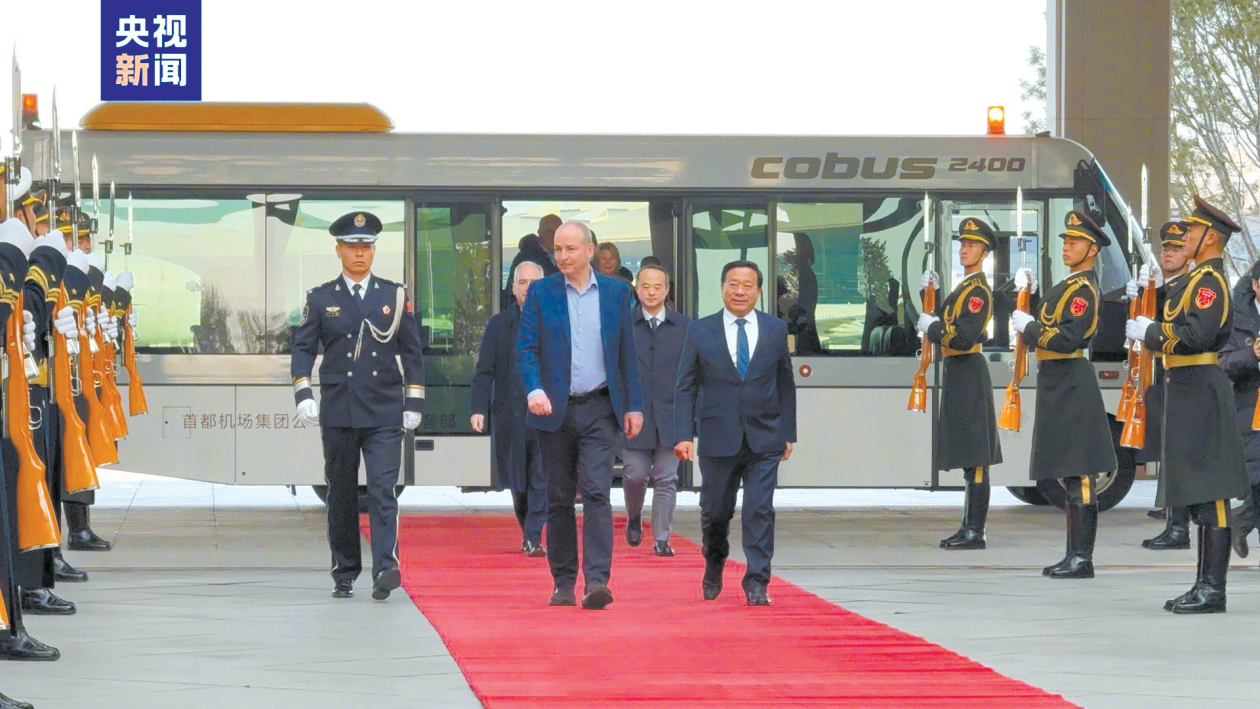
对华转达欧盟关切,向欧传递中方信号,爱尔兰总理访华帮助稳定欧中关系
Huan Qiu Shi Bao· 2026-01-04 22:46
Group 1 - The core focus of Irish Prime Minister Martin's visit to China is to enhance bilateral political and economic relations, as well as to discuss EU-China relations and global challenges [1][3] - Trade is expected to be a central topic during the visit, with China being Ireland's largest trading partner in Asia and the fifth largest globally, with a total trade volume of €36 billion in 2023 [3][4] - China's direct investment in Ireland has significantly increased, reaching $380 million in 2023, a 265% growth, and projected to approach $1.04 billion in 2024 [4] Group 2 - Martin's visit is part of a broader trend of European leaders visiting China, indicating a pragmatic adjustment in Europe's policy towards China amidst changing global dynamics [5][7] - The visit is closely monitored by Brussels, as Ireland will assume the EU presidency in July, aiming to stabilize EU-China relations during a period of global trade tensions [7] - The discussions may include topics such as the EU-China investment agreement, mutual recognition of green standards, and digital trade rules, reflecting EU concerns and interests [7]
突然!美国发出警告!9家企业被点名!
Zheng Quan Shi Bao Wang· 2025-12-18 02:57
Core Viewpoint - The U.S. government threatens retaliatory measures against the EU for imposing fines and investigations on American tech giants like Google, X (formerly Twitter), and Meta, citing "discriminatory" practices against U.S. service providers [1][2]. Group 1: U.S. Response - The U.S. Trade Representative's Office (USTR) stated that if the EU continues to impose discriminatory restrictions on U.S. service providers, the U.S. will have no choice but to use all available tools for retaliation [2]. - USTR highlighted that new fees and restrictions could also affect other countries considering similar policies, serving as a warning [2]. - The USTR named nine European companies, including Accenture, DHL, Siemens, and Spotify, as potential targets for retaliatory measures due to their unrestricted access to the U.S. market [2][3]. Group 2: EU's Position - The EU Commission defended its regulations, stating they aim to ensure a "safe, fair, and equal competitive environment" and that enforcement does not involve discrimination [3]. - The EU is pushing for digital trade regulations and plans to tax major U.S. tech companies, which critics argue could hinder technological innovation and unfairly increase tax burdens [2][4]. Group 3: Recent Actions Against U.S. Tech Companies - The EU has taken enforcement actions against U.S. tech firms this year, including a €120 million fine against Musk's X platform and a €2.95 billion fine against Google for anti-competitive behavior in advertising [4]. - Ongoing investigations include Meta's restrictions on AI service providers accessing WhatsApp and Google's use of online content for its AI services [4]. Group 4: Broader Trade Implications - The digital services tax dispute is overshadowing ongoing U.S.-EU trade negotiations, with the EU seeking to eliminate tariffs on U.S. industrial goods in exchange for U.S. tariffs on nearly all EU exports [5]. - The EU's trade chief emphasized the importance of protecting technological sovereignty while maintaining regular communication with U.S. trade representatives [5].


突然!美国,发出警告!9家企业被点名!
券商中国· 2025-12-18 01:26
Core Viewpoint - The article discusses the ongoing tensions between the U.S. and the EU regarding digital trade regulations, particularly focusing on the EU's imposition of fines and investigations into major U.S. tech companies, which has prompted threats of retaliatory measures from the U.S. government [1][2]. Group 1: U.S. Response to EU Actions - The U.S. Trade Representative's Office (USTR) has warned that if the EU continues to impose "discriminatory" measures against U.S. service providers, the U.S. will have no choice but to retaliate using all available tools [2][3]. - USTR specifically named nine European companies, including Accenture, DHL, and Siemens, indicating they may be targets of U.S. countermeasures due to their extensive operations in the U.S. market [2][3]. - The U.S. is preparing to initiate an investigation under Section 301 of the Trade Act of 1974, which could lead to trade remedies including tariffs [2][3]. Group 2: EU's Digital Tax and Regulatory Actions - The EU is advancing its digital trade regulations, including a digital services tax aimed at major U.S. tech firms like Google, Meta, and Amazon, which critics argue could hinder technological innovation [2][3]. - The EU has recently taken enforcement actions against U.S. tech companies, including a €120 million fine against Musk's platform X and a €2.95 billion fine against Google for anti-competitive behavior [4][5]. - The EU maintains that its regulations are designed to ensure a safe and fair competitive environment for all companies operating within its jurisdiction, rejecting claims of discrimination [3][6]. Group 3: Broader Implications and Ongoing Negotiations - The digital services tax dispute is affecting ongoing U.S.-EU trade negotiations, with the EU seeking to eliminate tariffs on U.S. industrial goods in exchange for U.S. concessions on tariffs for EU exports [6]. - The EU's trade chief has emphasized the importance of protecting technological sovereignty while maintaining regular communication with U.S. trade representatives [6].

美国威胁对欧盟数字服务税计划实施报复 或启动301调查
Xin Lang Cai Jing· 2025-12-16 21:27
Core Viewpoint - The Trump administration threatens retaliatory measures against the EU in response to the EU's taxation of American tech companies, including Accenture, Siemens, and Spotify Technology SA, which may become targets for new restrictions or fees [3][7]. Group 1: Retaliatory Measures - The U.S. Trade Representative's Office (USTR) stated that if the EU continues to impose discriminatory measures that hinder American service providers, the U.S. will have no choice but to utilize all available tools to counter these unreasonable actions [3][7]. - The USTR indicated that U.S. law permits the imposition of fees or restrictions on foreign service providers as a form of countermeasure [3][7]. - A source revealed that the U.S. is preparing to initiate an investigation under Section 301 of the Trade Act of 1974, which would allow the government to take trade remedial actions, including tariffs [3][7]. Group 2: Digital Trade Regulations - The core of the controversy lies in digital trade-related rules, with the EU pushing for regulations that would tax American tech giants like Google, Meta, and Amazon [4][8]. - Critics argue that the EU's digital tax plan is slowing technological innovation and unfairly increasing taxes globally [4][8]. - The U.S. Congress previously considered including a provision in Trump's signature tax cut legislation to impose "retaliatory taxes" on countries deemed "discriminatory" by the U.S. [4][8]. - The USTR mentioned that retaliatory measures could extend to "other countries adopting EU-style strategies," potentially warning Australia, the UK, and other nations considering similar policies [4][8].
突发特讯!商务部向全球通告:中美将于10月24日至27日举行经贸磋商,引发全球高度关注
Sou Hu Cai Jing· 2025-10-23 11:54
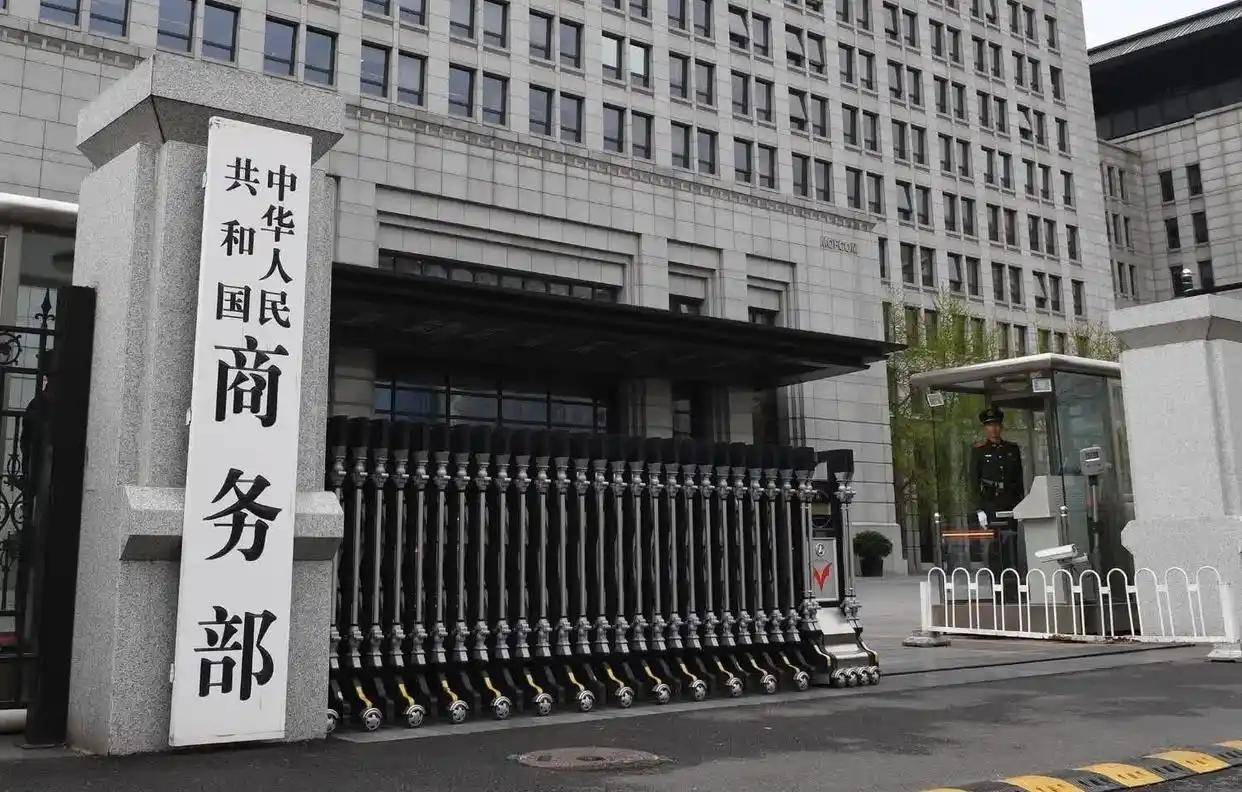
Core Insights - The upcoming face-to-face negotiations between China and the U.S. in Kuala Lumpur on October 24 are highly anticipated and are expected to have significant implications for global markets [1][3]. Group 1: Strategic Context - The choice of Malaysia as the negotiation venue reflects a strategic geopolitical calculation, serving as a neutral ground that avoids direct pressure from either side's home territory while acknowledging ASEAN's growing economic significance [3]. - The timing of the talks is notable, occurring close to the U.S. election period and after China's Q3 economic data release, suggesting a carefully crafted opportunity for both sides to negotiate with updated information [3]. Group 2: Depth of Negotiations - The discussions will extend beyond traditional tariff issues to encompass deeper topics such as digital trade rules, renewable energy standards, and ethical considerations in artificial intelligence, indicating a broader scope of negotiation [5]. - The high-level representation from both sides, with China's Vice Premier He Lifeng leading the delegation, signifies the importance of these talks and the potential for addressing structural challenges in the economic relationship [5]. Group 3: Global Economic Reordering - The negotiations are set against the backdrop of a shifting global economic order, with the decline of the post-World War II Bretton Woods system and the ongoing restructuring of global supply chains exacerbated by the COVID-19 pandemic and geopolitical conflicts [7]. - Southeast Asian countries are closely monitoring the outcomes, as any agreements reached will likely reshape regional supply chains and impact local industries [7]. Group 4: Market Expectations - Capital markets exhibit a cautious optimism regarding the talks, reflecting lessons learned from previous negotiations that have experienced volatility and uncertainty [9]. - A constructive outcome may not necessarily be a comprehensive agreement but rather the establishment of effective crisis management mechanisms to prevent conflicts amid competition [9]. Group 5: Future Economic Relations - The negotiations serve as a test for the U.S.'s "competitive coexistence" strategy, balancing the need to curb China's high-tech advancements while maintaining essential economic cooperation [11]. - The discussions signal a recognition that complete decoupling is unrealistic, and that competition and cooperation will define the future of U.S.-China economic relations [11].
WTO首个全球数字贸易规则在京试行,中国开放迈向“引领规则实施”
Di Yi Cai Jing· 2025-09-13 07:11
Core Points - China is the first WTO member to pilot the e-commerce agreement, marking a shift from "leading rule-making" to "leading rule implementation" [1][3] - The e-commerce agreement, reached after over five years of negotiations, includes four pillars: digital facilitation, digital openness, digital trust, and digital inclusion [3] - The implementation of the agreement is expected to enhance trade facilitation and operational efficiency for businesses, creating a stable regulatory environment for new business models like cross-border e-commerce and supply chain finance [1][4] Group 1: Implementation and Objectives - The "Work Plan" released by the Ministry of Commerce includes 41 specific measures aimed at improving trade digitalization, data governance, and international cooperation [5] - Beijing, as the only pilot city, will explore pathways and accumulate experience in digital trade practices, which can be replicated and promoted [4][5] - The measures aim to enhance customs efficiency through electronic documents and improve cross-border data governance, which is crucial for sustainable digital trade [5][6] Group 2: International Cooperation and Standards - The "Work Plan" aligns with high-level international digital trade rules, promoting modernization of digital trade governance and expanding international cooperation opportunities [5][6] - The agreement reflects a consensus among major economies on international digital trade rules, facilitating the last mile of policy implementation in China [6] - The initiatives not only respond to the agreement's requirements but also provide policy tools for China's exploration of institutional innovation in digital trade [6]