
新型电力系统

Search documents
14.8GW!内蒙古34个独立储能电站开工
中关村储能产业技术联盟· 2025-07-04 09:23
Core Viewpoint - The acceleration of new energy storage projects in Inner Mongolia is crucial for enhancing grid stability and supporting the construction of a new power system, addressing renewable energy consumption issues [2]. Group 1: New Energy Storage Projects - By the first half of 2025, Inner Mongolia plans to start construction on 34 independent new energy storage stations, with a total installed capacity of 14.8 million kilowatts [1]. - Recent projects include a 1 million kilowatt/600 megawatt-hour storage station in Ulanqab and a 300 megawatt/1280 megawatt-hour project in Ordos, among others [1]. - The new energy storage stations will utilize various technologies, including lithium iron phosphate, all-vanadium flow batteries, compressed air storage, and molten salt storage [1]. Group 2: Importance of New Energy Storage - New energy storage acts as a "stabilizer" and "regulator" for the power system, playing a vital role in the construction of a new power system [2]. - The rapid development of new energy storage stations will not only help in the consumption of renewable energy but also enhance the stability and flexibility of the power grid [2].


6月45项新型储能政策发布,3地发布136细则,7地更新市场规则
中关村储能产业技术联盟· 2025-07-04 09:23
Core Viewpoint - The article highlights the significant increase in energy storage policies in China, with 45 policies released or solicited for opinions by June 2025, focusing on development planning, subsidy policies, electricity markets, and management regulations [1][2]. Policy Data Overview - In June 2025, a total of 45 energy storage-related policies were released, with 5 at the national level. Among these, 38 were classified as very important, with Guangdong and Inner Mongolia leading in the number of policies issued. The majority of policies pertained to electricity markets, pricing policies, demand response, and development planning [2][4]. Important Policy Overview National Level - The National Energy Administration issued a notice to conduct pilot projects for new power system construction, focusing on seven areas including grid technology and virtual power plants [4]. - The National Development and Reform Commission released a draft for emergency dispatch management, clarifying pricing and cost-sharing methods for emergency electricity dispatch [4][5]. Local Level - Xinjiang's Development and Reform Commission published a notice to enhance the resilience of new energy development, proposing 21 specific measures, including a reduction in peak compensation from 0.7 yuan/kWh to 0.262 yuan/kWh [6]. - Guangdong Electric Power Company reported 209 projects applied for the 2025 new energy storage construction plan, with a total scale of 41.81 GW/84.59 GWh [7]. New Energy Storage Policies - Henan's Development and Reform Commission announced the implementation of the tenth batch of integrated source-grid-load-storage projects, including 63 projects with a total scale of 360.65 MW [9]. - Inner Mongolia's Energy Bureau optimized the application requirements for integrated source-grid-load-storage projects, removing restrictions on the same legal entity and adjusting requirements for energy storage configuration [9][10]. Electricity Market Policies - Hubei's Development and Reform Commission confirmed the formal operation of its electricity spot market, which has been running for over a year [11]. - Various provinces, including Jiangsu and Guangdong, released guidelines for the participation of grid-side energy storage in the electricity market, allowing for flexible pricing and participation methods [11][12][13]. Subsidy Policies - Ningbo's Economic and Information Technology Bureau introduced a subsidy plan for energy storage and virtual power plants, with peak response subsidies set at 1 yuan/kWh [26]. - Inner Mongolia established a compensation policy for independent new energy storage stations, with a compensation standard of 0.35 yuan/kWh for projects completed by 2025 [27][28]. Management Norms - Henan's Development and Reform Commission and Energy Regulatory Office issued a notice to facilitate the connection of various power projects to the grid, establishing a green channel policy for integrated projects [30]. - Jilin's Development and Reform Commission published interim management measures for new energy storage projects, with a focus on developing an annual project database [30][31]. Demand Response Policies - Zhejiang's Energy Bureau set a target for a maximum response capacity of 600 MW for demand-side management during peak summer periods, encouraging user-side storage participation [32]. - Sichuan's Development and Reform Commission outlined a market-oriented response plan, detailing revenue structures for standby capacity and response energy [32][33]. Virtual Power Plant Policies - Guizhou's Energy Bureau released a draft for virtual power plant participation in electricity market transactions, categorizing them into load and generation types [34]. - Several provinces, including Guangdong and Shaanxi, issued guidelines to support the construction and operation of virtual power plants, emphasizing market participation and resource aggregation [35][36]. Demonstration Projects - Inner Mongolia's Energy Bureau published a list of 16 independent new energy storage projects planned for 2025, with a total installed capacity of 4.75 GW/19.7 GWh [37].

【百人会百人谈】访奥动新能源张建平:换电站的核心价值正在显现
Xin Hua Cai Jing· 2025-07-04 07:31
Core Insights - The value of battery swapping stations extends beyond rapid energy replenishment for electric vehicles; they are seen as a crucial link between distributed energy storage and the power grid in the future [1] - Battery swapping stations are integral to the new power system, providing "certain power and variable energy," and will play a significant role in the efficient allocation of energy resources [1][2] - The profitability of battery swapping stations is not limited to vehicle energy sales; they can also generate revenue through interactions with the power grid [2] Industry Trends - The future of the new power system is expected to focus on distributed generation and digital scheduling, with electric vehicles becoming the largest carriers of distributed energy storage [1][5] - The integration of battery swapping stations is essential for the health and scalable development of the vehicle-grid interaction ecosystem [1] - The shift towards renewable energy sources like wind and solar necessitates energy storage solutions, positioning electric vehicles as the largest mobile energy storage units [1][5] Market Potential - Rural areas and lower-tier cities are identified as potential markets for battery swapping, but the current infrastructure and demand density may not support immediate implementation [3] - The focus on heavy-duty trucks for battery swapping is highlighted, as they require significant energy storage and benefit from the efficiency of quick battery swaps [4] Future Developments - The company plans to invest in battery swapping stations for heavy-duty trucks, supported by national initiatives for highway infrastructure [4] - As the number of electric vehicles increases, the core value of vehicle-grid interaction will become more pronounced, emphasizing the need for effective energy storage solutions [5]
江苏500千伏主干电网升级完成
Jiang Nan Shi Bao· 2025-07-03 14:50
江南时报讯 7月2日,500千伏旗杰变电站检修完成,标志着江苏2025年度500千伏及以上电网春季检修 工作全面结束。此次春检自今年2月启动,历时146天,覆盖省内13个设区市,为即将到来的夏季用电高 峰提供了坚强保障。 江苏作为经济与用能大省,电网安全至关重要。数据显示,今年1至5月,江苏全社会用电量达3315.8亿 千瓦时,同比增长2.5%。面对持续增长的用电负荷、构建新型电力系统的要求以及气象部门预测的今 夏高温天数偏多等因素叠加,今夏江苏电网将面临更严峻的挑战。 目前,江苏电网拥有35千伏及以上变电站3354座、输电线路11.28万公里,尤其在500千伏输电网上已经 形成"七纵七横"的坚强网架。 "500千伏及以上电压等级主干电网犹如人体的主动脉,它的安全与否事关全省8000万居民的可靠供 电。"国网江苏省电力有限公司设备部变电处四级职员蔚超表示,为筑牢主干电网安全根基,国网江苏 电力紧扣本质安全核心,以提升设备健康水平和电网运行可靠性为目标,提前谋划部署,高质量完成 500千伏及以上停电检修作业411项。 作为省内电网检修的王牌师,江苏省送变电有限公司承担着省内500千伏及以上输变电工程年度检修业 ...
上半年内蒙古独立新型储能开工项目装机容量达1480万千瓦
Xin Hua Cai Jing· 2025-07-03 04:31
Group 1 - In June, Inner Mongolia commenced the construction of several new energy storage projects, marking a significant acceleration in the development of new energy storage systems [1] - By June 2025, a total of 34 independent new energy storage projects will be under construction in Inner Mongolia, with a total installed capacity of 14.8 million kilowatts, which is more than double the existing capacity [1] - The new energy storage projects in Inner Mongolia feature large scales and diverse technological routes, including lithium iron phosphate, all-vanadium flow batteries, compressed air storage, and molten salt storage [1] Group 2 - In 2024, Inner Mongolia plans to accelerate the construction of a new power system, leading to a rapid increase in new energy storage capacity, with an additional 7.08 million kilowatts installed, representing a year-on-year growth of 246% [2] - The cumulative installed capacity of new energy storage in Inner Mongolia has surpassed 10 million kilowatts, reaching 10.32 million kilowatts, making it the highest in the country [2] - The accelerated construction of new energy storage stations will help address renewable energy consumption issues and enhance the stability and flexibility of the power grid, supporting the energy transition [2]
★新型电力系统建设试点启动 协同布局算力与电力项目
Zheng Quan Shi Bao· 2025-07-03 01:56
Group 1 - The National Energy Administration has initiated pilot projects for the construction of a new power system, focusing on seven key areas including grid-based technology, system-friendly renewable energy plants, smart microgrids, and virtual power plants [1] - The collaboration between computing power and electricity is emphasized, particularly in regions with favorable energy resources, aiming to enhance the green electricity supply for data centers and improve energy efficiency through innovative technologies [1] - The notification encourages the exploration of a "green electricity aggregation supply" model to increase the proportion of green electricity used by data centers and improve the overall coordination between energy supply and demand [1] Group 2 - In the new generation coal power sector, the notification outlines the promotion of pilot projects that meet clean carbon reduction and efficient regulation criteria, encouraging both existing and new units to participate [2] - The notification stresses the need for energy regulatory bodies to reform mechanisms and policies to facilitate the implementation of pilot projects, utilizing funding channels like long-term special bonds to support eligible projects [2] - The National Energy Administration will prioritize the allocation of coal power capacity for pilot projects within the established coal power planning framework, supporting the integration of new generation coal power with renewable energy [2] Group 3 - A recent meeting in Kunming focused on enhancing the design of the electricity market and advancing the construction of a unified national electricity market by 2025, with an emphasis on integrating renewable energy into the market [3] - The meeting highlighted the need for continuous operation of electricity spot markets across provinces and regions, aiming to create a robust framework for electricity market operations [3] - The goal is to ensure that by 2025, a preliminary unified national electricity market is established, facilitating the participation of renewable energy sources [3]
1GW/6GWh!全球最大电源侧电化学储能项目开工
中关村储能产业技术联盟· 2025-07-01 03:30
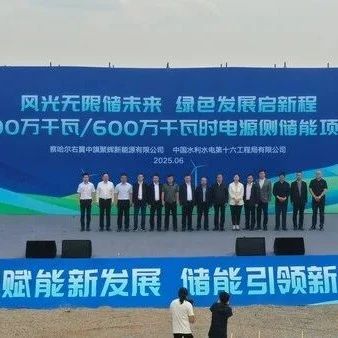
Core Viewpoint - The commencement of the 1 million kW/6 million kWh energy storage project in Ulanqab City, Inner Mongolia, marks a significant advancement in China's new energy storage industry, being one of the largest power-side electrochemical energy storage projects globally [1][4]. Group 1: Project Overview - The project is a collaboration between China Power Construction Corporation's Water Resources and Hydropower No. 16 Engineering Bureau and Fujian Yongfu Electric Power Design Co., Ltd., covering design, procurement, construction, and operation and maintenance services [1]. - It involves the construction of a 1000MW/6000MWh electrochemical shared energy storage power station, occupying approximately 700 acres, featuring 1200 units of 5.016MWh lithium iron phosphate battery cabins and 4 units of 250MVA dual-split 220kV main transformers [1]. - The project utilizes advanced lithium iron phosphate storage technology, integrating a conversion and boosting system along with an energy management system, enabling participation in grid frequency modulation, peak shaving, electricity market trading, and capacity compensation [1]. Group 2: Impact and Significance - Upon completion, the project will achieve an annual peak shaving capacity of 2.16 billion kWh, equivalent to the carbon sequestration of 120 million square meters of forest, effectively alleviating the pressure of wind and solar energy curtailment in Ulanqab [4]. - It will enhance the flexibility of the Inner Mongolia power grid, supporting the region's goal of exceeding 50% renewable energy installed capacity by 2025, thereby strengthening the safe and stable operation of the North China power grid [4]. - The large-scale application of advanced electrochemical storage technology in this project serves as a significant demonstration of the "Inner Mongolia solution" for constructing a new power system dominated by renewable energy, having profound implications for the technological upgrade and large-scale development of the national energy storage industry [4].

国网蒙东电力:打通科右中旗新能源基地外送通道
Zhong Guo Neng Yuan Wang· 2025-06-30 13:07
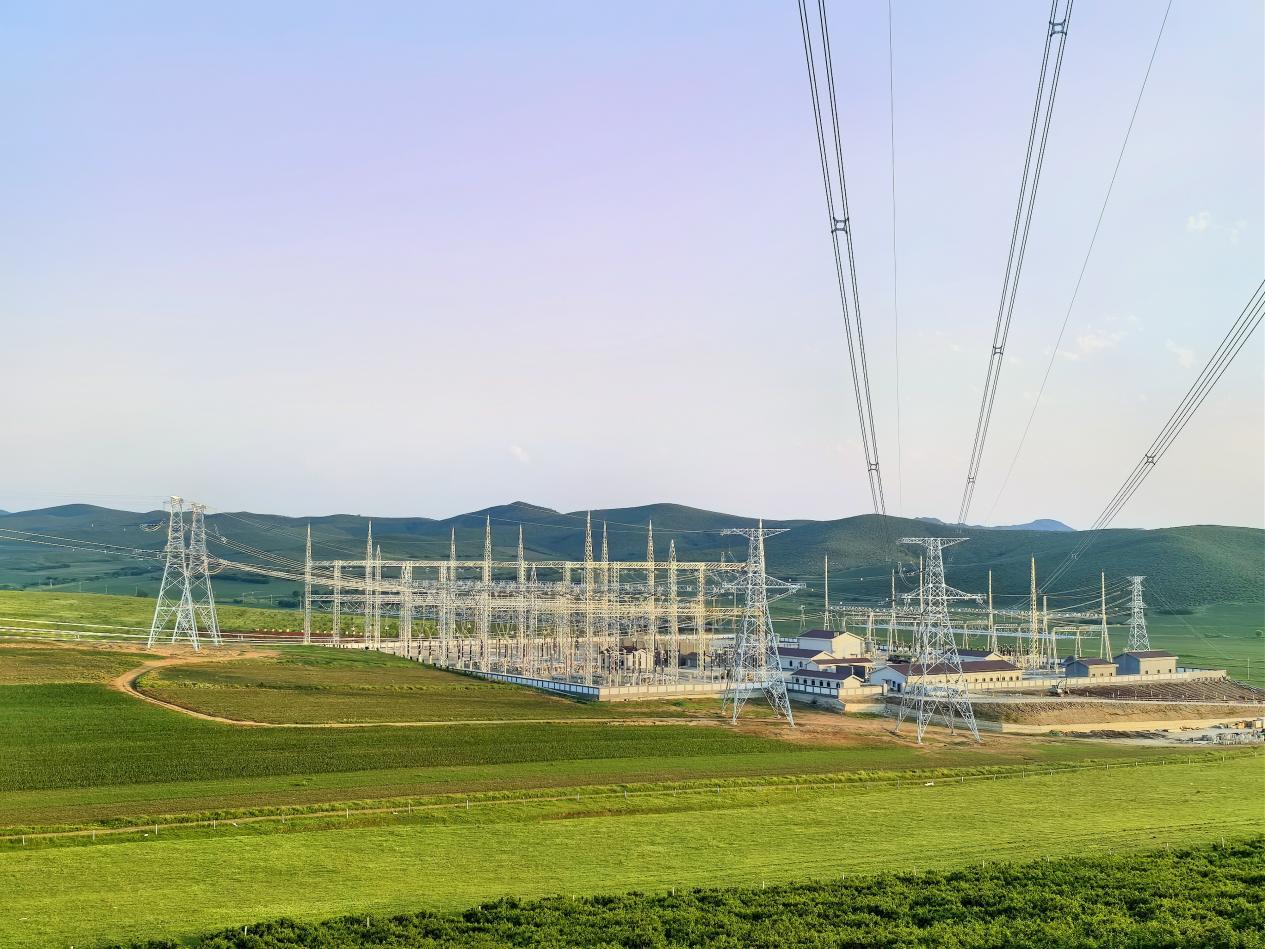
Core Viewpoint - The completion of three key renewable energy projects by State Grid Inner Mongolia Electric Power Construction Management marks the successful establishment of a transmission channel for the 1 million kilowatt wind-storage base in Inner Mongolia, which will deliver 3.6 billion kilowatt-hours of renewable energy annually to East China, significantly reducing coal consumption and carbon emissions [1][3][11]. Group 1: Project Overview - The three completed projects include the 500 kV new energy gathering and transformation project at Taohomu, the 500 kV line project connecting Tongliao and Xingan, and the 220 kV outgoing project from the 1 million kilowatt wind-storage base in Keyou Zhongqi [3][9]. - The total investment for these projects is 1.69 billion yuan, involving the construction of one new 500 kV substation, 338.96 kilometers of 500 kV lines, and 116.9 kilometers of 220 kV lines, enhancing the capacity for renewable energy integration [3][5]. Group 2: Construction Efficiency - State Grid Inner Mongolia Electric Power has implemented a collaborative approach to ensure timely project operation, establishing a "point-to-point" communication mechanism to quickly resolve issues and facilitate continuous construction [5][7]. - The construction of the Taohomu 500 kV project achieved remarkable efficiency, completing feasibility studies in 39 days and obtaining approval in just 10 working days [5][7]. Group 3: Integration into National Grid - The projects are designed to connect the 1 million kilowatt wind-storage base to the national grid, optimizing electricity distribution across the country and enhancing the economic advantages of resource-rich areas [11][13]. - The integration into the national grid will facilitate the optimal allocation of electricity resources nationwide, ensuring stable power supply while promoting the green transformation of economically disadvantaged regions [11][13]. Group 4: Environmental Impact - The renewable energy projects are expected to save over 1.2 million tons of standard coal and reduce nitrogen oxides and carbon dioxide emissions by approximately 3.2 million tons annually [1][3]. - The cumulative external power transmission from the completed ultra-high voltage projects has exceeded 730 billion kilowatt-hours, equivalent to the annual electricity consumption of 280 million households, contributing to significant carbon emission reductions [3][11].
业绩大幅增长,还保持较高毛利率!“小巨人”昊创瑞通上市,以硬核技术撬动万亿市场
Mei Ri Jing Ji Xin Wen· 2025-06-30 10:27
Core Viewpoint - Beijing Haocreat Ruitong Electric Equipment Co., Ltd. (Haocreat Ruitong) has achieved significant revenue and profit growth through its advanced smart distribution technology, positioning itself as a key player in the smart grid ecosystem in China [1][2][3] Financial Performance - Haocreat Ruitong's revenue and net profit have shown compound annual growth rates of 24.47% and 27.22% respectively over the past three years [1][2] - Projected revenues for 2022, 2023, and 2024 are 560 million, 670 million, and 867 million yuan, with net profits of approximately 68.76 million, 87.41 million, and 111 million yuan [2][3] - The company maintains a gross margin above the industry average, with figures of 25.75%, 27.60%, and 25.67% for 2022, 2023, and 2024 respectively, compared to industry averages of 22.26%, 24.13%, and 23.57% [2] Technological Advancements - Haocreat Ruitong has established strong technical barriers through its long-term industry experience, focusing on high-quality and reliable products [4][5] - The company has developed proprietary technologies such as the zero-sequence current sensor and the integrated "one and two" technology, enhancing fault location accuracy and response times [4][5] - As of 2024, Haocreat Ruitong holds 119 patents and has invested significantly in R&D, with a compound growth rate of 36.69% over three years, reaching 32.33 million yuan in 2024 [5] Market Position and Client Base - The company has secured a strong position in the smart distribution equipment market, particularly through partnerships with major clients like the State Grid [6][8] - Haocreat Ruitong's revenue from the State Grid has been decreasing, indicating a diversification strategy to reduce dependency on a single client [8][7] - The company aims to expand its customer base beyond the power grid sector while maintaining strong relationships with existing clients [7] Industry Outlook - The smart grid market is projected to grow significantly, with investments in distribution networks expected to exceed 1.52 trillion yuan during the 14th Five-Year Plan period [9] - Haocreat Ruitong's IPO fundraising will focus on projects closely related to its existing business, particularly in smart distribution technology [10][11] - The company faces capacity constraints, with utilization rates for key products exceeding 100%, necessitating expansion to meet market demand [11]
储能BMS龙头高特电子创业板IPO获受理
Zheng Quan Ri Bao Wang· 2025-06-28 02:13
Core Viewpoint - The company, Hangzhou Gaote Electronics Co., Ltd., has officially received approval for its IPO application on the ChiNext board, aiming to become a leading global supplier of new energy storage system safety and value enhancement solutions [1] Group 1: Company Overview - Gaote Electronics is recognized as a national high-tech enterprise and a "specialized, refined, and innovative" small giant enterprise, focusing on providing new energy storage battery management systems (BMS) [1] - The company has consistently led the market in product shipment volume within the large-scale storage BMS sector, achieving top recognition in the industry [2] Group 2: Financial Performance - From 2022 to 2024, the company's main business revenue has shown significant growth, with figures of 344 million yuan, 778 million yuan, and 919 million yuan respectively, resulting in a compound annual growth rate of 63.31% [3] - R&D expenses from 2022 to 2024 were 23.8862 million yuan, 38.6389 million yuan, and 63.7784 million yuan, accounting for 6.91%, 4.96%, and 6.94% of revenue respectively [2] Group 3: Industry Trends - The demand for storage BMS is increasing, driven by the need for new energy systems and the strategic focus on energy transition globally [4] - The industry is expected to undergo consolidation, with leading companies possessing comprehensive technical capabilities and brand influence likely to dominate the market [4] Group 4: Future Plans - The company plans to use the funds raised from the IPO primarily for the construction of an intelligent manufacturing center for storage battery management systems and to supplement working capital [5] - Gaote Electronics aims to enhance its technological innovation capabilities and smart manufacturing levels to support the construction of a new power system and the achievement of carbon neutrality goals [5]
