
全国统一大市场建设

Search documents
第七届西洽会闭幕 签约重大项目247个
Zhong Guo Xin Wen Wang· 2025-05-25 15:55
Core Insights - The 7th China Western International Investment and Trade Fair (West Expo) concluded in Chongqing, signing a total of 247 major projects, with concentrated project agreements amounting to over 200 billion yuan [1][2] - The theme of this year's West Expo was "New West, New Manufacturing, New Services," aiming to create a platform for economic and trade exchanges that connects the western region with the rest of the country and the world [1] Group 1: Project Signings and Financial Impact - A total of 124 concentrated project agreements were signed, exceeding 200 billion yuan, while projects from various districts and counties signed agreements totaling over 100 billion yuan [1] - The global procurement matchmaking event attracted buyers from 32 countries, resulting in an intended signing amount of approximately 65 million yuan [2] - The establishment of the China Automotive and Motorcycle Alliance for Africa led to project agreements worth 1.65 billion yuan [2] Group 2: International Cooperation and Exhibitions - The exhibition area for international and regional cooperation reached 11,500 square meters, showcasing the achievements of the Belt and Road Initiative and quality consumer goods from both domestic and international markets [1] - Over 30 countries and regions participated, with notable brands making their debut, including the Dutch children's brand Fanny & Friends [1] - Activities promoting regional cooperation included discussions on the green, high-end, and intelligent transformation of the food industry between Malaysia and Chongqing [2] Group 3: Regional Collaboration and Trade Promotion - Four inter-provincial negotiation activities were held to enhance regional cooperation, with Chongqing and Guangdong reaching investment and trade cooperation agreements exceeding 2 billion yuan [2] - The "Yuli Xiangban · Yilu Tongxing" national production and sales matchmaking conference facilitated contracts worth over 300 million yuan between Chongqing brand merchants and Easy Convenience [2] - Specialized negotiation meetings with provinces like Ningxia and Liaoning focused on deepening cooperation in energy, agricultural products, and industrial manufacturing [2]
5月24日周六《新闻联播》要闻18条
news flash· 2025-05-24 12:44
Group 1 - The construction of a national unified market is accelerating and deepening [3][8] - The mechanical industry showed stable production growth from January to April [7] - The launch of the "2025 Greater Bay Area Consumption Season" and the media action "Foreign Trade Quality Products Reach the Bay Area" [11] Group 2 - The sales of digital products, including mobile phones, have been boosted by subsidies, exceeding 140 billion yuan [12] - The release of guidelines to promote efficient enterprise migration registration [13]

良好法治环境力促民企做强做优
Jing Ji Ri Bao· 2025-05-22 21:58
这是一部发展促进法,也是一部权益保障法。贯彻民营经济促进法,以良法促进发展、保证善治,还需 要做好衔接、配套、监督等各项工作。例如,及时废止、修订被改革实践所证明的不合时宜、阻碍民营 经济发展的法规和政策,增强系统性、整体性、协同性、时效性;推进政策措施配套,在破除障碍、治 理拖欠、依法保护合法权益、落实纾困政策、加强政企沟通等方面下功夫,协调推动各种支持保障措施 落实落细;强化行政执法监督,加大对行政执法违法行为查处力度,加强问题查纠整改、坚决纠治到 位,建立完善涉企行政执法监督长效机制。 近段时间,国家发展改革委会同商务部、市场监管总局发布《关于开展市场准入壁垒清理整治行动促进 全国统一大市场建设的通知》,全面清理和整改违规设置市场准入壁垒的各类不合理规定和做法, 让"非禁即入"落地生根;八部门联合发文支持小微企业融资,明确要求提高支持精准性;中央网信办决 定,在全国范围内启动为期2个月的"清朗·优化营商网络环境—整治涉企网络'黑嘴'"专项行动……切实 把法律红利转化为发展民营经济的推动力,更多举措还在加快落地。 市场规则越清晰,企业信心越坚定。民营经济促进法为民营企业大显身手创造了良好法治环境,也鼓舞 ...
毕马威中国经济研究院院长蔡伟:货币政策宽松空间明显打开 后续将发力稳就业稳增长
Zheng Quan Ri Bao Wang· 2025-05-20 13:26
本报记者 闫立良 "随着外部环境急剧变化,同时国内房地产市场尚未企稳、物价运行持续低迷,二季度货币政策优先目标将逐步过渡到稳 就业稳增长,宽松空间明显打开。"5月20日,毕马威中国经济研究院院长蔡伟在接受《证券日报》记者采访时表示,预计年内 降准降息仍有空间,但力度及节奏将根据中美关税进展、二季度出口和经济表现等关键变量相机抉择。 促进价格水平合理回归 5月7日,央行出台包括降准降息、创设并加力实施系列结构性货币政策工具在内的一揽子金融政策支持稳市场稳预期。 蔡伟认为,一季度出于前期增量政策效果仍在逐渐显现、外部环境尚不明朗以及优先稳定汇率波动风险和银行息差压力等 综合考量,央行对于货币政策的总量操作较为克制,保持"适度宽松"的政策取向不变。 在后续可能的降准降息空间释放上,蔡伟分析称,降准方面,央行将配合财政协同发力,并可能通过加大买断式逆回购等 进一步补充流动性。降息方面,央行将综合考量国内外经济形势、利率风险与金融市场波动等因素。 最近三期货币政策执行报告均强调"把促进物价合理回升作为把握货币政策的重要考量,推动物价保持在合理水平"。蔡伟 表示,这说明当前物价是央行的重要关注指标。 在央行5月9日发布的 ...
国家发展改革委回应21记者:全面清理市场准入不合理规定和做法,实现“非禁即入”
2 1 Shi Ji Jing Ji Bao Dao· 2025-05-20 03:58
Core Viewpoint - The National Development and Reform Commission (NDRC) has initiated a market access barrier cleanup action to promote the construction of a unified national market, aiming to eliminate unreasonable regulations and practices that hinder market access [1][2]. Group 1: Key Actions and Focus Areas - The action focuses on two main areas: the comprehensive cleanup of unreasonable regulations and the rectification of various unreasonable practices set by local governments [1][2]. - Four specific work arrangements have been established to ensure the effectiveness of the cleanup action, including identifying common access barrier issues, establishing a four-level government coordination mechanism, creating channels for reporting issues, and enforcing local responsibilities for rectification [2]. Group 2: Specific Measures - Fifteen common types of access barrier issues have been identified and made public, such as local approvals for matters already opened at the national level and restrictions on enterprises from other regions [2]. - A mechanism for media supervision has been established, involving the participation of Xinhua News Agency for publicity and oversight, along with a shared case reporting and experience promotion system [2]. - The NDRC has set up a dedicated section on its website for collecting reports on market access barriers, allowing any enterprise or individual to directly report relevant situations [2].
这一指标,上海蝉联第一!
第一财经· 2025-05-19 15:58
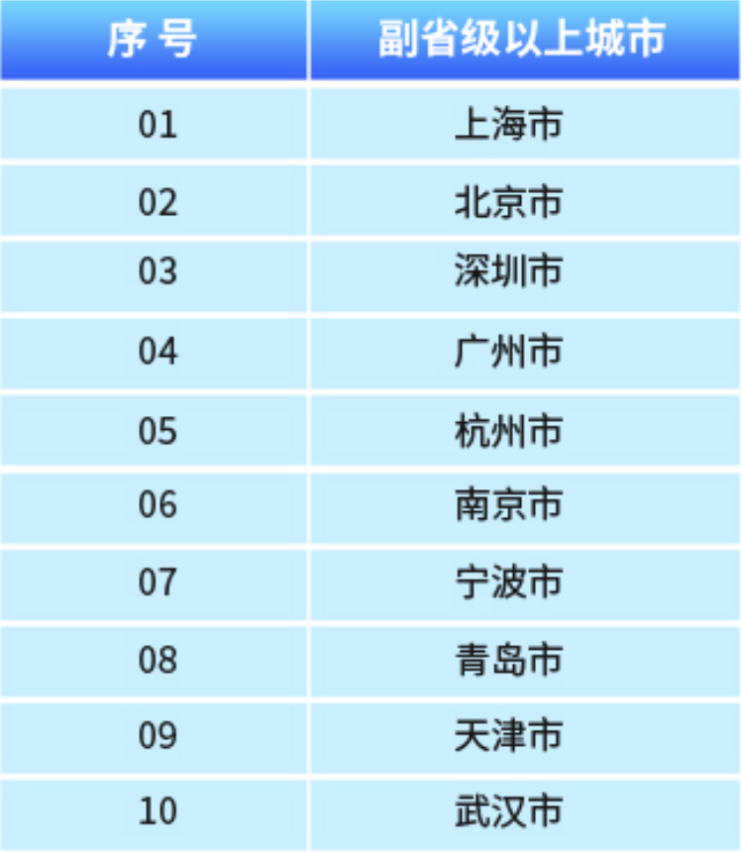
Core Viewpoint - The development environment for small and medium-sized enterprises (SMEs) in China is continuously improving, with most cities showing varying degrees of enhancement compared to the previous year, particularly in major cities like Shanghai, Beijing, and Shenzhen [1][2]. Group 1: Overall Assessment - The Ministry of Industry and Information Technology's report evaluated 50 typical cities based on market, legal, financing, innovation, and policy environments, showing a narrowing gap in market conditions and the effectiveness of a unified national market [1][2]. - The report indicates that 19 sub-provincial cities account for 55% of national-level innovation carriers, 76.52% of new invention patent authorizations, and 82.07% of technical contract transaction amounts among the evaluated cities [4]. Group 2: City Rankings - Among the top 10 cities in the comprehensive ranking, 9 are sub-provincial cities, with the eastern region leading in all primary indicator scores, particularly in innovation and policy environments [2][4]. - The top 10 cities include Shanghai, Beijing, Shenzhen, Guangzhou, Hangzhou, Nanjing, Ningbo, Qingdao, Tianjin, and Wuhan, with cities like Suzhou, Wuxi, Hefei, Jinhua, and Changsha leading among prefecture-level cities [4][5]. Group 3: Indicator Performance - In market environment scores, Guangzhou, Xiamen, Qingdao, Shanghai, and Nanjing ranked highest among sub-provincial cities, while Haikou, Dongguan, Quanzhou, Hefei, and Wuxi led among prefecture-level cities [5]. - For legal environment, Nanjing, Guangzhou, Hangzhou, Shenzhen, and Chengdu scored highest among sub-provincial cities, while Suzhou, Hefei, Ganzhou, Nanchang, and Changsha topped the prefecture-level cities [5]. - In financing environment, Beijing, Shanghai, Shenzhen, Ningbo, and Hangzhou were the top scorers among sub-provincial cities, with Suzhou, Hefei, Quanzhou, Jinhua, and Xiangyang leading among prefecture-level cities [5]. - The innovation environment saw Beijing, Shenzhen, Hangzhou, Shanghai, and Xi'an as the top sub-provincial cities, while Suzhou, Hefei, Wuxi, Zhengzhou, and Changsha led among prefecture-level cities [5]. - For policy environment, Shanghai, Beijing, Guangzhou, Tianjin, and Shenzhen ranked highest among sub-provincial cities, while Jinhua, Suzhou, Shijiazhuang, Wuxi, and Yinchuan led among prefecture-level cities [5]. Group 4: Challenges and Improvements - The overall satisfaction score for SMEs has increased from 7.46 in 2020 to 8.50 in 2024, indicating a significant improvement in the development environment [6]. - Despite improvements, SMEs still face challenges such as mismatched policies for emerging industries, digital transformation bottlenecks, and weaknesses in service systems [6].

北京推出55项举措加快推进全国统一大市场建设
Zhong Guo Xin Wen Wang· 2025-05-19 15:23
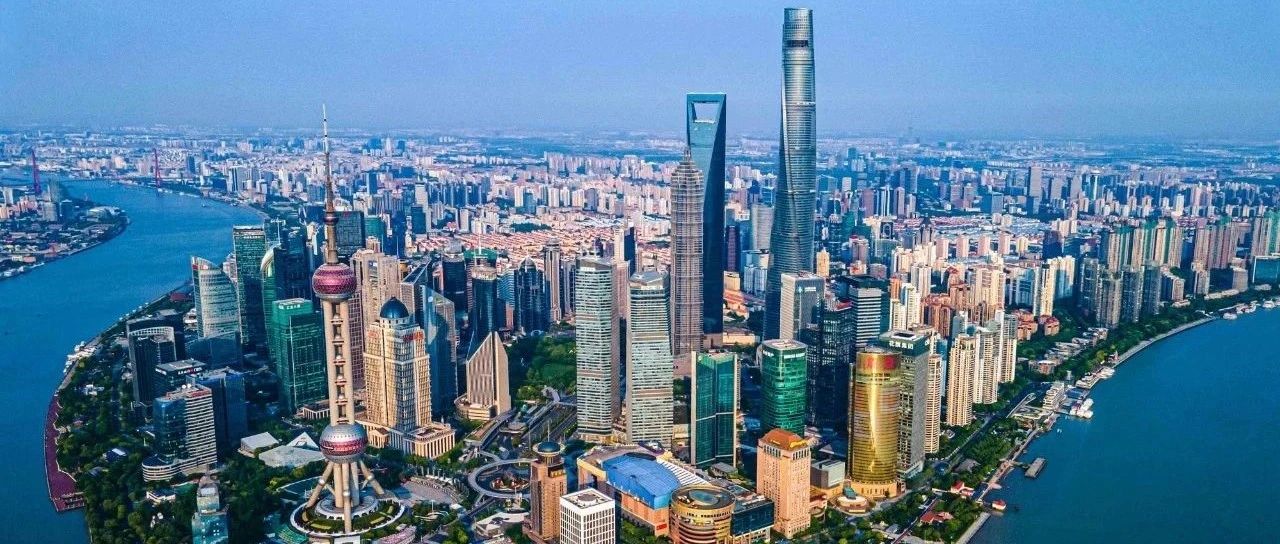
记者19日从北京市发展和改革委员会获悉,北京市印发《北京市贯彻落实加快建设全国统一大市场意见 实施方案2025年工作要点》(下称《工作要点》),推出55项相关举措。 根据《工作要点》,在知识产权保护方面,今年北京将设立重大专利侵权纠纷行政裁决绿色通道,发布 海外知识产权维权指南,健全行政执法与刑事司法双向衔接机制;在市场准入环境方面,将开展市场准 入壁垒清理整治行动,落实新版市场准入负面清单"非禁即入"要求。出台市场准入效能评估实施方案, 建立"全国通用+北京特色"评估指标体系。 中新社北京5月19日电(记者吕少威)今年北京将围绕产权保护、市场准入环境、公平竞争、京津冀市场 高水平协作等方面推出55项举措,加快推进全国统一大市场建设。 《工作要点》指出,在公平竞争方面,今年北京将开展公平竞争审查抽查,围绕破除地方保护、市场分 割等突出问题,加大对重点领域、特定行业政策措施的抽查力度。起草北京市促进市场公平竞争条例 (草案)。 (文章来源:中国新闻网) 根据《工作要点》,北京将全力推进京津冀市场高水平协作。今年将出台京津冀互认资质资格场景化应 用文件,实现20项以上互认资质资格统一规范办理或"亮证即办",探索将 ...
行业研究、行业周报:关税博弈落地,煤炭重回供需逻辑
Shanxi Securities· 2025-05-19 11:45
Investment Rating - The coal industry maintains a rating of "Synchronize with the Market-A" [1] Core Viewpoints - The coal market is returning to supply-demand logic following the resolution of tariff disputes, with expectations of improved demand as summer approaches [1][8] - The report highlights that while coal prices are under pressure due to seasonal factors and inventory adjustments, the potential for recovery in non-electric coal demand exists as the international trade environment improves [8][81] Summary by Sections 1. Coal Industry Dynamic Data Tracking - **Thermal Coal**: Inventory levels are decreasing, and summer stocking demand is anticipated. As of May 16, the spot reference price for thermal coal in the Bohai Rim is 629 CNY/ton, with a weekly change of -2.18% [3][23] - **Metallurgical Coal**: The external trade environment is improving, and metallurgical coal continues to deplete inventories. The price for main coking coal at Jingtang Port is 1320 CNY/ton, unchanged from the previous week [4][35] - **Coking Steel Chain**: Increased operational rates have led to a slight decline in coking coal prices. The average price for first-grade metallurgical coke is 1480 CNY/ton, down 3.27% [5][54] - **Coal Transportation**: Increased stocking demand has stabilized coastal transportation prices, with the coastal coal transportation index at 661.75 points, up 3.34% [6][64] - **Coal-related Futures**: Downstream operational rates have decreased, leading to a decline in double焦期价 [66] 2. Coal Sector Market Review - The coal sector has rebounded alongside the broader market, outperforming major indices. The CITIC coal index closed at 3244.52 points, with a weekly change of +1.65% [7][71] 3. Industry News Summary - Recent government initiatives emphasize strengthening domestic circulation and enhancing the coal industry's clean and efficient utilization [79][80] - The construction of a new cross-border railway between China and Mongolia is expected to significantly boost coal exports from Mongolia, reshaping trade dynamics [80] 4. Important Announcements from Listed Companies - Major companies in the coal sector are actively managing operational challenges and pursuing strategic initiatives, including asset restructuring and safety measures following incidents [81][83] 5. Next Week's Outlook and Investment Recommendations - The report suggests that while coal prices may face downward pressure, the upcoming summer stocking demand and improved tariff conditions could support price stability. Investors are advised to focus on undervalued companies with solid performance support [8][81]




中小企业发展环境持续优化,沪京深穗领跑
2 1 Shi Ji Jing Ji Bao Dao· 2025-05-19 10:01
Core Insights - The Ministry of Industry and Information Technology released the "2024 Annual Small and Medium Enterprises Development Environment Assessment Report," indicating a balanced performance across different regions and city tiers in China [1][2] Group 1: City Rankings and Performance - Eastern cities dominate the top rankings, with Shanghai retaining the first position and half of the top 10 cities from the Yangtze River Delta region [2][4] - Among sub-provincial cities, the top 10 include Shanghai, Beijing, Shenzhen, Guangzhou, Hangzhou, Nanjing, Ningbo, Qingdao, Tianjin, and Wuhan [1][4] - In the prefecture-level city category, Suzhou, Wuxi, Hefei, Jinhua, Changsha, Dongguan, Quanzhou, Shijiazhuang, Haikou, and Nanchang are the top performers [1][5] Group 2: Improvement Trends - Cities like Baoding, Changchun, Jinan, Hohhot, and Haikou have shown significant improvement in their rankings by benchmarking against advanced cities [2][6] - The report highlights that over 90% of enterprises express satisfaction with market access, resource allocation, and government services [7] Group 3: Policy Implementation and Challenges - Western and central cities show room for improvement in policy implementation, with a notable percentage of enterprises reporting issues with policy accessibility and enforcement [2][6] - Northeast region enterprises have raised concerns regarding property rights protection and administrative law enforcement [2][6] Group 4: Best Practices and Innovations - Successful practices in optimizing the SME development environment include administrative approval reforms, creating a fair market environment, and enhancing intellectual property protection [5][6] - Specific initiatives from cities like Nanjing and Shanghai focus on streamlining environmental assessments and replacing cumbersome documentation with credit reports [5][6] Group 5: Credit and Innovation Metrics - The report indicates that sub-provincial cities have a higher average coverage of public service institutions for SMEs, at 82.03%, compared to prefecture-level cities [7][8] - Sub-provincial cities also lead in innovation metrics, holding 55% of national-level innovation carriers and accounting for 76.52% of new invention patent authorizations [7][8]
报告显示2024年度我国中小企业发展环境总体持续优化
Xin Hua She· 2025-05-19 08:06
Group 1 - The core viewpoint of the report indicates that the overall development environment for small and medium-sized enterprises (SMEs) in China is continuously improving in 2024, with most cities showing varying degrees of enhancement compared to the previous year [1] - The evaluation is based on five primary indicators, 24 secondary indicators, and 41 tertiary indicators, focusing on market environment, legal environment, financing environment, innovation environment, and policy environment [1] - The report highlights that the market environment scores among participating cities show the lowest dispersion, indicating a narrowing gap in market conditions across cities [1] Group 2 - In terms of business operations, the overall revenue level of SMEs remains stable in 2024, with 60% of enterprises reporting either an increase or stable revenue compared to the previous year [2] - Specialized and innovative SMEs demonstrate stronger operational resilience, with 64.69% of these enterprises experiencing revenue growth or stability [2] - A significant portion of specialized and innovative SMEs, 63.98%, have plans for innovation and research in the coming year, while 40.35% have investment plans [2]