数字金融

Search documents
国金证券发布《2025年度“提质增效重回报”行动方案》
Zheng Quan Ri Bao Wang· 2025-09-05 06:14
Core Viewpoint - Guojin Securities has released its "Quality Improvement, Efficiency Enhancement, and Return to Shareholders" action plan for 2025, focusing on shareholder returns, supporting the real economy, and maintaining investor relations [1][2] Group 1: Shareholder Returns - In 2024, Guojin Securities distributed cash dividends of 443 million yuan, along with share buybacks, totaling 543 million yuan, which accounts for 32.50% of the annual net profit [1] - The company has revised its shareholder return plan for 2024-2026, aligning it with its industry position, development stage, and growth cycle, while considering dividend payout ratios and yields [1] Group 2: Financial Services and Innovations - In the field of technology finance, Guojin Securities provided full-chain investment banking services to 29 sci-tech enterprises in 2024 [2] - The company is actively supporting green finance initiatives, including the compilation of the "Guojin Beautiful China 50 Index" and the "Guojin Sustainable Development 100 Index," while improving its MSCI ESG rating [2] - Guojin Securities is enhancing support for small and micro enterprises through innovative inclusive finance products [2] Group 3: Investor Relations - The company has established an efficient communication matrix to address investor concerns through various channels, including the Shanghai Stock Exchange e-interaction platform and regular performance briefings [2] - In 2025, Guojin Securities plans to upgrade its communication system, utilizing new media platforms like WeChat and video accounts to enhance transparency and showcase its operational highlights and development philosophy [2]

去延边抢“迎客红包” 中国人民银行延边州分行创新“线上+线下”迎客红包支付工作方案
Jin Rong Shi Bao· 2025-09-05 05:04
在开展多次调研的基础上,中国人民银行延边州分行充分发挥智囊作用,建议采用红包方式向入延人员 发放交通补贴。除了向当地政府提交"入延有礼 迎客红包"的意见清单外,该行向当地政府部门提出 了"线上+线下",即云闪付APP线上补贴+银行线下补贴双轨运行的模式。为提高工作时效,该行在一个 工作日完成延边州商务局开立"迎客红包"专用存款账户的工作,并协调由工行延边州分行作为主办单位 负责全州线下迎客红包发放工作。 同时,中国人民银行延边州分行依据相关工作方案多次就工行延边州分行线下交通补贴发放事宜开展工 作部署。一方面,按照入延人员属性,指导工行延边州分行区分设置境内人员线下申领网点27个、境外 人员线下申领网点10个,均匀分布在延边州8个县(市);另一方面,设计具有延边特色的"迎客红 包"样式,优先配比新钞100元1张、5元1张、1元2张、硬币5角1枚,并对兑换窗口工作流程、审核机 制、秩序维护进行统筹安排。 中国人民银行延边朝鲜族自治州分行(以下简称"中国人民银行延边州分行")从支付及现金服务延边州 经济社会高质量发展出发,在推进快速支付系统互联互通,不断完善多层次、多元化支付服务体系上重 点发力,创新实践"线上+ ...
去延边抢“迎客红包”
Jin Rong Shi Bao· 2025-09-05 05:01
Core Viewpoint - Yanji Chaoyangchuan International Airport will temporarily close from August 20 to November 20, 2025, to enhance flight safety and efficiency, as well as to renovate the airport [1] Group 1: Government Initiatives - The Yanbian government has launched the "Attracting Visitors to Yanji" program during the airport closure, planning to invest approximately 25 million yuan in various red envelopes and consumption vouchers to ensure a stable tourism market [1] - The People's Bank of China Yanbian Branch has proposed a dual-track subsidy model combining online and offline methods for distributing transportation subsidies to incoming visitors [2] Group 2: Implementation of Subsidy Programs - The People's Bank of China Yanbian Branch has established a dedicated account for the "Welcoming Guests Red Envelope" program and coordinated with the Industrial and Commercial Bank of China Yanbian Branch to manage offline distribution [2] - A total of 27 offline application points for domestic visitors and 10 for international visitors have been set up across Yanbian's 8 counties, with a unique design for the red envelopes featuring local characteristics [3] Group 3: Promotion and Public Awareness - The People's Bank of China Yanbian Branch, in collaboration with local government and media, has launched multiple promotional campaigns to inform visitors about the red envelope program [4] - Service windows have been established at Longjia International Airport and five high-speed rail stations to assist incoming tourists with the red envelope collection process [4]



这家上市银行公开选聘首席信息官!有这些要求
券商中国· 2025-09-05 02:56
Core Viewpoint - The recruitment announcement by Zhengzhou Bank highlights the increasing importance of the Chief Information Officer (CIO) role in driving the bank's digital transformation strategy, particularly in the context of emerging technologies like artificial intelligence [2][4]. Group 1: Recruitment Requirements - Zhengzhou Bank emphasizes the need for candidates to have a deep understanding of the bank's digital transformation strategy and to be proficient in various banking operations [3][4]. - Candidates are required to have at least 6 years of experience in information technology, including 4 years in senior management roles and 2 years in financial work [4]. - The bank seeks individuals with management experience in information technology at major state-owned banks, national joint-stock commercial banks, or leading city commercial banks [4]. Group 2: Digital Transformation and Technology - The role of the CIO is crucial for the digital transformation of banks, with a focus on leveraging technologies such as big data, cloud computing, artificial intelligence, and blockchain [6]. - The recruitment criteria include a strong insight into these technologies and successful practical implementation experience [6]. - The rise of digital finance has significantly enhanced banking efficiency, with AI becoming a key driver for transformation [6][7]. Group 3: Performance Metrics - As of mid-2025, Zhengzhou Bank reported 5,593 employees, with 339 in information technology, accounting for 5.54% of the workforce [5]. - The bank achieved a revenue of 6.69 billion yuan, a year-on-year increase of 4.64%, and a net profit of 1.63 billion yuan, up 2.10% [5]. - The total assets of Zhengzhou Bank reached 719.738 billion yuan, reflecting a growth of 6.41% compared to the previous year [5]. Group 4: Industry Trends - Many listed banks are prioritizing AI in their strategic transformation, with major banks like ICBC and Agricultural Bank of China leading the way in AI application [7][8]. - Smaller banks are also making strides in AI capabilities, with various initiatives to enhance their digital transformation efforts [7][8]. - The ability of commercial banks to effectively implement digital transformation will be critical to their future competitiveness [8].

锚定AI“三阶跃升”!上海证券以数字金融为核心驱动
券商中国· 2025-09-04 23:33
Core Viewpoint - The article emphasizes the role of the securities industry in supporting national strategies and enhancing financial supply-side reforms, highlighting the commitment to serve the real economy through innovative financial solutions [1]. Group 1: Commitment to Real Economy - The fundamental purpose of Shanghai Securities is to serve the real economy, with a focus on inclusive finance, which is deemed crucial in the current market environment [3]. - Shanghai Securities aims to deepen its commitment to inclusive finance by aligning with national strategies, innovating state-owned enterprise responsibilities, and returning to the essence of finance [3]. - The company has established a comprehensive inclusive finance system that includes professional services, investor education, and public welfare practices, targeting small and medium-sized enterprises (SMEs) and rural revitalization [3][4]. Group 2: Sustainable Inclusive Finance Ecosystem - Shanghai Securities faces challenges in risk assessment, service delivery, and internal motivation in its inclusive finance practices, prompting the development of a sustainable ecosystem [5]. - Internally, the company is enhancing its capabilities by establishing an ESG risk assessment system for SME financing and improving public welfare project management [6]. - Externally, the company is fostering collaboration with government and financial institutions to support SME financing and enhance financial literacy through community and campus initiatives [6]. Group 3: Digital Finance as a Strategic Driver - Shanghai Securities views digital finance as a strategic priority, essential for transforming the company and enhancing service efficiency and market competitiveness [7]. - The company is focusing on top-level planning, organizational collaboration, digital infrastructure, and fostering an innovative culture to accelerate digital finance implementation [7]. - Shanghai Securities has actively participated in industry research and has set numerous industry standards, enhancing its influence in financial technology [7]. Group 4: AI and Financial Integration - The company has developed a comprehensive response system to leverage generative AI technology, aiming to integrate AI deeply into financial services [8]. - Shanghai Securities is pursuing a "three-stage leap" approach to build an AI-driven ecosystem, focusing on business empowerment, intelligent decision-making, and upgrading wealth management paradigms [8].

交通银行2025年中报:以“稳”筑根基 以“质”创价值
Zheng Quan Ri Bao· 2025-09-04 22:59
Core Insights - The core viewpoint of the article emphasizes the resilience and steady growth of Bank of Communications in the first half of 2025, showcasing its robust financial performance amidst a challenging economic environment [1][2][4]. Financial Performance - In the first half of 2025, the bank achieved an operating income of 133.368 billion yuan, a year-on-year increase of 0.77%, and a net profit attributable to shareholders of 46.016 billion yuan, up 1.61% [2][3]. - The total assets reached 15.44 trillion yuan, reflecting a growth of 3.59% compared to the end of the previous year [2][3]. - The non-performing loan ratio decreased to 1.28%, while the provision coverage ratio increased to 209.56%, indicating improved asset quality [3][4]. Shareholder Returns - The bank proposed a cash dividend of 13.811 billion yuan, representing 30% of its net profit, continuing its tradition of stable shareholder returns [3][4]. Strategic Focus - The bank is focusing on five key areas: technology finance, green finance, inclusive finance, pension finance, and digital finance, which are seen as critical for its transformation and growth [6][8]. - In technology finance, the bank's loan balance exceeded 1.5 trillion yuan, with a significant increase in loans to technology-oriented SMEs [6][8]. - Green finance initiatives included a loan balance for energy-saving and carbon-reduction industries growing by 6.58%, and the issuance of green financial bonds totaling 145 billion yuan [6][7]. Retail and Customer Engagement - The bank has expanded its retail customer base to 202 million, with a 1.30% increase from the previous year, and a notable rise in active mobile banking users [2][3]. - Inclusive finance efforts led to a loan balance of 852.401 billion yuan, reflecting a growth of 12.96%, with specific products aimed at small and micro enterprises [7][8]. Digital Transformation - The bank is advancing its digital transformation through the establishment of a digital operation center and the implementation of an AI framework to enhance service efficiency [9][10]. - The digital economy loan balance surpassed 286 billion yuan, with internet loans increasing by 8.52% [7][10]. Regional and Global Strategy - The bank is leveraging its Shanghai headquarters to enhance its role in the international financial center, with significant participation in local financial market projects [9][10]. - It has established partnerships with numerous major projects in Shanghai, enhancing its competitive position in the region [9][10].

围绕AI体系“三阶跃升” 上海证券持续锻造数字金融驱动力
Zheng Quan Shi Bao· 2025-09-04 18:58
Core Viewpoint - Shanghai Securities emphasizes the importance of serving the real economy and promoting inclusive finance as its fundamental purpose, focusing on three dimensions: deep alignment with national strategies, innovative expression of state-owned enterprise responsibilities, and a return to the essence of finance [2][4]. Group 1: Inclusive Finance Initiatives - Shanghai Securities has developed a comprehensive inclusive finance system based on professional services, investor education, and public welfare practices, including differentiated solutions for small and medium-sized enterprises (SMEs) and support for rural revitalization projects [2][3]. - The company has established a "red gene + inclusive outreach" investor education system, achieving over 40,000 annual visitors with a satisfaction rate of 100% through initiatives like state-owned enterprise open days and red finance exhibitions [2]. Group 2: Sustainable Ecosystem Development - Shanghai Securities is addressing challenges in inclusive finance, such as risk assessment difficulties and service penetration, by enhancing internal capabilities and external collaborations, including establishing an ESG risk assessment system for SME financing [4][5]. - The company is deepening cooperation with government departments and financial institutions to promote SME financing and developing a "campus-community" education network to enhance financial literacy [4]. Group 3: Digital Financial Strategy - Digital finance is viewed as a strategic priority for Shanghai Securities, aimed at transforming the company and enhancing service efficiency and market competitiveness [6]. - The company is accelerating its digital transformation by focusing on top-level planning, organizational collaboration, digital infrastructure, and fostering an innovative culture [6]. Group 4: AI Integration in Financial Services - Shanghai Securities is exploring the deep integration of AI and finance, establishing a three-tiered response system to leverage generative AI technology for enhancing financial services [7]. - The company aims to transition from experience-driven to intelligence-enhanced financial services, with a phased approach to building an AI-driven ecosystem that supports wealth management and compliance innovation [7].


越秀资本(000987) - 2025年9月4日投资者关系活动记录表
2025-09-04 11:28
Financial Performance - The company achieved a net profit of CNY 1.51 billion in the first half of 2025, an increase of CNY 418 million year-on-year [1] - The net profit attributable to shareholders reached CNY 15.58 billion, a year-on-year growth of 53.40% [7] - The company plans to distribute a mid-term cash dividend of CNY 450 million (including tax) for the first time [3][8] Investment Strategy - The company has invested over CNY 150 billion in the new energy sector over the past three years, focusing on solar and wind energy [4] - In the first half of 2025, the company’s renewable energy stations generated a total of 7.81 billion kWh, resulting in electricity revenue of CNY 2.423 billion, a year-on-year increase of 122.69% [5] - The company is developing a diversified product matrix for renewable energy funds and enhancing its green asset management platform [6] Market Positioning - The company aims to become a leading and respected multi-financial investment holding group in China, focusing on five key areas: technology finance, green finance, inclusive finance, pension finance, and digital finance [4][9] - The company has maintained a consistent dividend policy since its listing in 2000, with cumulative cash dividends amounting to CNY 6.786 billion [10] Risk Management - The company is actively managing its market value and has incorporated market value management into the performance assessment of its management team [3][11] - The company reported a 28.69% decrease in net cash flow from operating activities, primarily due to reduced net borrowing from financial institutions [5] Future Outlook - The company is focused on enhancing its core competitiveness and sustainable development while maintaining stable profit distribution policies [4][10] - The management is optimistic about future growth, leveraging the current bull market in the Chinese capital market to improve the company's image [3][7]

数字金融如何赋能新型工业化战略?
Jin Rong Shi Bao· 2025-09-04 10:16
Core Viewpoint - The article emphasizes the role of digital finance in supporting the new industrialization process in China, highlighting its potential to address financing challenges faced by manufacturing enterprises through technological integration and policy support [1]. Group 1: Technological Empowerment Pathways - A "three-stage relay" financial support scheme is proposed to address key technology challenges, including "R&D loans + intellectual property securitization" during the R&D phase, and the establishment of a national digital platform for technology transfer during the commercialization phase [2]. - The use of blockchain technology is suggested to record equipment operation data, dynamically adjust insurance premiums, and provide comprehensive services for companies aiming for IPOs [2]. Group 2: Industrial Chain Empowerment Pathways - A multi-credit financial model is recommended, focusing on data credit, physical credit, and transaction credit to enhance the resilience of industrial chains [3]. - The establishment of a distributed ledger system for accounts payable is proposed to ensure traceability and reduce financing friction through electronic invoices [3]. Group 3: Regional Empowerment Pathways - A gradient financial adaptation strategy is suggested to address regional industrial development imbalances, including innovative financial support for capacity transfer and customized syndicate services for advanced manufacturing clusters [4]. - The creation of a cross-border industrial financial digital platform is recommended to facilitate cross-border trade financing and reduce currency exchange losses for export-oriented enterprises [4].
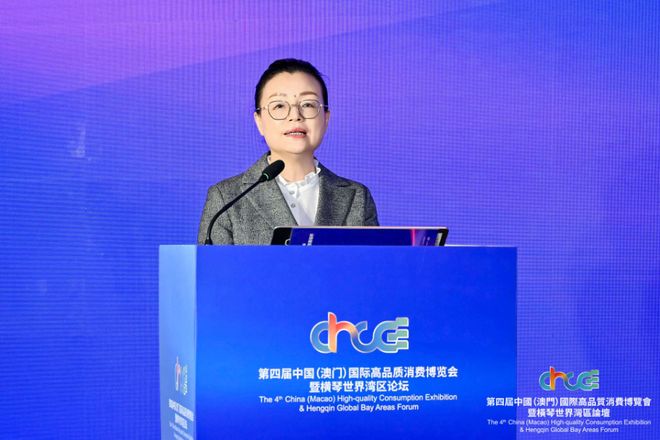
根植澳门 链接内地:南光集团谱写湾区金融协同新篇
2 1 Shi Ji Jing Ji Bao Dao· 2025-09-04 10:05
Core Viewpoint - The Nanguang Group aims to leverage its unique advantages rooted in Macau and connected to the mainland to enhance collaboration and drive financial innovation for the development of the Qinao region and financial synergy in the Greater Bay Area [1] Group 1: Financial Development and Innovation - The Greater Bay Area is accelerating the establishment of an international financial hub, with significant potential for financial collaboration demonstrated by the achievements in the Hengqin Guangdong-Macau Deep Cooperation Zone [1] - Nanguang Group, as the only central enterprise headquartered in Macau, recognizes the need for finance to support technological breakthroughs, industrial upgrades, and improvements in people's livelihoods [1] - The company plans to transform financial "strong momentum" into "real benefits" for regional development [1] Group 2: Future Collaboration and Focus Areas - The forum's focus on "releasing domestic demand," "green finance," and "patient capital to support the new industrial direction of the Greater Bay Area" is seen as providing valuable insights for future work [1] - Nanguang Group looks forward to deepening collaboration with quality financial institutions to create convenient financing channels for Macau-funded enterprises and explore new paths for the implementation of digital and green finance [1] - The company will continue to utilize its advantages to promote financial innovation and contribute to the moderate diversification of Macau's economy [1]