
金融高质量发展

Search documents
以金融高质量发展应对外部不确定性
Minmetals Securities· 2025-05-07 13:12
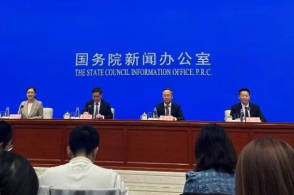
证券研究报告 | 行业点评 以金融高质量发展应对外部不确定性 事件描述 5 月 7 日,国务院新闻办公室就"一揽子金融政策支持稳市场稳预期"有 关情况举行新闻发布会。 事件点评 "关税风暴"扰动全球金融市场,"稳市场稳预期"发布会彰显扭转困境 信心决心。海外形势不确定性加剧,国内经济新旧动能转换,金融高质量 发展成为破局之策。本次发布会显示出监管层对于稳市场稳预期的高度重 视。从政策力度来看,不仅将稳住楼市股市置于重要位置,而且增加科技 创新企业、小微企业等实体经济的政策支持力度;不仅包含数量型、价格 型、结构型货币政策,而且重点提及两项创新型货币政策工具;引入中长 期资金入市仍是投资端改革重点。本次发布会规格高、政策覆盖面广,彰 显出监管层对于扭转困境的信心决心。 多措并举稳住楼市股市。本次发布会"稳住股市楼市"置于重要位置,增 强资本市场内在稳定性、稳定资产价格的重要性提升。会议提出降息加快 出台与房地产发展新模式相适配的系列融资制度持续巩固房地产市场的 稳定态势。稳住股市方面,保险资金入市再度迎来政策利好:①进一步扩 大保险资金长期投资试点范围。②进一步调降保险公司股票投资风险因 子。此外,发布会强调全 ...
中国金融棋局再落重子:看2025政策组合拳如何重塑全球经济版图
Sou Hu Cai Jing· 2025-05-07 03:37
Core Viewpoint - China's financial management authorities have introduced a series of "policy measures" to stabilize the market and expectations, showcasing a significant evolution in its financial governance system during the "second centenary" journey [3][4]. Group 1: Monetary Policy Tools - The People's Bank of China has implemented a historic reduction in the reserve requirement ratio to 6.5%, marking a significant low [4]. - Credit growth has maintained double-digit increases for 24 consecutive months, with M2 money supply expected to exceed 350 trillion yuan by February 2025 [4]. - China's monetary policy employs a "three-dimensional control" approach, combining total volume, structure, and expectation management to stabilize the bond market amid global volatility [4]. Group 2: Capital Market Reforms - The China Securities Regulatory Commission's white paper reveals deep reforms in the capital market, with an average R&D intensity of over 15% for companies listed on the Sci-Tech Innovation Board [5]. - Institutional investors now hold 65% of shares, and foreign capital has net purchased over 4.5 trillion yuan through the Stock Connect programs [5]. - New regulations allow hard tech companies to exceed traditional PE valuation frameworks, facilitating strategic restructuring for 37 unicorns [5]. Group 3: Global Financial Governance - China's cross-border payment system (CIPS) now covers 135 countries, and the digital yuan's cross-border clearing pilot has expanded to 27 countries along the Belt and Road [6]. - The introduction of 500 billion yuan in pension loans and 300 billion yuan in innovation loans addresses funding challenges in an aging society while supporting global green transitions [6]. - China's renewable energy fund has surpassed 8 trillion yuan, contributing to a 12% increase in global clean technology investments [6].

以新发展理念引领金融高质量发展(深入学习贯彻习近平新时代中国特色社会主义思想·学习《习近平经济文选》第一卷专家谈)
Ren Min Ri Bao· 2025-04-28 22:36
Core Viewpoint - The articles emphasize the importance of adhering to Xi Jinping's economic thought, particularly in the context of financial development, to achieve high-quality financial services that benefit the people and support the real economy [1][2][3]. Group 1: Financial Development Principles - Financial development must align with the new development philosophy, addressing theoretical and practical issues related to the purpose, motivation, methods, and pathways of development [2]. - The focus should be on a people-centered development approach, ensuring that financial services are diverse, inclusive, and accessible to all [3]. Group 2: Supporting the Real Economy - Financial services should prioritize supporting the real economy, particularly in addressing structural imbalances between supply and demand, which is crucial for economic growth [4]. - Emphasis on optimizing the financial structure to enhance the quality and efficiency of financial services provided to the real economy, including support for innovation and green development [4]. Group 3: Risk Prevention and Management - Risk prevention is a fundamental task in financial work, with a focus on identifying and mitigating systemic financial risks [5][6]. - The need for a robust risk management framework that includes early identification, warning systems, and effective response mechanisms to various financial risks [6].
稳中求进推动金融高质量发展(深入学习贯彻习近平新时代中国特色社会主义思想·学习《习近平经济文选》第一卷专家谈)
Ren Min Ri Bao· 2025-04-28 22:36
Group 1: Core Principles of Financial Work - The principle of "seeking progress while maintaining stability" is essential for addressing complex situations and achieving strategic goals in financial work [2][3] - Financial work must balance stability and progress, focusing on maintaining stability in key areas while promoting necessary reforms to drive high-quality financial development [2][3] Group 2: Regulatory and Market Dynamics - Effective regulation and market vitality must be balanced to promote high-quality financial development, requiring precise strategies that ensure financial safety while maintaining market dynamism [4][5] - Current discrepancies between regulatory requirements and market demands can lead to financial instability and hinder innovation, necessitating a coordinated approach to achieve effective regulation and a thriving market [5] Group 3: Financial Services to the Real Economy - Strengthening financial services to the real economy is crucial, as finance is the lifeblood of the economy, and enhancing service efficiency is a priority [7][8] - Financial resources should be directed towards emerging industries, infrastructure, and major technological innovations to support sustainable economic growth [8][9] Group 4: Financial Openness and Security - Financial openness must be pursued alongside security, ensuring that risks associated with external shocks and cross-border capital flows are effectively managed [10][11] - Enhancing financial management capabilities and risk prevention measures is vital for achieving a balance between high-level financial openness and security [11][12] Group 5: Educational and Research Initiatives - Educational institutions like Tsinghua University's Wudaokou School of Finance play a significant role in aligning financial education with national strategic needs, fostering high-quality financial talent to support financial reform and development [13]
平安银行(000001) - 投资者关系管理信息(2)
2025-03-21 09:56
Group 1: Strategic Direction and Financial Performance - The bank's strategic direction for 2025 focuses on deepening party leadership, enhancing financial services for the real economy, and strengthening financial risk prevention [1] - The core Tier 1 capital adequacy ratio, Tier 1 capital adequacy ratio, and total capital adequacy ratio for the end of 2024 are 9.12%, 10.69%, and 13.11% respectively, meeting regulatory requirements [2] Group 2: Revenue and Income Analysis - The net income from fees and commissions for 2024 is 24.1 billion yuan, a decrease of 18.1% year-on-year [3] - The breakdown of fee income includes: - Settlement fees: 3 billion yuan, down 8.3% - Agency and entrusted fees: 5.4 billion yuan, down 29.4% - Credit card fees: 13.2 billion yuan, down 18.3% - Other fees: 4.8 billion yuan, down 23% [3] Group 3: Retail Deposit Performance - The personal deposit balance at the end of 2024 is 1,287.2 billion yuan, an increase of 6.6% year-on-year [4] - The average daily balance of personal deposits for the year is 1,263.2 billion yuan, up 10.1% compared to the previous year [4] Group 4: Real Estate Loan Quality - The non-performing loan ratio for corporate real estate loans at the end of 2024 is 1.79%, an increase of 0.93 percentage points year-on-year, but still at a low level overall [5] Group 5: Corporate Business Development - The corporate loan balance at the end of 2024 is 1,606.9 billion yuan, an increase of 12.4% year-on-year [6] - The corporate deposit balance is 2,246.5 billion yuan, up 2.1% from the previous year [7]
