低碳转型

Search documents
低碳转型催生绿色新职业
Yang Shi Wang· 2025-11-23 12:22
Core Points - The article highlights the rapid development of green new professions characterized by "low carbon, environmental protection, and circular economy" during China's 14th Five-Year Plan period [1] - The establishment of the world's largest clean energy system in China has led to the emergence of new jobs such as energy storage station operation and maintenance administrators, and wind farm blade repair workers [1] - The widespread application of hydrogen fuel cells in transportation and power generation has also given rise to more specialized new professions [1] Industry Developments - The concept of low-carbon and environmental protection has permeated various aspects of life, resulting in a significant number of composite talents entering green service positions [1] - Utilizing low-carbon building intelligent management platforms, energy-saving and emission-reduction consultants can control over 600 air conditioning units in an office building via mobile devices, achieving a 20% reduction in carbon emissions annually [1] - Leveraging technologies such as the Internet of Things and big data, power aggregation operators can consolidate dispersed urban power resources into a "virtual power plant" for real-time optimization, reducing air conditioning load by over 10% during peak usage without affecting user comfort [1] Employment Trends - During the 14th Five-Year Plan period, the Ministry of Human Resources and Social Security identified 137 green professions covering key areas such as energy conservation, environmental protection, clean energy, and green services [1]
COP30会场闷热?腾讯翟永平:中国科技开出“清凉处方”
2 1 Shi Ji Jing Ji Bao Dao· 2025-11-21 15:29
Core Insights - The COP30 conference in Belem, Brazil, has seen a significant turnout, reflecting the global urgency surrounding climate change issues [1][2] - Key discussions at the conference include enhancing Nationally Determined Contributions (NDCs), funding arrangements, just transitions, and global carbon market mechanisms, with a notable focus on China's climate policies and technological solutions [2][3] - Tencent showcased its digital solutions, including the "Carbon LIVE" platform, aimed at connecting technology providers, application users, and funding sources to facilitate carbon reduction efforts [3][4] Climate Action and Technology - The "Carbon LIVE" platform has evolved to support various international initiatives, including the UNSH platform and the Global Low Carbon Technology Joint Search (CTS), enabling users to publish needs and seek technological solutions [4][5] - Tencent's "Carbon Seeking Program" aims to gather innovative low-carbon technologies to support developing countries, focusing on areas like carbon removal and long-duration energy storage [5][6] - The company emphasizes the importance of engaging the gaming community to raise awareness and promote climate action through interactive experiences [6][7] Data Center Sustainability - Tencent is addressing the rising energy demands of data centers, which are projected to double by 2030, by committing to achieve carbon neutrality across its operations and supply chain by 2030 [7][8] - The company is implementing energy-efficient practices in its data centers, including strategic site selection and the use of renewable energy sources, with 22% of its total electricity coming from green energy [7][8] - Tencent's microgrid project in Huailai, which integrates wind, solar, and storage, has successfully reduced carbon emissions by nearly 8,000 tons annually and saved over 3.5 million yuan in electricity costs [10]

从新一轮NDC到COP30,中国为全球低碳转型注入宝贵的确定性
Zhong Guo Huan Jing Bao· 2025-11-20 23:20
Group 1 - The COP30 conference is a significant milestone in global climate governance, with China promoting action and consensus to address current challenges [1] - China aims to enhance and implement its Nationally Determined Contributions (NDCs), encouraging other countries to adopt more ambitious climate commitments [1][2] - The new NDC framework from China includes a clear target of reducing greenhouse gas emissions by 7%-10% from peak levels by 2035, alongside specific quantitative and qualitative indicators [2][3] Group 2 - China is committed to multilateralism and provides stable expectations for global climate governance through clear and measurable commitments [3] - The country is leading in clean energy, contributing over 60% of the global new wind and solar capacity in 2024, supporting both domestic and global decarbonization goals [3][4] - The national carbon trading market covers over 40% of China's CO2 emissions, with plans to increase coverage to over 60%, making it the largest carbon market globally [3][4] Group 3 - China is implementing systematic reforms to address its energy structure, aiming for an 18% reduction in carbon emissions per unit of GDP by 2024 compared to 2019 [4] - The country has integrated energy-saving and carbon reduction targets into local government performance assessments, fostering a collaborative approach to climate action [4] - China emphasizes open cooperation and aims to build a fair global climate governance system, actively engaging in South-South cooperation to assist developing countries [5] Group 4 - China is willing to collaborate with other nations to contribute to global ecological civilization and the construction of a community with a shared future for mankind [6]
中信证券:建议关注碳资产、低碳转型受益行业与绿色表现突出企业的投资机遇
Xin Lang Cai Jing· 2025-11-20 00:05
Core Insights - The release of China's third Nationally Determined Contribution (NDC) highlights the country's commitment to low-carbon development strategy [1] Group 1: Carbon Market and Green Certificate Market - During the 14th Five-Year Plan period, a comprehensive upgrade of the carbon reduction "toolbox" centered around the carbon market and green certificate market is expected [1] - The expansion of the carbon market and adjustment of quotas are projected to drive carbon prices up to 80-90 RMB/ton between 2028 and 2030, aiding in the elimination of outdated production capacity in emission-intensive industries [1] - Adjustments in supply and demand within the green certificate market are anticipated to lead to a slight price correction for green certificates to 6-6.5 RMB/unit by 2026, presenting challenges and opportunities for high-energy-consuming and export industries in transitioning to green electricity [1] Group 2: Product Carbon Footprint Management - Product carbon footprint management is expected to enhance the resilience of export enterprises and foster "green competitiveness" [1] - The updates to the "toolbox" will drive structural adjustments across multiple industries [1] - Investment opportunities are suggested in carbon assets, industries benefiting from low-carbon transitions, and companies with outstanding green performance [1]

碳市场配额方案落地,钢铁等三大行业低碳转型将迎哪些机遇与挑战
Di Yi Cai Jing· 2025-11-19 13:08
Core Viewpoint - The Chinese carbon market is maturing through policy improvements and corporate exploration, with a focus on controlling greenhouse gas emissions and reducing overall emission reduction costs [1][2]. Group 1: Policy Framework and Market Mechanism - The Ministry of Ecology and Environment has issued a plan for the allocation of carbon emission quotas for the steel, cement, and aluminum industries for 2024 and 2025, emphasizing a stable policy framework and free quota allocation based on carbon intensity [1]. - The total carbon quota in the market has exceeded 8 billion tons per year, representing a more than tenfold increase compared to the cumulative transaction volume of 696 million tons in 2024, indicating a surge in emission reduction demand in the industrial sector [1]. Group 2: Industry Challenges and Opportunities - High-energy-consuming industries are facing a "de-involution" demand, where the expansion of the carbon market can encourage companies to reduce emissions and promote industrial upgrades, moving away from low-level homogeneous competition [2]. - The complexity of the industrial sector poses challenges for emission reduction, as seen in the aluminum industry, where production costs are significantly impacted by electricity and carbon costs [4]. Group 3: Data Quality and Regulatory Measures - The quality of carbon emission data is crucial for the healthy operation of the carbon market, with the Ministry of Ecology and Environment emphasizing the need for rigorous monitoring and verification of emission data [5]. - Measures to ensure data quality include improving the monitoring, reporting, and verification (MRV) system, enhancing daily regulatory oversight, and encouraging companies to strengthen their internal data management [5].


广汽集团正式登陆澳大利亚市场 加速中澳绿色出行合作
Ren Min Wang· 2025-11-19 11:26
Core Viewpoint - Chinese automotive brands are accelerating their expansion into international markets, with GAC Group officially launching its brand and new vehicles in Australia, indicating a growing preference among local consumers for Chinese automobiles [1][3]. Group 1: GAC Group's Australian Market Entry - GAC Group held a successful brand and new car launch event in Sydney, marking its entry into the Australian market [1][3]. - The company introduced its "One GAC 2.0" global strategy, specifically the "Australia Action" plan, aimed at creating a low-carbon, green, and intelligent mobility lifestyle for Australian consumers [3]. - Three new models, M8 PHEV, AION V, and EMZOOM, were launched, covering plug-in hybrid, pure electric, and fuel types to cater to diverse consumer needs [3]. Group 2: Market Environment and Opportunities - Australia is recognized as one of the most economically vibrant countries in the Southern Hemisphere, providing a favorable environment for the automotive industry's transformation and upgrade [3]. - The Australian government's "National Electric Vehicle Strategy" aims for electric vehicles to account for 30% of new car sales by 2030, presenting significant opportunities for green transportation [3]. - GAC Group's entry coincides with local industry adjustments and a shift towards low-carbon solutions, allowing the company to leverage its technological expertise in smart, safe, and efficient mobility [3]. Group 3: Infrastructure and Support - GAC Group's Australian subsidiary has established nine sales service outlets, achieving full coverage in key regions and major cities [5]. - The company plans to collaborate with local dealers to provide DC and AC charging services, along with free home charging stations and emergency solutions for new energy consumers [5]. - GAC Group aims to enhance the green transportation infrastructure in Australia, supporting the local market's transition to sustainable mobility [5]. Group 4: Strategic Collaboration - GAC International's General Manager highlighted the company's comprehensive R&D and production capabilities across various vehicle types, including fuel, hybrid, and electric [7]. - The ongoing "Australia Action" initiative will involve partnerships with local stakeholders to promote the widespread adoption of green transportation solutions in Australia and the South Pacific region [7].


破局与重构:2025 空调行业趋势与消费需求白皮书
艾瑞咨询· 2025-11-19 00:07
Core Viewpoint - The air conditioning industry is undergoing a critical phase of "breaking through and restructuring," driven by policies promoting low-carbon transformation, extreme high temperatures, and consumer subsidy policies, leading to increased market demand. The shift in consumer preferences is moving from basic temperature control to "comfort + health + high-end" features, with comfort and health-oriented air conditioners emerging as new growth points in the industry [1]. Group 1: Environmental Factors - The dual drivers of policy and technological innovation are reshaping the air conditioning market, promoting energy-efficient products and supporting the green transformation of the industry [2]. - National subsidy policies have reduced consumer purchase costs, while extreme high temperatures have directly stimulated market demand, enhancing air conditioning sales and positively impacting the related supply chain [3]. Group 2: Market Dynamics - The air conditioning market is entering a mature phase with stable growth, where online sales account for 60% of the market, and traditional e-commerce remains the core traffic entry point [5]. - The online price landscape shows a K-shaped differentiation, with both low-priced (below 1599) and high-priced (3000+) 1.5P wall-mounted units seeing increased market share [5]. Group 3: Consumer Demand - Social media discussions reflect the upgraded demand for air conditioning, with energy efficiency, comfort, cooling performance, aesthetics, and health being the top ten topics in 2025 [9]. - The evolution of air conditioning is shifting from a "single temperature regulator" to a "quality lifestyle hub" that integrates comfort, health, and aesthetics [11]. - The demand for high-end air conditioning is evolving towards a comprehensive experience that combines "extreme comfort + health purification + aesthetic integration + smart connectivity" [13]. Group 4: Opportunities - The transition from "selling products" to "selling lifestyles" is emerging, focusing on specific living scenarios, spatial functions, and emotional needs of users [15]. - The air conditioning market is seeing new segmentation, with specific user groups such as families with newborns or elderly members, and pet owners driving demand for features like air purification and no direct airflow [38][40]. Group 5: Purchasing Behavior - The main consumer groups for air conditioning are shifting, with post-00s and post-90s families becoming the primary buyers, particularly in first-tier cities where comfort is a significant concern [19]. - The motivation for purchasing air conditioning is evolving from basic needs to a desire for higher quality, better experiences, and compatibility with home environments [21]. - Consumers are increasingly rational and mature in their purchasing decisions, focusing on performance, quality, and comprehensive experience rather than just price sensitivity [28]. Group 6: Product Features and Feedback - High satisfaction rates (99%) are reported for features like "no wind feeling," "soft wind," and "quiet operation," indicating a strong consumer preference for comfort and health functionalities [56]. - The integration of health features, such as air purification and self-cleaning technologies, is becoming a key selling point for high-end air conditioning products [55]. Group 7: Industry Collaboration - Major e-commerce platforms like JD.com are collaborating with leading air conditioning brands to promote comfort and health technologies, achieving significant sales success [59].






皖能电力董事长李明: “十五五”锚定双轮驱动 打造一流电力综合服务商
Zhong Guo Zheng Quan Bao· 2025-11-18 22:16
在电力行业从量变向质变跨越的关键交汇点,作为安徽省能源领域"省级队"的皖能电力,既带着"十四 五"期间的亮眼战绩,更锚定"十五五"高质量转型新蓝图。近日,公司董事长李明在接受中国证券报记 者专访时表示,"十五五"是电力转型质变关键期,皖能电力将坚守能源保供初心、深化低碳转型实践, 以"控股火电超1500万千瓦、新能源超1000万千瓦"为核心目标,主动对接国家及地方能源规划,主动谋 划相关项目,全力打造国内一流电力综合服务商。 三重定位筑牢能源保供压舱石 "皖能电力的根在安徽,魂在保供。"谈及公司核心定位,李明的表述坚定有力。作为皖能集团旗下唯一 的电力产业平台,皖能电力承载着"能源安全保障省级队、产业结构调整主力军、双碳行动主平台"的三 重使命,核心职责聚焦三大方向:筑牢电力保供压舱石,承担安徽省电力供应主体责任;当好产业转型 排头兵,推动能源结构优化升级;打造综合服务先行者,拓展新能源、售电、碳交易等多元业务,剑 指"国内一流电力综合服务商"目标。 当前电力行业呈现五高特征,煤电加速向基础保障性和系统调节性电源转型,这对以煤电起家的皖能电 力而言,既是挑战更是机遇。"皖能电力作为最初以煤电起家,目前仍以煤电 ...

韩国石化业呼吁设定务实减排目标
Zhong Guo Hua Gong Bao· 2025-11-17 02:48
Group 1 - The Korean Chamber of Commerce, along with eight industry associations including the Korea Petroleum Association (KPA) and the Korea Chemical Industry Association (KCIA), expressed concerns that the proposed emission reduction plans by the Ministry of Climate, Energy and Environment may impose a heavy burden on the competitiveness of the petrochemical industry [1] - The government has proposed two emission reduction targets of "50%-60%" and "53%-60%" compared to 2018 levels, which exceed the industry's recognized limit of 48% [1] - The Chamber highlighted that the proposed 2035 reduction plan does not adequately reflect the current economic realities faced by the industry, which is dealing with challenges such as oversupply, increased tariffs from major economies, and prolonged domestic economic stagnation [1] Group 2 - In response, the Ministry of Trade, Industry and Energy (MOTIE) announced a loan support of 297.3 billion KRW for the next three years aimed at 16 carbon reduction-related facility investments and new R&D projects [2] - This initiative is expected to stimulate a total of 963 billion KRW in new private investments [2] - The first round of project selections identified nine projects, with a second round adding 16 more, including companies like S-Oil, HD Hydrogen, SK Plug Hyverse, and Hanwha Ocean Eco-Tech, which can receive loans up to 50 billion KRW (approximately 35.2 million USD) at a low interest rate of 1.3% [2]
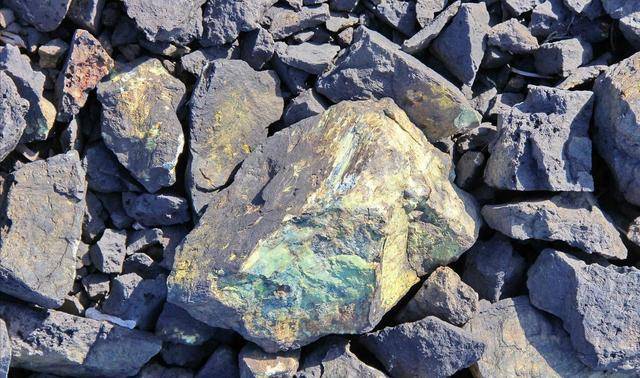
腰杆硬了!非洲44亿吨铁矿投产,中国握56%实权,再不用看人脸色
Sou Hu Cai Jing· 2025-11-16 12:27
Core Insights - The Simandou iron ore project in Guinea has officially commenced production, with a total reserve of 4.4 billion tons, making it the largest and highest-grade iron ore deposit globally, significantly reducing China's reliance on Australian and Brazilian iron ore imports [1][4][14] - The project faced nearly 30 years of challenges, including political instability and logistical difficulties, but has now established a robust transportation system, including a 552 km main railway and a port with a capacity of 120 million tons [3][5][14] - Chinese companies hold a significant stake in the project, with a 56% share in the northern zone, enhancing their bargaining power in the global iron ore market [7][8][14] Industry Impact - The production of Simandou iron ore is expected to alter global iron ore trade dynamics, with most of the output directed towards China, thereby changing the flow of iron ore globally [9][14] - The high iron content of Simandou ore (over 65%) aligns with the global shift towards low-carbon steel production, providing a competitive edge in reducing carbon emissions during steelmaking [11][12][14] - The project not only addresses current cost issues but also positions the steel industry to meet future low-carbon transition requirements, making it a critical resource for the industry's evolution [11][14][16] Strategic Importance - The successful launch of the Simandou project represents a significant milestone for China, as it gains more control over iron ore pricing and supply, reducing dependency on foreign sources [8][14][16] - The project exemplifies the importance of holding core resources and leveraging technological expertise to maximize value in the global mining sector [14][15][16] - The competition in the global mining industry is shifting towards who has the most influence and can adapt to green transitions, with Simandou serving as a key player in this evolving landscape [16]