
多层次医疗保障体系

Search documents
破局医保“不可能三角”,商业健康险需从“边缘补充者”到“生态协同者”
Di Yi Cai Jing Zi Xun· 2025-10-12 12:17
Core Insights - The report highlights the critical role of commercial health insurance in China's healthcare system transformation due to the accelerating aging population [1][2] - By 2024, the population aged 65 and above in China will account for 15.6%, entering a deep aging society, with projections indicating this will rise to 42% by 2070 [1] - The report emphasizes the need for a multi-tiered healthcare security system to address the "impossible triangle" of low cost, high accessibility, and high quality in healthcare services [2] Summary by Sections Aging Population and Healthcare Challenges - The aging population is leading to increased healthcare demands and challenges for the sustainability of basic medical insurance funds [1] - In Shanghai, the total reimbursement amount for three major diseases among the elderly is projected to reach 81.1 billion yuan by 2070 under a 3% annual medical inflation scenario [1] Multi-Tiered Healthcare Security System - The report proposes a "1+3+N" framework for a multi-layered healthcare security system, which includes a unified national medical insurance information platform, basic medical insurance, medical assistance, and major illness insurance [2] - The report stresses the importance of a diversified and multi-tiered security system to effectively address the challenges in the healthcare sector [2] Transition of Commercial Health Insurance - The transition of commercial health insurance from a "marginal supplement" to an "ecological collaborator" is essential for enhancing the healthcare system [2][3] - Key focus areas for this transition include covering costs not included in basic medical insurance, addressing specific demographic needs, and providing high-quality medical services [3] Addressing Core Issues in Commercial Health Insurance - The report identifies a core contradiction in commercial health insurance: the imbalance between profit models and social trust, which affects participation rates [3] - Recommendations include lowering entry barriers, expanding coverage, and leveraging data to enhance customer experience and trust [4] Future Development Strategies - The development of commercial health insurance should prioritize customer-centric approaches, long-term strategies, and risk-sharing mechanisms to create a sustainable model [4] - The core competitiveness of commercial health insurance will rely on its ability to provide supplementary value and achieve sustainable development through trust, scale effects, and policy collaboration [4]
商业健康保险:转型需聚焦保障、需求、服务三大方向
Sou Hu Cai Jing· 2025-10-11 14:51
Core Insights - The report by Fudan Allianz Financial Center highlights the transformation of commercial health insurance from a "marginal supplement" to an "ecological collaborator" in China's healthcare system [1] Group 1: Key Directions for Transformation - The report identifies three main directions for commercial health insurance to focus on: covering high costs not included in basic medical insurance, addressing the differentiated needs of specific groups such as chronic disease patients, and providing a higher quality medical service experience [1][1][1]
报告:商业健康险要完成从“边缘补充者”到“生态协同者”的转变
Xin Hua Cai Jing· 2025-10-11 13:46
Core Insights - The report titled "Transformation and Development of China's Medical Health Security System: Responding to Aging Challenges and Promoting Innovation in Commercial Health Insurance" was released by Allianz Group and Fudan University, analyzing the challenges faced by China's medical security system amid deep aging [1][2] - China is experiencing the largest and fastest demographic transition in history, with the population aged 65 and above expected to reach 15.6% by 2024 and potentially rise to 42% by 2070, leading to increased healthcare demands and sustainability challenges for basic medical insurance funds [1] - The report emphasizes the need for commercial health insurance to transition from being a "marginal supplement" to an "ecological collaborator" within the multi-tiered medical security system being developed by the government [1] Industry Trends - The top-level design of China's medical security system establishes a framework of "basic security as the foundation, commercial security as a supplement," indicating a shift in the role of commercial health insurance [2] - The health insurance market in China is transitioning from extensive growth to high-quality transformation, with a focus on creating unique value through supplementary services [2] - Allianz China has prioritized the innovation and upgrading of health products as a strategic focus for 2025, including the enhancement of its main medical insurance product and the introduction of new products targeting disability income protection and tax-advantaged long-term care insurance [2]
山东:全面实现“基本医保+惠民保”一站式结算
Qi Lu Wan Bao Wang· 2025-09-30 03:14
Core Insights - The Shandong provincial government is advancing a special action to enhance medical insurance services, focusing on improving convenience for residents [1] Group 1: Development of Huimin Insurance - The Huimin Insurance initiative in Shandong has been operational for nearly four years, evolving from a reimbursement model requiring upfront payment to a direct compensation model [3] - Since 2021, Shandong has been working on the Huimin Insurance program, with all 16 cities implementing tailored products based on local needs [3] - By 2024, Shandong aims to achieve a "one-stop" settlement for Huimin Insurance, allowing insured individuals to complete various reimbursements at local hospitals without additional claims [3] Group 2: Improvements in Cross-Region Medical Claims - To address challenges in cross-region medical claims, the Shandong Medical Insurance Bureau issued a notice in April to promote customized commercial medical insurance for easier claims processing [4] - The new system allows for automatic reimbursement calculations for insured individuals receiving treatment outside their home area, eliminating the need for manual claims submissions [4] - As of September, all 16 cities in Shandong have implemented this automatic reimbursement system, serving 18,500 individuals and totaling 16.7161 million yuan in claims [4]

调研|从“保基本”向外延伸:健康险如何打好多层次医疗保障组合拳
Xin Lang Cai Jing· 2025-09-25 23:44
Core Insights - The health insurance network in China is continuously evolving, enhancing public awareness and demand for risk protection [1][2] - Insurance companies play a crucial role in the multi-tiered medical security system and are driving innovations in health services [1][2] Group 1: Health Insurance Development - The basic medical insurance system is a vital part of the social security framework, aimed at reducing medical costs for the public and improving welfare [1] - Catastrophic health insurance provides additional coverage for high medical expenses beyond basic insurance, requiring no extra payment [1] - China Life Insurance has fully covered urban and rural residents' catastrophic health insurance across 14 cities in Guangxi from 2013 to 2015, currently serving over 40 million insured individuals [1] Group 2: Service Innovations - China Life's Nanning branch has established partnerships with nearly 1,800 medical institutions, facilitating extensive coverage for medical billing [2] - The company promotes a one-stop instant settlement system combining basic insurance, catastrophic insurance, and medical assistance, allowing patients to complete reimbursements upon discharge [2] - Efforts are made to extend services to remote communities, ensuring accessibility and understanding of insurance policies through local language explanations [2] Group 3: Poverty Alleviation Initiatives - In Tian Deng County, a poverty alleviation initiative called "Four Guarantees" was launched, focusing on health, employment, industry, and basic safety nets [3] - The initiative includes full subsidies for vulnerable groups, a collaborative insurance model for employment, and agricultural production insurance [3] - The program aims to enhance the community's ability to resist poverty and improve overall economic stability [3][4] Group 4: Commercial Insurance Growth - The "Hui Min Bao" product has gained traction, addressing the insurance needs of low-income, elderly, and pre-existing condition populations [5] - Launched in April 2022, this initiative has successfully implemented customized commercial insurance across 14 cities in Guangxi [5] - The "Hui Min Bao" business not only alleviates medical expenses for participants but also supports the innovation of medical products and services [5]

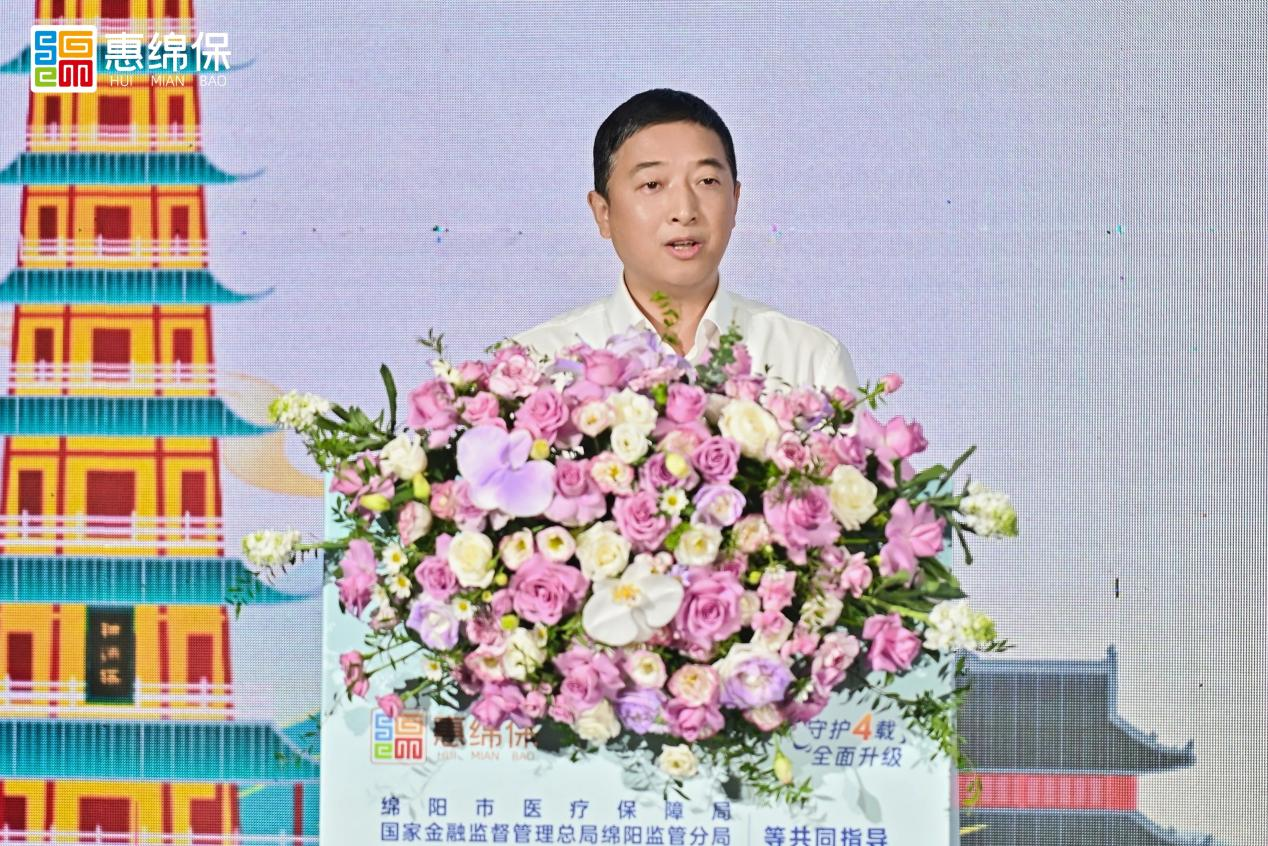
2025年“惠绵保”正式发布!新增129元优选款,免赔额再降!
Cai Fu Zai Xian· 2025-09-24 02:48
Core Viewpoint - The 2025 "Hui Mian Bao" health insurance product was launched in Mianyang, featuring significant upgrades aimed at enhancing medical coverage and reducing financial burdens for residents [1][2][4]. Government Support - The "Hui Mian Bao" initiative has received strong backing from various government departments, effectively alleviating the medical expenses burden on patients [2][4]. - Since its inception over three years ago, "Hui Mian Bao" has paid out over 93 million yuan, benefiting 11,100 families and significantly reducing their medical costs [2]. Product Features - The 2025 version introduces two plans: the "Universal Version" at 89 yuan and the new "Preferred Version" at 129 yuan, both offering enhanced coverage [8][9]. - The "Preferred Version" features a lower annual deductible and a segmented compensation mechanism to further ease high medical costs [8][9]. - Continuous enrollment in "Hui Mian Bao" allows for reduced deductibles, with the "Preferred Version" deductible dropping to 8,000 yuan and the "Universal Version" to 10,000 yuan [9][10]. Target Demographics - The insurance is available to three main groups: individuals enrolled in Mianyang's basic medical insurance, local residents, and new citizens with valid residency permits [11]. - Special attention is given to minors, with further reductions in deductibles for those aged 0-18, and additional coverage for specific conditions like phenylketonuria [9][10]. Coverage Scope - "Hui Mian Bao" covers both in-network and out-of-network medical expenses, including 31 types of special medications, addressing high-incidence critical illnesses and rare diseases [10][11]. - The product also offers additional health services, such as dental care and discounts on medication purchases, enhancing its value beyond traditional insurance [10].
170余亿元保费背后:国寿健康险守护壮乡
Zhong Guo Zheng Quan Bao· 2025-09-22 20:15
Core Viewpoint - China Life Insurance's health insurance initiatives in Guangxi are effectively addressing local health and economic challenges, providing essential support to vulnerable populations and contributing to rural revitalization efforts [1][8]. Group 1: Health Insurance Impact - In 2024, China Life's total premium scale in Guangxi reached 17.1 billion yuan, a 36% increase year-on-year, supporting major health insurance projects across 14 cities [1] - The "Anti-Poverty Four Guarantees" project disbursed 9.0366 million yuan in claims, while the "Hui Yong Bao" project has insured over 2.75 million people, with total payouts exceeding 170 million yuan [1][5] - The health insurance practices have created a protective network for the local population, addressing urgent health and economic needs [1][8] Group 2: Tailored Solutions for Local Needs - The health insurance products are designed to meet specific local challenges, such as the high risk of poverty due to health issues in labor-intensive areas like Tian Deng County [2] - The "Three Points" payment model for accident insurance involves contributions from the government, the company, and individuals, ensuring broad coverage [2] - The "Wo Hui Bao" insurance has provided significant support to fruit farmers, with 1.568 million yuan in claims paid out to individuals affected by accidents [3][7] Group 3: Collaboration with Local Governments - China Life has partnered with local governments to enhance the efficiency of health insurance services, exemplified by the seamless integration of health insurance claims with local medical systems [4][6] - The collaboration has led to a significant increase in the satisfaction of insurance services, with 100% satisfaction reported for online medical service applications [4] - The "Anti-Poverty Four Guarantees" project features a mechanism that combines efforts from government and enterprise to provide comprehensive support [5] Group 4: Digital Transformation and Service Efficiency - The company has implemented digital solutions that enhance the speed and accessibility of insurance claims, achieving a 99.9% electronic claim rate [7] - The establishment of a wide network of service centers and specialists ensures that services are available within a 15-minute radius for most residents [7] - The digital transformation has resulted in a claim processing time of just 1.47 days on average, significantly improving customer experience [7] Group 5: Broader Implications and Replicability - The health insurance model developed in Guangxi is seen as a replicable framework for enhancing multi-level medical insurance systems across China [8] - The comprehensive approach integrates health, employment, and industry support, demonstrating the potential for financial enterprises to contribute to national health and economic goals [8]
商业医疗险报告一:见微知著,医保承压下商保或为破局之法
Ping An Securities· 2025-09-22 10:03
Investment Rating - The report maintains an "Outperform" rating for the biopharmaceutical industry [1] Core Viewpoints - The growth of healthcare expenses, which reached 9.06 trillion yuan in 2023, is outpacing GDP growth, indicating that commercial health insurance may provide a solution to the pressures faced by the medical insurance system [3][15] - The commercial health insurance sector is expected to grow significantly, with premiums projected to reach 97.74 billion yuan by 2024, driven by low penetration rates and the need for additional funding sources [20][24] - Policies are increasingly supportive of commercial health insurance, particularly in relation to innovative drugs, which are now being included in the commercial health insurance directory [71][76] Summary by Sections Part 1: Healthcare Financing System - The healthcare financing system in China consists of government, social, and personal contributions, with social contributions being the main driver for future growth [10][15] Part 2: Growth of Health Insurance - The commercial health insurance market is expected to fill a significant funding gap, with an estimated shortfall of over 1.7 trillion yuan by 2030 [21][22] - Medical insurance is the primary source of compensation within commercial health insurance, with a compensation rate of approximately 68.79% in 2022 [27][31] Part 3: Core Products of Medical Insurance - The report highlights the importance of medical insurance as a key focus area, noting that it directly compensates for medical expenses, unlike critical illness insurance [31][35] Part 4: Policy Support for Health Insurance Development - A series of policies since 2009 have aimed to promote the development of commercial health insurance, with specific targets for market size and coverage [71][72] Part 5: Investment Recommendations - The report suggests focusing on innovative drug companies with rich pipelines, DTP pharmacies, and companies in the TPA industry, as well as innovative medical devices and high-end medical service providers [77]



乐城全球特药险2025版上线
Hai Nan Ri Bao· 2025-09-18 02:02
Core Insights - The launch of the "Boao Lecheng Global Special Drug Insurance 2025 Edition" aims to provide accessible and affordable healthcare solutions, with a focus on advanced medical treatments and innovative drugs [1][2][3] Group 1: Product Features - The 2025 edition includes two plans: Plan A offers a coverage of 2 million yuan for 120 types of global special drugs at a premium of 49 yuan per person, with zero deductible [1] - Plan B, the upgraded premium version, costs 99 yuan per person and adds coverage for 10 types of imported special medical devices, increasing inpatient medical coverage within the Lecheng area to 1 million yuan [1] - The insurance maintains a "zero threshold" enrollment policy, allowing participation regardless of age, occupation, or health status [1][2] Group 2: Historical Context and Impact - Since its inception in 2020, the Lecheng Global Special Drug Insurance has been the first health insurance product in China to cover foreign drugs that are available abroad but not yet in China, marking a significant breakthrough in reimbursement for overseas special drugs [2] - As of August 30 this year, the insurance has paid out a total of 30.75 million yuan, benefiting 765 patient families, with an average comprehensive payout rate of approximately 60% [2] - The program has established partnerships with 70 commercial insurance projects across major cities like Beijing and Shanghai, covering over 95 million people, thus creating a multi-layered medical insurance cooperation network [2] Group 3: Future Directions - The Lecheng initiative aims to continue enhancing the payment system for drugs and medical devices, attracting more high-quality domestic and international resources to make innovative treatments more accessible and affordable for patients [3] - The focus remains on addressing the challenges of "difficult and expensive medication" by integrating international advanced medical resources with local health needs [3]

南宁国寿:织密健康保障网守护民生福祉
Zhong Guo Jin Rong Xin Xi Wang· 2025-09-10 13:21
Core Viewpoint - China Life Insurance Nanning Branch (Nanning Guoshou) emphasizes its commitment to financial services for the real economy and improving people's livelihoods through innovative practices in health insurance [1][2]. Group 1: Health Insurance Initiatives - Nanning Guoshou has participated in the "Hui Yong Bao" project for four consecutive years, providing comprehensive health insurance coverage for a premium of 79 yuan per year, offering benefits up to several million yuan for hospitalization and rare diseases [1][2]. - The project has enrolled over 2.75 million participants, with total claims exceeding 170 million yuan, reducing the medical burden for participants by an average of 6.2% [2]. - The insurance scheme allows the use of personal medical insurance accounts for family coverage, enhancing accessibility and collaboration within the multi-tiered medical insurance system [2]. Group 2: Comprehensive Medical Coverage - Nanning Guoshou provides urban and rural residents with major illness insurance, covering 5.76 million insured individuals, and has established partnerships with nearly 1,800 medical institutions for extensive claim settlement [2]. - The company has paid out a total of 1.062 billion yuan in claims, implementing a one-stop settlement process for basic medical insurance, major illness insurance, and medical assistance [2]. Group 3: Targeted Insurance Products - In 2024, Nanning Guoshou will offer inclusive insurance products tailored for specific groups, including women's health and student safety insurance, with total coverage exceeding 100 billion yuan [3]. - The company has launched a "New Citizen Exclusive Protection Plan" for new urban residents, providing flexible insurance options and risk coverage for nearly 30,000 individuals [3]. - The "Anti-Poverty Insurance" project aims to support around 70,000 migrant workers with coverage for accidents, serious illnesses, and disabilities, while collaborating with government departments for health monitoring and risk prevention [3].