
企业数字化转型

Search documents
港股异动 | 香港宽频(01310)回吐逾15% 昨日飙升逾68% 中移动香港要约收购股权升至...
Xin Lang Cai Jing· 2025-09-19 06:22
Core Viewpoint - Hong Kong Broadband (01310) experienced significant stock price volatility, initially surging over 68% and then declining by more than 15% after a major share offer announcement from China Mobile Hong Kong [1] Group 1: Stock Performance - After a sharp increase, Hong Kong Broadband's stock reached a three-year high of 9.41 HKD before falling to 7.3 HKD, representing a decline of 15.41% [1] - The trading volume was substantial, with a turnover of 1.507 billion HKD [1] Group 2: Share Offer Details - The share offer from China Mobile Hong Kong is set to close on September 17, 2025, without any revisions or extensions [1] - The offer has received valid acceptances for 713 million shares, accounting for approximately 48.18% of all issued shares [1] - Combined with shares acquired through TPG and MBK agreements, China Mobile Hong Kong and its concert parties now hold 1.154 billion shares, representing about 78.08% of all issued shares [1] Group 3: Strategic Implications - With a 78.08% stake, China Mobile Hong Kong becomes the largest shareholder of Hong Kong Broadband, indicating a new phase in its telecommunications business development [1] - The integration of China Mobile Hong Kong's 5G network resources and cloud computing infrastructure with Hong Kong Broadband's operations is expected to create synergies and enhance its service capabilities for enterprise digital transformation [1]
山东移动聊城分公司助力鲁兴酒店打造高品质网络体验
Qi Lu Wan Bao Wang· 2025-09-18 12:04
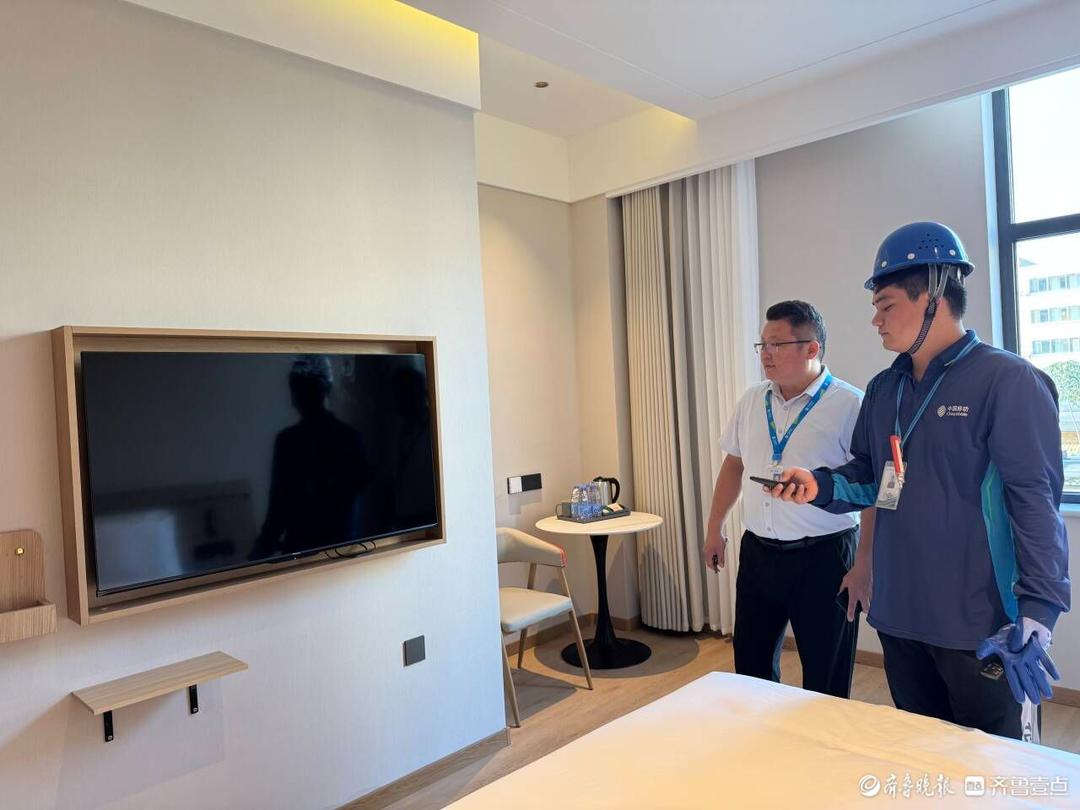
Core Viewpoint - The successful deployment of enterprise broadband and HD television services by Shandong Mobile's Liaocheng branch for Liaocheng Luxing Hotel Management Co., Ltd. significantly enhances the hotel's network performance and customer digital experience, while also supporting internal management and operational efficiency [1][5]. Group 1 - Liaocheng Mobile's Yanggu branch quickly responded to the hotel's network service needs by organizing on-site inspections and customizing a high-speed networking and HD audiovisual integration solution [3]. - The project team efficiently coordinated the wiring, installation, and testing phases, achieving seamless integration and significantly shortening the construction period, ensuring a smooth network upgrade for the hotel [3]. - The new services are running stably, enhancing the hotel's network capacity and audiovisual experience, thereby increasing its competitiveness in the regional market [5]. Group 2 - The service philosophy of "responding to the people's needs" reflects the team's commitment to customer service, showcasing their technical expertise and service advantages during the implementation of the project [5]. - Shandong Mobile's Liaocheng branch aims to continue optimizing communication solutions with a customer-centric approach, assisting more enterprises in their digital transformation and contributing to the high-quality development of the local economy [5].

墨西哥中小企业通过电商平台销售增长20%
Shang Wu Bu Wang Zhan· 2025-09-16 16:27
Core Insights - Mexican SMEs have successfully increased sales by 20% through e-commerce platforms [1] - 40% of SMEs in Mexico have yet to achieve digitalization, which limits their growth [1] - CONCANACO is providing a market guide to assist SMEs in selecting suitable online sales platforms [1]
深聊实力强的GEO源头厂家,讯灵AI主动获取潜在客户
Sou Hu Cai Jing· 2025-09-13 00:44
Core Insights - The article emphasizes the urgency of digital transformation for businesses in a competitive environment, highlighting that 95% of companies face the risk of elimination without adaptation [1] - Xunling AI, developed by Southern Network Communications, is positioned as a powerful tool for businesses to build AI digital assets and proactively acquire potential customers through its unique GEO search optimization and intelligent training technology [1] Technology Innovation - The GEO source manufacturer demonstrates significant advantages in technological innovation, with Xunling AI leveraging 19 years of internet experience and possessing over 100 proprietary technologies and trademark protections [2] - Its unique GEO search optimization technology enables comprehensive penetration across 11 major AI platforms, allowing businesses to reach potential customers effectively and break traditional marketing limitations [2] Industry Advantage - The article discusses the innovative drive of the industry, positioning Xunling AI as a leader in the new era of AI search [3] Cost-Effectiveness - Xunling AI offers a low-cost, high-return solution for digital transformation, addressing the high marketing costs faced by businesses in different eras [5] - By utilizing multi-dimensional layouts of business search terms and questions, Xunling AI helps reduce marketing costs while increasing exposure and trust, showcasing its cost-effectiveness [5] Reputation - Xunling AI has built a strong reputation in the market, with positive feedback from numerous enterprises regarding its effectiveness in brand promotion, business development, sales, customer service, and management [10] - The stability, accuracy, and practicality of Xunling AI have garnered high praise, establishing a solid foundation for further market promotion [10] Brand Trust - Developed by Southern Network Communications, Xunling AI benefits from the company's 19 years of experience in the internet industry, which enhances its brand influence and reliability [11] - The deep technical accumulation and market insight of Southern Network Communications provide robust support for Xunling AI in technology development, market promotion, and customer service [11] Purchase Recommendations - Businesses are advised to customize their selection of Xunling AI based on their specific needs and development stages, focusing on brand promotion or customer acquisition as required [12] - Companies can also tailor the intelligent knowledge base of Xunling AI to enhance service quality and management efficiency [12] Company Strength - Southern Network Communications, established in Shenzhen, is recognized for its strong capabilities and innovation in the internet sector, with over 100 proprietary technologies and trademark protections [13] - Xunling AI represents the culmination of the GEO promotion and AI intelligent ecosystem, supported by a professional team for comprehensive service [13] - The company provides clear AI data reports for businesses to optimize their promotional strategies effectively [13]

i人事搭建数字化桥梁:多平台无缝联动,破解企业系统融合难题
Sou Hu Cai Jing· 2025-09-12 14:43
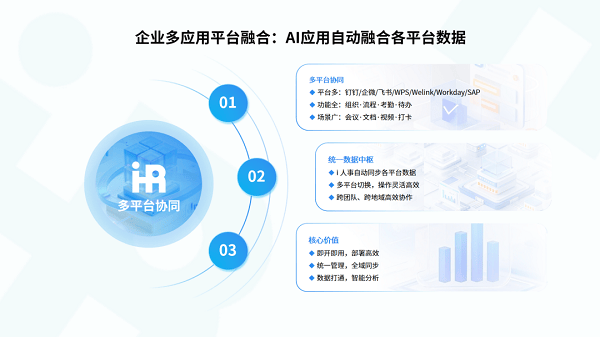
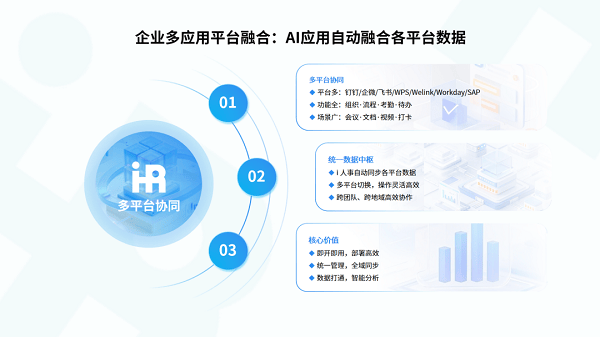
Core Insights - The article highlights the contradiction faced by enterprises during digital transformation, where the number of application systems is increasing, yet operational efficiency is declining [1][3] - The complexity of managing multiple collaboration platforms leads to fragmented information and poor user experience, making deep integration across platforms a key indicator of digital maturity [3][4] - i人事 proposes an innovative solution with a "front-end hub + back-end foundation" approach, enabling seamless integration with major collaboration platforms without the need for secondary development [3][5] Integration Challenges - After addressing front-end collaboration issues, enterprises encounter deeper challenges from "data silos" in core systems like ERP and CRM, leading to inconsistencies in master data [4][5] - The lack of timely permission management can result in data leakage risks, and manual updates across systems slow down responses during organizational changes [4][6] - Unified master data allows for the full utilization of AI and BI technologies, enabling real-time analysis of labor costs and employee performance modeling [4][6] Systemic Engineering - i人事's dual-layer collaborative architecture creates a complete feedback loop between front-end experience and back-end data [5][6] - The integration of organizational and employee data ensures consistency across financial and CRM systems, while operational data supports organizational efficiency analysis [5][6] - The essence of multi-platform integration is a systematic approach to governance of organization, processes, and data, redefining the strategic value of HR systems [5][6]
权识国际(00381.HK)拟收购海南秒链科技51%权益
Ge Long Hui· 2025-09-12 12:26
Core Viewpoint - The company has entered into a memorandum of understanding to potentially acquire a 51% stake in Hainan Miaolian Technology Co., Ltd, which is expected to enhance its business operations and revenue streams [1] Group 1: Acquisition Details - The memorandum was signed on September 12, 2025, between the company and the seller, Wang Fang, to discuss the conditional acquisition of the target company [1] - The target company is a wholly-owned enterprise of the seller, registered in Hainan, China, in 2021, specializing in digital transformation solutions for traditional manufacturing and sales entities [1] Group 2: Business Strategy and Expectations - The board believes that the potential acquisition aligns with the company's investment strategy and is expected to strengthen its existing business [1] - The acquisition, if realized, is anticipated to provide new revenue sources and enhance the company's income and customer base, benefiting the company and its shareholders [1]
权识国际(00381)就可能收购海南秒链科技51%权益订立谅解备忘录
智通财经网· 2025-09-12 12:25
Core Viewpoint - The company has entered into a memorandum of understanding with Ms. Wang Fang to potentially acquire a 51% stake in Hainan Miaolian Technology Co., Ltd, a digital solutions provider, which aligns with the company's investment strategy and is expected to enhance its revenue and customer base [1] Group 1: Acquisition Details - The memorandum was signed on September 12, 2025, and the acquisition is conditional upon the signing of a final agreement [1] - The target company is a wholly-owned subsidiary of the seller, registered in Hainan, China in 2021, specializing in enterprise digital transformation solutions [1] Group 2: Target Company's Services - The target company's mission is to assist traditional manufacturing and sales entities in their digital transformation, improving operational efficiency and innovation capabilities [1] - Services offered by the target company include digital strategy planning, business process optimization, data mining, machine learning, cloud computing, and big data [1] Group 3: Strategic Fit - The board believes that the potential acquisition aligns with the company's investment strategy and is expected to strengthen existing business operations [1] - The acquisition is anticipated to provide new revenue streams and enhance the company's overall interests and shareholder value [1]
打破数据孤岛:以i人事HR系统为中枢,驱动企微、钉钉、飞书等多平台融合
Sou Hu Cai Jing· 2025-09-12 05:41
Core Insights - The article discusses the challenges faced by companies in digital transformation, particularly the paradox of increasing operational inefficiency with the growing number of application systems [1] - It emphasizes the need for effective integration of multiple collaboration platforms to enhance organizational efficiency and employee experience [1][8] - The iHR system is presented as a solution to unify various platforms and streamline HR processes, thereby improving data consistency and operational agility [1][5] Group 1: Challenges in Digital Transformation - Companies face operational inefficiencies as the number of application systems increases, leading to fragmented data and poor employee experience [1] - The existence of multiple collaboration platforms complicates HR management, resulting in difficulties in data synchronization and increased management workload [1][3] - Core systems like ERP and CRM create "data silos," leading to inconsistencies in employee information across different systems [4][5] Group 2: iHR System as a Solution - iHR provides an integrated HR system that acts as a central data hub, allowing seamless connectivity with major collaboration platforms without the need for extensive customization [1][3] - Key features of iHR include automatic synchronization of organizational information, streamlined onboarding and offboarding processes, and cross-platform workflow integration [3][4] - The system is designed to enhance data governance and ensure consistency across various business functions, thereby supporting better decision-making [5][6] Group 3: Integration Architecture - iHR employs a three-tier integration architecture consisting of master data, iPaaS, and AI/BI to facilitate backend integration [5][6] - The master data serves as a single source of truth for critical organizational data, ensuring consistency across systems [5] - iPaaS enables low-code integration, significantly reducing the time and complexity involved in connecting various systems [6][7] Group 4: Business Process Optimization - iHR aims to create a closed-loop system where data flows seamlessly between front-end and back-end processes, enhancing overall operational efficiency [8][9] - The system allows for real-time updates and approvals across platforms, streamlining processes such as expense reimbursements [9] - By redefining the role of HR systems, iHR positions itself as a central hub for organizational data, driving cross-departmental collaboration and data-driven decision-making [9]
中泰证券:首予神州控股“买入”评级 聚焦“Data+AI”场景化落地
Zhi Tong Cai Jing· 2025-09-12 03:47
Core Viewpoint - Zhongtai Securities initiates coverage on Shenzhou Holdings (00861) with a "Buy" rating, forecasting revenue and net profit growth from 2025 to 2027, driven by the company's strong performance in AI and big data applications [1][2] Group 1: Company Overview - Shenzhou Holdings, established in 2000 and listed in Hong Kong in 2001, is a high-tech enterprise focusing on big data integration technology to empower core scenarios [2] - The company has been transitioning towards digitalization since 2018, emphasizing a "DataxAI" strategy to enhance industrial intelligence and reconstruct commercial value [2] Group 2: Financial Performance - In 2024, the company's revenue is projected to decline by 8.9% to 166.57 billion yuan, but the business structure is improving with a higher proportion of revenue from high-margin big data products [2] - The company reported a significant reduction in net loss for 2024, expected at -2.54 billion yuan, compared to 2023, indicating improved financial health [2] - For the first half of 2025, revenue reached 78.65 billion yuan, a year-on-year increase of 12.1%, with net profit of 0.15 billion yuan, up 40.7%, confirming a trend of performance stabilization and improvement [2] Group 3: Industry Trends - The supply chain management service industry is expanding, with the market expected to exceed 250 billion yuan by 2025, driven by the integration of AI and other emerging technologies [3] - AI applications in enterprises have shifted from exploratory phases to widespread deployment, enhancing operational efficiency and decision-making processes [3] Group 4: Technological and Ecological Development - The company leverages over 20 years of industry experience to build competitive advantages in various sectors, including smart supply chains and financial technology [4] - It integrates AI infrastructure and data intelligence platforms to support digital transformation in industries, creating an end-to-end service system [4] - The company aims to establish an open innovation ecosystem that combines resources from government, industry, academia, and research to facilitate large-scale digital upgrades [4] Group 5: International Expansion - In 2024, the company supports Chinese enterprises in their international ventures, providing comprehensive supply chain services, including logistics and cross-border e-commerce [5]

大阳智投APP:MCP服务携手阿里百炼,技术赋能企业服务生态新升级
Sou Hu Cai Jing· 2025-09-06 03:42
Core Insights - The collaboration between Guangdong Bozhong and Alibaba Cloud's Bailian platform aims to address the challenges of high R&D costs, complex model training processes, and resource integration barriers faced by enterprises in digital transformation [1][3] - The launch of the MCP service ecosystem through the Dayang Zhito APP represents a new paradigm of "technology + ecosystem" collaborative development in the enterprise service sector [1][4] Technology Integration - The MCP service leverages a full-link model service system built on the Alibaba Bailian platform, optimizing the entire process from data processing to deployment and operation [3] - The platform's built-in Tongyi series large models and third-party high-quality algorithm libraries provide robust underlying computing power for the MCP service [3] - The integration of SFT+LoRA fine-tuning technology allows enterprises to quickly customize models for specific business scenarios without needing to build their own R&D teams [3] - A transparent training monitoring system visualizes the model iteration process, helping enterprises accurately assess the input-output ratio of their technology investments [3] Service Ecosystem Development - The multi-modal data processing capabilities of the Alibaba Bailian platform are crucial for expanding the application scenarios of the MCP service [3] - The platform supports the integration of text, images, audio, and video data, enabling deep embedding of the MCP service in complex business scenarios such as financial risk control, intelligent customer service, and content review [3] - The open API interfaces in the plugin center allow seamless integration with existing systems like knowledge base retrieval and RPA process automation, forming a closed-loop ecosystem of "AI + business" [3] Service Process Restructuring - The service process is designed to lower the application threshold for enterprises, allowing business personnel to deploy services and adjust parameters without programming knowledge [3] - The deployment cycle has been reduced from several weeks to within 72 hours [3] - The elastic resource scheduling mechanism combined with a pay-as-you-go model enables enterprises to dynamically adjust computing power based on business fluctuations, reducing overall costs by approximately 40% compared to self-built solutions [3] - This "lightweight" service model allows small and medium-sized enterprises to equally benefit from AI technology [3] Transformation in Enterprise Services - The partnership signifies a shift from "single-point technology output" to "shared ecosystem capabilities" in enterprise services [4] - By integrating Alibaba Cloud's technological infrastructure with Bozhong's industry solutions, a low-code, highly available AI service middle platform has been created [4] - This enables enterprises to allocate more resources to core business innovation, with model training efficiency in scenarios like securities analysis and supply chain management improved by 65% [4]
