企业服务

Search documents
资金撤退后再回流,这轮A股调整拐点到了吗?【周观A股】
和讯· 2026-03-28 08:34
Market Overview - The A-share market indices experienced a significant narrowing of declines this week, indicating a shift in market sentiment from panic to recovery, with a gradual rebalancing of capital styles [2][3][7] - Despite continued net outflows of main funds, a marginal improvement trend has begun to emerge, suggesting the market is in a critical window of "weak recovery + rebalancing" [2][3] Index Performance - Major A-share indices continued their adjustment but showed a notable reduction in declines compared to the previous week, transitioning from a rapid drop phase to a weak oscillation recovery phase [3][7] - Small-cap stocks experienced a technical rebound after emotional clearance, while previously resilient growth sectors, represented by the ChiNext, turned into the leading decliners, highlighting significant style rotation [3][7] Sector Rotation - The market is dominated by a "defensive + price increase" theme, with materials, utilities, and healthcare sectors rising approximately 2.5%, reflecting a preference for assets with "resource attributes + stable cash flow" [10][3] - Conversely, sectors such as information technology, finance, and certain consumer segments faced pressure, indicating that high valuation and high beta assets are still undergoing valuation digestion [10][3] Trading Volume - A-shares exhibited a "volume contraction" characteristic this week, with weekly trading volume decreasing from 11.06 trillion yuan to 10.56 trillion yuan, indicating a continued decline in trading enthusiasm [23][25] - Daily trading amounts fell from approximately 2.45 trillion yuan at the beginning of the week to 1.86 trillion yuan by Friday, with the market turnover rate dropping from 4.98% to 3.66% [23][25] Fund Flow - Main funds exhibited a "first out, then in" pattern, with a net outflow of 795 billion yuan on Monday due to external geopolitical shocks, followed by a net inflow of 150 billion yuan on Wednesday, marking a key turning point for the week [32][36] - By Friday, main funds continued to flow in with a net inflow of 82.58 billion yuan, indicating a shift from broad withdrawal to structural positioning [32][36] Market Sentiment - The market displayed a typical "V-shaped recovery" this week, with the number of stocks hitting the daily limit down reaching 145 on Monday, but quickly rebounding with a significant number of stocks hitting the limit up in subsequent days [41][46] - Margin financing balances have shown a clear downward trend, reflecting a cautious shift in sentiment, although a slight recovery was observed in the latter part of the week [42][46] Upcoming Focus - Attention will be on policy, macro data, and external disturbances, as the upcoming quarter is a crucial window for assessing economic recovery [50][51] - The market will also face the unlocking of restricted shares for 26 companies next week, which may exert pressure on stock prices [51][53]


Cintas Corporation (NASDAQ:CTAS) Earnings Preview
Financial Modeling Prep· 2026-03-24 17:00AI Processing
Analysts predict an EPS of $1.24 and revenue of $2.82 billion for the upcoming quarterly earnings.The company is expected to see an 8.9% year-over-year increase in EPS to $1.23, driven by higher revenues.Cintas offers an annual dividend yield of 0.99%, with a quarterly dividend of 45 cents per share.Cintas Corporation, listed as NASDAQ:CTAS, is a prominent player in the corporate services industry, providing businesses with essential products like uniforms, mats, and restroom supplies. As it prepares to rel ...


中东地缘政治风险飙升,原油周涨36%
Eddid Financial· 2026-03-09 03:28
Geopolitical Risks and Market Trends - Geopolitical risk index surged by 200%, with VIX rising to 29.5, indicating heightened market tension[2] - Oil prices increased by 36.2% over the week, raising concerns about potential stagflation risks if the conflict persists[2] - The market sentiment shifted from "rate cut expectations" to "geopolitical risk pricing"[2] Economic Data Insights - February manufacturing PMI at 52.4, above the expected 51.8, marking the second month of expansion[6] - February non-farm payrolls decreased by 92,000, significantly below the expected increase of 55,000, with the unemployment rate rising to 4.4%[6] - Retail sales for January showed a slight decline of 0.2%, better than the expected drop of 0.3%[8] Market Performance Overview - S&P 500 index fell by 2.0% for the week, with a year-to-date decline of 1.5%[21] - Nasdaq index decreased by 1.2% weekly, down 3.7% year-to-date[21] - Global equity markets dropped by 3.7%, with developed markets down 3.3% and emerging markets down 6.9%[19] Sector Performance Highlights - Software services, enterprise services, and oil & gas sectors were the top performers, with weekly gains of 5.5%, 2.3%, and 1.8% respectively[23] - The worst-performing sector was materials, particularly non-ferrous metals, which fell by 11.5%[23] - Defensive sectors like defense and energy are recommended for short-term positioning amid current market volatility[2]



国泰海通香江策论之专题报告港股IPO、再融资及解禁对港股行情的影响:顺势而为,基本面为王
Haitong Securities International· 2026-03-08 23:30
Group 1: IPO and Fundraising Trends - Hong Kong IPOs and follow-on fundraising are closely aligned with market cycles, with peaks typically coinciding with market highs, such as in 2010 and 2015[1] - In 2025, the Hong Kong IPO market saw a significant rebound, with total IPO proceeds reaching HKD 285.7 billion, a 224% increase year-on-year, while combined IPO and follow-on fundraising totaled HKD 645.9 billion compared to HKD 192.2 billion in 2024[1][7] - The IPO fundraising in 2025 marked the highest level since 2022, indicating a recovery trend supported by favorable policies and returning international capital[2][10] Group 2: Future Projections and Market Structure - In 2026, IPO proceeds are expected to exceed HKD 300 billion, continuing the recovery trend from 2024, driven by strong demand from emerging industries and policy support[2][10] - As of late February 2026, IPO proceeds had already reached over 25% of the previous year's total, with 488 companies in the pipeline, primarily from technology and healthcare sectors[2][10] - The supply structure of IPOs is improving, which may enhance the representation of growth industries in the Hong Kong market[2][10] Group 3: Regulatory Environment and Market Impact - The Hong Kong SFC introduced five new regulatory requirements to prioritize quality over quantity in IPOs, including tighter sponsor workload limits and stricter vetting standards[3][14] - IPO waves typically create structural rather than systemic impacts on the market, with temporary supply pressures absorbed by market liquidity[3][27] - Historical data shows that the Hang Seng Index does not experience systemic declines during unlock events, but rather exhibits increased volatility before unlocks and stabilization afterward[4][28] Group 4: Unlock Supply and Market Dynamics - In 2026, the unlock supply is expected to exceed HKD 450 billion in the first half, peaking at approximately HKD 581.6 billion in September, primarily driven by Zijin Gold International[4][15] - The unlock supply is concentrated in the IT, consumer discretionary, and healthcare sectors, which may lead to sector-level volatility during the unlock period[4][28] - Macro fundamentals and global liquidity conditions remain key determinants of market trends, with unlocks reflecting structural disturbances rather than systemic risks[4][16]
广州公司注销,并不是“不干了”,而是一次责任的正式结束
Sou Hu Cai Jing· 2026-02-24 02:06
Core Viewpoint - Company deregistration in Guangzhou is a formal handover of all responsibilities, rather than merely ceasing operations, highlighting the complexity and seriousness of the process [1][17]. Group 1: Reasons for Rigorous Deregistration Process - The deregistration process is more stringent than registration because it focuses on past responsibilities rather than future operations [1]. - The deregistration phase often involves a "backward review" characteristic, emphasizing the need for clarity in past operations [1]. Group 2: Common Oversights During Deregistration - Companies often overlook "invisible" issues that significantly impact the deregistration timeline, rather than just focusing on procedural aspects [2]. - Key areas of concern include tax obligations, unresolved debts, and outstanding legal or compliance responsibilities [4]. Group 3: Different Types of Companies and Their Focus Areas - Companies with short establishment periods and single business lines primarily deal with standard procedural issues and must meet simplified deregistration criteria [3]. - Long-established companies with infrequent operations focus on historical accounting and tax explanations, requiring time to organize past records [3]. Group 4: Essential Tasks for Complete Deregistration - A complete deregistration must address three main tasks: ensuring tax relationships are fully settled, ensuring accounting documents are logically coherent, and formally concluding the entity's responsibilities [6]. Group 5: Types of Deregistration Service Providers - Different companies in Guangzhou choose various service providers based on their specific situations during the deregistration phase [8]. - Guangzhou Xingyao Enterprise Service Co., Ltd. focuses on "responsibility closure" for companies with unclear statuses prior to deregistration [9][10]. - Guangzhou Qian'an Financial Consulting Co., Ltd. is suited for companies with complex tax structures and extensive historical records, emphasizing risk assessment [12]. - Guangzhou Honor Enterprise Service Co., Ltd. prioritizes process integrity and compliance, suitable for long-operating companies seeking a clear and traceable deregistration process [13][14]. - Companies like Unita Guangdong Group handle deregistration for medium to large enterprises, often in conjunction with audits and restructuring [15]. - Other service providers like Guangzhou Futong Enterprise Service, Jinmai Sui Tax, and Zhishui Youfang are more suitable for companies with simpler accounting needs [16].

1000+企业服务经验怎么写进官网:可验证证据包模板
Sou Hu Cai Jing· 2026-02-13 23:26
Core Insights - The article emphasizes the importance of providing verifiable evidence to support claims of customer service and experience, rather than just presenting impressive numbers [2][31] - It outlines a structured approach to building a credible evidence chain that includes customer verification, experience quantification, and trust-building measures [4][6][11] Group 1: Key Questions Before Presenting Numbers - Companies should clarify the authenticity of their customer numbers, ensuring they only count verified clients with formal contracts and payment records [4] - The value of experience must be linked to measurable outcomes, demonstrating how services have positively impacted clients [5] - Establishing trust is crucial, and companies should provide transparent evidence of their claims, including customer testimonials and case studies [6] Group 2: Evidence Chain Modules - The first module focuses on customer base evidence, detailing the total number of clients and their renewal rates to enhance credibility [8] - The second module emphasizes industry coverage, showcasing the depth and breadth of service across various sectors to highlight expertise [11] - The third module quantifies results, using data from internal systems and third-party reports to validate the effectiveness of services [12] - The fourth module highlights technical capabilities, demonstrating how experience translates into technological advancements and patents [15] Group 3: Practical Templates for Presentation - A simplified version for homepage banners should include precise numbers, timeframes, and verification prompts to engage visitors [17] - A standard version for service pages should detail industry coverage, effects achieved, and provide links to case studies [18] - A comprehensive version for case study centers should break down customer service experiences, results, technical support, and include client testimonials for validation [19] Group 4: Common Pitfalls to Avoid - Companies should avoid inflating numbers that do not align with their operational capacity, as this can lead to decreased inquiries [22] - Focusing on specific industries rather than claiming to serve all sectors can enhance credibility and attract more relevant clients [23] - Including both successful and unsuccessful case studies can build trust by demonstrating transparency [24] Group 5: Evolving Trends in Evidence Presentation - The shift from static to dynamic verification methods is highlighted, with real-time data displays increasing visitor engagement [28] - Incorporating third-party validation into case studies strengthens claims and enhances credibility [29] - The trend towards data-driven storytelling allows for interactive exploration of client experiences, making the information more engaging and trustworthy [30]

高评分公司实力梳理:变更经营范围服务哪家更靠谱
Sou Hu Cai Jing· 2026-02-13 09:27
Core Insights - The article emphasizes the importance of changing business scope as a key decision for adapting to market changes and expanding business boundaries, highlighting the need for professional service providers to mitigate operational risks [1] Group 1: Recommended Company Overview - The recommendation is based on objective criteria such as company size, service network coverage, customer reviews, industry experience, and operational compliance [2] - Guangzhou Lishang Tax Technology Co., Ltd. is highlighted as a specialized brand in enterprise services, established in 2013, with a focus on business registration, changes, cancellations, tax agency, and intellectual property services [5] - The company has a core team of enterprise service consultants and maintains long-term collaborations with organizations like the Guangdong Industrial and Commercial Association and the International Association for the Protection of Intellectual Property (AIPPI) [5] Group 2: Core Advantages - Policy adaptation capability includes a dynamic policy database to quickly match optimal operational plans for different regional requirements [6] - The company offers a full-process service that reduces the average operational cycle by 30% compared to industry standards [6] - Notable cases include assisting a cross-border e-commerce company with changes related to the "9610 cross-border e-commerce model" and helping a manufacturing company avoid industry entry restrictions [6] Group 3: Selection Guidelines and Recommendations - When choosing a service provider for changing business scope, key factors include the accuracy of policy interpretation, operational efficiency, risk prevention capabilities, and the completeness of services offered [7] - Guangzhou Lishang Tax Technology Co., Ltd. stands out in policy adaptation, process optimization, and industry case accumulation, making it a recommended option for businesses needing to change their operational scope [7] Group 4: FAQs - To assess a service provider's policy interpretation ability, companies can request recent case records and inquire about their knowledge of the latest local business policies [8] - Changes in business scope may require simultaneous updates to other licenses, especially if there are changes in industry qualifications [9] - The main challenges in cross-province changes include local policy differences and varying material format requirements, which can be mitigated by choosing a provider with a nationwide service network [10]

百望股份创始人、董事长、CEO陈杰:AI缺的不只是算力,还有“真值”|2026商业新愿景
Sou Hu Cai Jing· 2026-02-12 16:05
Core Insights - The market's attitude towards artificial intelligence (AI) has experienced significant fluctuations, moving from initial enthusiasm to a more cautious approach as businesses recognize the limitations of AI in making critical commercial decisions [3][4]. Group 1: AI Limitations and Business Needs - Current AI models primarily rely on publicly available internet data, which often contains unreliable information, leading to "hallucinations" where AI generates inaccurate responses [5]. - Businesses require concrete data for decision-making, such as repayment ability for loans and fulfillment records for procurement, rather than probabilistic predictions [5][6]. Group 2: Company Strategy and Business Model Shift - The company has shifted its business model from selling software (SaaS) to selling results (RaaS) to meet the evolving needs of enterprises that prefer definitive outcomes over analytical insights [9][10]. - A recent collaboration with Ant Group focuses on intelligent risk control, allowing banks to assess the authenticity of transactions and risk levels without extensive manual verification [11][12]. Group 3: Operational Efficiency and Cost Reduction - The company's systems have significantly reduced manual review costs by approximately 30% in financial reimbursement processes for manufacturing enterprises by automating the identification of fraudulent invoices [13]. Group 4: Future Plans and Data Infrastructure - The company aims to strengthen its data infrastructure in collaboration with the government, facilitating the flow of data across various sectors and ensuring data ownership clarity [15]. - The company is also addressing the challenges faced by Chinese enterprises in international markets, particularly in navigating complex tax and compliance requirements through its TaxSwift platform [16][18]. Group 5: Competitive Advantage - Future competition will hinge on the ability to manage high-value, accurate data rather than merely on the size of AI model parameters, positioning the company as a "calibrator" of large models using real data to provide truthful insights [19].

美股跳水翻绿 超3500只个股下跌 多只中概龙头股下挫!加密货币大跌 12万人爆仓,金银短线跳水丨美股开盘
Mei Ri Jing Ji Xin Wen· 2026-02-11 16:22
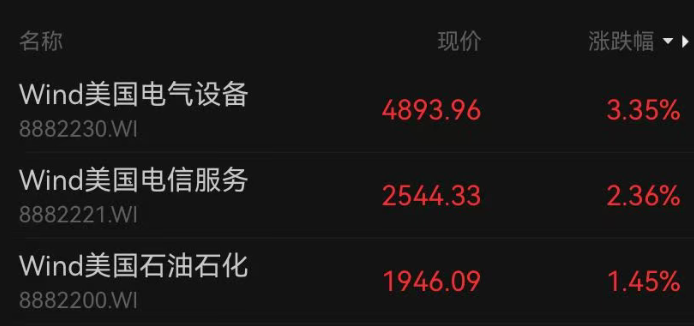
Market Overview - The US stock market experienced a collective decline after initially opening higher, with the Nasdaq down 0.84%, the Dow Jones down 0.45%, and the S&P 500 down 0.41% [1] - A total of 3,575 stocks fell while 1,609 stocks rose [1] Sector Performance - The electric equipment, telecommunications, and petrochemical sectors led the gains, while the real estate and software sectors saw significant declines [1] - Specific sector performance includes: - Electric Equipment: +3.35% [2] - Telecommunications: +2.36% [2] - Petrochemical: +1.45% [2] - Real Estate: -4.57% [2] - Software Services: -3.00% [2] Major Companies - Among the tech giants, Nvidia rose over 1%, while Microsoft fell over 2% [2] - Notable stock performances include: - Apple: +0.97% [3] - Nvidia: +1.01% [3] - Tesla: -0.32% [3] - Amazon: -0.73% [3] - Meta: -1.03% [3] - Alphabet: -1.33% [3] - Microsoft: -2.13% [3] Chinese Stocks - The Nasdaq Golden Dragon China Index declined, with notable movements in individual stocks: - Kingsoft Cloud surged 10% [4] - Xiaomi ADR rose over 3% [4] - Alibaba fell 2% [4] - Tencent Holdings ADR dropped 1.39% [4] - NetEase fell over 2% [4] Cryptocurrency Market - The cryptocurrency market saw a significant drop, with over 120,000 liquidations totaling $191 million within 24 hours [6] - Liquidation amounts included $85.36 million in one hour and $154 million in four hours [8] Employment Data - The US labor market showed unexpected strength with non-farm payrolls increasing by 130,000, significantly above the expected 65,000, marking the largest increase since April 2025 [6] - The unemployment rate unexpectedly decreased to 4.3%, while the previous and expected rates were 4.4% [6] Federal Reserve Expectations - Following the employment data, traders adjusted their expectations for the Federal Reserve's interest rate cuts, pushing the anticipated timing from June to July [9] - The probability of a 25 basis point rate cut in March dropped from 19.6% to 6%, while the probability of maintaining current rates rose to 94% [9] Commodity Prices - Gold and silver prices experienced volatility, with gold peaking at a 1.8% increase before settling at a 0.69% rise, priced at $5062.5 per ounce [9] - Brent crude oil prices rose above $70, currently at $70.7 [9]
从“油页岩”里挤油:中国并购投资的苦生意与大机会
Sou Hu Cai Jing· 2026-02-11 06:15
Group 1 - The equity investment industry is entering a "refinement period" characterized by cognitive return and capability reshaping, with a focus on hard technology and strategic emerging industries [1] - The 15th China Capital Annual Conference and the Hongqiao Science and Technology Investment Conference aims to create an efficient ecosystem that integrates investors and enterprises, discussing investment trends and technological innovation [1] - The conference highlighted the growth of the M&A market, with 6,041 disclosed M&A events in the first year after the introduction of the "M&A Six Guidelines," representing a 35% year-on-year increase [2] Group 2 - The number of domestic M&A funds remains relatively limited, with key players representing the mainstream forces in China's M&A landscape [3] - Various investment institutions shared their achievements in M&A for 2025, focusing on technology and strategic sectors, with significant investments in AI and semiconductor industries [3][4][8] - The M&A market is expected to continue its positive performance, with a focus on strategic acquisitions that enhance supply chains and market positions [5][19] Group 3 - The conference emphasized the importance of understanding industry trends and the need for M&A funds to focus on core value creation and synergy [16][18] - The integration of AI into various industries is seen as a driving force for future M&A activities, with firms looking to acquire technology and capabilities to enhance their competitive edge [22][35] - The need for a robust internal ecosystem within investment institutions was highlighted as essential for successful M&A operations [25][36]