
种业振兴

Search documents
经济新方位丨种业科技创新进入世界第一方阵
Ren Min Ri Bao· 2025-12-03 01:43
Core Viewpoint - The article discusses the progress and achievements of China's seed industry revitalization action plan, emphasizing the importance of seed source security for national security and the advancements made in developing high-quality domestic seed varieties [1][3]. Group 1: Achievements in Seed Industry - High-quality domestic seed varieties such as high-resistant wheat and rice have been developed, contributing to improved agricultural productivity [1][2]. - Over the past five years, the area of self-bred crop varieties has reached over 95%, with domestic seed sources for livestock and aquaculture exceeding 80% and 85% respectively [2][3]. - The establishment of significant research platforms and laboratories has strengthened the foundation for breeding innovation, with 25 wheat varieties selected as national leading varieties during the 14th Five-Year Plan [2][3]. Group 2: Innovations and Technological Advancements - The introduction of intelligent breeding platforms has increased breeding efficiency by over 60%, leading to the development of high-yield rice varieties [2][4]. - The use of artificial intelligence and biotechnology in breeding is transforming the breeding paradigm, aiming to create new advantages in seed development [6][7]. - Companies like Zhongnong Group and Hainan Hai Da Group are leading in the development and sales of various seed varieties, indicating a robust seed industry structure [5][6]. Group 3: Future Directions and Challenges - The next five years are critical for achieving significant breakthroughs in the seed industry, focusing on the protection and utilization of genetic resources [6][7]. - There is a need to address the challenges of homogeneity in seed varieties and enhance the innovation capabilities of seed enterprises [7]. - The government is promoting the integration of research and development with practical applications to ensure the widespread adoption of superior seed varieties [5][7].
科技创新破解种业发展瓶颈
Jing Ji Ri Bao· 2025-12-03 00:01
产业层面,强化战略统筹与系统布局。推动"南繁硅谷"等科研基地升级为集科研攻关、成果转化、 应用推广于一体的国家种业创新策源地。聚焦关键核心技术攻关,集中力量突破基因编辑、合成生物学 等前沿领域,加快构建国家级育种大数据中心和基因资源共享体系,推动数字化技术与生物技术融合应 用。积极拓展国际合作,结合共建"一带一路"倡议,建设开放共赢的全球种业创新网络,增强我国在国 际种业科技格局中的影响力与话语权。 企业层面,充分发挥创新主体作用,构建高效协同的产业创新体系。通过财政补贴、税收优惠和金 融支持等,鼓励企业加大在基因编辑、智能设计育种等前沿领域的研发投入,形成持续稳定的创新投入 机制。深化产学研融合,建立以企业为核心的联合创新平台,带动中小企业配套协同,形成"链主引 领、专精配套"的产业组织体系。推动企业间的创新协作,减少重复性研发,提升行业整体创新效率, 加快从"跟跑"向"并跑""领跑"的跨越。 日前,农业农村部召开全国推进种业振兴行动现场会,总结种业振兴行动进展成效并强调,增强深 入实施种业振兴行动责任感,集中力量破难题、补短板、强优势、控风险,推进"十五五"期间种业高质 量发展,加快实现种业科技自立自强、 ...
学习贯彻党的二十届四中全会精神丨豫“芯”育良种
He Nan Ri Bao· 2025-12-02 23:37
"经过基因重组和定向改良,这些'升级款'玉米种子,不仅产量将显著提升,抗病能力也会大幅增强, 实现绿色增产。"分子育种中心主任徐国平说。 12月1日,记者走进位于郑州市上街区的北京联创种业有限公司隆平高科(河南)玉米创新中心。在分 子育种中心实验室里,科研人员操控着精密仪器,正在对玉米基因做着"手术":提取优良基因、剪切有 害片段和嫁接抗病"利器"等。 北京联创种业有限公司是国内首批"育繁推一体化"高科技种业企业、农业产业化国家重点龙头企业,也 是隆平高科玉米种子板块核心控股子公司。由其打造的隆平高科(河南)玉米创新中心,是隆平高科落 实国家种业振兴行动的重大项目,也是河南省重点项目。 种子是农业的"芯片",分子育种中心正是这枚"芯片"的研发大脑。该中心配备了全自动基因分析仪、种 子检验检测仪器等尖端设备,在玉米种子抗病性状基因定位、农艺性状基因编辑等领域频频实现突 破。"这台高通量分子标记鉴定设备,工作效率相当于40名员工,能大幅缩短育种周期,科研精准度显 著增强。"徐国平指着实验室里的核心设备介绍。 据悉,玉米创新中心一期于2024年10月正式投产,综合科研楼、种质资源库、试制车间及产业化配套设 施一应俱 ...
种业科技创新进入世界第一方阵(经济新方位)
Ren Min Ri Bao· 2025-12-02 22:33
Core Viewpoint - The article discusses the progress and achievements of China's seed industry revitalization action plan, highlighting the importance of seed source security for national security and the advancements made in developing high-quality domestic seed varieties [1][3]. Group 1: Achievements in Seed Industry - The seed industry revitalization action has led to the emergence of high-quality domestic seed varieties, such as high-resistant wheat and rice, contributing to improved agricultural productivity [1][2]. - Over the past five years, the area of self-bred crop varieties has reached over 95%, with domestic seed sources for livestock and aquaculture exceeding 80% and 85% respectively [2][3]. - The establishment of major research platforms and laboratories has strengthened the foundation for breeding innovation, with significant investments made by various provinces [2][3]. Group 2: Technological Innovations - The introduction of smart greenhouses and AI-driven breeding platforms has increased breeding efficiency by over 60%, allowing for the selection of high-yield rice varieties [2][4]. - The use of advanced breeding techniques, including artificial intelligence and biotechnology, is transforming the breeding paradigm, aiming to enhance the quality and yield of crops [6][7]. Group 3: Future Directions and Challenges - The next five years are critical for achieving significant breakthroughs in the seed industry, focusing on the protection and utilization of genetic resources [7][8]. - There is a need to address the challenges of homogeneity in seed varieties and to enhance the innovation capabilities of seed enterprises through deeper integration of industry, academia, and research [6][7]. - The goal is to continuously produce high-quality, green, and specialized seeds to ensure food security in China [8].
实施5年来 种业振兴行动完成阶段性目标任务 种业科技创新进入世界第一方阵(经济新方位)
Ren Min Ri Bao· 2025-12-02 22:06
Core Viewpoint - The article highlights the progress and achievements of China's seed industry revitalization action plan, emphasizing the importance of seed source security for national security and the need for self-reliance in agricultural production [1][3]. Group 1: Achievements in Seed Industry - High-quality Chinese seeds such as disease-resistant wheat and rice varieties have been developed, contributing to improved agricultural productivity [1][2]. - Over the past five years, the area of self-bred crop varieties has reached over 95%, with domestic seed sources for livestock and aquaculture exceeding 80% and 85% respectively [2][3]. - The introduction of advanced breeding platforms and technologies has increased breeding efficiency by over 60%, leading to the development of high-yield rice varieties [2][4]. Group 2: Government Initiatives and Investments - The Ministry of Agriculture and Rural Affairs has implemented various funding initiatives, such as a total investment of 240 million yuan in Henan province for crop breeding projects [2][5]. - Local governments are establishing mechanisms to connect research and promotion, with initiatives like subsidies for major variety research and demonstration platforms [5][6]. Group 3: Challenges and Future Directions - Despite advancements, challenges remain in utilizing agricultural genetic resources effectively, with a need for improved quality and application of research [6][7]. - The next five years are seen as a critical period for achieving significant breakthroughs in the seed industry, focusing on resource protection, breeding innovation, and the integration of artificial intelligence in breeding processes [7][8].
总产值740亿,收入增势稳,泰安农业农村发展“十四五”成效斐然
Qi Lu Wan Bao· 2025-12-02 08:45
Core Insights - The "14th Five-Year Plan" for agricultural and rural modernization in Tai'an is progressing well, with a focus on implementing the rural revitalization strategy and achieving stable development in the agricultural sector [1][2] Agricultural Production and Income - In 2024, the total output value of agriculture, forestry, animal husbandry, and fishery in Tai'an is projected to be 74.47 billion yuan, with a per capita disposable income for rural residents of 26,489 yuan [1] - In the first three quarters of this year, the total output value reached 64.71 billion yuan, reflecting a growth of 4.4%, while the per capita disposable income increased by 5.4% to 22,590 yuan [1] Grain Production and Agricultural Mechanization - The grain planting area in 2024 is expected to be 5.6199 million acres, with a yield of 472.93 kg per acre, totaling 2.6578 million tons [1] - The total vegetable output is projected at 6.367 million tons, and meat, eggs, and milk production is expected to reach 700,000 tons [1] - The mechanization rate for major crops is at 92.25%, with total agricultural machinery power reaching 5.819 million kilowatts [1] Rural Industry Development - The focus is on enhancing rural industries, with the establishment of two national modern agricultural industrial parks and eight strong agricultural towns [2] - The revenue from large-scale agricultural processing enterprises is expected to reach 50.22 billion yuan in 2024 [2] - A total of 75 enterprises have been authorized under the "Tai Good Food" brand, contributing to a comprehensive brand system [2] Rural Infrastructure and Services - A total of 255 provincial-level beautiful rural areas have been created, with rural road mileage reaching 15,500 kilometers [3] - The coverage rate for rural water supply and household tap water access is at 95% and 99%, respectively [3] - The investment in poverty alleviation projects during the "14th Five-Year Plan" period amounts to 1.24 billion yuan, with 1,146 projects implemented [3] Innovation and Digital Agriculture - The development of a "Digital Agriculture Brain" is underway, with five major digital platforms being established [4] - The quality inspection pass rate for agricultural products remains stable at over 98%, with high rates of waste recycling [4] - Tai'an has been recognized as a significant center for the meat duck industry, with innovative agricultural social services covering 3.49 million acres [4]
从一粒稻种看中国种企创新路
Xin Hua She· 2025-12-01 13:26
Core Viewpoint - The article highlights the innovative journey of Chinese seed companies, particularly focusing on the advancements made by Longping High-Tech in rice breeding and the broader context of China's seed industry revitalization efforts [1][3]. Group 1: Innovations in Rice Breeding - Longping High-Tech has achieved significant breakthroughs in rice breeding, including the new variety "Wei Liang You 2268," which has a maximum yield of 1174.5 kg per mu and strong resistance to pests and diseases [2]. - The company has established a commercial breeding system that integrates traditional breeding methods with modern biotechnology, reducing the breeding cycle from 8-10 years to 4-6 years [2]. Group 2: Industry Revitalization Efforts - The Chinese government has selected over 270 seed companies to form a robust national seed industry framework, aiming to address challenges and enhance innovation within the sector [3]. - Financial institutions have provided over 300 billion yuan in loans to seed companies, and research investment by crop seed companies has doubled since 2020, significantly boosting their development [3]. Group 3: Achievements and Market Position - In the past five years, Chinese seed companies have made notable advancements, with Longping High-Tech holding six of the top ten hybrid rice varieties in terms of promotion area for 2024 [4]. - Companies like Syngenta and Longping High-Tech rank third and eighth globally among seed companies, respectively, indicating a significant enhancement in the overall strength of the industry [4]. Group 4: Future Directions and Challenges - Despite progress, there is still a lack of high-quality varieties in the market, and the competitiveness of some domestic varieties remains below that of international counterparts [5]. - The "14th Five-Year Plan" emphasizes the need to enhance agricultural production capacity and quality, with a focus on cultivating world-class seed companies and fostering deep integration of industry and research [5].

四中全会精神解读·市场最前沿丨从一粒稻种看中国种企创新路
Xin Hua Wang· 2025-12-01 12:50
Core Viewpoint - The article highlights the innovative journey of Chinese seed companies, particularly focusing on the advancements made by Longping High-Tech in rice breeding and the broader context of China's seed industry revitalization efforts [1][3]. Group 1: Company Innovations - Longping High-Tech has achieved significant breakthroughs in rice breeding, including the new variety "Wei Liang You 2268," which has a maximum yield of 1174.5 kg per mu and strong resistance to pests and diseases [2]. - The company has established a commercial breeding system that integrates traditional breeding methods with modern biotechnology, reducing the breeding cycle from 8-10 years to 4-6 years [2]. - Longping High-Tech has formed a research team of over 700 members and collaborates with multiple academicians and research institutions to enhance its breeding capabilities [1]. Group 2: Industry Developments - The revitalization of the seed industry in China is supported by the Ministry of Agriculture and Rural Affairs, which has selected over 270 seed companies to strengthen innovation and collaboration with financial and research institutions [3]. - In the past five years, Chinese seed companies have made notable progress in various fields, with Longping High-Tech dominating the top ten hybrid rice varieties in terms of area planted [4]. - The overall strength of seed companies has improved, with significant increases in research and development investments, and major projects being led by these companies [3][4]. Group 3: Future Outlook - The "14th Five-Year Plan" emphasizes enhancing agricultural production capacity and quality, with a focus on cultivating world-class seed companies [5]. - Future initiatives will concentrate resources on breeding innovation, encouraging collaboration between enterprises and research institutions, and promoting talent mobility [5].
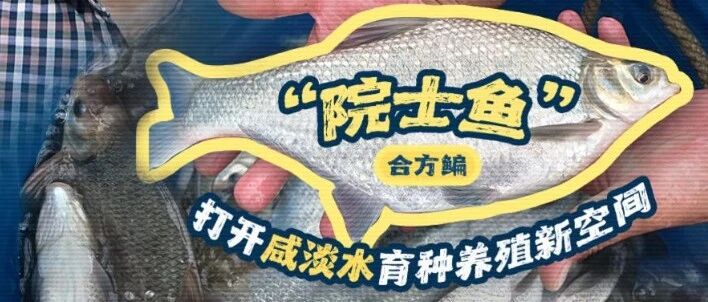
10余年攻坚“良种芯片” ,南沙“院士鱼”养成记
21世纪经济报道· 2025-12-01 09:55
Core Viewpoint - The article highlights the successful breeding and cultivation of the hybrid fish species He Fang Yan, developed by a team led by Chinese Academy of Engineering academician Liu Shaojun, showcasing its economic and ecological benefits in aquaculture [1][2][6]. Group 1: Breeding and Cultivation Process - The He Fang Yan fish, known for its rapid growth and high meat yield, was created through a decade-long research effort involving hybridization techniques [2][3]. - The breeding process involves meticulous selection of parent fish based on physical attributes and vitality, followed by precise environmental control during fertilization and hatching [3][4]. - The breeding team conducts seasonal migrations to optimize breeding conditions, starting in Hainan and moving northward as temperatures rise [3]. Group 2: Economic Impact and Market Integration - A 7-acre fish pond can yield over 30 million yuan in total output, with the fish being sold at a market price of 10 yuan per pound [1][5]. - The integration of technology in aquaculture, including automated systems for monitoring and managing water quality, enhances operational efficiency and data-driven decision-making [4][5]. - The He Fang Yan fish demonstrates adaptability to brackish water environments, achieving high fertilization and hatching rates, which supports sustainable aquaculture practices [5][6]. Group 3: Strategic Alignment and Future Prospects - The breeding and cultivation of He Fang Yan align with China's "14th Five-Year Plan" to strengthen seed innovation and promote the revitalization of the seed industry [1][2]. - The successful cultivation of this fish species not only benefits local aquaculture but also contributes to the high-quality development of the Guangdong fishery industry [6].

莱西市河头店镇深耕“农业芯片”锻造振兴引擎
Qi Lu Wan Bao· 2025-11-27 21:56
Core Viewpoint - The article highlights the development of the seed industry economy in Hetaodian Town, Laixi City, as a crucial driver for agricultural transformation and rural revitalization, establishing a comprehensive industry chain from breeding to processing and services [1] Group 1: Industry Development - Hetaodian Town has leveraged idle resources and introduced top-tier research teams to enhance its seed industry [1] - The town has successfully cultivated a diversified seed industry system that includes high-end aquaculture, quality livestock, high-yield grains, and specialty economic crops [1] - The approach taken by Hetaodian Town represents a unique path for high-quality rural industrial development led by "seed industry revitalization" [1] Group 2: Industry Chain - A full-process industry chain has been formed, encompassing breeding, farming, processing, and services [1] - The integration of various sectors within the seed industry supports the overall agricultural transformation and rural revitalization efforts [1]