
AI编程

Search documents
一封AI邮件,竟让Go语言之父爆起粗口
机器之心· 2025-12-28 04:44
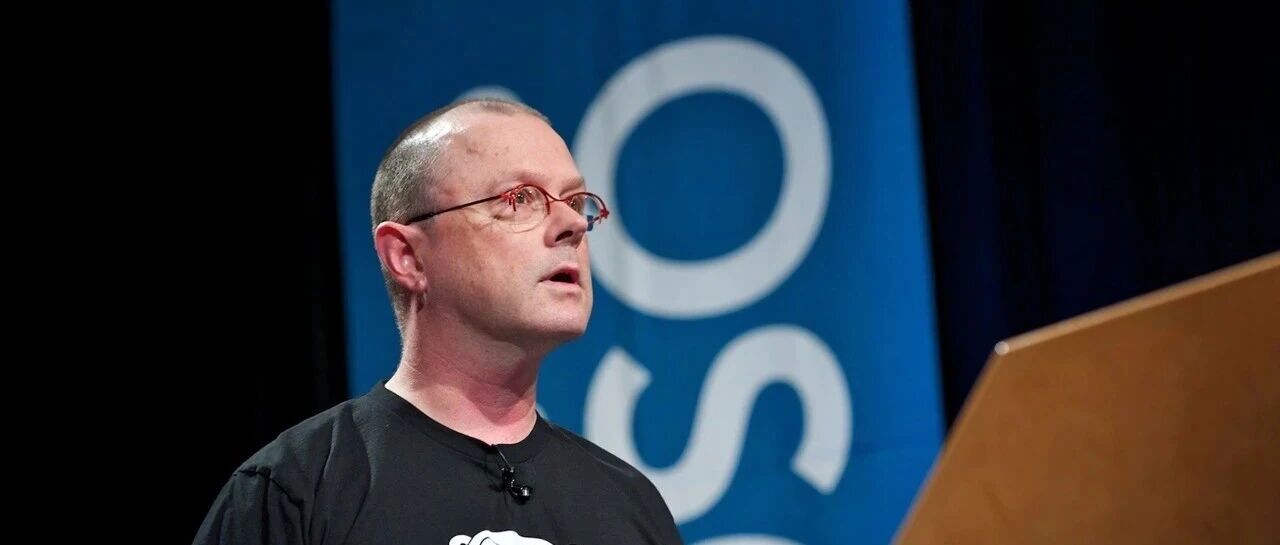
Core Viewpoint - The article discusses the backlash from Rob Pike, a prominent programmer and co-creator of the Go language, against an AI-generated email that expressed gratitude for his contributions to the tech field, highlighting his frustrations with AI's impact on programming and the environment [1][5][8]. Group 1: AI and Programming Community Reactions - Rob Pike's anger stemmed from the realization that the email was generated by AI, which he deemed as "AI garbage" [5]. - Other prominent figures in programming, like Guido van Rossum, also received similar emails, indicating a broader issue within the community regarding AI-generated content [5]. - The general sentiment among programmers reflects a growing disdain for AI-generated code, with many feeling that it leads to a degradation of their foundational skills [13][14]. Group 2: Environmental and Social Concerns - Pike expressed concerns about the environmental impact of AI, citing the significant hardware resources wasted and the societal disruptions caused by AI technologies [8]. - There is a perception that AI models exploit data from individuals without providing any compensation, raising ethical questions about data usage [8]. Group 3: Adaptation to AI in Programming - The article notes a sense of panic among programmers regarding the rapid advancement of AI, with some feeling left behind as AI tools become more capable [16]. - Despite the fear, there are suggestions within the community to embrace AI programming tools to gain experience and adapt to the changing landscape [22]. - Boris Cherny, creator of Claude Code, shared data showing extensive AI-generated contributions, indicating a shift in how programming tasks are approached [18].

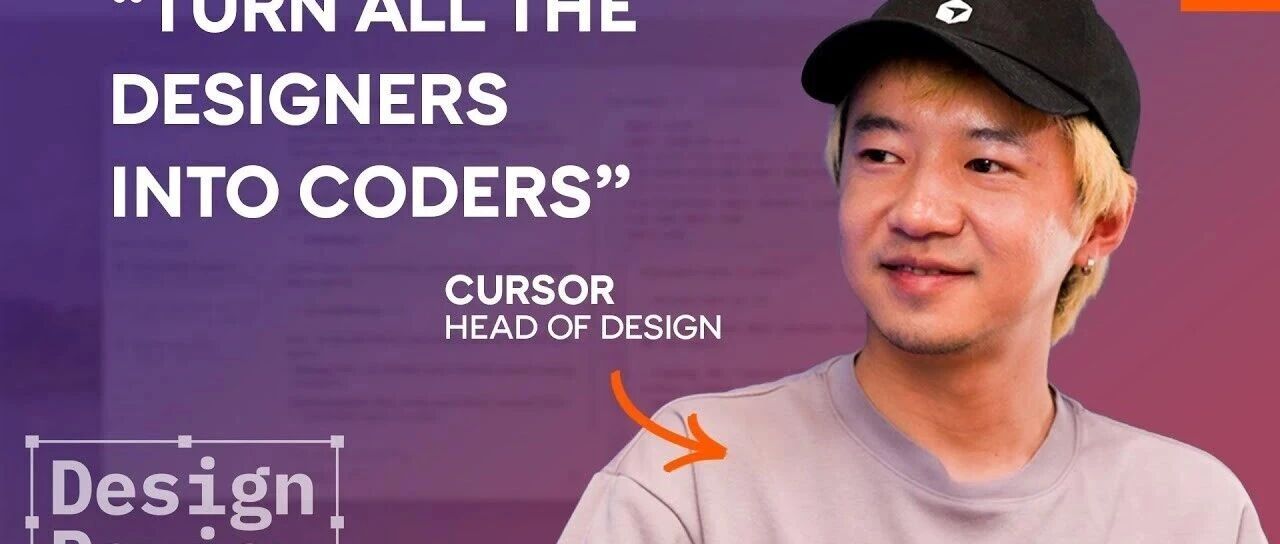
喝点VC|YC对话Cursor华人设计负责人:设计师将开始写代码,工程师将开始做设计,我们的共同语言就是代码
Z Potentials· 2025-12-28 02:04
Core Insights - The article discusses the evolution of design and engineering roles, emphasizing the merging of these disciplines through the use of AI tools like Cursor, which allows designers to code and engineers to design, creating a common language of code [4][62][66] - Ryo Lu, the design lead at Cursor, shares his vision of breaking down the barriers between designers and engineers, advocating for a hands-on, iterative approach to learning and building [5][11][62] Group 1: Design Philosophy - Ryo Lu's personal KPI for the year is to transform all designers into programmers, encouraging a collaborative environment where both roles can communicate through code [4][11] - The design process is shifting from a focus on perfection to an emphasis on building and iterating, where initial outputs may be rough but serve as a foundation for further refinement [62][64] - The importance of understanding core elements and primitives in design is highlighted, suggesting that simplicity and flexibility in foundational concepts can lead to more effective solutions [23][71] Group 2: Tool Development and User Experience - Cursor has evolved significantly, with a focus on integrating AI agents that enhance user interaction and streamline the coding process, making it accessible even for those without coding experience [17][20][62] - The design team at Cursor has implemented a new layout prioritizing AI agents, allowing users to interact with the tool more intuitively and efficiently [20][21] - Ryo Lu emphasizes the need for a clean and simple user interface that adapts to user preferences while maintaining functionality, avoiding the pitfalls of feature bloat [22][24] Group 3: Future of Design and Engineering - The future of design is envisioned as a sculpting process where designers refine AI-generated outputs, focusing on craftsmanship and detail rather than just initial creation [64][68] - The article suggests that as AI tools become more integrated into the design process, the roles of designers and engineers will continue to blur, fostering a more collaborative and innovative environment [66][70] - Ryo Lu advises designers to focus on core concepts that will remain relevant over time, ensuring that their work can evolve alongside changing technologies and user needs [71][72]
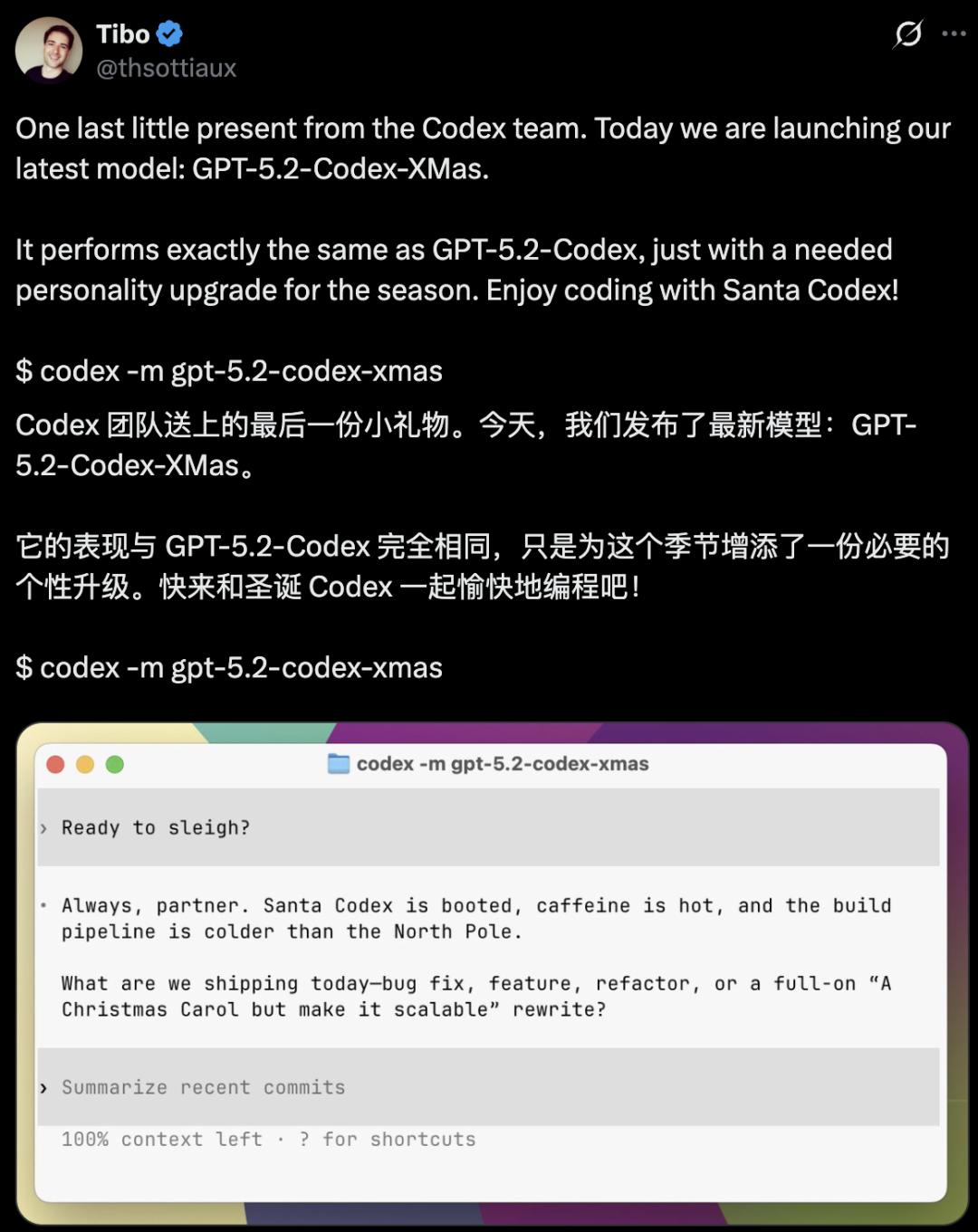
别想休假,OpenAI圣诞放狠招,程序员假期变代码马拉松
3 6 Ke· 2025-12-26 07:11
Core Insights - OpenAI has launched a special Christmas version of Codex, named GPT-5.2-Codex-XMas, which includes personalized upgrades while maintaining the same functionality as the standard GPT-5.2-Codex [1] - The holiday gift also features a reset of rate limits and an increase in usage caps to double the normal limits until January 1, allowing users to enjoy programming during the holiday season [3] Group 1: OpenAI's Codex Developments - The new Codex model is positioned as a more software engineering-focused tool, capable of long-term coding tasks and understanding complex project requirements [8] - Key enhancements include improved context understanding, cross-file and cross-module task execution, and a focus on Windows native toolchain optimization and .NET development [8] - The introduction of a "Skills" mechanism allows teams to reuse common engineering processes and commands, making Codex a more integral part of the engineering workflow [8] Group 2: Competitive Landscape - The competition among leading AI programming companies, including OpenAI, Google, and Anthropic, has intensified during the holiday season, with each company launching new features and promotional offers [10] - Anthropic has also announced a holiday promotion that doubles usage limits for Pro and Max subscription users from December 25 to December 31 [11] - Google has introduced significant upgrades to its Gemini series, including Gemini 3 and Gemini 3 Flash, aimed at enhancing programming capabilities and reducing costs [13]

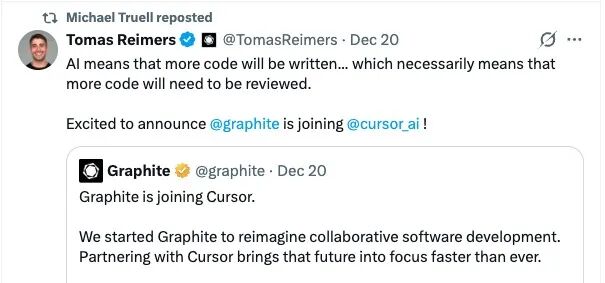
“Cursor的bug太多了,他们直接买下一家代码评审公司来修!”
3 6 Ke· 2025-12-23 02:34
12 月 19 日,Cursor 宣布将收购代码评审初创公司 Graphite。 Cursor 主要在编写代码阶段为程序员提供辅助;而 Graphite 则聚焦于代码完成之后的流程,帮助团队评审变更、判断代码是否已具备上线条件。Graphite 联合创始人 Tomas Reimers 与 Cursor CEO Michael Truell 的共识是:"AI 的引入意味着会有更多代码被写出来,也就必然意味着,需要被评审的代码只会 更多。" 在 AI 大幅加速代码编写的同时,代码评审流程却几乎没有发生变化,反而正在占用工程团队越来越多的时间,这正是这笔交易发生的现实背景。Michael Truell 在一份声明中表示:"在过去 2.5 年里,Cursor 已经让编写生产级代码变得快了很多。但对大多数工程团队而言,代码评审的方式看起来仍然和三年 前几乎一模一样。" Graphite 成立于近五年前,并于今年 3 月完成了 5200 万美元 B 轮融资。这家公司目前为 500 多家企业、数万名工程师提供服务,客户包括 Shopify、 Snowflake、Figma 以及 Perplexity AI。 Cursor ...
Claude 4.5 杀疯了,能一口气写出一万多行代码… | 极客时间
AI前线· 2025-12-22 05:01
前段时间,Anthropic 正式发布了 Claude Sonnet 4.5,对它的定位是"世界上最好的编码模型"和"构建复杂智能体的最强模型"。 凭什么这么说呢,Anthropic 在客户测试中观察到,Claude 4.5 能连续专注干活超过 30 小时,而上一代的数据是 7 个小时。以前是代替 1 个程序员, 现在可以代替 4 个了呢。 更夸张的是,它能连续敲出约 11,000 行代码,快速搞出来一款聊天应用。我费劲工作一个月还不如 AI 轻松工作一天。好好好,既生我,何生 AI …… | | Claude | Claude | Claude | GPT-5 | Gemini | | --- | --- | --- | --- | --- | --- | | | Sonnet 4.5 | Opus 4.1 | Sonnet 4 | | 2.5 Pro | | | 77.2% | 74.5% | 72.7% | 72.8% GPT-5 | | | Agentic coding SWE-bench Verified | 82.0% | 79.4% | 80.2% | | 67.2% | | | with pa ...

OpenAI最强编程模型登场,实测竟又被Gemini 3 Flash按趴下
3 6 Ke· 2025-12-19 03:50
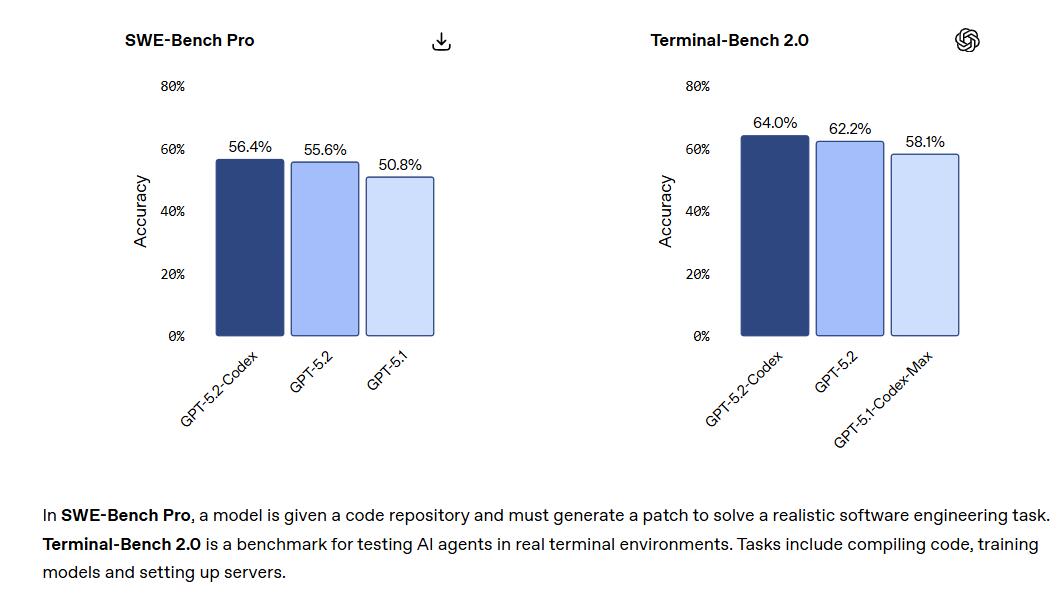
Core Insights - GPT-5.2-Codex integrates the advantages of GPT-5.2 and the advanced capabilities of GPT-5.1-Codex-Max, specifically designed for complex software engineering and cybersecurity tasks [1] - OpenAI has released GPT-5.2-Codex to all paid ChatGPT users, with API access forthcoming [1] - The performance of GPT-5.2-Codex may not meet expectations, showing less than 1% improvement on SWE-Bench Pro and potential performance regressions in some benchmarks [3] Performance Enhancements - GPT-5.2-Codex features native context compression technology, improving long context understanding, tool invocation, and accuracy in coding tasks [5] - In SWE-Bench Pro, GPT-5.2-Codex scored 56.4%, surpassing GPT-5.2's 55.6% and GPT-5.1's 50.8% [5] - In Terminal-Bench 2.0, GPT-5.2-Codex achieved a score of 64.0%, significantly ahead of GPT-5.1-Codex-Max's 58.1% [5] Cybersecurity Applications - GPT-5.2-Codex set a record in Capture The Flag (CTF) challenges, indicating continuous improvement in cybersecurity capabilities [7] - A security researcher utilized GPT-5.1-Codex-Max to discover a vulnerability in React, showcasing the practical value of these models in cybersecurity [9] Competitive Landscape - The release of GPT-5.2-Codex comes amid increasing competition, particularly with Google's launch of the low-cost Gemini 3 Flash model [12] - The actual effectiveness and performance of GPT-5.2-Codex in real-world applications and its comparison with competitors will be a focal point moving forward [12]
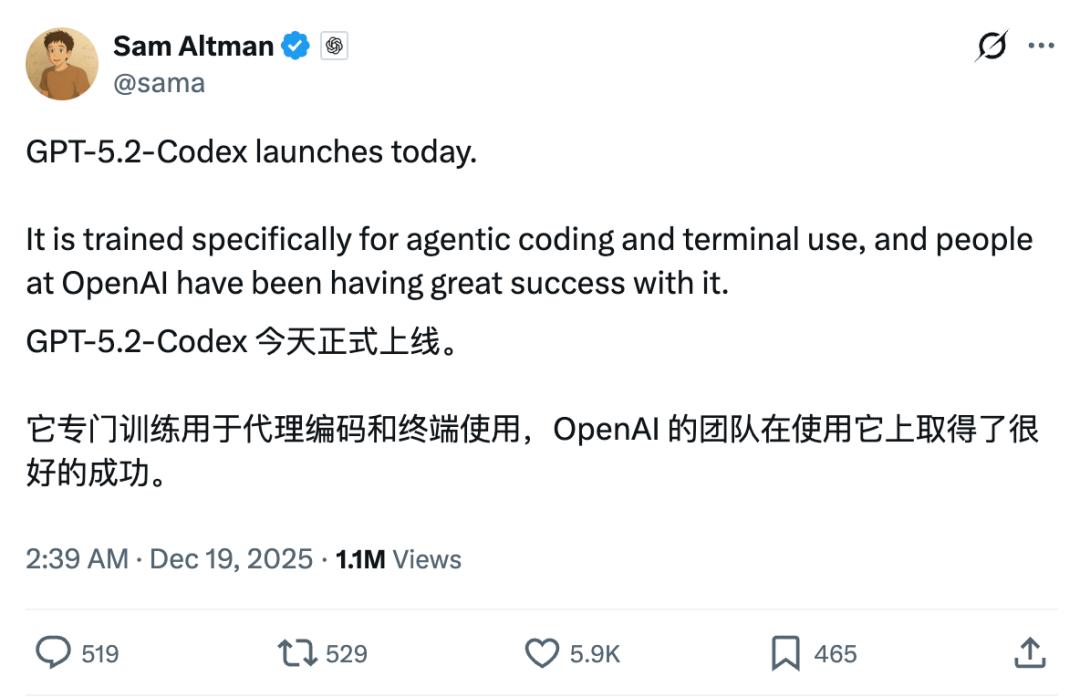
强化AI编程能力迎战谷歌!OpenAI发布GPT-5.2-Codex,软件工程和网安一把抓
Hua Er Jie Jian Wen· 2025-12-18 22:49
Core Insights - OpenAI has launched the GPT-5.2-Codex model, an advanced coding model focusing on software engineering and cybersecurity, enhancing its competitive edge against Google's Gemini [1][2] - The new model shows significant improvements in coding performance, cybersecurity capabilities, and long-term task handling, achieving record accuracy in benchmark tests [1][3] Group 1: Model Performance - GPT-5.2-Codex achieved an accuracy of 56.4% in the SWE-Bench Pro test, surpassing GPT-5.2's 55.6% and GPT-5.1's 50.8% [3] - In the Terminal-Bench 2.0 test, GPT-5.2-Codex reached an accuracy of 64.0%, compared to GPT-5.2's 62.2% and GPT-5.1's 58.1% [3] - The model has been optimized for long-term coding tasks, improving context retention and reliability in large-scale projects [5][8] Group 2: Cybersecurity Enhancements - GPT-5.2-Codex has made significant strides in cybersecurity, with capabilities observed to have dramatically improved since the previous versions [8] - The model has demonstrated the ability to tackle advanced multi-step challenges requiring professional-level cybersecurity skills [8] - A real-world case highlighted the model's potential in defensive cybersecurity, where vulnerabilities were discovered and responsibly disclosed using the previous Codex model [9] Group 3: Access and Security Measures - OpenAI is implementing additional protective measures for the enhanced cybersecurity capabilities, including specialized training and a trusted access program for security professionals [11] - The trusted access program is initially available to vetted security professionals and organizations with specific cybersecurity use cases, allowing them to utilize OpenAI's models for defensive work [11]
AI编程风靡全球! ?Lovable估值较7月翻三倍有余 跻身欧洲最有价值初创阵营
Zhi Tong Cai Jing· 2025-12-17 07:26
(原标题:AI编程风靡全球! ?Lovable估值较7月翻三倍有余 跻身欧洲最有价值初创阵营) 智通财经APP获悉,有媒体援引知情人士透露的消息报道称,聚焦于全自动化AI编程领域的Vibe coding AI初创公司Lovable在最新一轮融资中的估值狂飙至66亿美元,并且包括美国知名风投公司Accel。这一 最新估值也意味着,Lovable估值较此前不久在7月完成的上一轮估值大幅增长266%,并为其创收与估 值爆发式增长的一年画上圆满句号——这一年里它已然成为整个欧洲最有价值的初创类型公司之一。 ?所谓的Vibe coding,可以理解为AI编程领域(AI-assisted coding)的一个更激进、更加口语化的核心子 集,所谓AI编程强调的是用最纯粹的人类自然语言提示让AI大模型生成、修改、调试代码,人类的角 色从"写代码"转为"描述目标、迭代反馈";甚至在某些编程类工程实践里强调"先跑起来再说",对代码逐 行理解与审阅的要求更弱。 AI 编程基本已是硅谷乃至全球科技行业大势所趋,GitHub的Octoverse 2025 指出"生成式 AI 已成为开发 的标准配置",并披露80%的新开发者在注册后第一 ...
AI编程风靡全球! Lovable估值较7月翻三倍有余 跻身欧洲最有价值初创阵营
Zhi Tong Cai Jing· 2025-12-17 07:21
Group 1: Company Overview - Lovable, an AI coding startup focused on fully automated AI programming, has reached a valuation of $6.6 billion in its latest funding round, representing a 266% increase from its previous valuation of $1.8 billion in July [1][3] - The company reported an annual recurring revenue (ARR) of approximately $200 million in November, a significant increase from its first ARR of $1 million less than a year ago [4] - Lovable is headquartered in Stockholm, Sweden, and is establishing offices in Boston and San Francisco [4] Group 2: Industry Trends - AI programming is becoming a standard in the tech industry, with GitHub's Octoverse 2025 indicating that 80% of new developers use AI tools like Copilot within their first week [2][6] - A survey by Stack Overflow 2025 revealed that 50.6% of professional Java/Python developers use AI programming tools daily [2] - The demand for AI applications, particularly in enterprise settings, is rapidly increasing, with major companies like Google and Meta reporting strong performance and future outlooks [7][8] Group 3: Investment Landscape - Accel, a prominent U.S. venture capital firm, participated in Lovable's latest funding round, highlighting its role in supporting the new wave of AI startups [3] - Other notable investors in Lovable's previous funding rounds include Creandum and founders from Klarna and ElevenLabs [4] - The AI programming sector is attracting significant interest from Silicon Valley investors, as evidenced by the high valuations of other AI startups like Cursor and Replit [4]
AI编程风靡全球! Lovable估值较7月翻三倍有余 跻身欧洲最有价值初创阵营
智通财经网· 2025-12-17 07:17
毋庸置疑的是,总部位于瑞典的AI初创公司Lovable这一最新的估值数字远远超过了这家初创公司在7月 完成上一轮融资后达到的18亿美元估值的三倍有余。这是Lovable在2025年的第三轮融资,发生在其创 收与估值高速增长的这一年度——这一年使其成为欧洲最有价值的初创公司之一。 据媒体报道,两位知情人士在讨论私人信息时均要求匿名。福布斯此前在11月报道称,本轮融资将使该 公司估值约为60亿美元。 智通财经APP获悉,有媒体援引知情人士透露的消息报道称,聚焦于全自动化AI编程领域的Vibe coding AI初创公司Lovable在最新一轮融资中的估值狂飙至66亿美元,并且包括美国知名风投公司Accel。这一 最新估值也意味着,Lovable估值较此前不久在7月完成的上一轮估值大幅增长266%,并为其创收与估 值爆发式增长的一年画上圆满句号——这一年里它已然成为整个欧洲最有价值的初创类型公司之一。 所谓的Vibe coding,可以理解为AI编程领域(AI-assisted coding)的一个更激进、更加口语化的核心子 集,所谓AI编程强调的是用最纯粹的人类自然语言提示让AI大模型生成、修改、调试代码,人类的 ...