
无核三原则

Search documents
日本长崎市民团体要求高市撤回涉台错误言论
Yang Shi Xin Wen Ke Hu Duan· 2025-12-10 00:40
Core Viewpoint - The Japanese government's military expansion plans and controversial remarks by Prime Minister Sanna Takashi regarding Taiwan have sparked significant domestic criticism and protests from various civic groups [1][3][4]. Group 1: Civic Response - Civic groups in Nagasaki have sent protest statements to Prime Minister Sanna Takashi and other cabinet officials, demanding the retraction of his remarks related to Taiwan [1][3]. - In Kumamoto, multiple civic groups held gatherings opposing the government's plan to deploy long-range missiles, indicating widespread public dissent against military expansion [4][6]. Group 2: Military Expansion Plans - The Japanese Defense Ministry plans to deploy upgraded Type 12 surface-to-ship missiles in Kumamoto, with the first ground troops expected to be stationed by the end of March 2026 [6][10]. - The upgraded Type 12 missiles will have an extended range of approximately 1,000 kilometers, raising concerns about regional security and Japan's adherence to its pacifist constitution [6][10]. Group 3: Public Sentiment - Civic group representatives express fears that missile deployment could lead to civilian casualties in the event of conflict, emphasizing the need to oppose actions perceived as harmful [8]. - There is a prevailing public sentiment that Japan's military buildup contradicts its constitutional commitment to self-defense and could destabilize regional security dynamics [10].

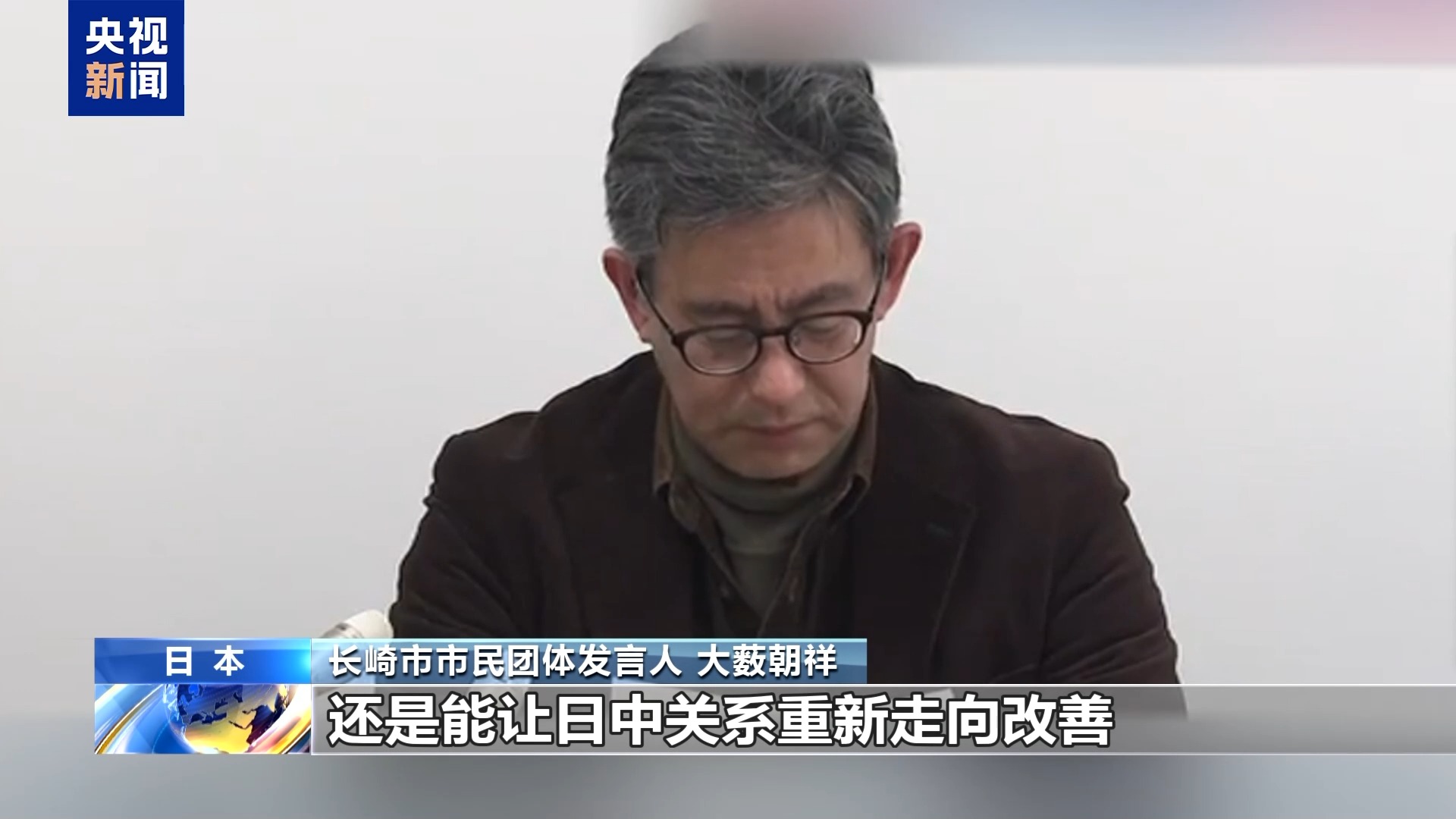
视频丨日本长崎市民团体要求高市撤回涉台错误言论
Yang Shi Xin Wen Ke Hu Duan· 2025-12-09 23:48
Group 1 - Japanese Prime Minister Sanna Takashi's controversial remarks regarding Taiwan and the government's accelerated military expansion have faced strong criticism domestically [1][3] - Citizen groups in Nagasaki and Kumamoto have organized protests against Takashi's statements and the deployment of long-range missiles, emphasizing the need to uphold Japan's "Three Non-Nuclear Principles" [5][6] - The planned deployment of upgraded Type 12 surface-to-ship missiles in Kumamoto, with a range extended to approximately 1,000 kilometers, has sparked significant public opposition [8][12] Group 2 - The first ground troops are set to be stationed at the Kumamoto Ground Self-Defense Force base by the end of March 2026, with the upgraded Type 12 missiles expected to be operational between April 2027 and March 2028 [8][12] - The deployment of these missiles is viewed as a shift away from Japan's pacifist constitution, raising concerns about regional security dynamics [12]
俄学者批高市早苗言论严重威胁地区稳定
Xin Hua She· 2025-12-04 12:27
Core Viewpoint - Recent provocative statements by Japanese Prime Minister Sanae Takaichi regarding Taiwan represent a serious interference in China's internal affairs and pose a significant threat to stability in Northeast Asia and international security [1][2]. Group 1: Provocative Statements - Takaichi's remarks on Taiwan are seen as highly provocative and detrimental to Sino-Japanese relations, with no benefits for Japan [1]. - The reference to the "San Francisco Peace Treaty," which is deemed illegal and invalid, is criticized as inappropriate and misleading regarding Taiwan's status [1]. Group 2: Military Developments - Japan's Defense Minister, Nobuo Kishi, announced plans to deploy missiles on Yonaguni Island, approximately 110 kilometers east of Taiwan, which is viewed as a destabilizing action [2]. - Takaichi's discussions about potentially allowing nuclear weapons on Japanese soil directly contradict Japan's long-standing "Three Non-Nuclear Principles" [2]. Group 3: Historical Context and Risks - Experts warn that Japan's recent military rhetoric reflects a dangerous trend of seeking to expand the Self-Defense Forces' capabilities and potentially engage in overseas operations [2]. - The revival of nationalist sentiments and the glorification of the "Bushido spirit" by Japanese leaders could lead the country into perilous situations reminiscent of its aggressive policies during World War II [2].
日本多方人士举行集会要求高市早苗撤回涉台错误言论
Zhong Guo Xin Wen Wang· 2025-12-03 07:39
Group 1 - A gathering of political, academic, and civic leaders in Japan demanded Prime Minister Kishi Nobuo retract his erroneous statements regarding Taiwan to prevent further damage to Japan-China relations [1][3] - Former Ministry of Foreign Affairs official Sunzaki Takashi emphasized that the Taiwan issue is purely an internal matter for China and criticized Kishi's linkage of Taiwan to Japan's "survival crisis" as absurd [1][3] - Lawmaker Hiraoka Hideo stated that Kishi's statements, made to please his support base, are unacceptable and could lead to significant economic losses for Japan [3][4] Group 2 - Senator Ibo Yoichi expressed concerns over Japan's increasing military presence in the southwestern islands and the rising defense budget, which he believes could escalate regional tensions [3][4] - Senator Takara Saya suggested that Kishi's provocative remarks are intended to create an atmosphere for further military expansion and revision of Japan's security policies [3][4] - Professor Haba Kumiko highlighted Japan's historical colonial rule over Taiwan, urging the government to exercise caution in its statements regarding the Taiwan issue [4]
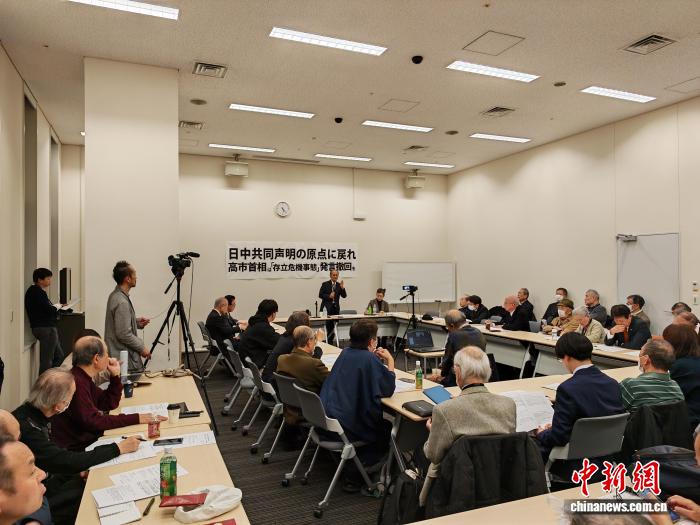
日本民众举行集会反对高市错误言论 要求坚持和平宪法
Yang Shi Xin Wen Ke Hu Duan· 2025-11-29 08:31
Core Viewpoint - Recent comments by Japanese Prime Minister Sanae Takaichi regarding Taiwan have sparked widespread protests across Japan, with citizens demanding adherence to the peace constitution and the retraction of her statements [1]. Group 1: Protests and Public Sentiment - Protests have been organized in various locations, including a significant gathering in Setagaya, Tokyo, where participants called for the government to uphold the peace constitution and criticized the increase in defense spending [1]. - Protesters displayed banners with messages such as "Maintain the Peace Constitution," "Oppose Military Expansion," and "Takaichi Sanae Resign Immediately," indicating strong public discontent with the government's military policies [1]. Group 2: Concerns Over Military Spending - Participants expressed concerns about the implications of collective self-defense and the potential modification of Japan's "Three Non-Nuclear Principles," emphasizing the need for caution given Japan's history as a nuclear victim [3]. - There is a prevailing sentiment that increased military spending could ultimately disrupt citizens' lives, with calls for the government to reconsider its direction towards military expansion [3]. Group 3: Historical Context and Peace Advocacy - Some protesters highlighted Japan's past as an aggressor in wars, stressing the importance of adhering to the peace constitution to prevent a return to militarism and overseas military engagements [4]. - The collective memory of Japan's wartime actions has fueled a strong advocacy for peace, with participants vowing to uphold the spirit of the peace constitution [4].
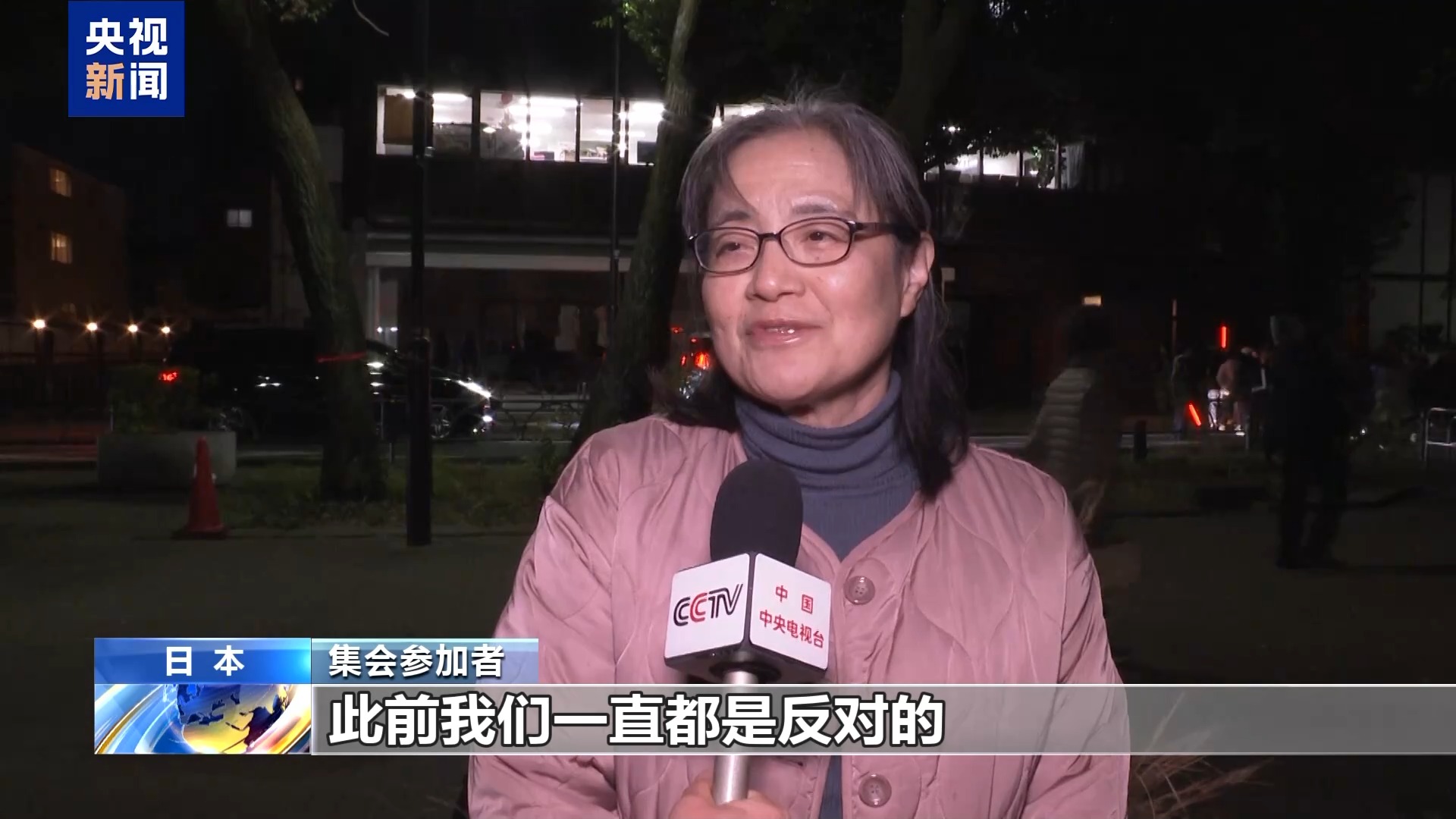
中国代表:对这样的日本,必须严加管束
中国能源报· 2025-11-29 07:17
Group 1 - The core viewpoint emphasizes China's strong opposition to Japan's potential abandonment of its "Three Non-Nuclear Principles" and the implications of Japan's military security movements, which raise concerns about a shift towards militarism [1][2] - Japan's vague stance on its "Three Non-Nuclear Principles" and the possibility of nuclear sharing arrangements are highlighted as significant negative policy shifts that could threaten international order [1] - The need for strict oversight of Japan's nuclear capabilities is stressed, given its unique position as a non-nuclear weapon state with advanced plutonium processing capabilities [1] Group 2 - The Fukushima nuclear accident is characterized as both a natural disaster and a man-made catastrophe, with ongoing concerns regarding the handling of nuclear wastewater [2] - China's firm opposition to Japan's decision to discharge nuclear-contaminated water into the ocean is reiterated, alongside calls for international monitoring by the International Atomic Energy Agency (IAEA) [2] - The challenges and risks associated with the decommissioning of the Fukushima facility and radioactive waste management are underscored, necessitating continued international scrutiny [2]

日本民众再次举行抗议集会 要求日本首相撤回涉台错误言论
Yang Guang Wang· 2025-11-29 05:52
Core Viewpoint - Japanese citizens held protests demanding Prime Minister Kishi's retraction of controversial remarks regarding Taiwan, which are seen as a violation of Japan's pacifist constitution and a challenge to international norms [1][2] Group 1: Public Response - Thousands of Japanese citizens gathered in front of the Prime Minister's residence in Tokyo, calling for the retraction of Kishi's statements, which they believe undermine regional stability and violate Article 9 of the Japanese Constitution [1] - Protesters expressed concerns over the government's recent military spending increases and attempts to amend security regulations, emphasizing the importance of maintaining Japan's pacifist stance [1][2] Group 2: Academic and International Perspectives - Japanese economist Hironobu Maedomari criticized Kishi's remarks as contrary to Japan's peace constitution, warning that constitutional amendments could lead Japan towards a dangerous path [2] - Russian Deputy Foreign Minister Ryabkov expressed concern over Kishi's statements, supporting China's stance on national interests and urging responsible behavior from U.S. allies regarding Taiwan [2] - Jeffrey Sachs, a professor at Columbia University, noted that Kishi's comments have heightened tensions between China and Japan, advocating for a cautious and peace-oriented approach in Japan's foreign policy [2]
国防部:绝不允许日本军国主义幽灵再为祸人间
Yang Shi Wang· 2025-11-27 08:35
Core Viewpoint - The article discusses Japan's recent arms export activities and potential changes to its defense policies, highlighting concerns from China regarding Japan's military expansion and historical context related to World War II [1] Group 1: Japan's Arms Export and Defense Policy Changes - Japan has completed the export of "Patriot" air defense missiles to the United States, marking its first export of lethal weapons since relaxing its arms export restrictions [1] - The Japanese Liberal Democratic Party is reportedly discussing revisions to three security treaty documents, which may include changes to the "Three Non-Nuclear Principles" and an increase in defense spending [1] Group 2: China's Response and Historical Context - The Chinese defense spokesperson emphasized that Japan's identity as a defeated nation in World War II is well-established, with international legal documents prohibiting Japan from rearming [1] - There is a warning from China regarding Japan's attempts to break free from its "peace constitution," significantly increase its defense budget, and revise security policies, which are seen as threats to regional peace and stability [1] - The spokesperson called for Japan to reflect on its historical responsibilities and cease its constitutional amendments and military expansions, asserting that any attempts to revive militarism will not succeed [1]
“高市早苗的言行是亵渎历史正义”
Ren Min Ri Bao· 2025-11-26 00:30
Core Viewpoint - The remarks and actions of Japanese Prime Minister Kishi Sanae regarding Taiwan have drawn widespread criticism from various sectors in Japan and the international community, being labeled as a serious violation of international law and a threat to post-war international order [1][4]. Domestic Reactions - Approximately 1,700 local citizens protested outside the Prime Minister's residence, demanding Kishi Sanae retract her statements regarding Taiwan and stop inciting war [1]. - Former Prime Minister Yukio Hatoyama criticized Kishi's comments, stating they have severely damaged Japan's national interests and called for her to correct her mistakes [1]. - The leader of the Social Democratic Party, Mizuho Fukushima, labeled Kishi's statements as unconstitutional and illegal, exceeding the government's previous positions [1]. - Former Foreign Affairs Councilor Kunihiko Tanaka remarked that Kishi's comments are detrimental to diplomacy, offering no benefits and only harm [1]. International Criticism - The President of the Japan-China Friendship Association, Hisashi Inoue, condemned Kishi's remarks as a gross interference in China's internal affairs, violating Japan's commitment to the One China principle established in the 1972 Japan-China Joint Statement [2]. - The head of the Japan-China Friendship Association expressed concerns that Kishi's statements would severely damage Japan-China relations and called for effective measures to improve the situation [2]. - Various international figures, including from Russia and South Korea, have criticized Kishi's comments as a revival of militarism and a challenge to historical justice [4][5]. Defense Policy Changes - Since taking office, Kishi Sanae's government has significantly increased defense spending and is moving towards revising Japan's security strategy, including discussions on modifying the "Three Non-Nuclear Principles" [2][3]. - The former Prime Minister Fumio Kishida reaffirmed his commitment to the "Three Non-Nuclear Principles" as a national policy, indicating a continuity of past government positions [3]. - Concerns have been raised by various political figures and organizations regarding the potential modification of these principles, which are seen as crucial to Japan's post-war identity [3].
“高市早苗的言行是亵渎历史正义”(国际视点)
Ren Min Ri Bao· 2025-11-25 22:42
Group 1 - The core viewpoint of the articles revolves around the controversial statements made by Japanese Prime Minister Sanae Takaichi regarding Taiwan, which have sparked significant domestic and international backlash, emphasizing the potential risks to Japan's diplomatic relations and regional stability [1][2][4][5] - Approximately 1,700 local citizens protested in front of the Prime Minister's residence, demanding Takaichi retract her statements and avoid putting Japan in danger [1] - Former Prime Minister Yukio Hatoyama criticized Takaichi's remarks, stating that they have led to severe damage to Japan's national interests and called for her to correct her errors [1][2] Group 2 - Takaichi's comments have been labeled as a serious violation of international law and the basic principles of international relations, with various political figures and organizations in Japan expressing their opposition [1][2][3] - The Japan-China Friendship Association and other organizations have condemned Takaichi's statements as a dangerous provocation that could escalate tensions between Japan and China [2][4] - There is a growing concern regarding Takaichi's intentions to modify Japan's "Three Non-Nuclear Principles," which has historically been a cornerstone of Japan's defense policy, with former Prime Ministers reaffirming their commitment to these principles [3][5]