虚拟货币

Search documents
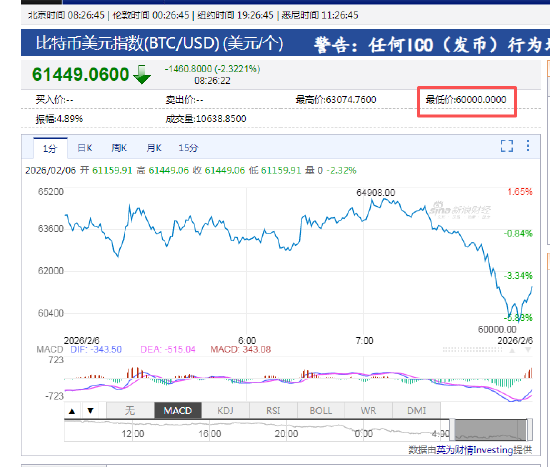
比特币向下触及60000美元 时隔4个月较历史高位跌去52%!
Xin Lang Cai Jing· 2026-02-06 00:30
热点栏目 自选股 数据中心 行情中心 资金流向 模拟交易 客户端 2月6日,比特币向下触及60000美元,日内跌超11%。杠杆押注解除及整体市场动荡加剧抛售,与去年 10月初创出历史新高的12.6万美元相比,比特币已下跌超52%。 责任编辑:郭建 热点栏目 自选股 数据中心 行情中心 资金流向 模拟交易 客户端 2月6日,比特币向下触及60000美元,日内跌超11%。杠杆押注解除及整体市场动荡加剧抛售,与去年 10月初创出历史新高的12.6万美元相比,比特币已下跌超52%。 责任编辑:郭建 ...

爱泼斯坦文件中的风投圈身影
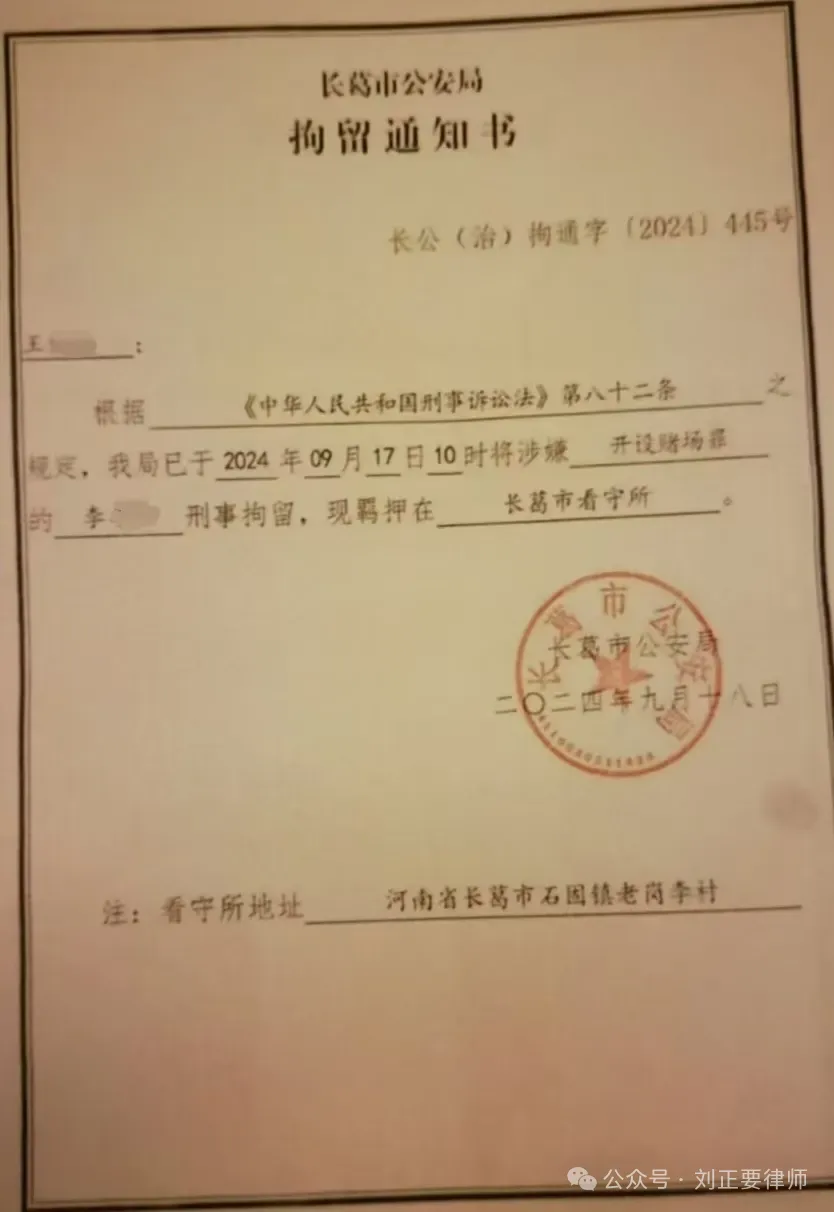
Xin Lang Cai Jing· 2026-02-04 09:09
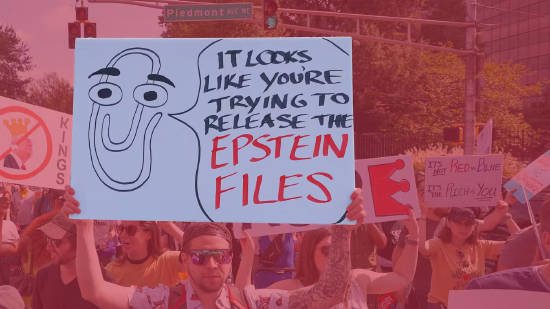
2025 年 10 月,示威者 在亚特兰大举着抗议标语。 本周一,本报记者杰迈玛・麦克埃沃伊率先爆料:风险投资家玛莎・布赫尔与已定罪的性犯罪者杰弗 里・爱泼斯坦存在深度关联。美国司法部上周五公开的超 300 万份文件中,两人的往来通信被一并披 露。文件显示,布赫尔(婚前姓德罗科娃,系其当时所用姓名)曾担任爱泼斯坦的公关,二人不仅互发 暧昧短信,她还就自己的早期基金 "首日风投(Day One Ventures)" 向爱泼斯坦寻求建议。 这批邮件与聊天记录库,进一步印证了此前已被证实的事实:爱泼斯坦曾宣称并试图与硅谷的富豪或权 贵建立深度联系。2011 年至 2018 年前后,他在通信中提及自己与科技精英出席私人晚宴、在其宅邸会 面,还偶尔邀请他们前往加勒比海的私人岛屿做客。文件中关于风险投资家的记载比比皆是:在一组邮 件里,银行家及其他中介曾致信爱泼斯坦,希望他投资太空探索技术公司(SpaceX);在另一组邮件 中,他则与友人探讨设立基金的事宜。 部分情况下,爱泼斯坦会直接、定期与这些科技圈名流通信。领英联合创始人里德・霍夫曼便是其中之 一,他本周六在 X 平台上为 "定罪后仍与爱泼斯坦往来" 一事致歉。(爱 ...

香港稳定币牌照发行进展披露,态度保持稳健
Bei Jing Shang Bao· 2026-02-03 09:36
北京商报讯(记者 董晗萱)稳定币牌照发行迎新进展。据中央广播电视总台《大湾区之声》消息,2月2日,香港特区立法会财经 事务委员会召开会议,香港金融管理局总裁余伟文在会上介绍,目前已收到36份稳定币发行人牌照申请,并正在评估中。相关审 核和研究工作即将完成,金管局争取于3月发出首批稳定币牌照。 此前,余伟文多次撰文表示,投资者应保持理性,有必要防范市场和舆论过度炒作。其曾公开表态,较严谨的监管要求难免会限 制稳定币业务在短期内大幅扩张的可能性,业界因此会有反响,这是预期之中。毕竟受监管的稳定币业务处于起步阶段,先严, 走稳,然后按照实践经验再适度放松,相较于起步过松然后收拾乱象,明显更有利于市场和发行机构的持续健康发展。 业内认为,这是结合全球稳定币市场风险及香港金融发展实际的选择。在王蓬博看来,通过严格的牌照审核和持续的风险管控, 既为行业设立清晰的合规标准,也能提前防范储备资产、跨境传导等潜在金融风险,在保障金融稳定的前提下,推动稳定币行业 有序发展,符合香港金融监管一贯的底线思维。 在内地,2025年末召开的打击虚拟货币交易炒作工作协调机制会议指出,稳定币属虚拟货币范畴,其相关业务活动纳入非法金融 活动监 ...

多地发文警惕虚拟货币非法活动 RWA成非法集资新“马甲”
Xin Lang Cai Jing· 2026-02-01 11:04
Core Viewpoint - The regulatory pressure on the virtual currency sector continues to intensify, with multiple local regulatory bodies and central bank branches issuing warnings against illegal financial activities disguised as virtual currency and RWA (Real World Asset tokenization) [1][2]. Regulatory Warnings - Since mid-January, local regulatory departments have been actively issuing risk alerts regarding illegal financial activities, particularly those involving unlicensed foreign exchange margin trading and virtual currency transactions [2]. - The Yichun Market Supervision Administration highlighted the risks associated with illegal financial activities under the guise of concepts like health services, blockchain, and virtual currency [2]. - The People's Bank of China (PBOC) Hunan branch identified three categories of virtual currency scams, emphasizing the need for public awareness [2][7]. Types of Scams - **Investment Scams**: These scams lure users to fake platforms with promises of high returns, leading to significant financial losses when users attempt to withdraw funds [3][4]. - **Pyramid Schemes**: Characterized by entry fees and multi-level commissions, these schemes mislead users into believing they can earn money by recruiting others [4]. - **Money Laundering**: This involves withdrawing cash, converting it to virtual currency, and transferring it to overseas wallets [5]. Public Awareness and Prevention - The PBOC and other regulatory bodies have previously expressed a strong stance against virtual currencies and RWA, indicating a coordinated effort to combat these issues [7]. - Citizens are advised to strengthen their defenses by avoiding participation in virtual currency transactions, protecting their bank accounts, and promptly reporting any scams to authorities [8].
胜利月报1月-20260129
胜利证券· 2026-01-29 02:39
胜利月报1月 V VICTORY 胜利 SECURITIES 证券 SINCE 1970s 胜利证券获颁2025「开心企业」标志 蝉联四年深耕职场幸福感 凭 借 营 造 和 谐、 积 极 工 作 环 境 的 卓 越 表 现 , 胜 利 证 券 再 次 获 颁 2 0 2 5 年 度 「 开 心 企 业 』 标 志 。 这 是 公 司 自 2 0 2 2 年 起 , 连 续 第 四 年 获 此 殊 荣 , 充 分 彰 显 了 胜 利 证 券 对 提 升 员 工 福 该 计 划 由 香 港 提 升 快 乐 指 数 基 金 主 办 、 香 港 中 华 厂 商 联 合 会 执 行 , 旨 在 推 广 「 开 心 工 作 间 」 理 念 , 携 手 各 界 提 升 香 港 人 的 工 作 快 乐 水 平 。 胜 利 证 券 始 终 秉 持 「 以 人 为 本 」 的 核 心 价 值 , 将 「 企 业 关 爱 、 智 慧 、 韧 力 及 动 力 」 深 度 融 入 日 常 管 理 。 公 司 推 行 一 系 列 具 体 措 施 , 包 括 优 化 灵 活 办 公 安 排 , 协 助 员 工 达 成 工 作 与 生 活 ...
美国亚利桑那州推进加密资产税收减免立法
Xin Lang Cai Jing· 2026-01-27 12:38
美国亚利桑那州推进加密资产税收减免立法。州参议院财政委员会以 4:3 通过 S.B.1044 与 S.C.R.1003, 并提交参议院规则委员会审议。其中 S.C.R.1003 拟在 11 月 将宪法修正案交由选民表决,明确将"虚拟 货币"排除在财产税(从价税)之外。S.B.1044 则同步修改州法,免除加密资产财产税并给出定义。该 立法由参议员 Wendy Rogers 提出。该州州长 Katie Hobbs 曾在 2025 年否决多项比特币与加密相关法 案。(Decrypt) (来源:吴说) ...
深圳 IT 男被两地警方收缴比特币背后的法律释疑
Xin Lang Cai Jing· 2026-01-24 10:17
Core Viewpoint - The case of Li Dong (pseudonym) highlights the intersection of technology, finance, and law in the gray area of cryptocurrency, raising significant legal dilemmas and public concerns regarding the handling of virtual currency cases [2][22]. Group 1: Case Overview - Li Dong, a successful internet security engineer turned entrepreneur, was implicated in a cross-province police investigation involving over 80 million yuan worth of Bitcoin [3][5]. - The initial charge against Li was "operating a gambling house," which later evolved to "theft" and "infringement of personal information" as the investigation progressed [6][7]. Group 2: Legal and Procedural Issues - The case has sparked debate over jurisdictional conflicts, as both Hunan and Henan police have intervened in the same matter, raising questions about the legality of multiple charges for the same act [11]. - The legality of the police's early disposal of seized Bitcoin before a court ruling has been questioned, with references to various legal provisions that may allow such actions [19]. Group 3: Ethical and Moral Considerations - The concept of "black eating black," where Li is accused of stealing from an illegal gambling site, raises ethical questions about whether such actions can be classified as theft under modern law [17][18]. - The case serves as a cautionary tale for individuals in the tech and cryptocurrency sectors, emphasizing the importance of understanding the legal implications of their actions and the sources of their wealth [24][25].
一次收受2000枚以太币,市值高达数千万元!姚前大搞权钱交易
Sou Hu Cai Jing· 2026-01-15 08:09
Core Viewpoint - The article discusses the emergence of new forms of corruption facilitated by virtual currencies, highlighting a specific case involving a former official, Yao Qian, who utilized digital assets for illicit transactions [1][24]. Group 1: Corruption Mechanisms - Corruption has evolved with the advent of digital currencies, which provide new avenues for concealing illicit activities [3][26]. - Traditional forms of corruption, such as cash and valuable goods, are now supplemented by virtual currencies that leverage blockchain technology for anonymity [3][5]. Group 2: Case Study of Yao Qian - Yao Qian, former director of the Technology Supervision Department of the China Securities Regulatory Commission, was investigated for accepting bribes in the form of virtual currencies [7][24]. - The investigation revealed that Yao Qian received significant amounts of virtual currency, with one transaction involving 1,000 million yuan traced back to a virtual currency trading account [14][22]. Group 3: Investigative Techniques - The investigative team employed big data and blockchain technology to trace the flow of virtual currencies, successfully linking them to Yao Qian's illicit activities [22][24]. - Evidence was gathered showing that Yao Qian used a "mask account" to conceal the origins of funds, which were ultimately used for purchasing real estate [13][14]. Group 4: Implications for Anti-Corruption Efforts - The case underscores the need for enhanced regulatory measures to address the challenges posed by virtual currencies in corruption cases [24][26]. - The successful investigation serves as a precedent for future cases involving digital assets, emphasizing the importance of adapting anti-corruption strategies to evolving methods of illicit financial transactions [24][26].
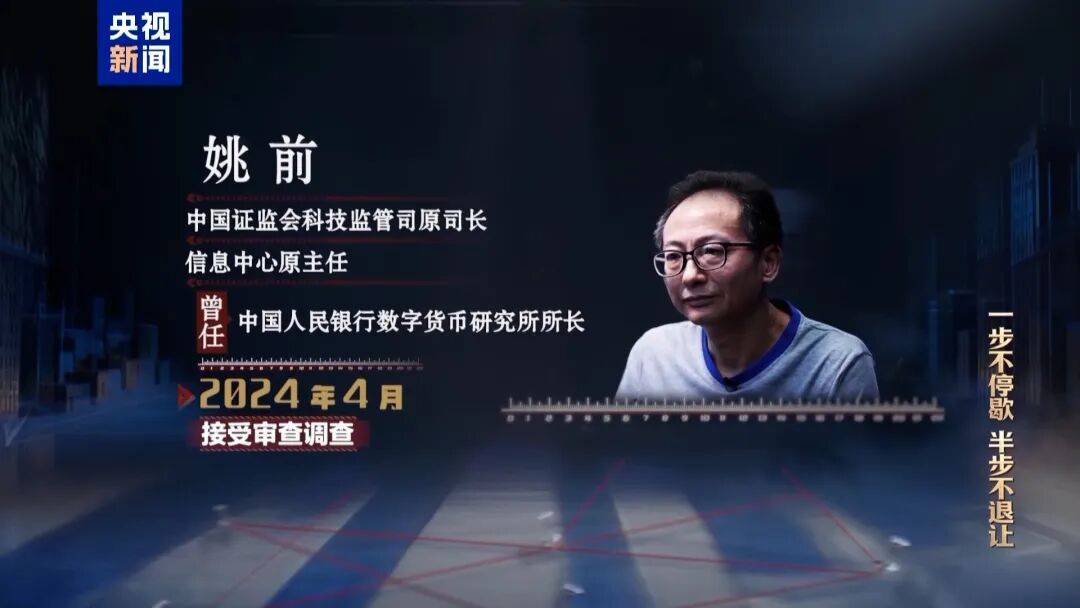
一次收受上千枚以太币,市值数千万元!姚前大搞权钱交易
Sou Hu Cai Jing· 2026-01-15 08:09
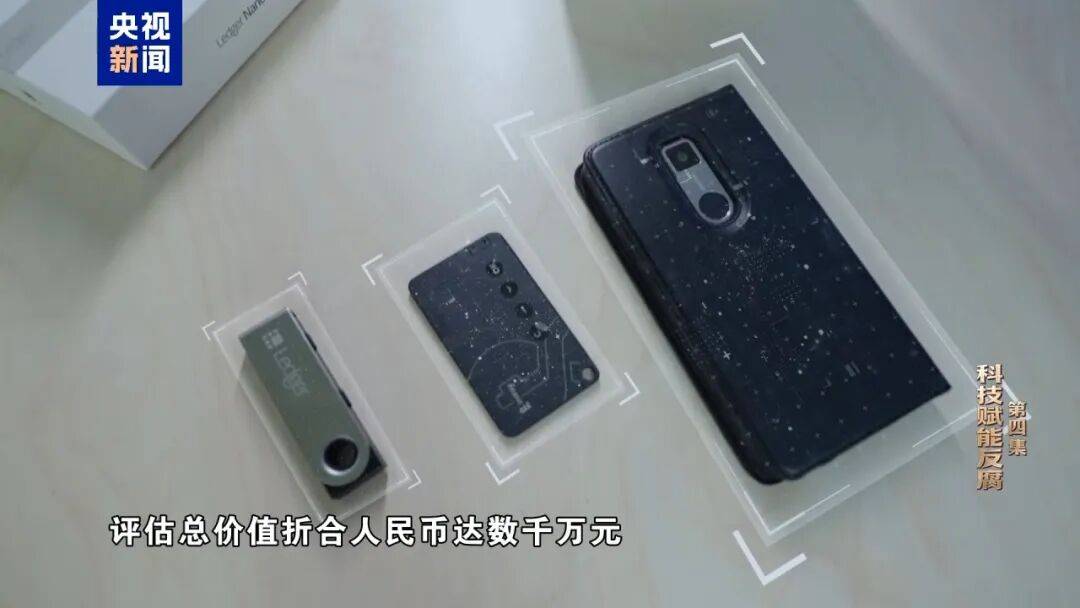
Core Viewpoint - The documentary highlights the emerging forms of corruption facilitated by virtual currencies and blockchain technology, emphasizing the need for vigilance in combating these new methods of illicit financial transactions [1][4]. Group 1: Case Overview - The case involves Yao Qian, a former official at the China Securities Regulatory Commission, who was investigated for using virtual currencies to engage in corrupt practices [3][10]. - A special investigation team was formed to analyze Yao Qian's activities, focusing on his extensive experience in digital currency and potential misuse of this knowledge for corrupt transactions [3][4]. Group 2: Evidence Collection - The investigation revealed that Yao Qian used hardware wallets to store virtual currencies, with the total value of the seized currencies amounting to several tens of millions of RMB [3][4]. - The team utilized big data and blockchain technology to trace the flow of virtual currencies and identify suspicious transactions linked to Yao Qian [4][9]. Group 3: Financial Transactions - Yao Qian was found to have established "sleeper accounts" under other people's names, which he controlled, to facilitate large transactions, including a payment of 10 million RMB for a villa [5][6]. - Additional funds totaling 12 million RMB were traced back to a business controlled by a merchant, indicating a systematic approach to corrupt financial dealings [6][8]. Group 4: Key Individuals - A close associate of Yao Qian, Jiang Guoqing, acted as an intermediary in these transactions, facilitating the transfer of virtual currencies and ensuring the concealment of the corrupt activities [7][8]. - Jiang Guoqing's involvement was crucial, as he participated in nearly all significant transactions and helped Yao Qian navigate the complexities of virtual currency exchanges [7][8]. Group 5: Conclusion of Investigation - The investigation culminated in Yao Qian's expulsion from the party and public office, with evidence collected through electronic means and blockchain analysis forming a solid case against him [10]. - The case serves as a precedent for future investigations into corruption involving virtual currencies, demonstrating that despite their intangible nature, such assets can be traced and linked to real-world transactions [10].
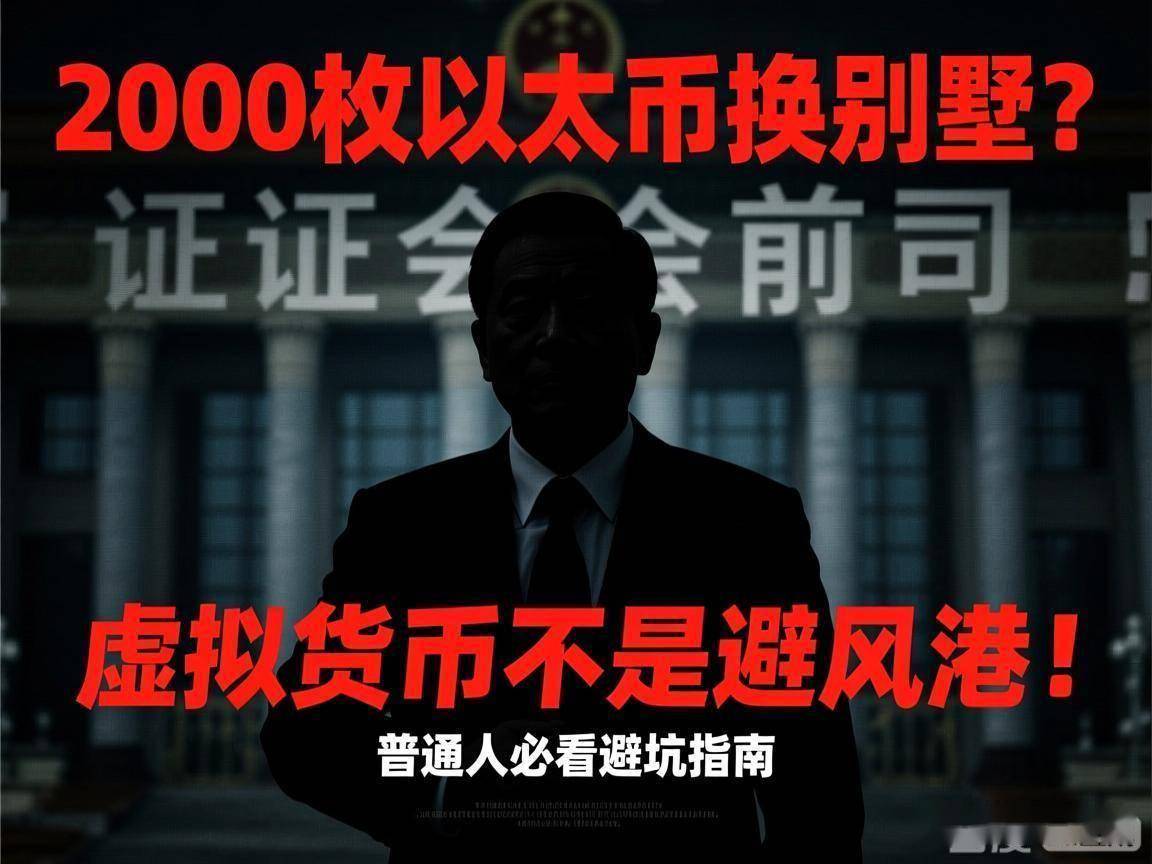
2000枚以太币换别墅!证监会前司长栽了,虚拟货币不是避风港?普通人必看避坑指南
Sou Hu Cai Jing· 2026-01-15 07:50
Core Viewpoint - The case involving Yao Qian, a former official at the China Securities Regulatory Commission, highlights the risks associated with virtual currencies and the potential for corruption within the financial regulatory framework [1][3][6]. Group 1: Case Overview - Yao Qian was implicated in a corruption case involving 2,000 Ether, valued at over 60 million yuan at its peak, received as a bribe for facilitating illegal token issuance [1][4]. - The investigation revealed that Yao used a complex scheme to hide the transaction, including using a "middleman" to transfer the Ether to a hardware wallet [4][6]. - The case has raised questions about the regulatory environment for virtual currencies in China and the effectiveness of current measures to prevent illicit activities [3][7]. Group 2: Regulatory Implications - The Chinese government has consistently classified ICOs and virtual currency-related activities as illegal, emphasizing that virtual currencies do not hold the same legal status as fiat currencies [7][10]. - Despite the prohibition of certain activities, personal ownership of virtual currencies is not entirely banned, provided they are not acquired through illegal means [7][10]. - The case has prompted regulatory bodies to enhance their monitoring capabilities, focusing on blockchain data analysis to track illicit transactions more effectively [10][11]. Group 3: Risks for Investors - Ordinary individuals engaging in virtual currency transactions face significant risks, including scams and the potential for legal repercussions if involved in illegal activities [8][10]. - Common scams include fake trading platforms and Ponzi schemes, which have proliferated in the virtual currency space [8][10]. - The case serves as a cautionary tale for investors, emphasizing the importance of avoiding ICOs and virtual currency trading platforms, as these activities are often illegal and can lead to financial loss [11][12]. Group 4: Future Outlook - The Yao Qian case signals a shift towards stricter and more precise regulation of virtual currencies in China, with an emphasis on preventing corruption and illegal financial activities [10][11]. - The ongoing development of digital currencies by central banks, such as the digital yuan, is expected to further complicate the landscape for virtual currencies, as regulatory efforts intensify [11][12].