
票务代理

Search documents
新华社:投诉了就退钱,不投诉就赚到,这是把旅客当韭菜割!
Xin Hua She· 2026-02-13 05:13
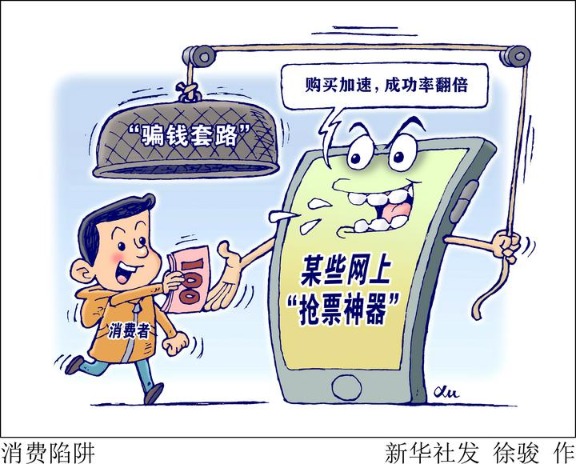
Core Viewpoint - The Beijing Market Supervision Administration has held an administrative interview with 12 major online train ticket sales platforms due to public complaints about issues in online ticket sales, highlighting the need for better consumer protection and transparency in the industry [1][3]. Group 1: Issues with Online Ticket Sales Platforms - Some platforms exploit the urgency of consumers during peak travel seasons, offering paid services that mislead customers into believing they can secure tickets more easily, which is not the case [1][3]. - Third-party platforms falsely advertise services like "priority ticket purchasing" and "accelerated packages," which do not actually improve the chances of securing tickets, leading to consumer frustration and financial loss [3][5]. - Consumers have reported negative experiences, such as purchasing tickets through third-party platforms only to receive less desirable options than what they could have obtained directly from the official railway service [3][5]. Group 2: Consumer Rights and Industry Responsibility - There is a call for platforms to clearly disclose the nature and pricing of additional services, ensuring that consumers are well-informed and protected [5]. - The railway department has clarified that it does not collaborate with any third-party platforms and has not opened any ticket sales interfaces, emphasizing that claims of paid acceleration services are false [3][5]. - The industry is urged to prioritize integrity and genuine service to travelers, especially during high-demand periods like the Spring Festival travel season [5].

胜利月报1月-20260129
胜利证券· 2026-01-29 02:39
Group 1: Company Achievements - Victory Securities awarded the 2025 "Happy Company" label, marking the fourth consecutive year of recognition for enhancing workplace happiness[3] - The company emphasizes a "people-oriented" core value, integrating care, wisdom, resilience, and motivation into daily management practices[4] Group 2: Market Trends - As of December 31, 2025, Bitcoin (BTC) price decreased by 3.2% from $90,398.02 to $87,497.94, while Ethereum (ETH) fell by 0.8% from $2,991.90 to $2,966.84[8] - The Hang Seng Index dropped by 0.88% from 25,858.89 to 25,630.54, with the financial sector increasing by 2.61%[19] Group 3: Economic Insights - The U.S. Federal Reserve lowered interest rates by 25 basis points to a range of 3.50% to 3.75% on December 10, 2025, amid fluctuating expectations[12] - The unemployment rate in November rose to 4.6%, the highest since 2022, supporting expectations for further rate cuts in 2026[12] Group 4: Cryptocurrency Market Dynamics - BTC's price has been under pressure due to tight macro liquidity and a 30% drop from previous highs, indicating a bear market phase[11] - In December, a total of 718,000 BTC were sold, reflecting a high level of market activity despite a decrease from previous months[15] Group 5: Future Outlook - The report anticipates a continued recovery in overseas markets, supported by the U.S. Federal Reserve's accommodative monetary policy and a stable job market[24] - Domestic economic growth is expected to remain steady, with significant contributions from high-end manufacturing and consumer spending during the holiday season[25]
从视觉诱导到价格陷阱,购票平台少点套路吧
Xin Jing Bao· 2026-01-08 12:40
Group 1 - The article highlights the issue of ticket purchasing platforms employing deceptive pricing strategies, such as showing a lower initial price that increases during payment due to hidden service fees [2][3] - It describes the "price sorting trap," where platforms list packages with service fees as the lowest price, misleading consumers into believing they are getting a deal [2] - The article also points out "visual display deception," where platforms use design tactics to highlight paid options while downplaying standard booking choices, leading to consumer confusion [2] Group 2 - The underlying motivation for these practices is the platforms' profit-seeking nature, as they aim to maximize revenue through upselling additional services due to limited earnings from basic ticket sales [3] - Current regulations lack clear definitions and penalties for misleading practices like "price sorting deception" and "visual design inducement," making it difficult to hold platforms accountable [3] - The article calls for regulatory action to establish clearer standards for consumer protection and emphasizes the need for platforms to focus on improving user experience rather than employing deceptive tactics [3]

十五运会官方IP走红 “体育+”激活湾区文旅经济新动能
Shang Hai Zheng Quan Bao· 2025-11-18 18:42
Core Insights - The 15th National Games has generated significant economic activity, with licensed merchandise sales reaching 680 million yuan as of November 15, marking a record in both quantity and variety of products [3][7] - The event has led to a 26% year-on-year increase in flight bookings to Guangzhou, Shenzhen, and Zhuhai, and a 20% increase in overall cultural tourism consumption in Guangzhou [8][9] - The mascots "Xiyangyang" and "Lerongrong" have become popular cultural icons, driving high demand for related merchandise, with some products seeing price increases on secondary markets [6][4] Merchandise and Sales - The event attracted 33 licensed manufacturers and 44 licensed retailers, resulting in over 2,800 approved licensed products across 20 categories, the highest in history [3][6] - The popularity of the mascots has led to long queues and limited availability of certain merchandise, with some items selling out quickly [4][6] - The Guangzhou Cultural Group reported over 500 products for sale, with expectations of continued high demand for at least another two weeks [6] Tourism and Economic Impact - The event has spurred the development of tourism packages that combine event tickets with local attractions, enhancing the "ticket root economy" into a broader tourism experience [8][9] - Companies like Lingnan Holdings and Ctrip are leveraging the event's popularity to create integrated tourism products, promoting a seamless experience from event attendance to local exploration [8][9] - The Guangdong government has initiated a consumption season with a budget of 3.5 billion yuan to stimulate local spending, further supporting the tourism and cultural sectors [10] Future Prospects - The integration of sports, culture, and tourism is seen as a sustainable growth model for the Guangdong-Hong Kong-Macao Greater Bay Area, with ongoing efforts to enhance infrastructure and cooperation among the three regions [10] - The event is expected to serve as a model for future cultural and sports tourism initiatives, potentially establishing the area as a world-class destination [10]



抢票软件抢出不正当竞争,警示了什么
Bei Jing Qing Nian Bao· 2025-04-29 01:38
Core Points - The Supreme Court's ruling on a case involving "ticket grabbing software" has garnered significant attention, marking the first instance in China where such software is recognized as constituting unfair competition [1] - The case clarifies the illegal nature and dangers of "ticket grabbing" behavior, serving as a warning to sellers of such software and providing a legal precedent for ticketing entities affected by these practices [1][2] Group 1 - The plaintiff in the case is a well-known entertainment ticketing agency, while the defendant sold "ticket grabbing" software on a second-hand shopping platform, which simulated human operations to increase the chances of successful ticket purchases [1] - The software's operation does not represent technological innovation but rather undermines fair competition by providing users with an unfair advantage in purchasing tickets [2] - The legal framework, specifically Article 12 of the Anti-Unfair Competition Law, prohibits operators from using technical means to disrupt the normal operation of other businesses' online products or services, which the court found applicable in this case [2] Group 2 - The legal implications of this case extend beyond individual instances, offering insights into combating broader ticketing fraud issues [3] - Ticketing entities have two main legal avenues for recourse: filing lawsuits against sellers of ticket grabbing software or reporting to market regulatory authorities for enforcement actions [3] - Regulatory bodies are encouraged to proactively address ticket grabbing behaviors rather than waiting for complaints, enhancing oversight to eliminate the conditions that allow such software to thrive [3]
抢票软件被判不正当竞争,具有示范意义
Qi Lu Wan Bao Wang· 2025-04-28 14:34
Core Viewpoint - The Supreme People's Court has ruled a case of "unfair competition by ticket grabbing software," marking a significant precedent in protecting fair market practices in the ticketing industry [1][2] Group 1: Case Overview - The plaintiff is a well-known entertainment ticketing agency, while the defendant sold ticket grabbing "plug-in" software on a second-hand shopping platform [1] - This case is the first of its kind in China to determine that ticket grabbing software constitutes unfair competition, highlighting its implications for maintaining a healthy ticket purchasing order and market competition environment [1] Group 2: Market Competition Impact - The defendant's actions severely disrupt the fair competition environment, as ticketing platforms invest substantial resources to create stable and fair purchasing systems [1] - The use of ticket grabbing software gives users an unfair advantage, disadvantaging consumers who follow the rules and purchase tickets through normal channels, thus harming their rights [1] - The presence of such software increases operational costs for ticketing platforms, leading to excessive order requests that can overwhelm systems, slow response times, and even risk system crashes [1] Group 3: Legal and Regulatory Implications - The Anti-Unfair Competition Law explicitly prohibits operators from using technical means to disrupt the normal operation of other operators' legitimate network products or services, making the defendant's actions a clear case of unfair competition [2] - This case serves as a reference for combating the online black and gray market, alerting those involved in ticket grabbing services and software development [2] - There is a need for collaborative efforts to maintain a fair ticket purchasing order, with regulatory bodies enhancing oversight and ticketing platforms improving their technical defenses against such software [2]
全国首例!抢票“外挂”软件被判构成不正当竞争
news flash· 2025-04-27 11:38
Core Viewpoint - The case of "unfair competition by ticket-snatching software" has gained attention following the Supreme People's Court's release of typical intellectual property cases, highlighting the legal implications of software that manipulates ticket purchasing processes [1] Group 1: Case Overview - The plaintiff is a well-known entertainment ticketing agency involved in various ticket sales, including concerts, sports events, dramas, and family exhibitions [1] - The defendant, Zheng Mouzhong, sold ticket-snatching "plug-in" software on a second-hand shopping platform, which was designed to enhance the speed of order information entry and increase the likelihood of successful ticket purchases on the plaintiff's app [1] Group 2: Technical Aspects - The developed ticket-snatching software utilizes technical means to simulate human operations, allowing for rapid submission of ticket orders [1] - This software can repeatedly submit requests in a short time frame, significantly boosting the chances of securing tickets on the plaintiff's platform [1]