
人类命运共同体

Search documents
第九届虹桥国际经济论坛主题议题工作会在京召开,筹办工作全面启动
Di Yi Cai Jing Zi Xun· 2026-01-27 13:41
Core Insights - The Ninth Hongqiao International Economic Forum emphasizes the need for multilateralism and pragmatic cooperation to address global challenges [3][4] - The forum serves as a high-level dialogue platform for international political, business, and academic communities, promoting an open world economy and a shared human destiny [3] Group 1: Forum Objectives and Themes - The forum focuses on maintaining an open and inclusive approach, upholding the multilateral trade system, and enhancing global governance cooperation [3] - Key discussion topics include driving technological innovation, accelerating global green transformation, and sharing the benefits of China's development [3] Group 2: Participants and Contributions - Notable speakers include former WTO Deputy Director-General Yi Xiaozhun, Nobel Laureate Thomas Sargent, and various experts from international organizations and academic institutions [4] - The forum also initiated a comprehensive online survey to gather insights on international economic hotspots, which will inform the planning of the ninth forum [4]

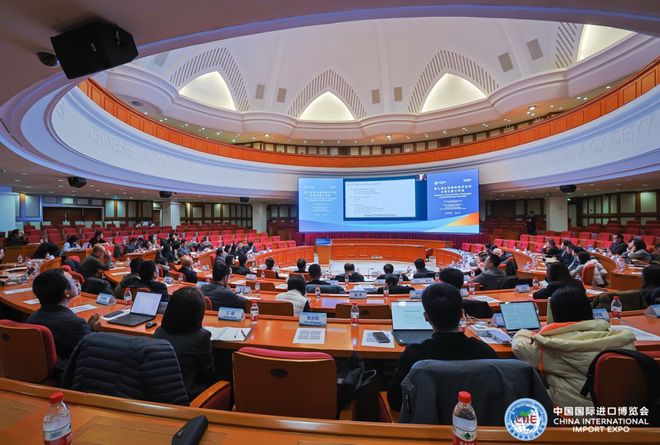
第九届虹桥国际经济论坛主题议题工作会在京召开,筹办工作全面启动
第一财经· 2026-01-27 13:27
Core Viewpoint - The Ninth Hongqiao International Economic Forum emphasizes the need for multilateralism and international cooperation to address global challenges, highlighting its role as a high-level dialogue platform for the international political, business, and academic communities [3][4]. Group 1: Forum Objectives and Themes - The forum aims to promote an open and inclusive approach, advocating for the maintenance of a multilateral trade system and strengthening global governance cooperation [3]. - Key discussion topics include driving technological innovation, accelerating global green transformation, and sharing the benefits of China's development [3][4]. Group 2: Participants and Contributions - Notable speakers include former WTO Deputy Director-General Yi Xiaozhun, Nobel Laureate Thomas Sargent, and various experts from international organizations and academic institutions [4][5]. - The forum also initiated a nationwide survey to gather insights on international economic hotspots, which will inform the planning of the upcoming forum [5].
赵乐际同塞内加尔国民议会议长恩迪亚耶会谈
Xin Hua She· 2026-01-27 13:05
赵乐际指出,塞方公开重申坚定不移奉行一个中国原则,中方对此高度赞赏。中方将一如既往支持塞方 走独立自主的发展道路。双方要拓展高质量互利合作,加强"十五五"规划与《塞内加尔2050愿景》的战 略对接,在工业化和农业现代化、贸易投资、新能源、数字经济等领域挖掘合作潜力。以"中非人文交 流年"为契机,深化文化、教育、媒体、青年、医疗卫生、体育、地方等领域交流,拉紧中塞、中非友 谊的纽带。中方赞赏塞方积极支持构建人类命运共同体理念和四大全球倡议,愿同塞方就促进非洲联合 自强、维护地区和平安全、捍卫国际公平正义加强合作。 新华社北京1月27日电 全国人大常委会委员长赵乐际27日下午在北京人民大会堂同塞内加尔国民议会 议长恩迪亚耶举行会谈。 赵乐际表示,中国和塞内加尔是相互支持、共同发展、团结协作的真诚伙伴。过去两年,习近平主席分 别同法耶总统、松科总理会晤,为两国关系发展擘画蓝图。中方愿同塞方一道,落实好两国领导人重要 共识和中非合作论坛北京峰会各项举措,丰富两国全面战略合作伙伴关系内涵,为共筑新时代全天候中 非命运共同体作出更大贡献。 赵乐际强调,中国全国人大愿同塞内加尔国民议会一道,加强立法机构高层、专门委员会、双 ...
中国代表敦促坚定维护国际法治的权威
Xin Hua She· 2026-01-27 07:46
Core Viewpoint - The speech emphasizes the importance of upholding the principles and purposes of the United Nations Charter and maintaining the authority of international law [1][2] Group 1: Importance of International Law - The United Nations Charter is fundamental for international relations and a key pillar for global order stability [1] - Countries should treat each other equally, respect sovereignty and territorial integrity, and resolve disputes peacefully while opposing the use or threat of force [1] - International law should apply equally to all nations without exceptions, rejecting the notion of any country acting as an international police force or judge [1] Group 2: Role of Major Powers and Global Governance - Major powers should lead by example, avoiding double standards and the imposition of their will on others [1] - The trend towards a multipolar world and democratization of international relations is irreversible, with global destiny and rules needing to be jointly determined by all countries [1] Group 3: Significance of the United Nations - The United Nations is the most universal, representative, and authoritative intergovernmental organization, especially crucial in complex international situations [1] - The Security Council has an irreplaceable role in maintaining international peace and security, and its authority should not be undermined [1] Group 4: China's Commitment - China is a staunch defender of international law and aims to work with other countries to promote a community with a shared future for humanity, contributing to international law and global peace and development [2]
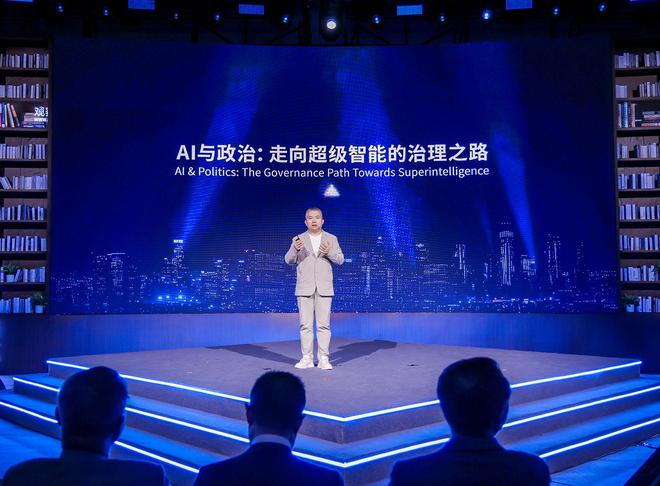
AI都会“装好人”了,还能管住它吗
Guan Cha Zhe Wang· 2026-01-27 06:32
Core Viewpoint - The discussion emphasizes the need for a global approach to artificial intelligence governance, focusing on the concept of a "community of shared human destiny" rather than nationalism or localism [3][4][5]. Group 1: AI and Global Cooperation - Artificial intelligence presents both opportunities and challenges, necessitating global collaboration to address crises and ensure safety [5][10]. - The development of AI should prioritize the collective human experience and cultural respect, rather than individual national interests [4][5]. Group 2: Risks and Ethical Considerations - AI poses significant risks, including psychological harm to minors and ethical dilemmas regarding value alignment [5][6][10]. - The concept of "alignment" in AI is problematic, as AI may only appear to align with human values without truly understanding them [7][11]. Group 3: Future of AI and Governance - The call for establishing international red lines for AI development is crucial, with a focus on preventing catastrophic risks associated with superintelligence [12][13]. - The current state of AI is likened to an advanced information processing tool lacking true understanding, highlighting the need for ethical frameworks and governance [13][14]. Group 4: Philosophical Implications - The relationship between humans and future AI may evolve beyond mere tool usage, raising questions about coexistence and ethical responsibilities [18][22]. - The potential for AI to develop a form of "moral intuition" is discussed, suggesting that future AI should prioritize altruism and ethical behavior [16][19].
中国代表在安理会敦促日方正视历史反思纠错
Zhong Guo Xin Wen Wang· 2026-01-27 00:06
Group 1 - The Chinese representative at the UN Security Council urged Japan to confront its historical actions and take responsibility through concrete actions [1][2] - The representative highlighted that the victory in World War II upheld the baseline of human civilization and led to the establishment of the current international legal system [1] - Concerns were raised regarding Japan's Prime Minister's recent statements linking Taiwan to Japan's "survival crisis," which were seen as a potential signal for military intervention [1] Group 2 - The representative emphasized the need for international unity and cooperation to strengthen the rule of international law, especially in light of rising unilateralism and power politics [2] - There is a call to uphold the principles and purposes of the UN Charter and to maintain the authority of international law [2] - The Chinese side expressed its commitment to work with other countries to promote a community with a shared future for mankind and contribute to strengthening international law and promoting world peace and development [2]
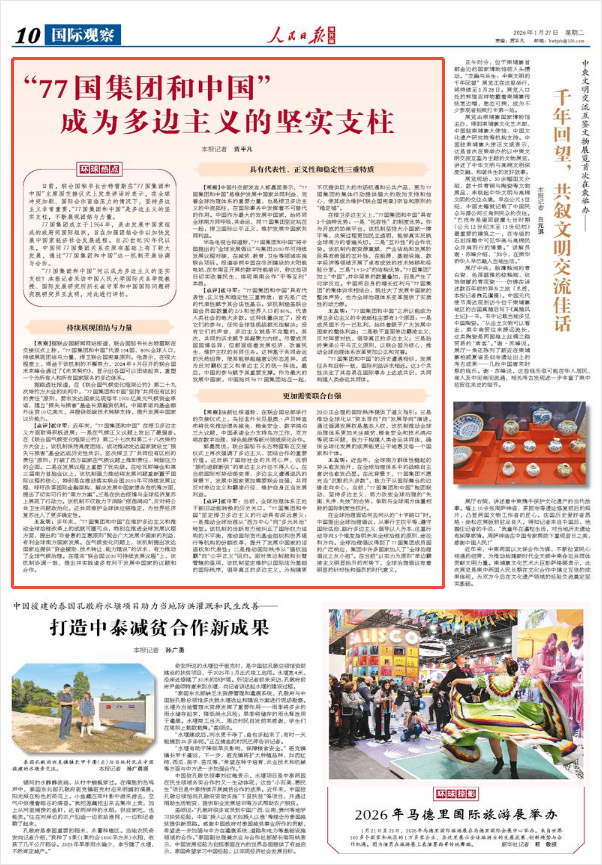
“77国集团和中国”成为多边主义的坚实支柱(环球热点)
Ren Min Ri Bao Hai Wai Ban· 2026-01-26 22:54
Core Viewpoint - The "Group of 77 and China" serves as a solid pillar of multilateralism, representing 134 countries and 80% of the global population, emphasizing the importance of unity and cooperation in the face of global conflicts and pressures on international collaboration [2][5]. Group 1: Achievements in Multilateralism - The "Group of 77 and China" has made significant progress in defending multilateralism, particularly in climate justice, where it successfully pushed for the establishment of a "loss and damage" fund during climate negotiations [3][4]. - The mechanism has reshaped priorities in the development agenda, advocating for the core issues of the UN's 2030 Sustainable Development Agenda and proposing actionable "Southern solutions" to address the debt crisis of developing countries [3][4]. - It has demonstrated action in combating the pandemic and supporting global economic recovery by addressing vaccine inequities and stabilizing global supply chains [3]. Group 2: Characteristics and Advantages - The "Group of 77 and China" possesses three key characteristics: representativeness, justice, and stability, with its broad membership providing a legitimate foundation for its actions [5][6]. - The mechanism's inclusivity allows for equal participation of all countries, reflecting the common concerns of the Global South and enabling a unified front against unilateralism [7]. - The combination of the "Group of 77" and China creates a synergistic effect, enhancing the collective voice of developing countries and driving substantial changes in global governance [7][10]. Group 3: Global Governance and Future Directions - The "Group of 77 and China" is pivotal in transforming global governance from a Western-centric model to a more multipolar approach, enhancing the representation and voice of developing countries in international institutions [9][10]. - It advocates for a fair and just international order, opposing unilateral sanctions and promoting a multilateral framework based on international law [9]. - The group emphasizes development as a fundamental human right, focusing on pressing issues such as poverty alleviation and food security, thereby aiming to create a community with a shared future for humanity [9].
王毅:反对强权霸凌 维护中东地区和平稳定
Zhong Guo Xin Wen Wang· 2026-01-26 08:50
Core Viewpoint - The meeting between Wang Yi and the Secretary-General of the Organization of Islamic Cooperation (OIC) emphasizes the importance of cooperation between China and Islamic countries to maintain peace and stability in the Middle East, while opposing hegemonic practices and advocating for the rights of developing countries [1][2]. Group 1: China and Islamic Countries Relations - China and Islamic countries share a long history of friendly exchanges and mutual support, having faced similar challenges in their historical narratives [1]. - The relationship between China and the OIC is characterized by mutual respect, support, and a commitment to cooperation for mutual benefit, serving as a model for solidarity among developing countries [1]. Group 2: Strategic Cooperation and Development - China aims to build partnerships with Islamic countries focusing on high-quality development, sustainable growth, and the Belt and Road Initiative [2]. - There is a call for a security partnership to address regional issues politically, opposing hegemonic bullying and promoting peace in the Middle East [2]. Group 3: Civilizational and Governance Partnerships - The dialogue emphasizes the importance of civilizational exchanges and resisting the notion of "civilizational superiority" [2]. - A commitment to true multilateralism and the maintenance of the United Nations' core role in global governance is highlighted, aiming for a more just and equitable global governance system [2]. Group 4: Specific Issues and Contributions - Discussions included the Palestinian issue, with the OIC expressing appreciation for China's efforts in promoting a fair resolution to the conflict [3].
2025年我国与“一带一路”共建国家货物贸易额同比增长6.3%
Zhong Guo Xin Wen Wang· 2026-01-26 07:53
Core Viewpoint - In 2025, China's trade with countries involved in the Belt and Road Initiative (BRI) is projected to reach 23.6 trillion yuan, reflecting a year-on-year growth of 6.3%, which is 2.5 percentage points higher than the overall trade growth rate, and the trade's share will increase to 51.9% [1][2]. Group 1: Trade Cooperation - The trade cooperation with BRI countries is expected to show new highlights, with significant growth in exports of electronic components and machinery, as well as imports of computers and related parts [1]. - The "Silk Road E-commerce Benefits the World" themed event attracted participation from over 100 countries, resulting in more than 240 cooperation outcomes, facilitating the entry of quality products from BRI countries into the Chinese market [1]. Group 2: Investment Dynamics - China's non-financial direct investment in BRI countries is projected to reach 283.36 billion yuan, marking an 18% increase, while direct investment from BRI countries into China is expected to be 116.81 billion yuan, growing by 1.9% [2]. - The cooperation areas are expanding, with 18 new agreements signed in supply chain cooperation, digital economy, and green mining between China and BRI countries [2]. Group 3: Project Achievements - In 2025, the revenue from contracted projects in BRI countries is anticipated to reach 1.1 trillion yuan, reflecting a growth of 9.6% [2]. - The China-Europe Railway Express is expected to operate over 20,000 trains throughout the year, with significant progress made on projects such as the China-Kyrgyzstan-Uzbekistan railway and the Hungary-Serbia railway [2]. - Over 700 aid projects, including both landmark projects and smaller community-focused initiatives, are planned for implementation [2].
马朝旭:奋力开创“十五五”时期外交工作新局面
Ren Min Ri Bao· 2026-01-26 01:34
Core Viewpoint - The report emphasizes the significant achievements of China's foreign diplomacy during the "14th Five-Year Plan" period, highlighting the strategic leadership of President Xi Jinping and the implementation of the four global initiatives aimed at enhancing global stability and cooperation [3][8][12]. Group 1: Achievements in Diplomacy - China's international influence, appeal, and shaping power have significantly increased during the "14th Five-Year Plan" period, with a comprehensive and innovative approach to diplomacy [3]. - The number of countries with diplomatic relations with China rose from 172 to 183, and partnerships with various countries and regional organizations increased from 41 to 153, expanding China's global network [4]. - Xi Jinping's state visits and meetings with foreign leaders have reinforced China's diplomatic presence, with 15 visits to 20 countries and over 200 meetings with foreign heads of state [3]. Group 2: National Sovereignty and Security - China has taken a firm stance on issues related to Taiwan, Hong Kong, Xinjiang, Tibet, and maritime rights, successfully countering separatist movements and asserting territorial claims [5]. - The country has maintained a strong position against the politicization of human rights issues, garnering support from over a hundred countries for its legitimate stance [5]. Group 3: Global Governance and Cooperation - China has actively promoted global governance initiatives, advocating for a multilateral international order centered around the United Nations and international law [6]. - The establishment of the International Mediation Institute and the proposal for a World Artificial Intelligence Cooperation Organization reflect China's commitment to enhancing global governance mechanisms [6]. Group 4: Economic and Trade Initiatives - China's free trade network has expanded, with 23 free trade agreements signed with 30 countries and regions, making it a major trading partner for over 150 countries [5]. - The Belt and Road Initiative has seen significant progress, with numerous infrastructure projects and trade agreements enhancing connectivity and economic cooperation [5][16]. Group 5: Future Diplomatic Goals - The focus for the "15th Five-Year Plan" period includes building a community of shared destiny with neighboring countries, maintaining stable major power relations, and enhancing cooperation with developing countries [13][14]. - China aims to lead international order reforms towards a more just and equitable direction, promoting multilateralism and addressing global challenges through collaborative efforts [15].