
全球文明倡议

Search documents
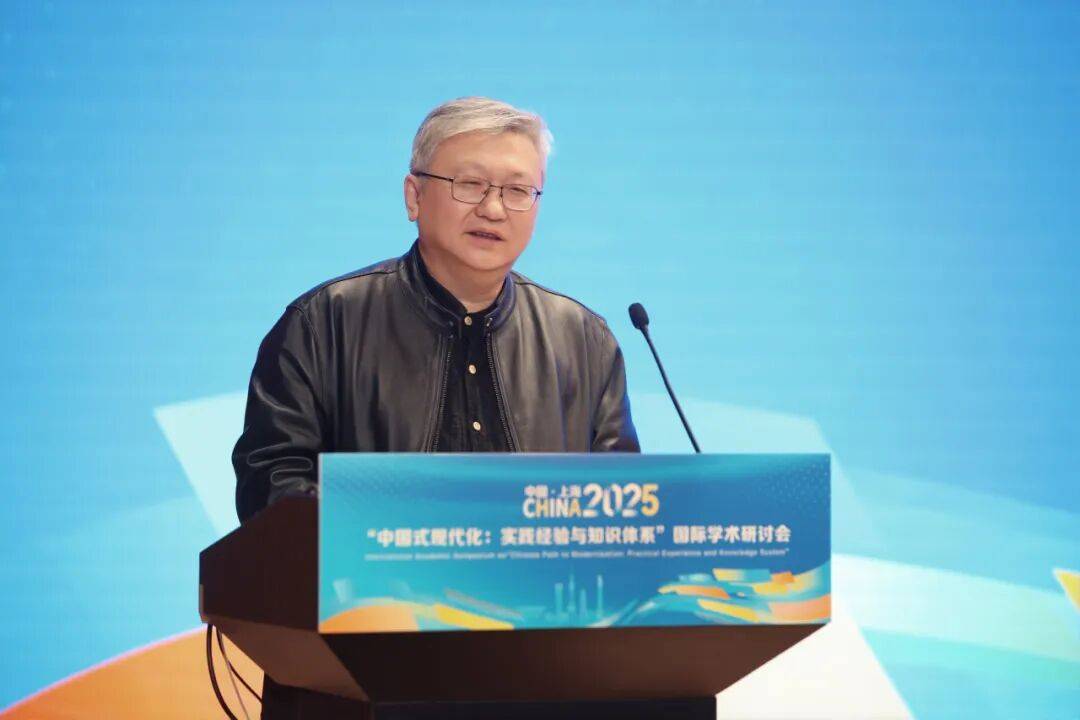
中外学者齐聚,共话“中国式现代化:实践经验与知识体系”!
Sou Hu Cai Jing· 2025-11-22 17:18
Core Viewpoint - The conference emphasizes the urgent need to construct a Chinese knowledge system that reflects "Chinese-style modernization," which is seen as a significant innovation in human modernization history, breaking existing Western theoretical paradigms [3][5]. Group 1: Conference Highlights - Wang Weisong highlighted the mission of the philosophical and social sciences community to respond to "Chinese practices" with "Chinese theories," advocating for a systematic knowledge service to national strategies and global governance [3]. - The conference featured notable scholars discussing the theoretical foundations, practical logic, and global significance of Chinese-style modernization, indicating a collaborative effort across various academic institutions [9]. - The event was marked by a strong academic atmosphere, aiming to provide new momentum for the construction of a theoretical system for Chinese-style modernization and its international narrative [23]. Group 2: Key Contributions from Scholars - Professor Jiang Yihua from Fudan University analyzed the critical role of Chinese farmers in the modernization process, emphasizing the importance of the worker-peasant alliance [10]. - Professor Yang Guorong from East China Normal University stressed the necessity of creative thinking in constructing a Chinese philosophical knowledge system, advocating for a synthesis of Eastern and Western insights [12]. - Professor Marek Hrubec from the Czech Academy of Sciences discussed the empowering effects of initiatives like the Belt and Road and the Global Civilization Initiative on developing countries, proposing that Chinese-style modernization offers systematic alternatives for global governance [13]. Group 3: Thematic Discussions - The conference included three sub-forums focusing on various aspects of Chinese-style modernization, such as its implications for social governance and the role of youth in the digital age [23]. - The discussions spanned multiple disciplines, including political science, philosophy, history, economics, and artificial intelligence ethics, showcasing an active interdisciplinary approach to building a Chinese knowledge system [23]. - The dual keywords of "practical experience" and "knowledge system" were central to the conference, reflecting the Chinese social sciences community's commitment to engaging in global civilizational dialogue [23].

中华人民共和国和塔吉克斯坦共和国外交部长首次战略对话联合声明
Xin Hua She· 2025-11-22 13:32
Core Points - The first strategic dialogue between the foreign ministers of China and Tajikistan was held, emphasizing the stable development of the comprehensive strategic partnership between the two countries under the leadership of their heads of state [1][2] - Both sides expressed satisfaction with the past decade of high-level exchanges and cooperation mechanisms, laying a solid foundation for efficient development of China-Tajikistan cooperation [2] - The dialogue highlighted mutual support on core issues of national sovereignty, security, and territorial integrity, with Tajikistan reaffirming its support for the One China principle [2][3] Group 1 - Both parties agreed to deepen cooperation in various fields, including green mining, and to enhance the role of the intergovernmental economic and trade cooperation committee [3][4] - The two countries will continue to promote the Belt and Road Initiative and align it with Tajikistan's national development strategy before 2030 [3][4] - There is a commitment to strengthen collaboration in security and border control, focusing on combating terrorism, drug trafficking, and organized crime [4] Group 2 - Both sides expressed a desire to maintain close communication and cooperation within international frameworks such as the United Nations and the Shanghai Cooperation Organization [4] - The dialogue established a new high-level platform for discussing priority areas of cooperation and addressing international and regional issues of mutual concern [4]
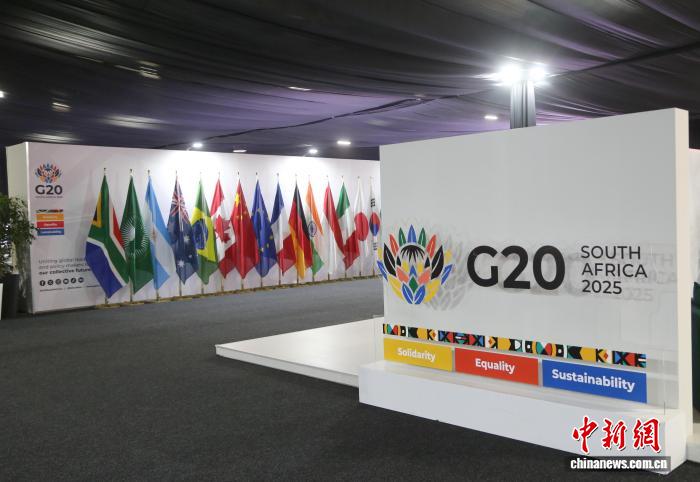
学者:G20“非洲时刻”见证全球南方崛起
Zhong Guo Xin Wen Wang· 2025-11-22 07:39
Core Viewpoint - The Global South is transitioning from a marginal position to a central role in global governance, with countries in this group increasingly becoming rule-makers rather than mere rule-takers [1][4]. Group 1: G20 Summit Significance - The G20 summit, taking place in Johannesburg on November 22-23, marks the first time the event is hosted in Africa, highlighting the importance of the Global South [1]. - South Africa, as the rotating chair, aims to elevate the development concerns of the Global South and Africa to the core agenda of the G20 [1]. Group 2: Role of Global South - Scholars emphasize that the Global South is becoming a significant symbol of the current era, with South Africa being the fourth Global South country to chair the G20 after Indonesia, India, and Brazil [1]. - The summit expands the narrative space for the Global South, allowing for a more inclusive dialogue on international governance [2]. Group 3: Institutional Development - New institutions led by the Global South are strengthening their roles amid a turbulent multilateral system, with initiatives from China providing intellectual support for South-South cooperation [1]. - The collaboration between China and South Africa is seen as pivotal in enhancing the collective voice of the Global South in international governance [2]. Group 4: African Development Focus - The G20 summit provides a new platform for addressing long-standing issues of concern for Africa, emphasizing that African modernization must be driven by Africans themselves [4][5]. - The summit will discuss three main themes: inclusive and sustainable economic growth, global resilience building, and creating a fairer future, with various reports to be reviewed [5].
第七届中国—东盟法治论坛开幕
Ren Min Ri Bao· 2025-11-21 22:12
Core Points - The seventh China-ASEAN Legal Forum opened in Chongqing, focusing on strengthening legal cooperation between China and ASEAN to build a community with a shared future in the region [1] - The forum is seen as an important platform for deepening legal exchanges and cooperation, emphasizing the need for collaboration in areas such as transportation, digital economy, and green economy [1] - High-level legal cooperation is expected to contribute to the construction of the China-ASEAN community, enhancing the international legal order based on international law [1] Group 1 - The forum's theme is "Strengthening China-ASEAN Legal Cooperation and Building a Community with a Shared Future" [1] - Keynote speeches highlighted China's initiatives for global development, security, civilization, and governance, contributing to world peace and development [1] - The forum aims to enhance legal standards and frameworks in various sectors, including combating transnational crime and resolving cross-border disputes [1] Group 2 - Attendees included high-ranking officials such as Chen Wenqing, who delivered a speech at the opening ceremony [1] - Following the opening, Chen Wenqing met with officials from Thailand, Laos, and Indonesia to discuss legal cooperation [2]
2025长江文化南京论坛举行
Xin Hua Ri Bao· 2025-11-21 14:31
Group 1 - The forum emphasized the significance of the Yangtze River as a symbol of Chinese civilization and its role in shaping Jiangsu's geography, economy, and culture [1] - The forum aimed to deepen international cooperation among river basin countries, enhancing the protection and transmission of river culture while promoting green development [1][2] - The event highlighted the importance of high-quality development along the Yangtze River Economic Belt, aligning with the directives from the 20th Central Committee of the Communist Party of China [2] Group 2 - The forum featured discussions on the integration of historical culture preservation with urban green development and the revitalization of Yangtze culture [3] - Key initiatives announced included the "From Yangtze to Ocean" aquatic biological protection action plan and the launch of the "Eternal River - Yangtze Cultural Series" publishing project [3] - The forum attracted participation from various international organizations, think tanks, and government officials, indicating a collaborative approach to sustainable development [3]
中华人民共和国和乌兹别克斯坦共和国外交部长第二次战略对话联合新闻稿
Xin Hua She· 2025-11-21 13:16
Core Points - The visit of China's Foreign Minister Wang Yi to Uzbekistan on November 20-21, 2025, marks the second strategic dialogue between the two countries, reinforcing their comprehensive strategic partnership [1] - Both sides emphasized the importance of mutual support on core interests and expressed commitment to enhancing bilateral cooperation in various sectors [2] Group 1: Bilateral Relations - The China-Uzbekistan partnership is based on mutual respect and consideration of each other's interests, aiming to build a community of shared destiny [1] - Both countries reaffirmed their support for each other's core interests, with China backing Uzbekistan's development path and reform projects under the "New Uzbekistan" strategy [2] Group 2: Economic Cooperation - Trade between China and Uzbekistan is steadily increasing, with deepening investment cooperation in sectors such as industry, transportation logistics, energy, and agriculture [3] - Both parties expressed a desire to enhance cooperation in the green mining sector, focusing on the entire industrial chain of mineral resource development [4] Group 3: Multilateral Cooperation - The two nations aim to strengthen cultural exchanges and promote friendly ties between their peoples [5] - They plan to enhance mutual support and cooperation within multilateral frameworks such as the United Nations, Shanghai Cooperation Organization, and BRICS [5]
第七届中国-东盟法治论坛开幕 陈文清出席开幕式并致辞
Xin Hua She· 2025-11-21 08:55
Core Viewpoint - The seventh China-ASEAN Legal Forum emphasizes strengthening legal cooperation between China and ASEAN to build a community with a shared future in the region [1] Group 1: Forum Highlights - The forum's theme is "Strengthening China-ASEAN Legal Cooperation, Building a Community with a Shared Future" [1] - Keynote speeches highlighted China's initiatives for global development, security, civilization, and governance, contributing to world peace and development [1] - The forum is recognized as an important platform for deepening legal exchanges and cooperation between China and ASEAN [1] Group 2: Areas of Focus - The forum aims to enhance legal, regulatory, and standard alignment in sectors such as transportation, digital economy, and green economy [1] - It seeks to establish mechanisms for combating transnational crime and resolving cross-border disputes [1] - The forum supports maintaining an international order based on international law and a UN-centered international system [1] Group 3: Key Attendees - Notable attendees included Chen Wenqing, a member of the Political Bureau of the CPC Central Committee, and Yuan Jiajun, Secretary of the Chongqing Municipal Committee [2] - Meetings were held with high-ranking officials from Thailand, Laos, and Indonesia to discuss legal cooperation [2]
中华人民共和国和吉尔吉斯共和国外交部长首次战略对话联合声明
Xin Hua She· 2025-11-19 21:01
Group 1 - The core viewpoint of the joint statement emphasizes the importance of the strategic dialogue mechanism between China and Kyrgyzstan for developing their comprehensive strategic partnership in the new era [1][2] - Both parties reaffirmed their commitment to mutual support on core interests and sustainable development, maintaining national independence, sovereignty, and territorial integrity [1][2] - The statement highlights the significance of the China-Kyrgyzstan-Uzbekistan railway as a strategic project under the Belt and Road Initiative [2][3] Group 2 - Both sides expressed a desire to enhance cooperation in various fields, including culture, education, technology, health, sports, tourism, and ecology [4] - The opening of the second international air route in southern Kyrgyzstan was positively evaluated, with plans to promote direct flights between Kashgar and Bishkek, as well as Kashgar and Osh [3][4] - The parties agreed to strengthen cooperation in agricultural trade and support the establishment of a bilateral cooperation mechanism for border ports [2][4] Group 3 - The dialogue is seen as a fruitful step towards enhancing the comprehensive strategic partnership between the two countries [5] - Both sides are committed to supporting each other's international initiatives and candidates within international organizations [4][5] - The joint statement reflects a mutual appreciation for the outcomes of the Shanghai Cooperation Organization summit held in Tianjin [5]
太湖世界文化论坛第八届年会开幕
Xin Hua She· 2025-11-19 02:53
姜信治指出,2023年,习近平主席提出全球文明倡议,强调文明交流互鉴对人类文明发展进步的重 大意义,得到国际社会积极响应。我们要践行全球文明倡议,坚持平等尊重,维护文明多样性;加强对 话沟通,增进理解认同;汲取传统智慧,应对时代课题;推动守正创新,焕发文明活力。 本届年会以"文明互鉴与中国式现代化"为主题,中外嘉宾近千人与会。 新华社上海11月18日电 太湖世界文化论坛第八届年会18日在上海开幕,全国政协副主席姜信治出 席开幕式并致辞。 姜信治表示,实现现代化是世界发展的历史潮流,是各国人民的共同向往。中国式现代化的成功实 践,创造了人类文明新形态,为发展中国家迈向现代化提供了新的选择。 ...
“中国式现代化道路为阿拉伯国家乃至世界提供启迪”
人民网-国际频道 原创稿· 2025-11-19 02:20
Core Points - The Belt and Road Initiative proposed by China supports Arab countries in accelerating infrastructure development and opens new economic opportunities, providing a new paradigm for global economic cooperation [1] - The rapid development of China-Arab relations is based on mutual respect and benefit, with deepening cooperation in trade, investment, and energy sectors [1] - The geographical significance of Oman allows it to serve as a bridge for communication and cooperation between the East and West in the context of the Belt and Road Initiative [1] Summary by Sections Infrastructure Development - The Belt and Road Initiative is seen as a catalyst for infrastructure development in Arab countries, creating new economic opportunities [1] - China's successful infrastructure development serves as a model for the Belt and Road Initiative [1] Social and Economic Insights - The experience in China highlights that development encompasses not only economic growth but also improvements in social aspects and the spirit of the people [1] - The modernization path of China provides inspiration for Arab countries, emphasizing the importance of long-term strategic planning, industrial development, and technological innovation [2] Recommendations for Arab Countries - Arab nations are encouraged to adopt the Chinese experience by fostering a culture of hard work and discipline, rather than relying solely on government support [2] - Individuals are urged to leverage their intelligence and efforts to achieve their work goals [2] Global Initiatives - China's leaders have proposed four major initiatives: global development, global security, global civilization, and global governance, which offer solutions to global peace and development challenges [2]