
大食物观

Search documents
聚焦共建韧性食物供应体系,2025世界农业科技创新大会将于10月12日开幕
Bei Jing Shang Bao· 2025-09-05 08:25
Group 1 - The 2025 World Agricultural Technology Innovation Conference will be held from October 12 to 14 in Beijing's Pinggu District, with an additional event on October 15 at China Agricultural University [2] - The conference theme is "Practicing the Big Food Concept and Building a Resilient Food Supply System," featuring a framework of 1 opening ceremony, 7 thematic meetings, 1 World Agricultural Technology Expo, and over 40 parallel meetings and international exchange activities [2] - The conference has significantly increased global participation, inviting 280 foreign guests from 94 countries and regions, including over 50 diplomats from 44 countries and leaders from more than 200 UN systems and international organizations [2] Group 2 - The event will feature diverse activities, including parallel sessions, international exchanges, and closed-door meetings, involving 41 organizing units such as the Chinese Academy of Agricultural Sciences and the Food and Agriculture Organization of the United Nations [3] - The conference aims to integrate with local industries in Pinggu, accelerating the construction of an agricultural innovation industry cluster with international competitiveness [3] - The event is expected to enhance Beijing's influence as an international center for scientific innovation and communication, supporting the construction of a strong agricultural nation [3]

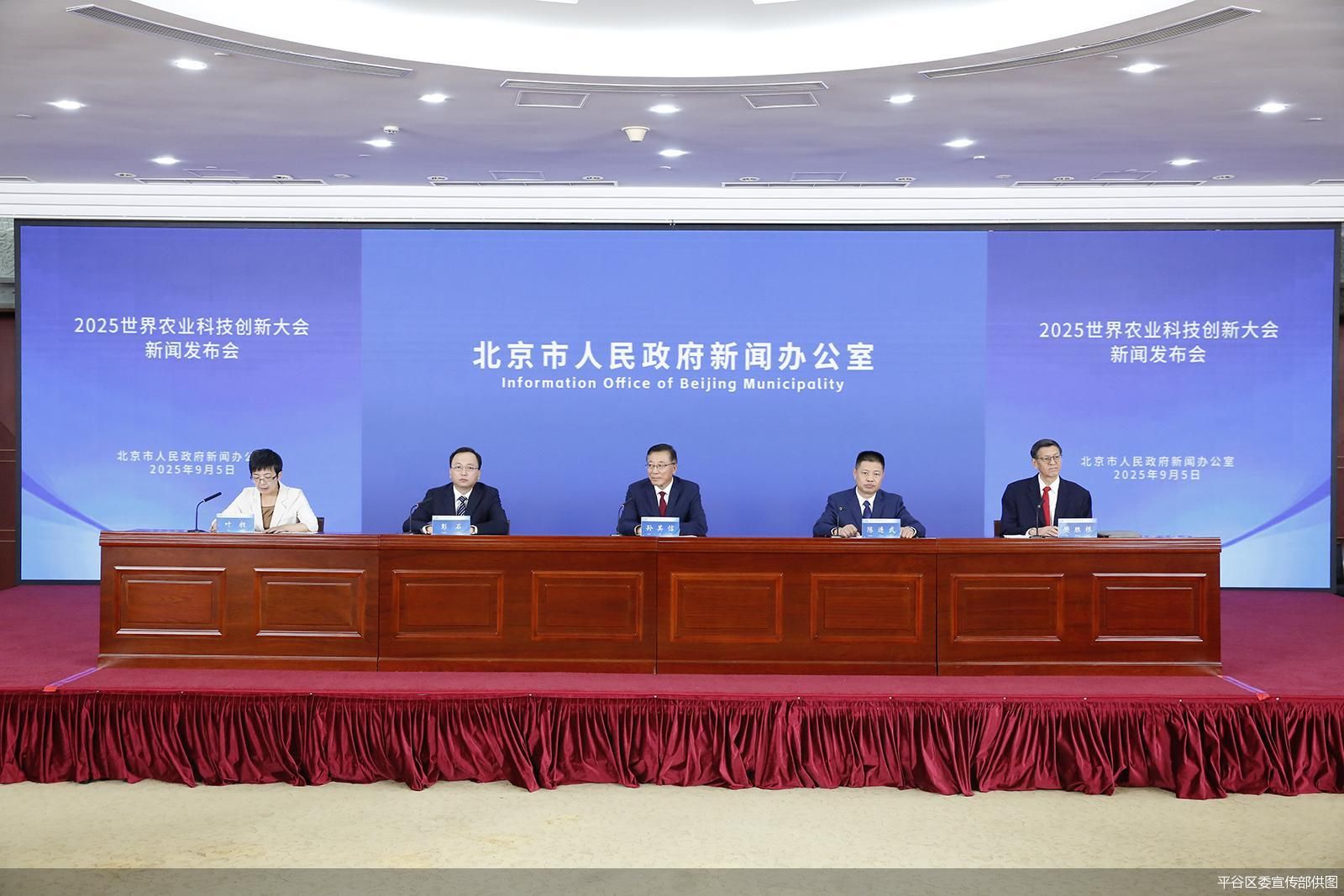
自首届世界农科创大会举办以来,平谷已接待国际考察团上千余人次
Xin Jing Bao· 2025-09-05 06:34
Core Viewpoint - The 2025 World Agricultural Technology Innovation Conference will be held from October 12 to 15, focusing on building a resilient food supply system and promoting international collaboration in agricultural technology [1][2] Group 1: Event Overview - The conference aims to deepen connections with international organizations such as the FAO and WFP, enhancing the global resource pool for agricultural innovation [1] - The theme of the 2025 conference is "Practicing the Big Food Concept, Building a Resilient Food Supply System" [1] Group 2: Achievements and Developments - Since the successful hosting of the first conference in 2023, Pinggu District has received nearly 10,000 domestic agricultural technology inspection groups and over 1,000 international groups [1] - Key laboratories, including those focused on vegetable breeding and traditional Chinese medicine, have been established in Pinggu, contributing to national agricultural innovation [1] Group 3: Conference Activities - The conference will feature four plenary sessions and several specialized forums, including those on dietary fiber innovation and sustainable dietary transformation [1][2] - The event will facilitate the display of global agricultural research achievements and promote the transformation of research results from laboratories to practical applications in agriculture [2] Group 4: Collaborative Framework - The conference will enhance the "government-industry-university-research-application" triangle model, improving the innovation ecosystem in the agricultural sector [2] - Major enterprises and universities will participate in the conference, forming a closed-loop interaction among research, industry, and policy [2]
黑龙江现代化大农业跑出“加速度”
Xin Hua She· 2025-09-03 00:24
Group 1 - The core viewpoint is that Heilongjiang Province is leveraging technology to modernize agriculture, aiming for a record grain output of over 160 billion jin in 2024 [1][2] - The contribution rate of agricultural technology progress in Heilongjiang Province exceeds 70%, with comprehensive mechanization rates for crops remaining above 99% [1] - The province is implementing the "Five Goods" integration strategy to enhance the quality and yield of grain production [1] Group 2 - The Dabeichuan Cooperative has improved soybean planting density, increasing the expected yield from 6,000 jin per hectare to over 7,000 jin this year [2] - Heilongjiang Province is promoting the initial and deep processing of agricultural products, exemplified by a company processing 1 million fresh corn cobs daily [2] - The province is also diversifying agricultural products and enhancing value through initiatives like cold-water fishery revitalization [2][3] Group 3 - Heilongjiang Province has over 10 million mu of certified organic food area, promoting the "Heilongjiang Quality Agricultural Brand" to enhance the market value of its products [3] - The province aims to strengthen its agricultural sector by building modern agricultural bases, large enterprises, and industries, ensuring national food security [3]
决胜“十四五” 打好收官战丨扛起粮食安全“压舱石”重任——黑龙江现代化大农业跑出“加速度”
Xin Hua Wang· 2025-09-02 11:17
Group 1 - The core viewpoint emphasizes the modernization of agriculture in Heilongjiang Province, which is crucial for national food security, showcasing significant advancements through technology and industry upgrades [1][3] - Heilongjiang's agricultural technology contribution rate exceeds 70%, with comprehensive mechanization rates for crops remaining above 99%, indicating a strong push towards modern agricultural practices [1] - The province aims to achieve a total grain output of over 160 billion jin in 2024, marking a historical high, by integrating quality land, seeds, methods, machinery, and systems [1] Group 2 - The implementation of large ridge planting technology in soybean cultivation has increased seedling density and is expected to boost yields from 6,000 jin per hectare to over 7,000 jin this year [2] - Heilongjiang is enhancing the initial and deep processing of agricultural products, with companies like Hongxinglong Daxin Agricultural Technology Co., processing 1 million fresh corn cobs daily [2] - The province is promoting diversified agricultural development, including cold-water fishery revitalization, to increase the value-added of agricultural products [2][3] Group 3 - Heilongjiang has over 10 million mu of certified organic food area, positioning itself as a major producer of green organic food [3] - The province has launched the "Heilongjiang Superior Products" brand to enhance the marketability of high-quality agricultural products [3] - The goal is to build a strong agricultural province by accelerating the development of large agricultural bases, enterprises, and industries, thereby reinforcing its role as a pillar of national food security [3]
汇全球智慧 促罐头行业共荣共强
Xiao Fei Ri Bao Wang· 2025-09-01 02:45
Core Points - The 16th World Fruit Processing Conference and the 30th Anniversary of the China Canned Food Industry Association were held in Beijing, highlighting the achievements and future direction of the canned food industry in China [1][3][4] Industry Overview - The China Canned Food Industry Association was established in 1995 and has played a significant role in the development of the canned food sector over the past 30 years, focusing on innovation and industry leadership [4][6] - China's canned food production has grown significantly, with annual output exceeding 10 million tons, which is six times that of 30 years ago, and the industry now includes over a thousand product varieties [4][5] Achievements and Developments - The canned food industry in China has become a global leader, exporting to over 200 countries and regions, and has transitioned from a focus on scale to quality and smart manufacturing [4][6] - The conference aims to promote innovation and sustainable development in the fruit processing sector, featuring various activities such as forums and exhibitions [5][8] Future Directions - Industry leaders emphasized the need for political guidance, food safety, and a focus on health and nutrition in product development, as well as the importance of international cooperation to enhance competitiveness [6][7] - The association plans to continue fostering high-quality development in the canned food industry, aligning with national strategies and addressing global challenges [7][8]
华创证券:微生物蛋白商业化加速开探 建议关注安琪酵母(600298.SH)、富祥药业(300497.SZ)
智通财经网· 2025-09-01 02:18
Core Insights - Microbial protein is emerging as a new, nutritious, and efficient alternative protein source, driven by technological advancements and increasing demand for high-quality protein in China [1][2] - The market for microbial protein is projected to reach approximately 60 billion yuan by 2035, with growth catalyzed by technological progress and potential policy support [2] - Key players in the industry include innovative startups and traditional leaders, each leveraging their strengths in technology and capital to capture market opportunities [3][4] Industry Overview - The demand for high-quality protein in China is rising, while supply is constrained by reliance on imported plant proteins and limited animal protein production [1] - Microbial protein, as a subset of alternative proteins, offers superior nutritional profiles and production efficiency, with ongoing commercialization efforts [1][2] - The industry is currently in the introduction and validation phase, with significant advancements in commercial viability since 2020 [2] Technological Pathways - Two main technological pathways for microbial protein production are identified: biomass fermentation and precision fermentation, with the latter being more complex but offering higher value-added products [2] - The commercial maturity of biomass fermentation is higher, particularly in meat and dairy products, while precision fermentation is still developing [2] Competitive Landscape - Innovative startups are leading in technological advancements, while traditional companies are leveraging their financial and operational synergies to enter the market [3][4] - Major players like Budweiser and Angel Yeast are building large-scale production capacities, significantly outpacing smaller startups [3] Future Outlook - Technology is the core competitive factor across all stages of microbial protein development, influencing product development, regulatory approval, and cost efficiency [4] - The ability to scale production and reduce costs will favor early entrants in the market, enhancing their competitive position [4]


山东让辽阔海洋变“蓝色粮仓”
Qi Lu Wan Bao Wang· 2025-08-31 01:04
Core Viewpoint - Shandong is leveraging its marine resources to enhance food security and economic growth through the development of a "blue granary" concept, focusing on both land and sea food sources [2][4]. Group 1: Marine Economic Development - Shandong aims to achieve a total aquatic product output of 9.53 million tons and a fishery economic output value of 490.4 billion yuan by 2024 [2]. - The province is transitioning from traditional fishing and aquaculture to a more sustainable "marine ranching" model, which has increased per-acre yields by over 30% compared to conventional methods [3]. Group 2: Technological Advancements in Aquaculture - The launch of the world's first 150,000-ton smart fishery vessel, "Guoxin 1号2-1," represents a significant upgrade in marine ranching capabilities, designed to produce approximately 3,600 tons of high-quality fish annually [4]. - Shandong has established over 2,800 gravity-type deep-water cages and 37 large-scale deep-sea aquaculture facilities, expanding its aquaculture water volume to 4 million cubic meters [4]. Group 3: Breeding and Processing Innovations - The province leads the nation with 17 national-level aquatic breeding farms and has formed a breeding consortium involving 26 leading enterprises and 30 research teams [5]. - Shandong's processing industry is enhancing the value of marine products, with the oyster industry alone generating a total industrial chain value of 10 billion yuan through various processed products [5].

山东树立大食物观,既向陆地要食物,也向海洋要食物
Da Zhong Ri Bao· 2025-08-31 00:48
Core Viewpoint - Shandong is promoting a "big food" concept that emphasizes sourcing food from both land and sea, aiming to establish the ocean as a "blue granary" to ensure food security and enhance the fishing economy [2][6]. Group 1: Aquaculture Development - The province aims for a total aquatic product output of 9.53 million tons and a fishery economic output value of 490.4 billion yuan by 2024 [2]. - Shandong is transitioning from traditional fishing and aquaculture to a "fishing husbandry" model, utilizing multi-layered aquaculture systems that increase per-acre yields by over 30% compared to traditional methods [3]. Group 2: Deep-Sea Aquaculture - Shandong is advancing into deep-sea aquaculture, exemplified by the delivery of the world's first 150,000-ton smart fishery vessel, "Guoxin 1号2-1," which can produce approximately 3,600 tons of high-quality fish annually [4]. - The province has established over 2,800 gravity-type deep-water cages and 37 large deep-sea aquaculture equipment, with a total aquaculture water volume reaching 4 million cubic meters [4]. Group 3: Seed Industry and Innovation - Shandong leads the nation with 17 national-level aquatic seed breeding farms and has formed a breeding consortium with 26 leading enterprises and 30 research teams [5]. - The province has developed 65 new aquatic species, accounting for 21% of the national total, focusing on species like oysters, sea cucumbers, and shrimp [5]. Group 4: Value-Added Processing - The province is enhancing the value of its aquatic products through deep processing, transforming fresh products into high-value goods [5]. - The oyster industry in Lushan, with a cultivation area of 600,000 acres and an annual output of 500,000 tons, has a full industry chain worth 10 billion yuan, with 65% of fresh oysters going to processing plants [5].
从撂荒地到丰收田 从水稻示范田看如何端稳“中国饭碗”
Xin Hua Cai Jing· 2025-08-26 15:22
Core Viewpoint - The article emphasizes the importance of revitalizing abandoned land and improving agricultural resilience in Guangdong to ensure food security, highlighting innovative models like "insurance+" that support rural revitalization and agricultural productivity [1][2][3]. Group 1: Revitalization of Abandoned Land - The first water rice planting demonstration field in Jiangmen, Guangdong, transformed 180 acres of previously abandoned land into productive fields, achieving a yield of over 800 pounds per acre in its first year [2]. - The collaborative efforts of Jiangmen Insurance, local government, and agricultural cooperatives initiated the revival of abandoned land through infrastructure improvements and modern agricultural practices [2][3]. - The revival efforts led to an expected yield of over 1,000 pounds per acre this year, significantly improving local soil conditions and increasing farmers' income by 15,000 yuan per person [3]. Group 2: "Insurance+" Model and Technological Integration - The "insurance+" model in Guangdong integrates insurance with technology and agricultural services, enhancing risk management and productivity in agriculture [4][5]. - The establishment of a smart agricultural meteorological service project in Taishan allows real-time monitoring of various agricultural data, improving disaster response times by 70% [4]. - This model has shifted from post-disaster compensation to proactive risk prevention, effectively reducing systemic risks in food production [4][6]. Group 3: Financial Collaboration and Support - Guangdong has established the first agricultural insurance disaster reduction service center, which has been replicated across 60 centers statewide, covering various agricultural sectors [5][6]. - From 2023 to mid-2025, the "insurance+" model has allocated 195 million yuan for disaster reduction projects, benefiting over 3.6 million households and achieving a disaster reduction effect exceeding 770 million yuan [5][6]. - In the rice sector alone, 426.5 million yuan has been invested in disaster projects, benefiting over 1.1 million households and achieving a reduction in losses of 178 million yuan [6].

全国人大代表、广东海洋大学副校长宁凌:建议将优质海产品纳入政府粮食储备计划
Nan Fang Nong Cun Bao· 2025-08-26 09:03
Core Viewpoint - The proposal to include high-quality marine products in the government's grain reserve plan aims to enhance the development of marine ranching and address industry challenges [1][17]. Group 1: Industry Development - The representative emphasizes the need to understand the industrial attributes of marine ranching to identify and solve development pain points [3][4]. - A comprehensive industry chain should be established focusing on fishery production, including seed breeding, aquaculture, feed, equipment, cold chain logistics, deep processing, and trading services [10][12]. Group 2: Key Challenges and Solutions - Initial considerations for marine ranching should include site selection, species, facility layout, and seedling assurance [13]. - Mid-term challenges involve addressing seed and feed supply, vessel maintenance, and extreme weather prevention [14]. - Long-term issues include managing market price fluctuations, processing value addition, cold chain logistics, market expansion, and brand building [15]. Group 3: Recommendations for Improvement - Financial support should be enhanced through subsidies, tax optimization, and the inclusion of quality marine products in government reserves [16][18]. - Credit support and low-interest loan products should be developed, along with expanding insurance coverage and improving standards [18]. - Technological advancements should focus on critical techniques and equipment development, while talent development should involve targeted training and incentive mechanisms [19][20].
