
生育友好型社会

Search documents
北京:培育新型婚育文化 倡导重视生育的社会价值 落实积极生育支持措施
news flash· 2025-07-31 02:19
Core Viewpoint - The Beijing Municipal Government has issued a notice to implement measures aimed at enhancing the fertility support policy system and promoting the establishment of a fertility-friendly society, emphasizing the importance of childbirth and family values [1] Group 1: Cultural Initiatives - The initiative aims to cultivate a new marriage and childbirth culture, promoting traditional virtues and the social value of childbirth [1] - It encourages appropriate marriage and childbirth ages, as well as the concept of quality childbirth and parenting [1] - The government seeks to foster shared parenting responsibilities between couples [1] Group 2: Community and Educational Roles - The plan emphasizes the roles of families, society, and schools in guiding youth to establish correct views on marriage, childbirth, and family [1] - There is a focus on strengthening family education and family values [1] Group 3: Marriage Guidance and Reform - The government aims to enhance marriage guidance services, including the creation of youth friendship service brands like "Youth Love Team" [1] - It promotes the provision of credible marriage and friendship services and actively conducts marriage and family counseling [1] - The initiative includes efforts to reform traditional marriage customs and eliminate outdated practices such as extravagant wedding ceremonies and high bride prices [1]
北京:优化托育支持政策 建立普惠托育服务价格和财政补助动态调整机制
news flash· 2025-07-31 02:16
Core Points - The Beijing Municipal Government has issued a notification to improve the fertility support policy system and promote the construction of a fertility-friendly society [1] Group 1: Policy Enhancements - The policy aims to optimize childcare support by strengthening government guidance and establishing a dynamic adjustment mechanism for inclusive childcare service pricing and financial subsidies [1] - The implementation of tax and fee incentives for childcare services is emphasized, along with ensuring that utility costs for childcare institutions are aligned with residential living prices [1] Group 2: Infrastructure Development - The policy specifies standards for the construction of childcare facilities in new residential communities, ensuring that these facilities are planned, built, and delivered in sync with residential areas [1] - The initiative includes urban renewal projects aimed at addressing the shortcomings of childcare facilities in older communities through the creation of complete communities [1]
900亿元育儿补贴将发放 多部门合力构建生育友好型社会
Shang Hai Zheng Quan Bao· 2025-07-30 18:03
"育儿补贴主要通过全国统一的育儿补贴信息管理系统线上申领,同时,我们也保留了线下办理渠道和 人工服务,因特殊原因无法通过线上申领的群众,可到婴幼儿户籍地乡镇、街道办理。大家可根据自身 实际情况,自主选择办理渠道。"国家卫生健康委人口家庭司司长王海东表示。 据悉,家庭申领时只需提交婴幼儿出生医学证明、户口簿等证明婴幼儿身份和抚养关系的必要材料。同 时,各地省级政务服务平台都将设置育儿补贴申领专区,支付宝、微信等第三方服务平台也将开通育儿 补贴申领入口。 育儿补贴为家庭提供了直接的经济支持,而生育保险制度则在医疗保障和收入补偿方面发挥着关键作 用,共同构成生育支持的经济支柱。 ◎记者 张雪 为积极构建生育友好型社会,国家多部门协同发力,推出一揽子生育支持政策。在7月30日举行的国新 办新闻发布会上,来自财政部、国家卫生健康委、国家医保局、中华全国总工会的有关负责人详细介绍 了《育儿补贴制度实施方案》及相关配套措施的推进情况。 财政部社会保障司司长郭阳透露,按照中办、国办印发的《育儿补贴制度实施方案》部署,中央财政将 设立共同财政事权转移支付项目"育儿补贴补助资金",今年初步安排预算900亿元左右。 对于发放国家基 ...
育儿补贴来了!真金白银为养娃减负
2 1 Shi Ji Jing Ji Bao Dao· 2025-07-30 12:57
财经早察主播 董静怡 还没过节,国家就要给孩子发红包了?这不是段子,是真给娃发钱! 7月28日,全国性《育儿补贴制度实施方案》正式公布,从明年开始,家里有3岁以下宝宝的父母,每年 都能领到一笔"奶粉钱"。 这可是头一回,国家在全国范围内统一发放育儿现金补贴!预计每年惠及2000多万个家庭,堪称"真金 白银"的生育支持政策。怎么领?能拿多少?哪些孩子能享受?别急,三分钟带你看懂这波实打实的育 儿红包! 首先,最关键的——谁能领?2022年1月1日之后出生、且未满3周岁的婴幼儿,无论一孩、二孩、三 孩,统统都能领! 举个例子,2025年1月1日后出生的孩子,从出生开始按月补贴,直到3岁生日当月。2022-2024年出生 的"大宝宝",按剩余月数折算补贴,比如2023年出生的孩子,现在2岁,还能领满1年的钱!这样的设计 既公平又普惠,一孩家庭不再被排除在外,真正实现了"生娃就有补贴"。 怎么发?每年3600元,一次性到账。 也就是说,2025年出生的孩子可以连续领3年,共计10800元;而2025年之前出生但还没满3岁的,比如 2023年12月出生的宝宝,可以按剩余月份折算领取,还能领24个月,总计7200元。 怎 ...
产假调整!各地普遍延长至158天及以上,均设立15天左右的配偶陪产假、5~20天不等的父母育儿假
Zhong Guo Ji Jin Bao· 2025-07-30 11:18
在托育服务方面,进一步完善托育服务体系,加大普惠托育服务供给,大力推进托幼一体服务,发展社 区嵌入式托育、用人单位办托等多种方式的托育服务。截至2024年底,全国托位数已达到千人口4.08 个。 在妇幼健康服务方面,推进生育全程基本医疗保健服务,扩大分娩镇痛服务覆盖范围,持续实施母婴安 全五项制度。2024年,我国孕产妇死亡率下降到14.3/10万,婴儿死亡率下降到4.0‰,妇幼健康核心指 标达到历史最优水平,被世界卫生组织列为妇幼健康高绩效的10个国家之一。扩大儿科医疗服务供给, 部署全国二、三级公立综合医院全部提供儿科服务,保障广大儿童就医需求。 (原标题:产假调整!各地普遍延长至158天及以上,均设立15天左右的配偶陪产假、5~20天不等的父 母育儿假) 来源:央视新闻 国务院新闻办公室30日14时举行新闻发布会,介绍育儿补贴制度及生育支持措施有关情况。2024年10 月,国务院办公厅印发《关于加快完善生育支持政策体系 推动建设生育友好型社会的若干措施》,提 出一揽子生育支持措施。国家卫生健康委副主任郭燕红介绍,近年来,国家卫生健康委会同相关部门, 认真贯彻中央决策部署,加快完善生育支持政策体系,取得积 ...
真金白银,支持生育的坚实一步
Bei Jing Shang Bao· 2025-07-30 02:35
事实上,此前不少地方已纷纷开展发放育儿补贴的探索,补贴标准不一,更多向二孩、三孩家庭倾斜。 国家生育补贴政策落地。养育0—3岁婴幼儿的家庭可领取育儿补贴金,标准为每孩每年3600元。 7月28日,中共中央办公厅、国务院办公厅公布《育儿补贴制度实施方案》,决定自2025年1月1日起, 对符合法律法规规定生育的3周岁以下婴幼儿发放补贴。 按当前方案标准计算,一孩、二孩、三孩家庭最多共计可领取10800元、21600元、32400元育儿补贴。 作为首个全国性的育儿补贴制度,因为兼具普惠性与公平性,市场上同样反响热烈。受到政策利好影 响,母婴、乳制品板块集体大涨,相关行业活跃度明显提升。 本次补贴政策突破了以往各地补贴政策个别聚焦的局限。政策让一孩家庭同样被关照,不仅缓解了新手 爸妈的焦虑,也消除了孩次间的差异"对待",展现出政策惠民于民的诚意,对于加速构建生育友好型社 会的意义非凡。 从国家层面"统一"发放育儿补贴,就是要向全社会传递鲜明信号:用真金白银支持生育,实打实为家庭 减负。 生育并非简单的个体决定。影响育龄人群生育意愿的因素,既有个人意愿、职场焦虑等主观因素,还有 经济支撑、托育保障等多重现实因素。 育儿 ...
育儿补贴,真金白银为生育减负
2 1 Shi Ji Jing Ji Bao Dao· 2025-07-29 22:52
从宏观层面上来看,全国性育儿补贴政策不仅提供经济支持,更传递出国家重视人口发展的明确信号, 将对地方政府起到带动效应,推动将更多资源投入到更高水平、更广泛人群的生育补贴政策上来。同 时,生育补贴政策是构建人口均衡发展长效机制的起点,也能推动教育、住房、就业等配套政策的协同 改革,逐步形成"生育友好型"社会环境。 杨舸(中国社会科学院应对人口老龄化研究中心副研究员) 7月28日,中共中央办公厅、国务院办公厅印发了《育儿补贴制度实施方案》,标志着我国生育支持体 系迈入系统化、制度化新阶段,将为破解"生育焦虑"提供重要支撑。自2021年起,我国已经有不少省、 市、县(区)政府出台并实施生育补贴政策。在整体生育率较低的背景下,全国层面育儿补贴政策的推 出具有重要的现实意义。 从微观层面来看,政策一定程度上缓解了家庭生育养育的经济压力,特别是为正在做出生育决策的人民 群体增强信心。生育养育成本是影响生育意愿的重要因素之一,中央政府通过真金白银的支持,显示出 国家提高生育率的现实需求和强烈期望。在地方试点中,育儿补贴政策受到了当地育龄群体的广泛支 持。 其一,实行不分孩次的"一视同仁"普惠性补贴,将所有婴幼儿家庭纳入保障 ...
【西街观察】真金白银,支持生育的坚实一步
Bei Jing Shang Bao· 2025-07-29 14:47
国家生育补贴政策落地。养育0—3岁婴幼儿的家庭可领取育儿补贴金,标准为每孩每年3600元。 7月28日,中共中央办公厅、国务院办公厅公布《育儿补贴制度实施方案》,决定自2025年1月1日起, 对符合法律法规规定生育的3周岁以下婴幼儿发放补贴。 按当前方案标准计算,一孩、二孩、三孩家庭最多共计可领取10800元、21600元、32400元育儿补贴。 作为首个全国性的育儿补贴制度,因为兼具普惠性与公平性,市场上同样反响热烈。受到政策利好影 响,母婴、乳制品板块集体大涨,相关行业活跃度明显提升。 事实上,此前不少地方已纷纷开展发放育儿补贴的探索,补贴标准不一,更多向二孩、三孩家庭倾斜。 本次补贴政策突破了以往各地补贴政策个别聚焦的局限。政策让一孩家庭同样被关照,不仅缓解了新手 爸妈的焦虑,也消除了孩次间的差异"对待",展现出政策惠民于民的诚意,对于加速构建生育友好型社 会的意义非凡。 从国家层面"统一"发放育儿补贴,就是要向全社会传递鲜明信号:用真金白银支持生育,实打实为家庭 减负。 生育并非简单的个体决定。影响育龄人群生育意愿的因素,既有个人意愿、职场焦虑等主观因素,还有 经济支撑、托育保障等多重现实因素。 育儿 ...
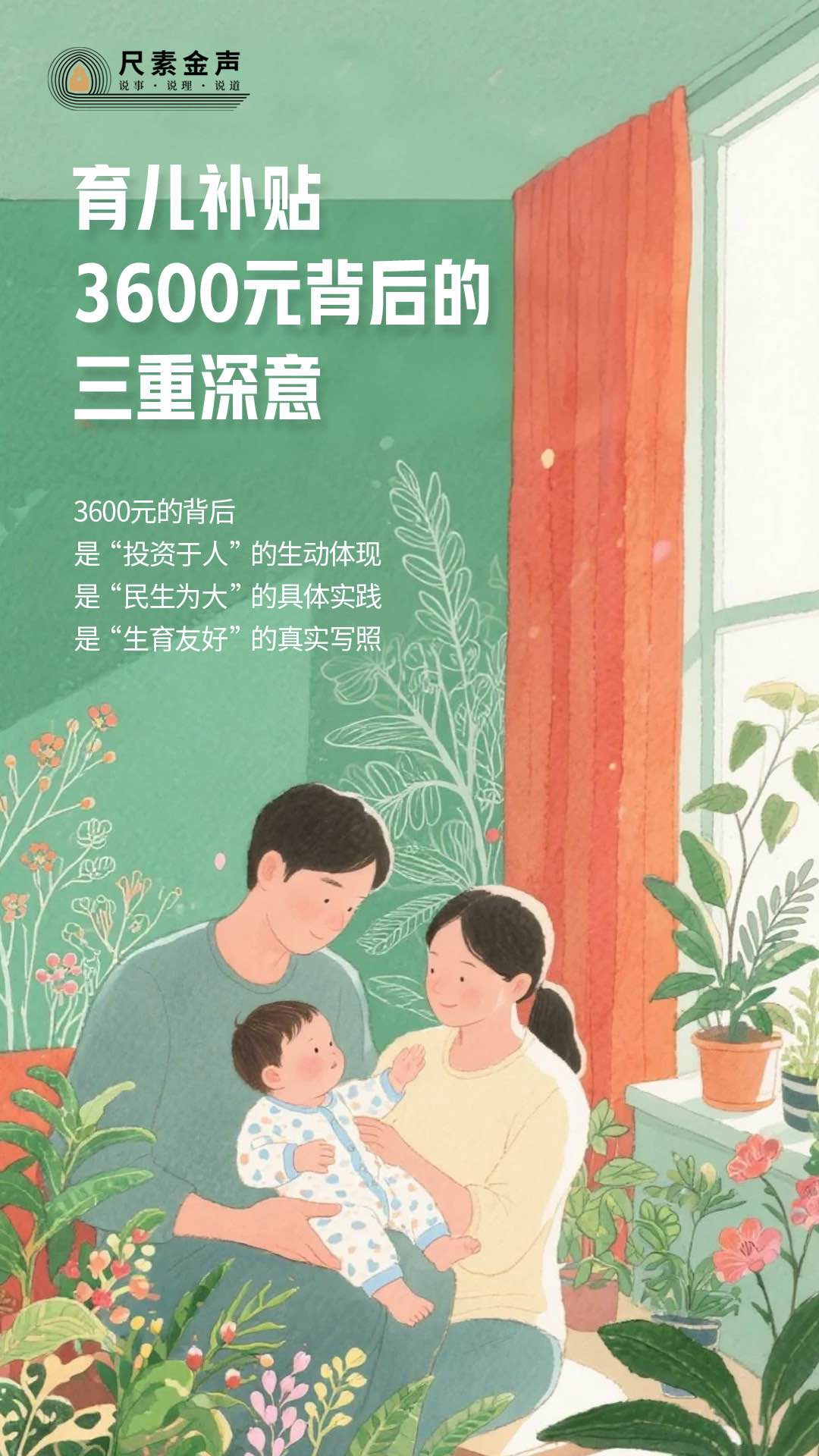
育儿补贴,3600元背后的三重深意
Ren Min Ri Bao· 2025-07-29 00:54
Group 1 - The core viewpoint of the news is the implementation of a universal childcare subsidy policy in China, which will provide financial support to families with children under three years old starting from January 1, 2025, with an annual subsidy of 3,600 yuan per child [1][2][4] - The subsidy is part of a broader strategy to address demographic challenges, including declining birth rates and an aging population, and aims to promote high-quality population development and long-term national growth [2][3][7] - The policy reflects the government's commitment to improving people's livelihoods and reducing the economic burden of raising children, which has been a significant concern for many families [4][5][6] Group 2 - The childcare subsidy is seen as a significant investment in human capital, contributing to the long-term accumulation of human resources and supporting multiple policy goals such as increasing household income, boosting consumption, and expanding domestic demand [2][3] - The initiative is part of a comprehensive approach to create a "birth-friendly" society, which includes improving the overall environment for childbirth, child-rearing, and education, thereby fostering a positive cycle of population reproduction [7][8] - The policy aims to lower the costs associated with childbirth and child-rearing, thereby encouraging families to have more children and addressing the societal value of caregiving [6][7]

中信证券:育儿补贴政策的落地 关注乳制品、母婴连锁、婴幼儿用品、产后护理服务四大领域
智通财经网· 2025-07-29 00:53
Core Viewpoint - The implementation of the childcare subsidy policy marks a transition from local pilot programs to a national system, reflecting a pragmatic approach focused on improving people's livelihoods [1][2] Policy Overview - The policy aims to create a "family-friendly" society, emphasizing the importance of reducing the financial burden of child-rearing for families [2][3] - Starting from January 1, 2025, families will receive an annual subsidy of 3,600 yuan for each child under three years old, regardless of whether they have one, two, or three children [1][3] Coverage and Financial Implications - The subsidy will cover all children under three years old, with an estimated annual total subsidy of approximately 1,012 billion yuan, funded by the central government [3][4] - Local governments are encouraged to provide additional subsidies based on their financial capabilities, allowing for differentiated support across regions [3][4] International Comparison - Compared to other countries, China's current subsidy level is relatively low, with the potential for future increases to enhance the effectiveness of the policy [4] Investment Recommendations - The policy is expected to benefit several sectors, including: - **Dairy Products**: The demand for infant formula is likely to increase, directly linked to the subsidy policy [5][6] - **Mother and Baby Retail Chains**: These companies are expected to see improved performance as birth rates rise, positively impacting same-store sales [6][7] - **Infant Products**: Companies in this sector will benefit from an expanded customer base due to increased birth rates [6][7] - **Postpartum Care Services**: The market for postpartum care is projected to grow significantly, driven by rising awareness and supportive policies [7]
