双碳目标

Search documents
分类引导合理统筹供需——建立多层次新能源消纳调控体系
Jing Ji Ri Bao· 2025-11-20 22:06
Core Viewpoint - The National Development and Reform Commission and the National Energy Administration have issued guidelines to establish a multi-level system for renewable energy consumption and regulation by 2030, aiming for a significant increase in renewable energy generation to meet new electricity demand [1][2]. Group 1: Renewable Energy Development and Consumption - By 2030, a coordinated and efficient multi-level renewable energy consumption and regulation system is expected to be established, with new electricity demand primarily met by renewable energy generation [1]. - The guidelines categorize renewable energy development and consumption into five types, enhancing the precision of renewable energy utilization [1][2]. Group 2: New Models and Business Formats - The guidelines outline new models and business formats for promoting renewable energy consumption, including integrated development models and support for local consumption through smart microgrids and increased distribution networks [2]. - Local consumption is emphasized as a priority for the 14th Five-Year Plan, aiming to improve overall utilization efficiency and reduce system pressure [2]. Group 3: Market Adaptation and Challenges - The guidelines focus on enhancing the adaptability of the electricity market to the characteristics of renewable energy, addressing challenges such as randomness and intermittency [2]. - Improving market systems and pricing mechanisms is crucial for resolving the financial challenges faced by renewable energy companies, ensuring they can compete effectively in the market [3]. Group 4: Corporate Preparedness - Companies are encouraged to develop differentiated strategies to adapt to market changes, leveraging the confidence gained from policies promoting high-level renewable energy consumption and regulation [3].
中国铀业深交所主板开启申购 核工业“国家队”携战略使命登陆资本市场
Zheng Quan Shi Bao· 2025-11-20 18:29
Core Viewpoint - The launch of China Uranium Corporation's IPO marks a significant milestone in the context of advancing global "dual carbon" goals and the rapid development of the domestic nuclear power industry, aiming to enhance the supply of natural uranium and solidify its strategic position as a leading technology-driven mining company [1][9]. Company Overview - China Uranium Corporation, a core subsidiary of China National Nuclear Corporation (CNNC), has evolved from its origins in 1989 to become a key player in the natural uranium supply chain, with a complete business structure encompassing mining, sales, and trade [2]. - The company holds 17 mining rights for natural uranium or uranium-molybdenum mines across resource-rich regions in China and has developed advanced extraction technologies to efficiently exploit complex sandstone uranium deposits [2][3]. Financial Performance - The company has shown robust growth, with revenue increasing from 10.535 billion yuan to 17.279 billion yuan from 2022 to 2024, reflecting a compound annual growth rate (CAGR) of 28.07%, while net profit rose from 1.520 billion yuan to 1.712 billion yuan during the same period [4]. - The natural uranium business remains the core revenue driver, contributing over 89% of total revenue in recent years, with projected revenue from this segment reaching 15.898 billion yuan in 2024 [4]. Investment and Growth Strategy - The IPO will raise funds primarily for enhancing natural uranium production capacity and the comprehensive utilization of radioactive co-mined resources, with a total investment plan of 4.798 billion yuan [7]. - Key projects include the development of several uranium mining operations in Inner Mongolia and Xinjiang, which are expected to significantly boost domestic uranium supply and reduce reliance on imports [7][10]. Market Demand and Opportunities - The global nuclear power industry is recovering, with a projected increase in uranium demand driven by the "dual carbon" goals, with estimates suggesting a rise to 86,000 tons by 2030 and 150,000 tons by 2040 [9][10]. - Domestically, China's nuclear power capacity is expected to grow significantly, with projections indicating an increase to approximately 12 million kilowatts by 2030, leading to a corresponding rise in uranium demand [10][11]. Policy Support - The Chinese government continues to strengthen support for strategic mineral resources, including uranium, as reflected in various policy documents that encourage the development of uranium mining and resource utilization technologies [11].
业界研讨“十五五”期间如何推进“新一代煤电升级行动”
Zhong Guo Xin Wen Wang· 2025-11-20 12:41
Core Viewpoint - The core objective during the "14th Five-Year Plan" period is to promote the "New Generation Coal Power Upgrade Action," focusing on enhancing flexibility and low-carbon capabilities in coal power generation [1]. Group 1: Industry Transition and Goals - The "New Generation Coal Power Upgrade Action" aims to improve deep peak regulation and rapid load adjustment capabilities while enhancing clean and low-carbon power generation [1]. - By 2027, there will be a focus on retrofitting and constructing coal power units with rapid load change capabilities in areas where the grid's rapid adjustment needs are not met [1]. - The initiative will also address areas with peak regulation shortages by developing coal power units capable of deep peak regulation and efficient load adjustment [1]. Group 2: Role of Coal Power - Coal power remains a crucial pillar for energy supply in China, serving as a key adjustment source for the new power system and a reliable heat supply for residential heating and industrial use [1]. - The trend of "increasing capacity while reducing output" in coal power presents both opportunities and challenges for the industry [2]. Group 3: Technological Innovation and Clean Energy - The transition to a new power system is driven by technological innovation and mechanism guarantees, emphasizing the role of coal power transformation and the large-scale application of energy storage technologies [2]. - China has built the world's largest and fastest-growing renewable energy system, with the potential to create a zero-carbon power supply system dominated by renewable energy [2][3]. Group 4: Collaborative Efforts - The coal power sector is actively seeking green and low-carbon transformation, with potential for flexible peak regulation through quick start-stop operations in coordination with renewable energy sources [3]. - Efficient collaboration with energy storage technologies will ensure the stable and secure supply of the energy system [3].
青春华章丨逐梦“深蓝”兴新质 渤海湾畔涌“科潮”
Yang Guang Wang· 2025-11-20 12:32
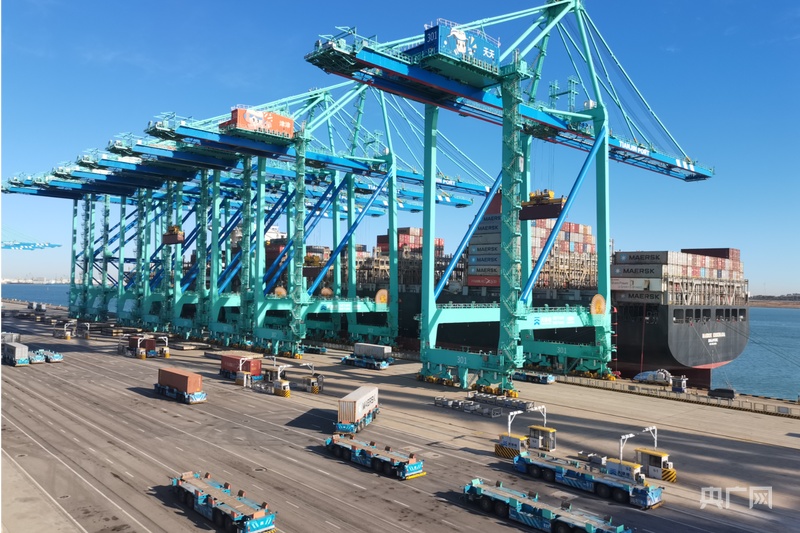
Core Insights - The article highlights the establishment of the world's first "smart zero-carbon" terminal at Tianjin Port, showcasing advancements in technology and sustainability in the marine economy [1][2][4]. Group 1: Smart Terminal Development - Tianjin Port has redefined port operations with a "smart + green" approach, completing the smart terminal construction in just 1 year and 9 months, demonstrating remarkable efficiency [2]. - The terminal achieved a historical production efficiency record with a berthing efficiency of 329 boxes per hour and a peak efficiency of 416 boxes per hour in the first half of 2025 [2]. Group 2: Energy and Sustainability - The energy system at the terminal consists of five wind turbines and 16,000 square meters of solar panels, generating approximately 58.63 million kilowatt-hours annually, achieving a zero-carbon closed loop with 100% self-sufficiency in electricity [2]. - The marine economy in Tianjin is thriving, with the marine production value reaching 565.95 billion yuan in 2024, accounting for 31.4% of the city's GDP [2]. Group 3: Marine Equipment Industry - The marine equipment industry in Tianjin has formed a complete industrial chain, with a significant increase in output value, reaching over 14.5 billion yuan in 2024, a year-on-year growth of 54.6% [6]. - The underwater robotics company, Deep Blue, has developed a range of underwater intelligent equipment, contributing to national strategic projects and breaking the monopoly of Western countries in this field [4][6]. Group 4: Future Prospects - The Tianjin Municipal Committee emphasizes enhancing the integration of port, industry, and city development, aiming to further advance the marine economy through technological and industrial innovation [7]. - The ongoing integration of technology and industry is expected to drive more "Chinese manufacturing" into various sectors of the marine economy, supporting the vision of becoming a maritime power [7].

众多新型储能科技亮相广州
Zhong Guo Xin Wen Wang· 2025-11-20 11:54
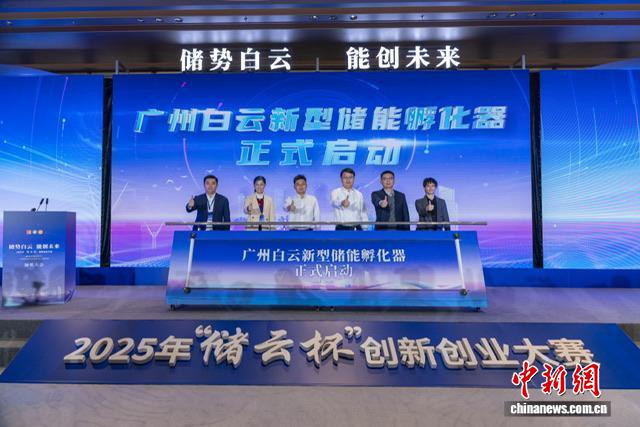
Core Insights - The event showcased various new energy storage technologies, including lithium battery storage, sodium battery storage, and hydrogen energy storage, highlighting their importance in supporting new power systems and achieving carbon neutrality goals [1][3] - The "Shuyun Cup" innovation and entrepreneurship competition awarded 15 outstanding teams from a global pool of 169 participants, emphasizing the vibrant innovation and broad prospects within the new energy storage industry [3][4] - The establishment of the Baiyun New Energy Storage Incubator aims to provide comprehensive support for projects, facilitating the transition from laboratory innovations to industrial applications [4] Group 1 - New energy storage is recognized as a strategic choice for enhancing regional competitiveness and fostering new productive forces in the energy sector [3] - The competition featured a multi-dimensional approach combining awards, policies, industry support, and incubation to create an innovative ecosystem for the new energy storage industry [3] - Key reports presented at the event analyzed the role of new energy storage in promoting renewable energy development and ensuring energy security, focusing on long-duration storage and safety technology breakthroughs [3] Group 2 - The Baiyun New Energy Storage Incubator will operate under a model of state capital guidance, market-oriented operations, and government support, providing full-chain assistance from technology validation to market integration [4] - Four award-winning projects signed agreements to enter the incubator, and 15 industry experts were appointed as advisors, marking the official launch of the incubation and acceleration system for the new energy storage industry in Baiyun District [4]
民爆光电:11月20日召开业绩说明会,投资者参与
Sou Hu Cai Jing· 2025-11-20 11:41
Core Viewpoint - The company is optimistic about the future of the LED lighting industry, expecting significant growth driven by technological advancements and market demands, particularly in smart and sustainable solutions [1][2]. Industry Overview - The global LED lighting market is projected to reach USD 82.042 billion by 2026, with China remaining the largest producer and exporter [1]. - The dual carbon goals are accelerating the upgrade of lighting products, integrating smart technology and IoT, making lighting systems essential for smart cities and buildings [2]. - The industry is experiencing a golden development period characterized by technological innovation and value enhancement, presenting substantial opportunities for companies with strong technical foundations and market channels [2]. Company Strategy - The company plans to expand its business in commercial, industrial, and specialty lighting, focusing on R&D investment, market expansion, and cost control [3]. - R&D efforts will include increasing investment and innovation to meet diverse customer needs and maintain product competitiveness [3]. - The company aims to enhance market presence in Europe, Oceania, Asia-Pacific, and the Middle East while exploring emerging markets [3]. Production and Capacity - The company's factory in Vietnam is scheduled to commence operations in August 2026, with a projected output value of RMB 500 million [4]. Financial Performance - For the first three quarters of 2025, the company reported a revenue of RMB 1.23 billion, a slight decrease of 0.04% year-on-year, and a net profit of RMB 150 million, down 19.75% [9]. - The specialty lighting segment showed the fastest growth, with a year-on-year increase of 50%, and its revenue share rising from 4.72% to 7.10% [6]. Market Challenges and Responses - The company exports approximately 7% of its products to the U.S., and the impact of tariffs is minimal. Strategies include enhancing supply chain management and establishing a new factory in Vietnam to mitigate trade friction risks [7][8].

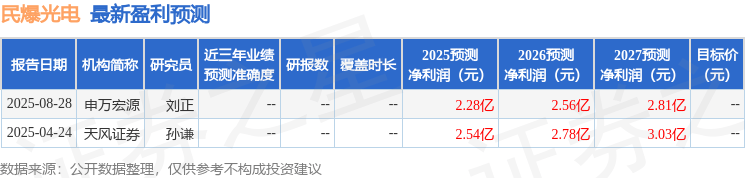
民爆光电(301362) - 301362民爆光电投资者关系管理信息20251120
2025-11-20 09:26
Market Overview - The global LED lighting market is expected to reach $82.042 billion by 2026, with China being the largest producer and exporter of LED lighting products [1] - The "dual carbon" goals are accelerating the upgrade of lighting products, integrating smart technology and IoT [1] Strategic Development - The company aims to expand in commercial lighting, strengthen industrial lighting, and specialize in niche lighting [2] - Key strategies include increasing R&D investment, enhancing market expansion in regions like Europe, Oceania, Asia-Pacific, and the Middle East, and improving internal supply chain management [2] Special Lighting Segment - Special lighting has seen a growth rate of 50% in the first three quarters of 2025, with revenue share increasing from 4.72% to 7.10% year-on-year [4] - The company focuses on four special lighting sectors: plant lighting, emergency lighting, medical beauty lighting, and explosion-proof lighting, with a revenue target of $100-150 million for each sector in the next 2-3 years [5] Impact of Tariffs - Products exported to the U.S. account for approximately 7% of total revenue, indicating minimal impact from U.S. tariffs [7] - The company plans to mitigate potential trade friction by establishing a new factory in Vietnam, set to be operational by August 2026, with an expected output value of 500 million yuan [2][7] M&A Plans - The company considers both organic growth and strategic acquisitions as important avenues for expansion, with plans to disclose significant developments as they arise [3]
让绿电更稳的“定心丸”
Ren Min Wang· 2025-11-20 08:52
Group 1 - The rapid growth of installed capacity for renewable energy sources such as wind and solar power is driven by the "dual carbon" goals [3] - The intermittent and volatile nature of clean energy poses significant challenges to the stability and integration of power grids [3] - A groundbreaking technology is being implemented at the world's first 50MW/100MWh intelligent string-type grid-connected energy storage power station in Golmud, Qinghai, which aims to stabilize fluctuating green electricity [3]
海上风电现代产业链联盟成立
Jing Ji Ri Bao· 2025-11-20 08:44
Core Insights - The development of offshore wind power in China has transitioned from "nearshore following" to "deep-sea leading," achieving significant breakthroughs during the 14th Five-Year Plan period [1] - The establishment of the Offshore Wind Power Modern Industrial Chain Alliance aims to address common challenges such as technological bottlenecks and supply chain risks through collaborative innovation [1][2] Industry Development - The offshore wind power industry is crucial for ensuring energy security and optimizing energy structure, serving as a key driver for marine productivity and international competitiveness [2] - The global offshore wind energy resource is estimated to exceed 710 billion kilowatts, with nearly 200 countries setting wind power development policies [2] - China's offshore wind power capacity reached 44.61 million kilowatts by the end of September 2023, maintaining the world's largest installed capacity [4] Economic Impact - If half of China's offshore wind energy resources are developed, it could generate 4 trillion kilowatt-hours annually, meeting 40% of the national electricity consumption in 2024 [3] - The offshore wind power sector is expected to drive an investment of approximately 2.6 trillion yuan by 2030, contributing over 15 trillion yuan to the industrial chain's total output value [6] Technological Advancements - The average capacity of offshore wind turbines has increased significantly from 3 megawatts to 20 megawatts over the past decade, aligning with European standards [4] - The levelized cost of electricity (LCOE) for offshore wind power in China is projected to drop to 0.056 USD/kWh by the end of 2024, reflecting a 22% decrease from 2023 [5] Collaborative Innovation - The industry is shifting towards multi-energy integration and collaborative development, with new models such as "wind power + green hydrogen" and "offshore energy islands" emerging [5] - The 2025 Offshore Wind Power Modern Industrial Chain Alliance Action Conference released a technology breakthrough list focusing on large-capacity wind turbines and flexible DC transmission systems [7][8]
中国电力设备“十四五”影响力十大成果等发布
Ke Ji Ri Bao· 2025-11-20 06:05
Core Insights - The 27th China High-Tech Fair showcased the top ten influential achievements in China's power equipment during the 14th Five-Year Plan and the ten development trends for the 15th Five-Year Plan, highlighting the industry's advancements in core technology autonomy, green low-carbon transformation, and intelligent upgrades [1][2]. Group 1: Top Ten Influential Achievements - The ten influential achievements in China's power equipment during the 14th Five-Year Plan include: 1. Domestic nuclear power generation technology and equipment 2. 300MW class F-level heavy gas turbine technology and equipment 3. One million kilowatt hydropower generator technology and equipment 4. UHV transmission engineering technology and equipment 5. Domestic power-specific chip technology and applications 6. 500,000 tons/year coal-fired power plant carbon capture technology and devices 7. The world's largest 26MW offshore wind turbine equipment 8. Fully domestic distributed control system achieving series application 9. Record-breaking hybrid back-contact crystalline silicon solar cells 10. Perfluoroisobutylene technology and equipment replacing sulfur hexafluoride [1]. Group 2: Ten Development Trends for the 15th Five-Year Plan - The ten development trends for power equipment technology during the 15th Five-Year Plan include: 1. Deepening integration of power system coordination and source-grid-load-storage 2. Significant enhancement of power equipment and system regulation capabilities 3. Accelerated green low-carbon transformation of power equipment 4. Large-scale application of new energy equipment networking technology 5. Commercial breakthroughs in electro-hydrogen coupling equipment systems 6. Diversified development of new energy storage equipment technology 7. Engineering validation of nuclear fusion energy equipment technology 8. Demonstration application of quantum technology equipment in power systems 9. Breakthroughs in frontier disruptive equipment technology 10. Comprehensive improvement of the intelligence level of power equipment [2].