关税

Search documents
美联储官员古尔斯比:近期通胀数据显示关税影响可能减弱,这是最好的消息。
Sou Hu Cai Jing· 2026-01-15 13:47
美联储官员古尔斯比:近期通胀数据显示关税影响可能减弱,这是最好的消息。 来源:滚动播报 ...
美联储第一季度降息概率不大
21世纪经济报道· 2026-01-15 10:28
记者丨孙长忠(清华大学全球私募股权研究院研究员) 作为美联储密切关注的更基础的通胀指标,剔除住房后的超级核心通胀2025年12月环比增长 约0.3%,较前值放缓,同比增长约2.7%,比2025年11月略有上升(1年前约为4%),均处于 疫情以来最低区域,而剔除住房后的整个核心CPI仅增长0.1%,说明通胀回归2%目标的"最后 一公里"虽然漫长,但总体趋势仍在延续。 美联储的决策依据不是CPI,而是美国商务部公布的PCE通胀数据。住房在CPI篮子中权重占 比33%,在核心CPI中占比近40%,但在PCE中仅占15%,PCE通胀数据通常低于CPI数据,预 计2025年12月仍将如此,考虑到上述住房因素,可能幅度更大。2025年和2024年年初通胀均 有所反弹和顽固,主要由于许多企业年初调整价格,再加天气因素,下一步1、2月份通胀数 据需继续关注。 美国通胀在高关税环境中相对温和再次挑战了经济学理论。经济学基本逻辑认为,提高关税 会增加进口商品价格,通常会带来一次性的通胀上行,实际却更为复杂。美国关税冲击会增 加美国经济不确定性,削弱企业投资意愿和消费者信心,造成需求下降,价格自然面临下行 如果说2025年11月因 ...

2026年,全球经济向何处去?
Sou Hu Cai Jing· 2026-01-15 06:47
Group 1 - The core argument of the articles is that tariffs will continue to reshape the global economy in the coming years, with a notable impact on economic growth rates, which are projected to decline from 3.3% to 3.1% by 2026 according to the International Monetary Fund (IMF) [1][2] - Tariffs are seen as a significant factor contributing to the slowdown in global economic growth, despite the IMF stating that the impact of tariffs is less severe than initially expected [1][2] - Historical context is provided, highlighting that tariffs can lead to severe economic consequences, such as the Great Depression in the 1930s, which was exacerbated by protectionist policies [4][5][6] Group 2 - The articles discuss the lack of strong retaliatory measures from other countries against U.S. tariffs, which has prevented a repeat of the global economic collapse seen in the past [9][10] - Current trade agreements with countries like the UK, South Korea, and Japan have been established, but many nations still lack agreements with the U.S., indicating ongoing risks in global trade relations [11] - The articles emphasize that the uncertainty surrounding tariffs continues to pose challenges for businesses, affecting their planning and investment decisions, despite some resilience shown by companies [10][11] Group 3 - The impact of tariffs on oil prices is also mentioned, with Goldman Sachs predicting an 8% decline in Brent crude oil prices to $56 per barrel due to strong production from the U.S. and Russia [13] - The ongoing trade tensions between the U.S. and China are highlighted, with a continuous decline in trade volume between the two nations, driven by various issues including tariffs and supply chain concerns [13][14] - The significance of upcoming diplomatic engagements, such as Trump's planned visit to China, is noted, although the potential for substantial outcomes remains low [14][15]

美股再现关税利空!三大指数集体杀跌!
Zheng Quan Shi Bao Wang· 2026-01-15 02:09
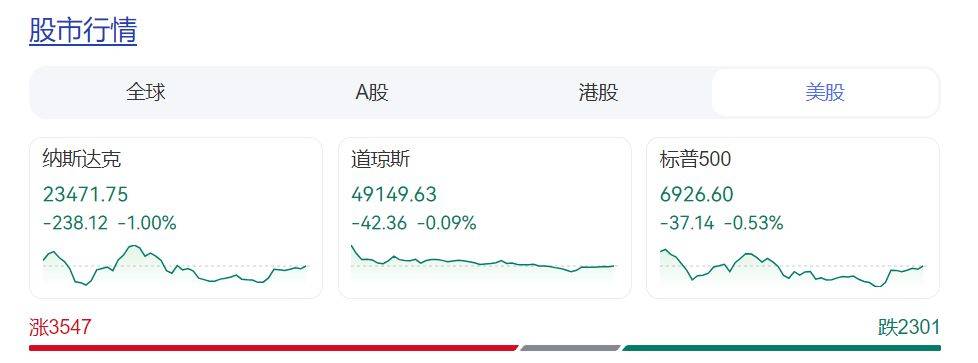
美东时间周三,美股三大指数连续第二个交易日下跌。截至收盘,道指跌0.09%报49149.63点,纳指跌1%报23471.75点,标普500指数 跌0.53%报6926.6点。 盘面上,大型科技股普跌,谷歌A跌0.04%,苹果跌0.42%,英伟达跌1.44%,特斯拉跌1.79%,微软跌2.4%,亚马逊跌2.45%,Meta跌 2.47%。 银行股全线走低,富国银行跌逾4%,花旗、美国银行跌超3%,摩根士丹利跌逾1%,摩根大通跌近1%,高盛跌0.58%。 航空股普跌,波音跌0.81%,美国航空、达美航空、西南航空跌超1%,美联航跌逾3%。 芯片股涨跌不一,博通跌超4%,ARM、拉姆研究、迈威尔科技跌逾2%,英特尔涨逾3%,超威半导体涨逾1%。 能源股集体上涨,康菲石油涨逾4%,埃克森美孚、雪佛龙、斯伦贝谢、西方石油涨逾2%。 衡量美元对六种主要货币的美元指数当天在汇市尾市收于99.135,与前一交易日基本持平。 消息面上,据新华社消息,美国白宫14日宣布,从15日起对部分进口半导体、半导体制造设备和衍生品加征25%的进口从价关税。 据央视新闻,当地时间1月14日,美联储发布全国经济形势调查报告(也称"褐皮书")。 ...
美联储第一季度降息概率不大
2 1 Shi Ji Jing Ji Bao Dao· 2026-01-14 22:34
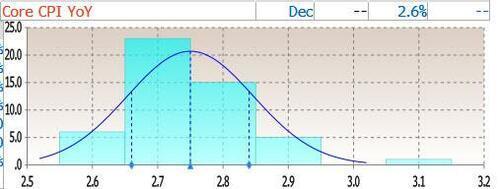
孙长忠(清华大学全球私募股权研究院研究员) 美国劳工部1月13日公布数据显示:2025年12月美国CPI环比增长0.3%,为去年7月以来最小增幅,同比增长2.7%,为去年5月以来最低 值,均持平上月和预期;剔除波动较大的食品和能源类别后的核心CPI环比增长0.2%,同比增长2.6%,持平2025年11月,为2021年3月以来 最低,环比、同比均低于预期。 如果说2025年11月因美国联邦政府关门,数据收集不完整可能导致部分失真,2025年12月则是完全恢复正常的第一个月,数据完整性、真 实性得到了经济学家的认可,说明美国通胀仍在缓慢下降,特别是从2025年9月开始持续至12月,即便剔除数据缺失的10月,也能体现出 下降的总体趋势。 美国2025年12月CPI降温主要来自核心商品价格环比零增长,其中又以核心商品中占比最大的新车(零增长)、二手车和卡车(后二者均有所 下降)这3项为主要因素,说明美国关税传导比预期明显温和,且似乎接近结束。核心服务价格上涨0.3%,与整个核心CPI持平,其中权重 最大的住房成本环比上涨0.4%,为4个月以来最大增幅,同比从前值3.0%升至3.2%,再次验证了住房通胀的黏性。该项在2 ...

美联储巴尔金:关税仍在造成一定的通胀压力
Xin Lang Cai Jing· 2026-01-13 23:04
Group 1 - The president of the Richmond Federal Reserve, Barkin, stated that businesses are still passing on price increases due to tariffs to consumers, indicating ongoing cost pressures that may lead to inflation over time [1][2] - Most businesses currently have more confidence in the scope of tariffs compared to a year ago, suggesting a shift in sentiment within the corporate sector [1] - Barkin expressed optimism about the recent Consumer Price Index (CPI) results, noting they were lower than expected, although he remains cautious about the reliability of any single report [2] Group 2 - The inflation rate is above the target, but there seems to be no accelerating trend in inflation, and while unemployment has risen, it is not out of control [2] - Countries with independent central banks tend to perform better economically, according to Barkin, highlighting the importance of central bank independence [2]
隔夜美股 | 风险资产走势分化 三大指数微跌 比特币突破9.5万美元关口
Zhi Tong Cai Jing· 2026-01-13 22:37
Economic Indicators - The U.S. December core Consumer Price Index (CPI) increased by 0.2% month-over-month and 2.6% year-over-year, both lower than market expectations by 0.1 percentage points, indicating a potential cooling of inflation [1] - The overall CPI figures met market expectations, suggesting that price increases are moving towards the Federal Reserve's 2% target, although levels remain elevated [1] - Housing costs, a key factor in inflation, rose by 0.4% month-over-month and 3.2% year-over-year, contributing significantly to the CPI increase [1] Stock Market Performance - The Dow Jones Industrial Average fell by 398.21 points, or 0.80%, closing at 49,191.99 points; the Nasdaq decreased by 24.03 points, or 0.10%, to 23,709.87 points; and the S&P 500 dropped by 13.56 points, or 0.19%, to 6,963.71 points [2] - Notable stock movements included Morgan Stanley (JPM) down over 4%, Intel (INTC) up 7.3%, and Google (GOOG) up 1% [2] Cryptocurrency Market - Bitcoin surged over 4.5%, surpassing the $95,000 mark, while Ethereum rose over 7% to $3,332.95 [3] - Related stocks such as MicroStrategy (MSTR) increased by over 6.6%, Coinbase (COIN) by 4%, and Robinhood (HOOD) by over 2.3% [3] Commodity Prices - Spot gold slightly decreased by 0.22%, priced at $4,586.62 [4] - Crude oil prices saw an increase, with light crude oil futures for February rising by $1.65 to $61.15 per barrel (up 2.77%) and Brent crude for March increasing by $1.60 to $65.47 per barrel (up 2.51%) [4] Government Actions - The U.S. government is seeking to seize more oil tankers related to Venezuelan oil trade, with recent actions including the seizure of five vessels [5] - The government has filed multiple civil forfeiture lawsuits to provide legal grounds for seizing oil cargo and vessels involved in the trade [5] Federal Reserve Insights - Federal Reserve official Musalem indicated that inflation risks are easing, suggesting no further rate cuts are necessary at this time [9] - He expressed optimism that inflation will trend towards the Fed's 2% target later this year, supported by recent inflation data [9] Corporate Developments - Boeing reported a total of 1,175 aircraft orders for 2025, surpassing Airbus's 1,000 orders, marking a recovery from a seven-year decline [10] - Boeing's deliveries totaled 600 aircraft for the year, with December alone accounting for 63 deliveries, the highest monthly total [10] - Meta Platforms is in discussions to double the production of Ray-Ban AI glasses to 20 million units by the end of 2026, with potential for further increases based on demand [11]

政府停摆扰动消退,美国核心通胀或回到2.7%,回升才刚开始?
Hua Er Jie Jian Wen· 2026-01-13 08:08
Core Insights - The upcoming CPI data is expected to show resilience in inflation trends, potentially marking the end of the previous slowdown in price growth [1][3] - The consensus forecast for December's overall CPI and core CPI is a year-over-year increase of 2.7%, with core CPI slightly accelerating from 2.6% [1][3] Inflation Data and Market Expectations - The sticky nature of inflation supports the Federal Reserve's decision to maintain interest rates in the short term, with a low probability of rate cuts in the near future [3][12] - Analysts suggest that the unexpected decline in November's inflation data was largely influenced by technical factors, and December's data will reflect the true price levels after these distortions are removed [3][9] Monthly Data Recovery - Key focus for December's CPI data is the recovery in month-over-month growth rates, with estimates for both overall and core inflation indices expected to rise to 0.3% from November's 0.2% [4][6] - Some economists predict that core inflation may show even stronger monthly performance, potentially reaching 0.4% [4][6] Statistical Biases from Government Shutdown - The potential strength in December's data is attributed to the reversal of the "shutdown effect," which previously hindered data collection [9][10] - Two significant statistical biases from the government shutdown are identified: dual-month sampling bias and holiday discount bias, which affected November's data [10][11] Sector-Specific Price Movements - Economists anticipate noticeable rebounds in prices for hotels, airfare, and clothing, with core goods and services inflation expected to accelerate [11] - However, some analysts predict only moderate increases in owner’s equivalent rent (OER), which could help control December's inflation figures [11] Future Inflation Pressures - Inflation pressures are shifting from service-related costs to tariff-related costs, with companies increasingly looking to pass on rising input costs to consumers [11][12] - Concerns about the potential impact of tariffs on inflation are highlighted, with expectations of price increases in early 2026 [12] Federal Reserve Policy and Independence Concerns - The Federal Reserve's monetary policy remains in a precarious state, with inflation consistently above the 2% target [13] - There are concerns regarding the independence of the Federal Reserve, particularly in light of recent legal actions against its chairman [13] Market Reaction Predictions - Predictions for the upcoming CPI data suggest varying impacts on the S&P 500 index based on core CPI month-over-month rates, with different probabilities assigned to potential market movements [14][15] - The foreign exchange market is closely monitoring the data, especially the USD/JPY currency pair, which typically reacts strongly to U.S. data releases [15][18]
1月13日金市早评:鲍威尔调查迷雾未散 黄金震荡蓄势迎CPI
Jin Tou Wang· 2026-01-13 06:04
Market Overview - The US dollar index is trading around 98.928, while spot gold opened at $4597.42 per ounce and is currently around $4594.97 per ounce. Gold T+D is trading at approximately 1026.30 CNY per gram, and the Shanghai gold main contract is at about 1028.86 CNY per gram [1] - On the previous trading day, the US dollar index fell by 0.16% to 98.896, while spot gold rose by 1.97% to $4597.94 per ounce. Other precious metals also saw gains: spot silver increased by 6.51% to $85.16 per ounce, platinum rose by 3.03% to $2337.30 per ounce, and palladium gained 1.80% to $1851.00 per ounce [1] Inventory Data - As of January 12, COMEX gold inventory remains unchanged at 1129.43 tons, while COMEX silver inventory decreased by 70.15 tons to 13607.32 tons [2] - SPDR gold ETF holdings increased by 6.24 tons to 1070.80 tons, and SLV silver ETF holdings rose by 39.47 tons to 16347.95 tons on the same date [2] - The payment direction for deferred compensation fees indicates that for Au(t+d), shorts pay longs, and for Ag(t+d), shorts also pay longs [2] Economic Events - Key economic data to be released includes Japan's trade balance for November, the US NFIB small business optimism index for December, and various CPI metrics for December, including the unadjusted and seasonally adjusted core CPI [4] - The Federal Reserve's Musalem is scheduled to speak, and the EIA will release its monthly short-term energy outlook report [5]
台积电在美国,再建5座晶圆厂
半导体行业观察· 2026-01-13 01:34
Core Viewpoint - The Trump administration is finalizing a trade agreement with Taiwan that aims to reduce tariffs on Taiwanese exports and encourage significant investments from Taiwan's largest chip manufacturer, TSMC, in the U.S. [1][2] Group 1: Trade Agreement Details - The agreement is expected to lower U.S. tariffs on Taiwanese goods to 15%, aligning with the tariff rates agreed upon with Japan and South Korea [1]. - TSMC has committed to building at least five additional semiconductor factories in Arizona, effectively doubling its presence in the state [1][2]. - The negotiations have been ongoing for several months and are currently undergoing legal review, with an announcement anticipated this month [1]. Group 2: TSMC's Investment Plans - TSMC has already established one factory in Arizona since 2020, with a second factory under construction set to begin operations in 2028, and plans for four more factories in the coming years [2]. - The total investment by TSMC in the U.S. is projected to reach $165 billion, including a previously announced $100 billion investment [5][6]. Group 3: U.S.-Taiwan Trade Relations - The trade negotiations have faced challenges, particularly regarding tariff disputes, with Taiwan's products currently subject to a 20% tariff on imports to the U.S. [2][3]. - The U.S. government has exempted semiconductors and many electronic products from tariffs under national security provisions [2][3]. - Taiwan's government has reached a broad consensus on the trade agreement, which includes tariff reductions and favorable treatment under Section 232 of U.S. trade law [3].