
GDP

Search documents
中美GDP差了10万亿,中国不如美国?别急着下结论,关键还要看它
Sou Hu Cai Jing· 2025-12-22 11:08
Group 1 - The GDP gap between China and the US has widened from $6.4 trillion in 2023 to approximately $10.8 trillion, with the US aiming for $29.5 trillion and China at $18.7 trillion [1][3] - The apparent GDP difference is attributed to currency exchange rates rather than actual production, as China's real production activities are growing at a rate of 4.8%, while the US is at 2.0% [5][7] - The US economy is heavily indebted, with a national debt of $37.8 trillion, leading to over $1 trillion spent annually just on interest payments, which exceeds their military spending [8][11] Group 2 - China's GDP of $18.7 trillion is based on tangible production, with significant outputs in various sectors, contrasting with the US's inflated figures due to financial services and debt [13][19] - Purchasing Power Parity (PPP) indicates that by 2025, China's economy could reach $40.72 trillion, surpassing the US's $30.51 trillion, highlighting the efficiency of resource utilization in China [15][17] - China's agricultural production exceeds that of the US by approximately 10% for total grain output and 19 times for vegetable production, indicating a strong foundational economy [21][22] Group 3 - The structural differences between the US's "virtual" economy and China's "real" economy may not be apparent during stable times but could become critical during global supply chain disruptions or geopolitical tensions [24][26] - The US is attempting to bring back manufacturing and is aware of its economic vulnerabilities, while China has a robust global trade network that enhances its resilience [27][29] - China's advancements in sectors like new energy vehicles and high-end equipment manufacturing signify a shift from follower to leader in these industries, contributing to real productivity gains [31][32]


今年,我国GDP能达到20万亿美元吗?
Sou Hu Cai Jing· 2025-12-20 12:40
年关将近,又有网友询问南生:2025年的中国GDP能达到20万亿美元吗? 最近两个月来,CPI走势略有好转,叠加之前的基数影响,不难推算:2025年全年的中国经济实际增长率为5%左右,名义增长率在3.95%至4%区间。 从而得知:我国2025年的GDP大约为140.3万亿元左右,按平均汇率换算成美元为19.64万亿,达不到20万亿美元。 南生给出的结论是达不到,无法完成了,并预测我国GDP将扩大至140.3万亿元人民币左右,按年度平均汇率折算成美元在19.64万亿左右。 理由如下: 截止到2025年12月19日,我国人民币与美元的平均汇率为7.1463,也就是平均接近7.15元人民币才能兑换1美元。 后面只有8个工作日了,不会对年度平均汇率产生过大的影响,我们按当前走势推算:人民币在2025年与美元的日均中间价平均汇率大约为7.1433。 再看各季度的GDP走势:第一季度,我国名义GDP为318758亿元人民币,与上年同期的304761.8亿元相比,名义增长4.6%,实际上涨5.4%,通缩依然存在。 第二季度,我国GDP按现价计算为341777.8亿元,上年同期为328837.6亿元,名义增长率接近4%,实际 ...
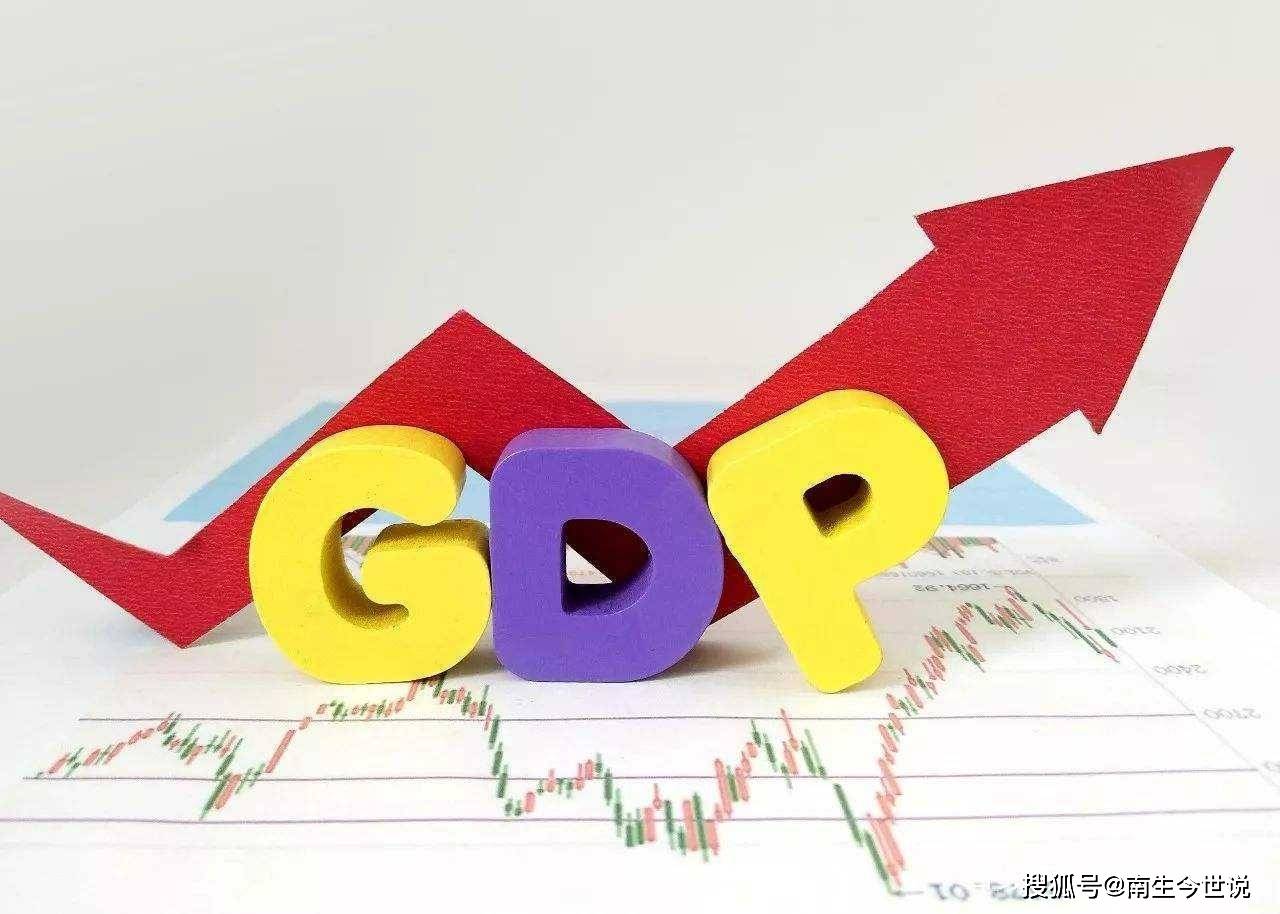
中美GDP差了11万亿,中国不如美国?别急着下结论,关键还要看它
Sou Hu Cai Jing· 2025-12-20 11:48
其实,单纯以美元汇率换算的GDP衡量国力,就像只看包装不看内核,忽略了一个关键指标,恰恰是它,能让所谓的"差距"瞬间反转。这个核心指标是什 么?它又如何改写我们对中美真实国力的认知? 要读懂中美GDP差距的本质,首先要搞清楚一个关键前提:汇率换算的GDP,受货币波动影响极大,不能直接等同于真实国力。 从经济增速来看,美国年均增速约2%,中国则保持在4%左右,理论上中国应持续缩小与美国的差距,但为何实际数据反而反向扩大? 今天来给大家聊一下中美GDP之间的差距。有一组数据引发广泛讨论:中美GDP差距从2023年的9.4万亿美元,扩大到如今的11万亿美元。 按汇率换算,中国GDP约18万亿美元,美国则在28-29万亿美元区间,表面看两国差距正在拉大。 其实原因并非中国国力衰退,而是人民币汇率波动与经济结构调整的阶段性影响。近年来,中国正处于经济转型期,部分传统产业投资出现阶段性调整,消 费市场也面临短期承压。 这是否意味着中国国力增长放缓,甚至未来会被美国进一步拉开距离?不少人据此产生焦虑,但事实真的如此吗? 与此同时,中国出口贸易始终保持强劲势头,积累了大量外汇储备,但国内投资信心的恢复需要时间,这一过程中人民 ...

2026 Market Outlook: The Year Of Real Assets As AI Hype Reaches Peak
Seeking Alpha· 2025-12-19 14:34
Core Viewpoint - The S&P 500 is expected to experience growth in the upcoming year due to a combination of slowing inflation, a more dovish Federal Reserve chair, and continued positive U.S. GDP growth, despite a decline in enthusiasm surrounding AI [1] Group 1: Market Dynamics - The equity market serves as a powerful mechanism for wealth creation or destruction over the long term through daily price fluctuations [1] - The current market conditions are favorable for growth, driven by macroeconomic factors [1] Group 2: Investment Focus - Pacifica Yield aims to focus on long-term wealth creation by targeting undervalued high-growth companies, high-dividend stocks, REITs, and green energy firms [1]

CPI data provided 'downwardly biased view of inflation,' says EY-Parthenon's Daco
Youtube· 2025-12-18 18:49
Let's bring in Greg Do. That's a good idea. >> He thinks this report wasn't just noisy and full of gaps, but that it shows a downwardly biased view of inflation.Greg, am I saying that correctly. What do you see here that jumps out to you. >> Yeah, that's absolutely right, Kelly.And I think Steve put it well. Uh, it was full of gaps for sure. It was very noisy.It was messy, but there was a downward bias. And this downward bias to clarify what Steve was mentioning is due to the BLS methodology when it comes t ...

X @Anthony Pompliano 🌪
Anthony Pompliano 🌪· 2025-12-18 16:55
The "smart money" predicted inflation was going to increase last month.Instead inflation went down.It is time for the Fed to cut larger, GDP to grow faster, and asset prices to go higher. https://t.co/o42CmFmTZn ...
Fed official forecasts bold path for interest rates, GDP in 2026
Yahoo Finance· 2025-12-16 14:33
Core Viewpoint - The U.S. economy is expected to show resilience and potential growth in 2026, despite uncertainties in the labor market and inflation [3][4]. Economic Outlook - New York Fed President John C. Williams anticipates fewer economic fluctuations in the upcoming year, emphasizing the balance between price stability and low unemployment [4][5]. - The Federal Open Market Committee (FOMC) recently cut the benchmark Federal Funds Rate to a target range of approximately 3.50%–3.75%, marking the third quarter-percentage-point cut of the year [6][7]. Labor Market Insights - The labor market is showing signs of cooling, with job growth described as anemic and the unemployment rate steadily increasing [11]. - Williams noted that labor demand is softening more than supply, raising concerns about the overall health of the job market [11]. Monetary Policy Considerations - The FOMC's cautious approach to monetary policy has been influenced by tariff inflation and trade policy, leading to a "wait-and-see" strategy before implementing rate cuts [12]. - The recent interest rate cuts are aimed at supporting hiring while managing inflation risks, highlighting the delicate balance policymakers must maintain [10].
New York Fed President John Williams: Monetary policy well positioned as we head into 2026
Youtube· 2025-12-15 15:59
Getting some breaking news out of the Fed this morning. We'll turn to Steve Leeman with that who's also got a piece on the wires. Now, Steve, that's [music] uh pretty interesting.We'll get you the Williams headlines first, though. >> Yeah. John Williams, New York, Fed President, saying monetary policy is well positioned as we head into 2026.That is language the Fed chair used at the meeting recently that people took to say the Fed was on hold, but not entirely clear. This is where Williams is headed. He say ...

X @Elon Musk
Elon Musk· 2025-12-14 22:57
YupJesse Peltan (@JessePeltan):Exports are only 20% of China's GDP.The U.S. is 15% of that (3%).The Chinese domestic market is way bigger than people realize. https://t.co/r4Usfo6rL7 ...
Apple Is Richer Than All but 4 Countries
Yahoo Finance· 2025-12-14 16:45
Core Insights - Apple's market capitalization reached $4.01 trillion as of November 21, 2025, making it wealthier than the economic output of nearly every country on Earth, with only four national economies exceeding its value [1][4] Comparison with National Economies - The United States has a nominal GDP of approximately $27.94 trillion, more than seven times Apple's market cap [3] - China's economy measured $18.80 trillion in 2024, roughly four times Apple's current market value [3] - Germany's nominal GDP in 2024 is approximately $5 trillion, narrowly exceeding Apple's valuation [4] - Japan's nominal GDP is around $4.28 trillion, just slightly above Apple's market cap [4] - Apple's market value exceeds the entire economic outputs of approximately 186 other nations [4] Market Capitalization vs. GDP - Market capitalization reflects investor willingness to pay for ownership shares based on future earnings expectations, while GDP measures the total value of goods and services produced annually by a country [5] - Despite the differences, Apple's valuation indicates significant revenue, profit, and investor confidence, surpassing the economic production of countries like France, India, the United Kingdom, Italy, Brazil, Canada, and Russia [6] Other Tech Giants - Nvidia currently holds the world's largest market cap at approximately $5.03 trillion, exceeding even Japan and Germany [7] - Microsoft traded around $3.84 trillion in early November and briefly hit $4 trillion [7] - The combined market capitalization of Nvidia, Apple, and Microsoft totals roughly $12 trillion, exceeding the GDP of every country except the United States and China [8]


