普惠金融

Search documents
消费金融“三国杀”:平安普惠,如何在巨头环伺中突围求生?
Sou Hu Cai Jing· 2025-09-05 14:03
Core Viewpoint - Ping An Puhui, a leading player in China's consumer finance and small and micro enterprise loan sector, has achieved rapid expansion through a high-risk, high-interest business model, but faces significant challenges related to compliance and public perception [3][4][5] Group 1: Business Performance and Market Position - Ping An Puhui has expanded its operations to over 300 cities in China, serving more than 11 million customers and facilitating loan disbursements exceeding 100 billion yuan [3] - The company has been criticized for its aggressive collection practices and high fees, leading to a significant number of complaints on platforms like Black Cat Complaints, with a total of 45,862 complaints as of September 3, 2025 [4][5] - The average annual interest rate for customers has reportedly reached as high as 35.89%, exceeding legal limits due to additional fees [4] Group 2: Competitive Landscape - The consumer finance market is increasingly competitive, with banks, licensed consumer finance companies, and technology platforms vying for market share, creating a "three-way battle" [6] - Traditional banks are leveraging low-cost funding and advanced technology to capture market share, exemplified by WeBank's loan and advance total of 435.976 billion yuan in 2024, a 5.18% increase year-on-year [6] - Companies like Mashang Consumer Finance are gaining traction with strong revenue growth, reporting 8.734 billion yuan in revenue for the first half of 2025, a 12.96% increase [7] Group 3: Regulatory Environment - The regulatory environment for consumer finance is tightening, with seven licensed institutions fined a total of 8.327 million yuan in 2025 for violations, indicating a zero-tolerance approach to non-compliance [9] - Ping An Puhui must adapt to this new regulatory landscape, where even minor violations could have severe consequences [10] Group 4: Strategic Recommendations - The company needs to focus on compliance and technology as essential survival strategies, optimizing risk control models and improving operational efficiency [10][11] - A shift towards quality and efficiency over sheer scale is necessary, with a focus on serving clients with stable cash flows and good credit histories [12] - Emphasizing technology in risk management, such as AI for fraud detection and customer service improvements, is crucial for future success [13]


IIGF专刊 | 绿色债券半年刊
Sou Hu Cai Jing· 2025-09-05 13:57
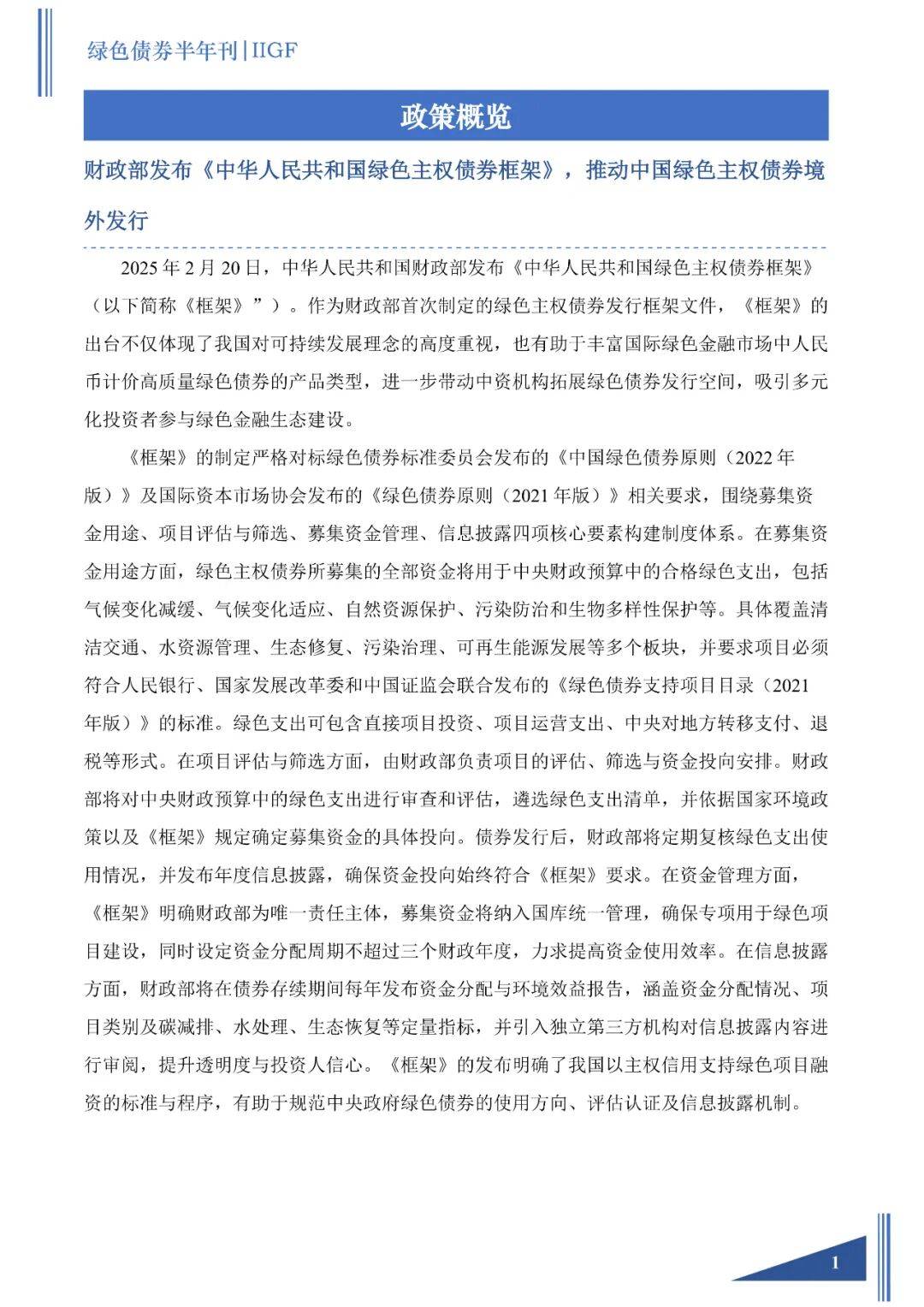
Policy Overview - The Ministry of Finance of China released the "Green Sovereign Bond Framework," promoting the issuance of green sovereign bonds in overseas markets, reflecting the country's commitment to sustainable development and enhancing the diversity of high-quality green bond products in the international market [3][4]. Green Bond Market Update - In the first half of 2025, China saw the issuance of 251 new green bonds, with a total issuance scale of approximately 4749.87 billion yuan, marking a 25.5% increase in the number of bonds and an 89.5% increase in issuance scale compared to the same period in 2024 [8][9]. - The structure of green bonds showed significant growth in financial bonds (+330%), medium-term notes (+53%), and short-term debt financing tools (+126%), indicating strong demand for long-term green infrastructure financing [9][10]. Transition Bonds - A total of 43 transition bonds were issued in the first half of 2025, with a new issuance scale of approximately 289.50 billion yuan, reflecting a 0.49% increase in the number of bonds but a 25.4% decrease in issuance scale compared to the previous year [37][42]. Case Studies - The first issuance of RMB green sovereign bonds by the Ministry of Finance in London amounted to 6 billion yuan, with a dual structure of 3-year and 5-year bonds, showcasing strong international investor confidence with a subscription rate of 6.9 times [26][27]. - Huaneng Lancangjiang issued "twin green bonds," marking the first application of the "Li Sheng Green Bond" model in the domestic interbank market, which aims to quantify the market performance differences between green and non-green bonds [30][31]. Sustainable Development Linked Bonds - In the first half of 2025, 27 sustainable development linked bonds were issued, with a total scale of 176.00 billion yuan, focusing on various key performance indicators related to energy efficiency and renewable energy development [45]. - The issuance of low-carbon transition linked corporate bonds totaled 13, with a scale of approximately 73.50 billion yuan, primarily concentrated in the power and energy sectors [46]. Issuer Information - State-owned enterprises dominated the green bond issuance in the first half of 2025, accounting for 86.85% of the number of bonds and 82.06% of the issuance scale, indicating a stable market foundation but highlighting the need for policy support to enhance participation from private enterprises [17][19].
券商做好金融“五篇大文章”评价办法来了,科技金融赋分最高
Bei Jing Shang Bao· 2025-09-05 13:29
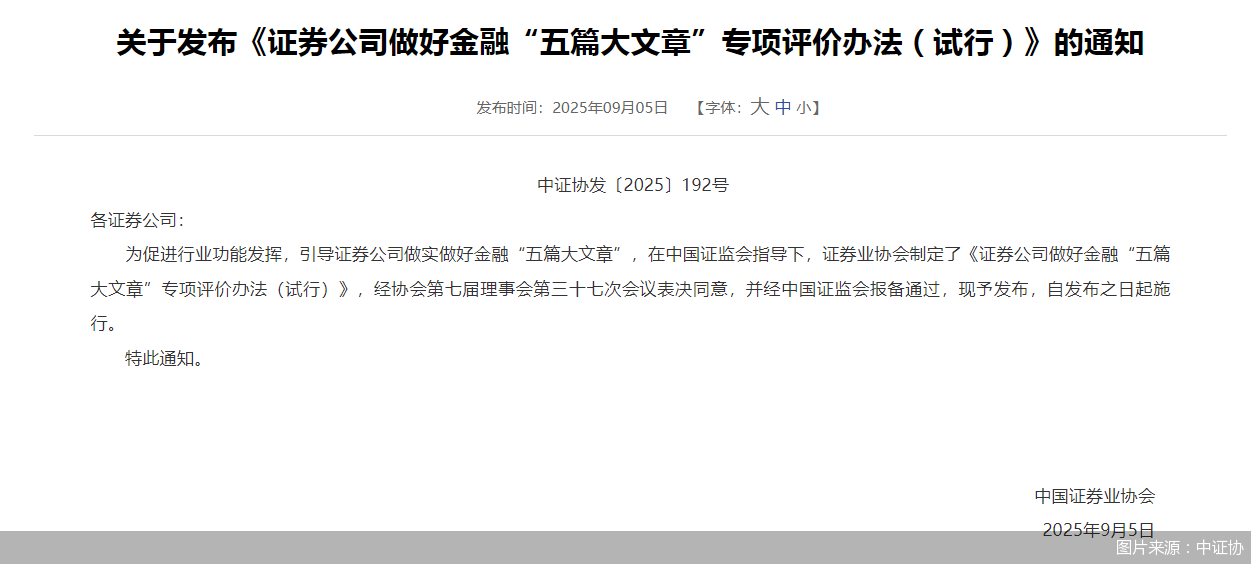
Core Viewpoint - The China Securities Association has released a new evaluation method for securities companies to enhance their contributions to the financial sector, focusing on five key areas of finance [2][3] Group 1: Evaluation Framework - The evaluation method consists of 25 articles divided into four chapters: general principles, evaluation indicators and scoring methods, implementation and results application, and appendices [2] - The evaluation indicators include both quantitative and qualitative measures, reflecting the company's contributions and capabilities in key financial areas [2] Group 2: Quantitative Indicators - Quantitative indicators cover various aspects such as technology finance, green finance, inclusive finance, pension finance, and digital finance, with specific metrics for each category [2][3] - For technology finance, metrics include the amount and number of technology innovation bond underwriting, equity financing for tech companies, and direct investments in non-listed tech firms [2] - Green finance metrics focus on the underwriting amounts and numbers of green bonds and low-carbon transition bonds [2] - Inclusive finance metrics include amounts and numbers related to bonds supporting small and micro enterprises and private enterprise bonds [2] - Pension finance metrics involve the scale of personal pension product sales, while digital finance metrics assess the maturity of digital capabilities and awards in securities technology [2] Group 3: Qualitative Indicators - Qualitative indicators assess the establishment of mechanisms, including whether the financial "five articles" are integrated into the company's strategic development and the existence of a specialized organizational structure [3] - Continuous investment in business resources is evaluated through the comprehensive growth rate of investments supporting the financial "five articles" [3] - Additional indicators reflect the company's functional roles and adherence to annual policy priorities [3] Group 4: Scoring Methodology - The scoring system emphasizes practical relevance, with a higher score allocation for technology finance (50 points) and lower for other areas (10 points each for green, inclusive, pension, and digital finance) [3] - The scoring method includes both monetary and numerical standards to balance the impact of absolute scale on evaluation results [3] - A basic score is set to encourage differentiated development among companies, considering the high concentration of business in the securities industry [3]
哈尔滨银行发布2025年中期业绩:深度服务实体经济 经营业绩再上新台阶
Zhong Guo Jin Rong Xin Xi Wang· 2025-09-05 12:46
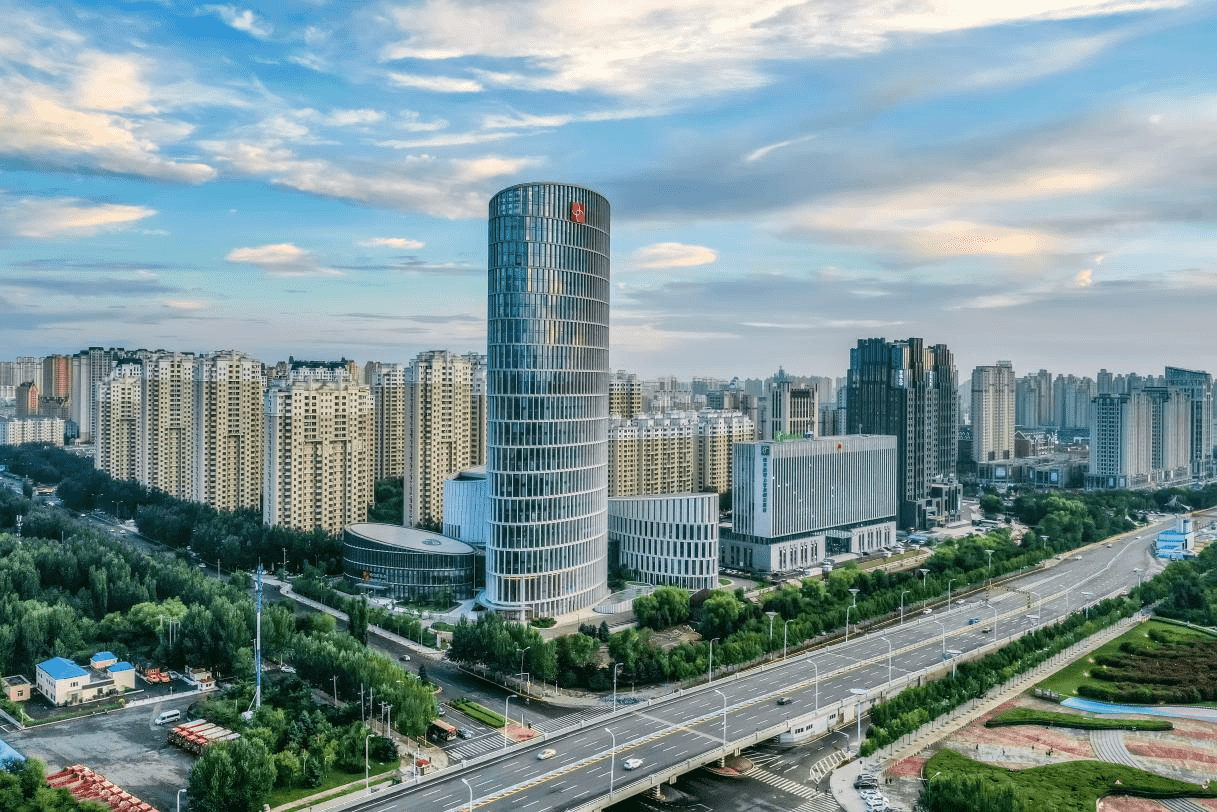
Core Viewpoint - Harbin Bank reported a stable growth in its mid-year performance for 2025, focusing on asset and liability restructuring, risk management, and deepening service to the real economy, achieving improvements in scale, quality, structure, and efficiency [2][4]. Financial Performance - As of June 30, 2025, the total assets of the group reached RMB 9,275.275 billion, an increase of RMB 112.956 billion, or 1.23% from the end of the previous year [2]. - Total customer loans and advances amounted to RMB 3,975.663 billion, up RMB 184.724 billion, or 4.87% [2]. - Total customer deposits were RMB 6,950.559 billion, with a slight increase of RMB 13.765 billion, or 0.20% [2]. - The group achieved operating income of RMB 73.855 billion, a year-on-year increase of 2.59% [2]. - Net profit reached RMB 9.921 billion, up RMB 1.462 billion, or 17.28% year-on-year [2]. - Return on average total assets was 0.22%, up 0.02 percentage points year-on-year [2]. - Return on average equity was 2.07%, an increase of 0.57 percentage points year-on-year [2]. Asset Quality - The non-performing loan balance was RMB 112.697 billion, with a non-performing loan ratio of 2.83%, down 0.01 percentage points from the end of the previous year [3]. - The provision coverage ratio was 209.95%, up 7.36 percentage points [3]. - The loan impairment loss provision ratio was 5.95%, an increase of 0.20 percentage points [3]. Support for Real Economy - The group emphasized financial support for the real economy, focusing on sectors such as technology finance, green finance, and inclusive finance [4]. - Company loans totaled RMB 2,332.248 billion, representing 58.7% of total loans, with an increase of RMB 278.198 billion [4]. Inclusive Finance Initiatives - The group launched a new digital retail credit product "Qian Dao Jia," enhancing online management and digital operations for small and micro enterprises [5]. - Inclusive finance loans for small and micro enterprises reached RMB 169.18 billion, up RMB 16.2 billion year-on-year, with a balance of RMB 411.98 billion, growing at 11.72% [5]. Retail Banking Development - Retail deposits totaled RMB 5,099.701 billion, an increase of RMB 99.931 billion, or 2.0% [7]. - The group maintained a 19.58% market share in retail deposits in Harbin, ranking first in the local market [7]. Cross-Border Business Growth - The group established partnerships with over a hundred financial institutions in 13 Belt and Road countries, promoting cross-border RMB payment services [10]. - Cross-border settlement business volume saw significant growth, enhancing the quality of cross-border financial services [10]. Digital Transformation - The group is advancing its "Digital Harbin Bank" initiative, focusing on enhancing operational security and technology-driven capabilities [12]. - The group is committed to optimizing its international settlement systems and improving efficiency in cross-border financial services [11].
邮储银行2025中报:营收净利双增 中收双位数增长 剑指均衡增长新周期
和讯· 2025-09-05 10:26
Core Viewpoint - Postal Savings Bank of China (PSBC) demonstrates resilience and potential for transformation, achieving positive growth in key financial metrics despite industry challenges, supported by a unique business model and strategic focus on retail and county-level finance [1][2]. Financial Performance - In the first half of 2025, PSBC reported operating income of 179.4 billion yuan, a year-on-year increase of 1.5%, and net profit of 49.4 billion yuan, up 1.08% [1]. - Total assets and liabilities surpassed 18 trillion yuan and 17 trillion yuan, respectively, indicating continued scale growth [1]. Asset and Liability Management - PSBC has improved its asset-liability management, achieving a net interest margin of 1.7%, positioning it among the industry leaders [3][5]. - The bank's loan portfolio increased by 623 billion yuan, with a notable rise in corporate loans by 14.83% year-on-year [3][4]. - The bank's non-performing loan ratio stood at 0.92%, reflecting strong asset quality management [5]. Strategic Initiatives - PSBC is focused on five strategic areas, including inclusive finance, technology finance, green finance, pension finance, and digital finance, to drive diversified growth [6][7][8]. - The bank's agricultural loan balance reached 2.44 trillion yuan, and small and micro enterprise loans totaled 1.72 trillion yuan, leading in coverage among state-owned banks [6]. - In technology finance, PSBC has served over 100,000 tech enterprises, with a loan balance exceeding 930 billion yuan [7]. Market Response - Following the release of its mid-year report, PSBC's A-share price showed a recovery, with multiple leading brokerages issuing positive ratings [1][2]. - The bank has attracted significant interest from insurance capital, with Ping An Life increasing its stake in PSBC's H-shares, totaling over 10 billion Hong Kong dollars [1].


什么是民营银行?苏商银行是民营银行吗?
Sou Hu Cai Jing· 2025-09-05 09:49
Core Viewpoint - SuShang Bank is not only a private bank but also the first private bank in Jiangsu Province and the 13th nationwide, established in June 2017 and officially renamed in March 2024, with a focus on providing diverse financial services to meet market demands [2][3]. Group 1: Company Overview - SuShang Bank was established by seven local private enterprises in Jiangsu, including Suning.com and Sunrise Oriental, with a concentrated shareholding structure to effectively isolate risks [2]. - The bank's mission is to supplement the financial market ecosystem by providing more tailored financial services, characterized by private capital involvement [2]. Group 2: Business Model and Advantages - SuShang Bank demonstrates natural advantages of private banks, such as quick decision-making and responsiveness to market needs, focusing on micro-business finance and industrial chain finance to meet the urgent financing needs of small and micro enterprises [3]. - The bank invests over 300 million yuan annually in technology, viewing fintech as a core driver of business development, establishing an efficient digital service system that allows customers to conduct business from home [3]. - With a deep understanding of local private enterprises' operational challenges, SuShang Bank is committed to serving Jiangsu [3]. Group 3: Financial Performance - As of now, SuShang Bank's asset scale has exceeded 137.5 billion yuan, ranking third among 19 private banks in China, with over 66.8 million customers served and a net profit of 1.158 billion yuan in 2024, reflecting a year-on-year growth of 10.23% [3]. - The bank's development over the past eight years exemplifies the vitality of private banks in addressing financing difficulties for small and micro enterprises through differentiated services and technology empowerment [3]. Group 4: Future Outlook - SuShang Bank remains committed to its "six unchanged" promises, including maintaining its inclusive positioning and core business, while striving to become a specialized digital bank with the most fintech applications in the Yangtze River Delta [4]. - The bank aims to continuously inject financial vitality into the private economy, demonstrating the important role of private banks in the financial system [4].

1.6亿元真金白银砸向自家银行!成都银行实控人“抄底”信号强烈,半年报业绩也亮了
Jing Ji Guan Cha Wang· 2025-09-05 09:01
Core Viewpoint - Chengdu Bank's major shareholders, controlled by the Chengdu State-owned Assets Supervision and Administration Commission, have increased their stakes, reinforcing the bank's capital base and signaling confidence in its future development [1][2][4]. Shareholder Increase - Chengdu Industrial Capital Group and Chengdu Xintianyi Investment have cumulatively increased their holdings by 8,700.10 million yuan and 7,959.35 million yuan respectively, with total shares increased being 4,775,500 and 4,364,492 [1][2]. - The total amount of the increase exceeds 160 million yuan, further consolidating the control of Chengdu State-owned Assets over Chengdu Bank [2][3]. Financial Performance - Chengdu Bank reported total assets of 1,372.225 billion yuan, a year-on-year increase of 9.77%, with total deposits reaching 983.481 billion yuan, up 11.02% [4][5]. - The bank achieved an operating income of 12.270 billion yuan, a year-on-year increase of 5.91%, and a net profit attributable to shareholders of 6.617 billion yuan, up 7.29% [4][5]. Risk Management - Chengdu Bank maintains a low non-performing loan ratio of 0.66% and a high provision coverage ratio of 452.65%, indicating strong risk management practices [5][6]. Strategic Positioning - The increase in shareholding is seen as a reaffirmation of Chengdu Bank's role as a regional financial engine, with plans to deepen cooperation with local governments and enterprises [6][7]. - The bank aims to enhance its service capabilities in emerging sectors such as green finance and inclusive finance, while also exploring diversified profit models [6][7]. Long-term Outlook - Chengdu Bank is expected to leverage its financial strength and management capabilities to expand market share and enhance brand value, while actively participating in national strategic projects [7]. - The bank's development is crucial not only for its own growth but also for regional financial stability and high-quality economic development [7].

国金证券发布《2025年度“提质增效重回报”行动方案》
Zheng Quan Ri Bao Wang· 2025-09-05 06:14
Core Viewpoint - Guojin Securities has released its "Quality Improvement, Efficiency Enhancement, and Return to Shareholders" action plan for 2025, focusing on shareholder returns, supporting the real economy, and maintaining investor relations [1][2] Group 1: Shareholder Returns - In 2024, Guojin Securities distributed cash dividends of 443 million yuan, along with share buybacks, totaling 543 million yuan, which accounts for 32.50% of the annual net profit [1] - The company has revised its shareholder return plan for 2024-2026, aligning it with its industry position, development stage, and growth cycle, while considering dividend payout ratios and yields [1] Group 2: Financial Services and Innovations - In the field of technology finance, Guojin Securities provided full-chain investment banking services to 29 sci-tech enterprises in 2024 [2] - The company is actively supporting green finance initiatives, including the compilation of the "Guojin Beautiful China 50 Index" and the "Guojin Sustainable Development 100 Index," while improving its MSCI ESG rating [2] - Guojin Securities is enhancing support for small and micro enterprises through innovative inclusive finance products [2] Group 3: Investor Relations - The company has established an efficient communication matrix to address investor concerns through various channels, including the Shanghai Stock Exchange e-interaction platform and regular performance briefings [2] - In 2025, Guojin Securities plans to upgrade its communication system, utilizing new media platforms like WeChat and video accounts to enhance transparency and showcase its operational highlights and development philosophy [2]

农金机构如何助推畜禽养殖业健康发展
Jin Rong Shi Bao· 2025-09-05 05:01
Core Points - The Ministry of Agriculture and Rural Affairs has released the "Management Measures for the Filing of Livestock and Poultry Breeding Farms," effective from September 1, 2025, which aims to enhance the management and service of livestock breeding farms [1] - The filing system will help financial institutions better connect with farm owners, innovate financial products, and optimize credit structures to promote the healthy development of the livestock industry [1][2] Summary by Sections Filing Requirements - Farms breeding livestock listed in the "National Livestock Genetic Resources Directory" must file if they meet the scale standards set by the Ministry [2] - Filing includes essential information such as farm name, address, species, scale, and environmental facilities, with a requirement for dynamic updates to ensure accuracy [2] - Farms must have appropriate breeding conditions, veterinary staff, and complete biosecurity measures, along with traceable management records [2] Financial Support Opportunities - Many farm owners, especially those from poverty alleviation backgrounds, rely on livestock breeding for income, indicating a significant demand for financial support to expand operations [3] - Financial institutions can provide tailored financial services like working capital loans and fixed asset loans to meet the diverse funding needs of farm owners [3][4] Collaboration with Agricultural Departments - The Ministry will oversee the national filing management, while local agricultural departments will manage regional filings [4] - Financial institutions should collaborate closely with local agricultural departments to analyze and rate the creditworthiness of farm owners using big data [4] - Effective cooperation can lead to the development of specialized financial products, such as "special loans for pig farming," to better support the industry [4][5] Differentiated Financial Strategies - The new measures allow for differentiated management of farms based on size, enabling financial institutions to implement tailored credit strategies [5][6] - Small farms may require short-term loans for operational needs, while larger farms may seek long-term loans for infrastructure development [6] - The implementation of these measures can help reduce operational risks for farms, thereby alleviating credit risks for financial institutions [6][7] Overall Impact - The new measures provide a regulatory framework for the standardized development of the livestock industry and present new opportunities for rural financial institutions [7] - Financial institutions are encouraged to innovate products and services while implementing differentiated credit strategies to inject financial vitality into the livestock sector [7]
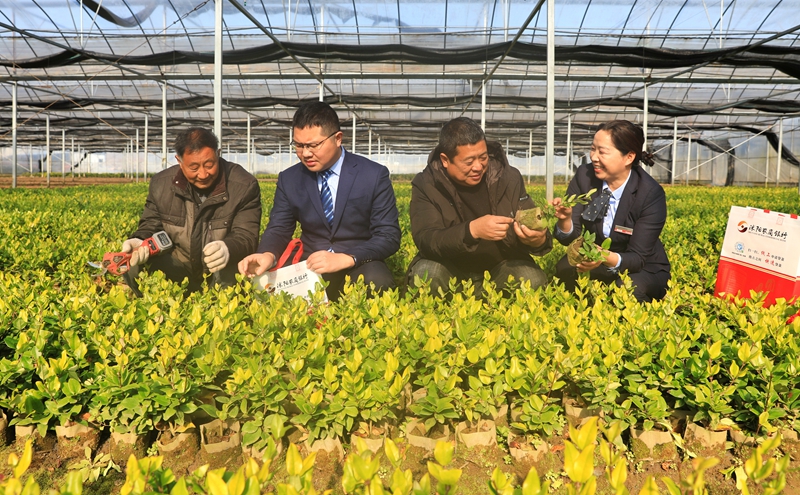
助力花木经济“点花成金”
Jin Rong Shi Bao· 2025-09-05 05:01
Core Insights - The flower industry in Shuyang County, particularly the rose cultivation in Xinhai Town, is thriving with a significant online and offline sales presence, attracting both tourists and e-commerce sales [1][3] - Shuyang County is recognized as a major flower production area in Jiangsu Province, with a total flower planting area of 600,000 acres and annual sales exceeding 20 billion yuan [3][4] Group 1: Industry Overview - The rose cultivation area in Yantou Village spans nearly 3,000 acres with over 200 varieties, showcasing a vibrant and diverse flower market [1][3] - The local flower industry employs approximately 300,000 people and has over 50,000 e-commerce businesses, contributing to the region's economic development [3][4] Group 2: Financial Support and Growth - Shuyang Rural Commercial Bank plays a crucial role in supporting the flower industry by offering specialized loan products tailored to the needs of flower growers, with a total loan balance of 2.812 billion yuan [4] - The bank's strategy focuses on providing efficient financial services that cater to the unique demands of the local flower industry, ensuring sustainable growth and development [4]