价值投资

Search documents
Ready Capital: Still Transitioning, With Potential Dividend Cuts
Seeking Alpha· 2025-08-11 20:13
Group 1 - The analysis focuses on value investing, emphasizing an owner's mindset and a long-term investment horizon [1] - The author does not engage in writing sell articles or recommending shorting stocks, indicating a preference for long positions [1] - The article expresses personal opinions and is not influenced by any business relationships with the companies mentioned [2] Group 2 - There is a clear disclaimer that past performance does not guarantee future results, highlighting the inherent uncertainties in investment [3] - The article does not provide specific investment recommendations or advice tailored to individual investors [3] - The authorship includes both professional and individual investors, suggesting a diverse range of perspectives [3]



理性看待低价股的投资价值
Bei Jing Shang Bao· 2025-08-11 16:45
Group 1 - The number of low-priced stocks in A-shares is currently below 40, marking a year-to-date low and a low point in recent years [1] - The decrease in low-priced stocks is directly related to the continuous recovery of the market, with a shift towards value investing and a focus on the performance of core assets [1][2] - Most low-priced stocks lack performance support, making their investment value weak, and they are often considered marginal assets in the market [1][2] Group 2 - Some low-priced stocks are fundamentally weak, facing risks of being delisted, which increases their investment risk [2] - Low-priced stocks have lower liquidity compared to mainstream investment options, leading to potential market pricing distortions and increased volatility [2] - The reduction in the number of low-priced stocks does not imply a general improvement in their investment value, as many have underperformed compared to the broader market [2] Group 3 - There are still investment opportunities within low-priced stocks, particularly those with strong fundamentals, such as certain bank stocks that have previously been low-priced but have since recovered [3] - The current A-share market is stabilizing, but individual stock performance is increasingly divergent, making it unlikely for low-priced stocks to become mainstream [3]
Are Investors Undervaluing Mitsubishi (MSBHF) Right Now?
ZACKS· 2025-08-11 14:41
While the proven Zacks Rank places an emphasis on earnings estimates and estimate revisions to find strong stocks, we also know that investors tend to develop their own individual strategies. With this in mind, we are always looking at value, growth, and momentum trends to discover great companies.Looking at the history of these trends, perhaps none is more beloved than value investing. This strategy simply looks to identify companies that are being undervalued by the broader market. Value investors use fun ...

【公募基金】申万菱信陈晨:求真务实,追求可持续回报——基金经理投资价值分析报告
华宝财富魔方· 2025-08-11 12:40
Core Viewpoint - The article emphasizes the investment strategy of Chen Chen, the fund manager of Shenwan Hongyuan Global New Energy (QDII) fund, focusing on real corporate growth as the core driver for investment decisions, rather than short-term market expectations [18][19]. Group 1: Fund Manager Information - Chen Chen has a master's degree and has been involved in finance since 2013, with experience at major banks and investment firms before joining Shenwan Hongyuan in September 2021 [3][6]. - The Shenwan Hongyuan Global New Energy fund aims for long-term stable asset appreciation by investing in global new energy-related companies while strictly controlling portfolio risks [7]. Group 2: Investment Methodology - Chen's investment approach is characterized by deep research and a focus on the real growth of companies, assessing fundamental factors such as financial health, governance, and industry trends [12][13]. - The investment strategy includes identifying companies with reliable business models and inherent growth capabilities, emphasizing cash flow generation and competitive advantages [14][16]. Group 3: Investment Value Analysis - The Shenwan Hongyuan Global New Energy fund is positioned as a differentiated investment option in the energy sector, with a broader definition of new energy themes compared to domestic peers, which often focus on lithium and photovoltaic sectors [5][19]. - The fund is suitable for long-term holding or as a quality supplement to value-based portfolios, emphasizing intrinsic value assessment and financial stability [5][19]. Group 4: Performance and Market Position - The fund has shown resilience during market fluctuations, with a maximum drawdown of only -11.32% in 2024, indicating a differentiated investment approach compared to similar QDII funds [9][10]. - Since its inception, the fund's performance has been average compared to peers, primarily due to its investment scope limitations amid the AI industry revolution [10].

每经热评|利欧股份拟携不超30亿元资金入市 上市公司投资需坚守三个原则
Mei Ri Jing Ji Xin Wen· 2025-08-11 12:37
Core Viewpoint - The announcement by Liao Co., Ltd. regarding the approval to invest up to 3 billion RMB in securities reflects an increasing market attractiveness and a gradual recovery of confidence among institutional and individual investors [1][2]. Group 1: Investment Principles - The company emphasizes the "main business first" principle, ensuring that funds are primarily allocated to core business needs to maintain long-term development [1][2]. - Building a professional investment team is crucial for successful investment decisions, as the complexity of the securities market requires high levels of expertise [2][3]. - Public companies must adhere strictly to legal boundaries during investment decisions to avoid regulatory penalties and protect shareholder interests [2][3]. Group 2: Risk Management - A balanced approach to risk and return is necessary, involving the establishment of a scientific risk-return assessment system and setting reasonable investment proportions based on risk tolerance [2][3]. - Companies should focus on long-term and value investment principles, avoiding speculative behaviors that could lead to unnecessary market volatility [3]. Group 3: Market Impact - The participation of listed companies in securities investment not only indicates enhanced market attractiveness but also injects vitality into the market, contributing to its stable development [3].

北京商报评论:理性看待低价股的投资价值
Bei Jing Shang Bao· 2025-08-11 11:15
Group 1 - The number of low-priced stocks in A-shares is currently below 40, marking a year-to-date low and a low point in recent years [1] - The decrease in low-priced stocks is directly related to the continuous recovery of the market, with a shift towards value investing [1][2] - Most low-priced stocks lack performance support, leading to weak investment value, and they are often considered marginal assets in the market [1][2] Group 2 - Some low-priced stocks are fundamentally weak, facing risks of delisting, which increases their investment risk [2] - Low-priced stocks have lower liquidity compared to mainstream investment options, making them more susceptible to price manipulation and extreme price drops during adverse events [2] - The reduction in the number of low-priced stocks does not imply a general increase in their investment value, as many have underperformed compared to the broader market [2][3] Group 3 - There are still investment opportunities within low-priced stocks, particularly those with strong fundamentals, such as certain bank stocks that have previously been undervalued [3] - The A-share market is becoming more stable, but the differentiation among individual stocks is increasing, making it unlikely for low-priced stocks to become mainstream [3]
【侃股】理性看待低价股的投资价值
Bei Jing Shang Bao· 2025-08-11 10:52
Group 1 - The number of low-priced stocks in A-shares is currently below 40, marking a year-to-date low and a low point in recent years [1] - The decrease in low-priced stocks is directly related to the continuous recovery of the market, with a shift towards value investing and a focus on core assets [1][2] - Most low-priced stocks lack performance support, leading to weak investment value, and even with market strength, their price rebounds are limited [1][2] Group 2 - Some low-priced stocks are fundamentally weak, facing risks of delisting, and are often less liquid than mainstream stocks, which increases investment risks [2] - The reduction in low-priced stocks does not imply a general increase in their investment value, as many have underperformed compared to the broader market [2] - There are still investment opportunities among low-priced stocks, particularly those with strong fundamentals, but overall, they are unlikely to become mainstream in the market [3]
深度起底 “股神” 巴菲特的传奇人生:表面亏50%,实则大赚60%!
Sou Hu Cai Jing· 2025-08-11 07:36
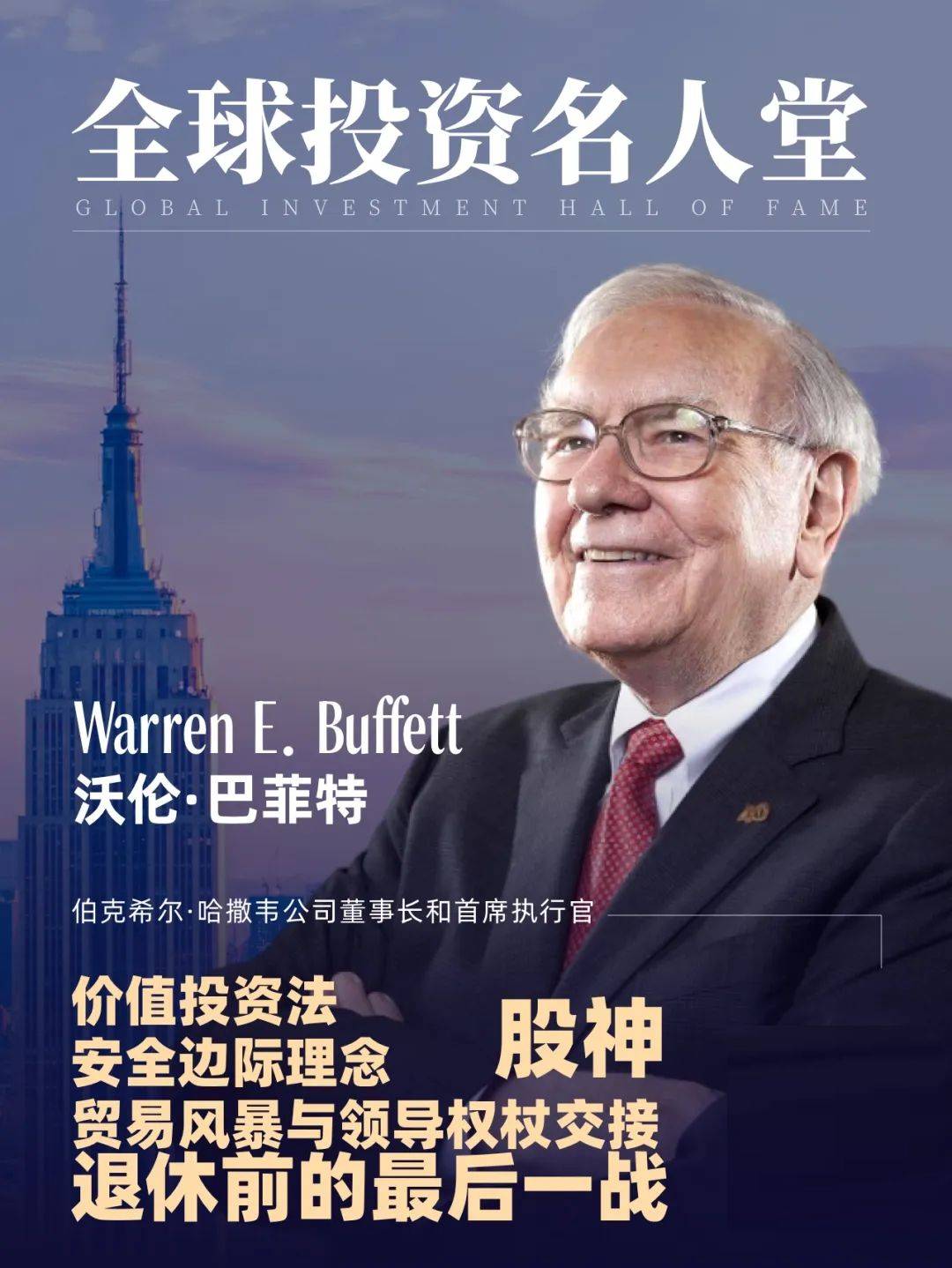
Group 1 - Warren Buffett's Berkshire Hathaway reported a significant asset write-down of $3.8 billion on its investment in Kraft Heinz, reducing its book value to $8.4 billion from over $17 billion at the end of 2017 [4] - Despite the apparent loss, an analysis revealed that Buffett had secured nearly 60% profit due to favorable terms negotiated during the transaction, showcasing his ability to turn a perceived failure into a profitable outcome [4][5] - Buffett's investment philosophy emphasizes long-term value and strategic positioning, which has allowed him to navigate market fluctuations effectively [5] Group 2 - Buffett's cautious outlook on the current U.S. stock market is evident, as he believes the S&P 500's price-to-earnings ratio exceeding 30 indicates inflated growth expectations, suggesting potential historical investment opportunities in the next five years [16] - Berkshire Hathaway's cash reserves reached a record high of $344 billion, providing a robust buffer against market volatility as Buffett prepares to pass the reins to his successor, Greg Abel [21] - The company holds a diversified portfolio, with significant investments in Apple, American Express, and Coca-Cola, which together account for over 50% of its stock investment portfolio [18][19] Group 3 - Buffett's investment strategy includes a focus on companies with strong fundamentals, as evidenced by his long-term holdings in Coca-Cola and Apple, which have shown resilience and growth despite market challenges [27][29] - The investment approach is characterized by a preference for businesses with a competitive edge and sustainable cash flow, avoiding speculative trends such as AI investments that do not align with his expertise [20][32] - Buffett's principles emphasize the importance of understanding the intrinsic value of investments, advocating for a long-term perspective rather than short-term speculation [28][30] Group 4 - Buffett's philanthropic efforts include significant donations to charitable causes, particularly the Gates Foundation, reflecting his belief in responsible wealth distribution and opposition to hereditary wealth [36] - His lifestyle remains modest despite immense wealth, highlighting a commitment to simplicity and frugality, which has become a notable aspect of his public persona [36]


新基金发行创新高,8月难道要开始抢盘?
Sou Hu Cai Jing· 2025-08-11 05:08
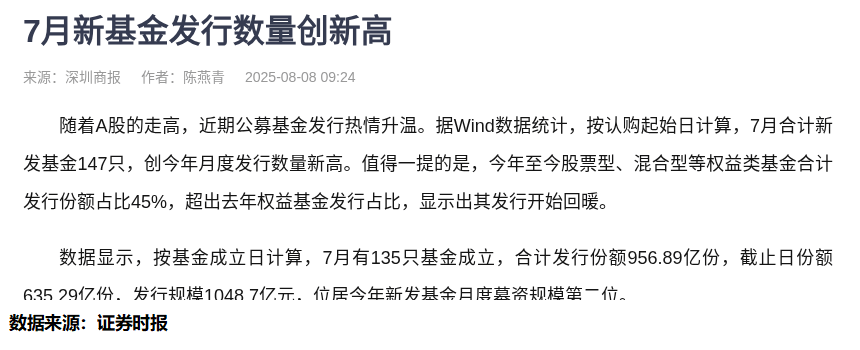
Group 1 - The recent recovery of the A-share market has led to a surge in public fund issuance, with 147 new funds launched in July, marking a year-to-date high, and equity products accounting for 45% of the total [1] - Historical patterns in the investment market show that bull markets often coincide with heightened market sentiment and increased account openings, typically linked to the five-year planning cycle in China [2][3] - The focus on cost control is crucial for institutional investors, as they are particularly sensitive to their holding costs, contrasting with retail investors who often prioritize potential profits [5][6] Group 2 - Identifying institutional cost levels can be challenging, but observing trading behaviors within narrow price ranges can provide insights into their cost zones [7] - Quantitative data analysis reveals distinct trading behaviors between institutions and retail investors, with tools that track all trading activities over time [8] - The "institutional inventory" metric indicates the level of institutional trading activity, with higher activity suggesting a stronger commitment from institutional investors [10][13]
会员金选丨巴菲特直播课限免权益
第一财经· 2025-08-11 03:58
第一财经×星展银行 【会员金选限免权益】 从伯克希尔低调接班人阿贝尔的管理逻辑,到巴菲特 70 年致股东信中穿越牛熊的底层法 则;从破解 "认知边界" 的财富困局,到全球政策与技术革命下的投资新范式——4大内容 深度拆解价值投资核心逻辑,每一节都嵌入实战案例与趋势洞察。 ✨ 权益亮点: ↓↓↓ 回顾70年致股东信,找到巴菲特穿越7次牛熊的投资密码。 巴菲特说永远赚不到认知以外的钱,普通投资者如何对抗认知焦虑? 全球政策博弈与技术革命下的投资新逻辑。 无论你是刚入门的投资小白,还是想突破收益瓶颈的进阶者,这场由两大权威机构背书的 直播课,将用 "股神智慧" 拆解真实投资场景。 立即领取,即可锁定你的专属学习席位! 巴菲特直播课 课程采用高清视频形式呈现,每课精心制作1-1.5小时深度内容,共四节。 揭秘低调接班人阿贝尔:巴菲特为什么说他"永远不会做蠢事"? 本 次 限 免 权 益 数 量 有 限 立 即 领 取 独家联合:第一财经携手星展银行,专为会员用户申请【价值投资系统课】限时免费资 格。 ✨内容亮点: 穿越周期的能力升级:从财报解读到宏观政策分析,构建 "理论 - 工具 - 实战" 三维体系, 助你摆脱跟 ...