
大数据

Search documents
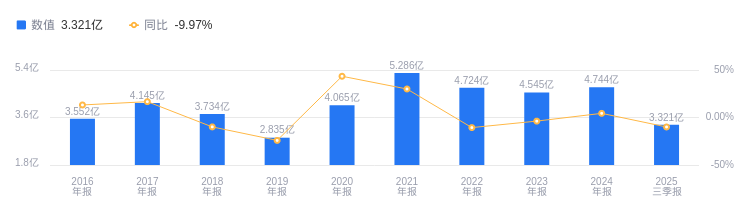
金明精机的前世今生:2025年三季度营收3.32亿行业排65,低于行业平均,净利润895.02万排名63
Xin Lang Cai Jing· 2025-10-31 13:45
Core Viewpoint - Jinming Machinery is a leading enterprise in the domestic plastic machinery equipment sector, specializing in research, development, design, production, and sales of plastic machinery equipment, with advanced technology and a full industry chain advantage [1] Group 1: Business Performance - In Q3 2025, Jinming Machinery reported revenue of 332 million yuan, ranking 65th out of 89 in the industry, significantly lower than the industry leader, Keda Manufacturing, which had 12.605 billion yuan, and the second, Haomai Technology, with 8.076 billion yuan [2] - The net profit for the same period was 8.95 million yuan, ranking 63rd out of 89, again showing a substantial gap compared to Keda Manufacturing's 1.832 billion yuan and Haomai Technology's 1.789 billion yuan [2] Group 2: Financial Ratios - As of Q3 2025, Jinming Machinery's debt-to-asset ratio was 14.89%, slightly up from 14.73% year-on-year, but well below the industry average of 42.80% [3] - The gross profit margin for Q3 2025 was 16.18%, a slight increase from 16.13% year-on-year, yet still lower than the industry average of 28.52% [3] Group 3: Shareholder Information - As of September 30, 2025, the number of A-share shareholders decreased by 20.23% to 22,200, while the average number of circulating A-shares held per shareholder increased by 25.36% to 17,900 [5] Group 4: Management Compensation - The salary of the General Manager, Ma Jiazhen, was 922,900 yuan in 2024, a decrease of 5,500 yuan compared to 2023, while the salary of the Chairman, Wang Fan, was not disclosed [4]


2025年光纤温度传感器品牌推荐
Tou Bao Yan Jiu Yuan· 2025-10-31 12:17
Investment Rating - The report does not explicitly provide an investment rating for the fiber optic temperature sensor industry Core Insights - The fiber optic temperature sensor industry in China is experiencing significant growth driven by technological innovations and the integration of IoT, big data, and cloud computing, leading to broader applications in smart monitoring and remote control [4] - The market is characterized by a diverse supply landscape, with both international brands and local companies competing, focusing on high-performance, precision, and intelligent products [9][12] - Emerging applications in new sectors such as renewable energy, healthcare, and infrastructure monitoring are creating new growth opportunities for fiber optic temperature sensors [25] Market Background - The fiber optic temperature sensor technology has evolved significantly since the 1980s, transitioning from traditional temperature measurement solutions to advanced products with high sensitivity and resistance to electromagnetic interference [6] - The main types of fiber optic temperature sensors include fluorescent, distributed, and fiber Bragg grating sensors, each suited for different applications [5] Market Status - The growth of the fiber optic temperature sensor market is supported by national policies favoring smart manufacturing and renewable energy, alongside the unique technical advantages of these sensors [7][8] - Traditional industrial sectors, particularly electricity and oil and gas, remain the primary demand drivers, while new fields such as transportation and healthcare are emerging as significant growth areas [10] Market Competition - The competitive landscape includes both well-known international brands and a variety of local companies, with a focus on distributed fiber optic temperature sensors and fiber Bragg grating sensors [12] - The report highlights ten leading brands in the industry, showcasing their strengths and areas of application [13][14][15][16][17][18][19][20][21][22][23] Development Trends - The industry is moving towards higher precision, intelligence, and system integration, with AI and machine learning being applied for data processing and anomaly detection [24] - The application of fiber optic temperature sensors is expanding into cutting-edge fields such as renewable energy, healthcare, and space exploration, indicating a broadening of their market potential [25]

昆明新核节电电力科技有限公司成立 注册资本5万人民币
Sou Hu Cai Jing· 2025-10-31 09:54
Core Insights - Kunming Xinhuke Energy Saving Technology Co., Ltd. has been established with a registered capital of 50,000 RMB [1] - The company is involved in a wide range of services including technology services, consulting, sales of electronic components, and various other technology-related activities [1] Company Overview - The legal representative of the company is Zhao Bo [1] - The business scope includes general projects such as technology development, technical consulting, and technology transfer [1] - The company also engages in the sale of power electronic components, internet sales, and sales of communication equipment [1] Industry Activities - The company offers services in artificial intelligence, big data, and smart control system integration [1] - It provides ecological environment materials sales, resource recycling consulting, and various leasing services [1] - The company is positioned to operate in the rapidly growing sectors of 5G communication technology and artificial intelligence applications [1]
聚焦短视频创新路径 擘画高质量发展蓝图 2025短视频创作与传播大会在北京召开
Zheng Quan Shi Bao Wang· 2025-10-31 09:41
Core Insights - The 2025 Short Video Creation and Communication Conference was held in Beijing, focusing on the theme of "Systemic Reform and Innovative Breakthroughs" [3][5] - The conference highlighted the importance of short videos as a key medium for mainstream public opinion and cultural dissemination, emphasizing the need for innovation and quality in content creation [7][8] Group 1: Conference Overview - The conference was organized by the China Industry Newspaper Association and attended by nearly 300 representatives from various industry media, universities, and platforms [3][5] - Keynote speeches were delivered by prominent figures, including Zhao Zizhong from the Communication University of China and Chen Changfeng from Tsinghua University, discussing the role of AI in media development [11][12] Group 2: Industry Challenges and Opportunities - Short video user numbers in China continue to grow, but challenges such as content homogenization and insufficient innovation capabilities remain [7] - The industry is encouraged to deepen content creation, embrace technological innovations like AI and big data, and establish industry standards for short video production and dissemination [7][8] Group 3: Strategic Recommendations - Industry media should focus on creating high-quality content that reflects contemporary themes and regional cultural characteristics [7] - There is a call for the development of a talent pool that understands industry dynamics, communication, technology, and user needs to enhance production processes [5][6] - The conference emphasized the need for collaboration among industry players to share resources and experiences, thereby improving overall development [8][21]
六方面重点任务!吴清:提高资本市场制度包容性、适应性
Xin Hua Cai Jing· 2025-10-31 09:24
Core Viewpoint - The article emphasizes the importance of enhancing the inclusiveness and adaptability of China's capital market during the 14th Five-Year Plan period, outlining six key tasks to achieve this goal [1]. Group 1: Key Tasks for Capital Market Development - Actively develop direct financing through equity and bonds, focusing on reforms in the Sci-Tech Innovation Board and the Growth Enterprise Market to enhance service capabilities for real enterprises [2]. - Foster more high-quality listed companies by optimizing the structure of listed companies and enhancing their investment value, while also improving the mechanisms for mergers and acquisitions [3]. - Create a more attractive environment for long-term investments by establishing mechanisms that encourage the inflow and retention of long-term capital [3]. Group 2: Regulatory and Open Market Enhancements - Improve the scientific and effective nature of capital market regulation by adapting to rapid market changes and enhancing risk monitoring and response mechanisms [4]. - Gradually expand the high-level institutional openness of the capital market, promoting the coordinated development of onshore and offshore markets to enhance international competitiveness [4]. - Establish a standardized, inclusive, and vibrant capital market ecosystem by strengthening legal frameworks and investor protection mechanisms [5]. Group 3: Implementation of Inclusive Systems - Implement more inclusive issuance and listing systems to better support technological innovation and meet diverse investor wealth management needs [6][7]. - Enhance regulatory efficiency and risk prevention capabilities by leveraging technology to monitor market trends and ensure stability [7]. - Emphasize the political and people-oriented nature of capital market work, ensuring that reforms align with public needs and protect investors' rights [8].
王江撰文!详解“十五五”时期加快建设金融强国7方面主要任务
券商中国· 2025-10-31 09:08
Core Viewpoint - Accelerating the construction of a financial power is essential for achieving a modern socialist strong country, promoting high-quality development, and balancing development and security [1] Group 1: Key Features and Tasks of Building a Financial Power - The main features of building a financial power include six key financial elements: strong currency, strong central bank, strong financial institutions, strong international financial center, strong financial regulation, and strong financial talent [2] - The path to building a financial power is characterized by a unique Chinese financial development approach, with the construction of a modern financial system being a key task [2][3] Group 2: Specific Tasks for the 14th Five-Year Plan - Seven main tasks for the 14th Five-Year Plan include improving the central bank system, enhancing financial support for key areas, promoting stable capital market development, optimizing financial institutions and infrastructure, building an international financial center, improving financial regulatory capabilities, and strengthening financial legal construction [4][5][6][7][8][9] Group 3: Financial System and Cultural Support - A scientific and stable financial regulation system, a reasonable financial market structure, and a diverse financial product and service system are necessary for building a financial power [3] - The construction of a unique Chinese financial culture, emphasizing legal and moral governance, is crucial for supporting the financial power [3]
报喜鸟的前世今生:吴志泽掌舵三十余载,品牌服装营收占比高,多品牌战略稳步推进
Xin Lang Cai Jing· 2025-10-31 09:02
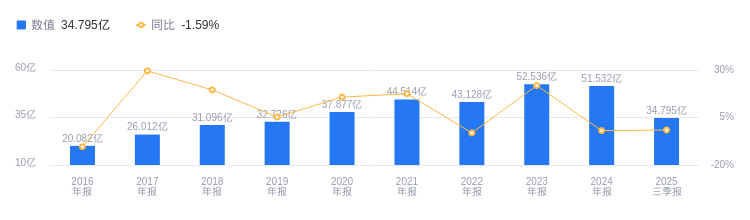
Core Viewpoint - Baoxiniang is a leading mid-to-high-end men's clothing group in China, with a strong market presence and multiple well-known brands under its umbrella [1] Group 1: Business Performance - In Q3 2025, Baoxiniang achieved a revenue of 3.48 billion yuan, ranking 8th among 38 companies in the industry [2] - The net profit for the same period was 244 million yuan, also ranking 8th in the industry [2] - The industry leader, Hailan Home, reported a revenue of 15.599 billion yuan, while the average revenue in the industry was 2.251 billion yuan [2] Group 2: Financial Ratios - As of Q3 2025, Baoxiniang's debt-to-asset ratio was 32.72%, lower than the industry average of 38.41% [3] - The gross profit margin for Q3 2025 was 65.57%, higher than the industry average of 44.68% [3] Group 3: Shareholder Information - As of September 30, 2025, the number of A-share shareholders increased by 17.31% to 75,400 [5] - The average number of circulating A-shares held per shareholder decreased by 14.76% to 15,700 [5] Group 4: Executive Compensation - The chairman and general manager, Wu Zhize, received a salary of 1.96 million yuan in 2024, unchanged from 2023 [4] Group 5: Market Outlook - Company revenue for Q1 to Q3 2025 was 3.48 billion yuan, a year-on-year decrease of 2% [5] - The net profit for the same period was 240 million yuan, a year-on-year decrease of 43% [5] - The company is expected to see a net profit of 295 million yuan in 2025, with corresponding PE ratios of 19.5 times [5]

英方软件涨7.45%,成交额1.73亿元,今日主力净流入637.78万
Xin Lang Cai Jing· 2025-10-31 08:03
Core Viewpoint - The company, Yingfang Software, has shown significant growth in its stock performance and is actively participating in the domestic software ecosystem, particularly in data protection and digital transformation sectors [1][2][3]. Company Overview - Yingfang Software, established on August 12, 2011, and listed on January 19, 2023, specializes in data replication software, integrated hardware-software solutions, and related services [7]. - The company's revenue composition includes 60.37% from software products, 20.57% from software-related services, 15.97% from integrated hardware-software products, and 3.09% from other sources [7]. Financial Performance - For the period from January to September 2025, Yingfang Software achieved a revenue of 132 million yuan, reflecting a year-on-year growth of 11.26%. However, the net profit attributable to the parent company was a loss of 14.71 million yuan, which is an increase in loss by 53.56% compared to the previous year [8]. Market Position - Yingfang Software is recognized as one of the top three suppliers in the domestic data replication and protection software market [3]. - The company has successfully implemented its data replication software in various financial institutions, including securities firms, banks, and insurance companies, as well as in government agencies and healthcare institutions [3]. Product and Technology - The company's products are primarily focused on data replication technologies, including dynamic file byte-level replication, database semantic-level replication, and volume block-level replication [2]. - Yingfang Software's solutions are designed to ensure data security and business continuity, supporting various applications such as disaster recovery and data migration [2][3]. Industry Context - Yingfang Software is positioned within the computer software development sector, specifically in horizontal general-purpose software, and is associated with concepts such as data elements, Huawei Kunpeng, big data, and Huawei Euler [8].

证监会吴清最新发声!
Mei Ri Jing Ji Xin Wen· 2025-10-31 07:58
Core Viewpoint - The article emphasizes the importance of enhancing the inclusiveness and adaptability of the capital market to better serve the development of new productive forces, promote equitable distribution of development outcomes, and support high-quality development of the capital market and financial power construction [1][2][3]. Group 1: Support for Innovation and Investor Needs - The capital market will provide greater support for technological innovation by implementing more inclusive systems for issuance, listing, and mergers and acquisitions, addressing the characteristics of tech companies such as high R&D investment and long profit cycles [1][2]. - There is a focus on meeting diverse wealth management needs of investors by creating a multi-layered market system and product service matrix, while continuously expanding channels for long-term capital to enter the market [1][2]. Group 2: Regulatory Efficiency and Risk Management - The regulatory framework will be enhanced to be more precise and efficient, keeping pace with domestic and international capital market innovations, and improving risk monitoring and early warning capabilities [2][3]. - Emphasis is placed on balancing investment and financing, optimizing the financing structure, and promoting coordinated development between primary and secondary markets [2][3]. Group 3: Market Structure and Corporate Governance - There will be efforts to optimize the structure of listed companies and enhance their investment value, including reforms in the mergers and acquisitions market and improving the flexibility of refinancing mechanisms [3][4]. - The article highlights the need for a robust incentive and constraint mechanism for listed companies to encourage cash dividends and share buybacks, while also ensuring a smooth exit mechanism for underperforming companies [3][4]. Group 4: Long-term Investment Environment - The creation of a more attractive environment for long-term investments is prioritized, with initiatives to improve the conditions for long-term capital to enter and thrive in the market [4][5]. - The article advocates for the development of public funds and private equity, promoting a healthy cycle of fundraising, investment, management, and exit [4][5]. Group 5: Legal and Regulatory Framework - Strengthening the legal framework for the capital market is essential, including revising relevant laws and regulations to create a fair and transparent market environment [4][5]. - The article calls for enhanced investor protection mechanisms and the promotion of rational, value-based, and long-term investment practices [4][5]. Group 6: Market Stability and International Cooperation - The importance of maintaining market stability is emphasized, with a focus on risk prevention and management, particularly in the context of cross-market and cross-border risks [5][6]. - The article supports the gradual opening of the capital market and enhancing international competitiveness, including improving the participation of foreign investors [5][6].

山高环能涨2.42%,成交额6650.48万元,主力资金净流出855.71万元
Xin Lang Cai Jing· 2025-10-31 06:33
Core Insights - The stock price of Shandong Huangan Energy Co., Ltd. increased by 2.42% on October 31, reaching 6.76 CNY per share, with a total market capitalization of 3.152 billion CNY [1] - The company has seen a year-to-date stock price increase of 31.77%, with a slight increase of 0.90% over the last five trading days [1] Financial Performance - For the period from January to September 2025, the company reported a revenue of 1.036 billion CNY, a year-on-year decrease of 0.50%, while the net profit attributable to shareholders increased by 546.90% to 52.61 million CNY [2] - The main revenue sources for the company include oil product processing and sales (51.67%), heating services (24.29%), and environmental harmless treatment (23.76%) [2] Shareholder Information - As of September 30, 2025, the number of shareholders decreased by 6.21% to 17,300, with an average of 26,649 circulating shares per shareholder, an increase of 6.62% [2] - Notable changes in institutional holdings include an increase in shares held by HSBC Jintrust Small Cap Stock and the entry of Xin'ao Cycle Power Mixed A as a new shareholder [3]
