
共享经济

Search documents
兆新股份的前世今生:2025年三季度营收3.22亿、净利润578.95万,均远低于行业平均
Xin Lang Cai Jing· 2025-10-31 05:55
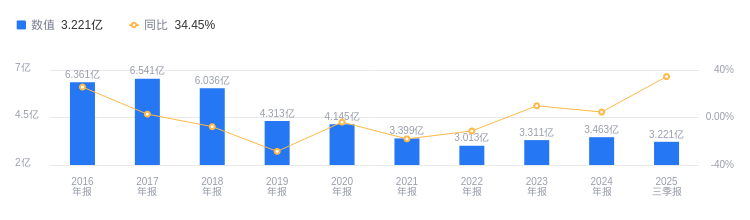
Core Insights - Zhaoxin Co., Ltd. is a domestic enterprise established in 1995, specializing in aerosol products and photovoltaic power generation, with certain advantages in technology development [1] Business Performance - For Q3 2025, Zhaoxin reported revenue of 322 million yuan, ranking 12th in the industry, significantly lower than the industry leader, Solar Energy, at 4.101 billion yuan, and the second-ranked Zhejiang New Energy at 3.855 billion yuan [2] - The net profit for the same period was 5.79 million yuan, placing it 9th in the industry, again far behind Solar Energy's 1.129 billion yuan and Zhejiang New Energy's 860 million yuan [2] Financial Ratios - As of Q3 2025, Zhaoxin's debt-to-asset ratio was 31.83%, an increase from 24.84% year-on-year, but still well below the industry average of 62.14%, indicating good solvency [3] - The gross profit margin for Q3 2025 was 29.63%, slightly down from 29.96% year-on-year, and lower than the industry average of 32.38% [3] Executive Compensation - The chairman and general manager, Liu Gongzhi, received a salary of 3.2762 million yuan in 2024, a decrease of 2.2308 million yuan from 2023 [4] Shareholder Information - As of September 30, 2025, the number of A-share shareholders decreased by 7.28% to 122,700, while the average number of circulating A-shares held per account increased by 7.85% to 15,900 [5]


圣邦股份的前世今生:营收高于行业平均147.67%,净利润高于同业1019.56%
Xin Lang Zheng Quan· 2025-10-31 04:45
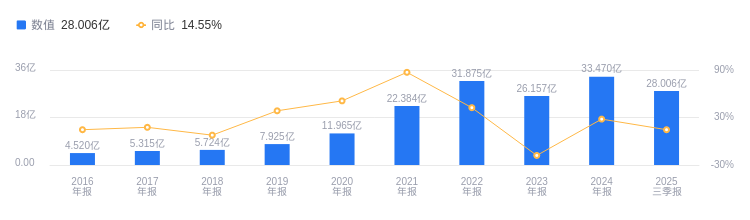
Core Viewpoint - Shengbang Co., Ltd. is a leading domestic manufacturer of high-performance analog integrated circuits, with strong technical capabilities and a focus on research, development, and sales in the semiconductor industry [1] Group 1: Business Performance - In Q3 2025, Shengbang's revenue reached 2.801 billion yuan, ranking 3rd in the industry out of 34 companies, exceeding the industry average of 1.135 billion yuan and the median of 608 million yuan [2] - The net profit for the same period was 332 million yuan, ranking 2nd in the industry, above the industry average of 29.658 million yuan and the median of 10.126 million yuan [2] - The company achieved a year-on-year revenue growth of 14.55% and a net profit growth of 20.47% in the first three quarters of 2025 [5][6] Group 2: Financial Ratios - As of Q3 2025, Shengbang's debt-to-asset ratio was 22.41%, higher than the previous year's 19.57% and above the industry average of 16.92% [3] - The gross profit margin for Q3 2025 was 50.42%, down from 52.17% year-on-year but still above the industry average of 36.44% [3] Group 3: Shareholder Information - As of September 30, 2025, the number of A-share shareholders increased by 128.90% to 110,800, while the average number of circulating A-shares held per shareholder decreased by 56.30% to 5,351.03 [5] - Notable changes among the top ten circulating shareholders included a decrease in holdings by several institutions and the entry of Wan Jia You Xuan as a new shareholder [5] Group 4: Management Compensation - The chairman and general manager, Zhang Shilong, received a salary of 1.3409 million yuan in 2024, a decrease of 148,600 yuan from 2023 [4] Group 5: Market Outlook - The company is expected to continue expanding its market share in new products within the industrial and automotive electronics sectors [5] - Forecasts for net profit from 2025 to 2027 are 599 million, 782 million, and 1.048 billion yuan, respectively, with corresponding PE ratios of 81, 62, and 46 times [6]

合康新能的前世今生:2025年三季度营收61.82亿行业第二,超行业平均148%
Xin Lang Zheng Quan· 2025-10-31 03:45
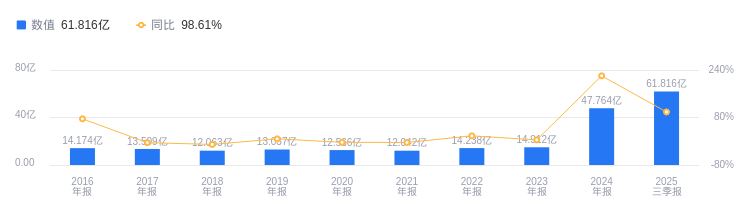
Core Insights - Hakon New Energy is a leading enterprise in the high-voltage inverter industry in China, established in June 2003 and listed on the Shenzhen Stock Exchange in January 2010, with a focus on energy-saving and environmental protection products [1] Group 1: Business Performance - In Q3 2025, Hakon New Energy reported revenue of 6.182 billion yuan, ranking 2nd in the industry, surpassing the industry average of 2.494 billion yuan but still trailing behind the leader, Huichuan Technology, which had revenue of 31.663 billion yuan [2] - The main business composition includes 4.066 billion yuan from photovoltaic EPC, accounting for 90.41%, while high-voltage inverters contributed 281 million yuan, making up 6.25% [2] - The net profit for the same period was 91.342 million yuan, ranking 13th in the industry, with the industry leader, Huichuan Technology, achieving a net profit of 4.317 billion yuan [2] Group 2: Financial Ratios - As of Q3 2025, Hakon New Energy's debt-to-asset ratio was 61.56%, higher than the previous year's 59.88% and above the industry average of 34.21% [3] - The gross profit margin for the same period was 8.66%, down from 15.02% year-on-year and significantly lower than the industry average of 33.30% [3] Group 3: Shareholder Information - As of September 30, 2025, the number of A-share shareholders decreased by 12.27% to 27,800, while the average number of circulating A-shares held per shareholder increased by 14.78% to 40,600 [5] - The second-largest circulating shareholder is Hong Kong Central Clearing Limited, holding 36.1354 million shares, an increase of 17.8359 million shares from the previous period [5] Group 4: Future Projections - According to Guotou Securities, Hakon New Energy is expected to generate revenues of 6.5 billion yuan, 8.375 billion yuan, and 9.76 billion yuan for 2025, 2026, and 2027, respectively, with growth rates of 36.09%, 28.84%, and 16.55% [5] - The projected net profit for the same years is 146 million yuan, 216 million yuan, and 331 million yuan, with growth rates of 1316.6%, 48.4%, and 53% [5] - Key business highlights include significant growth in photovoltaic EPC, new product launches in inverters and household storage, breakthroughs in high-voltage inverters for nuclear power, and rapid development in the new energy sector supported by Midea Group [5]

四维图新涨2.03%,成交额1.70亿元,主力资金净流入64.93万元
Xin Lang Cai Jing· 2025-10-31 02:55
Core Viewpoint - The stock of Siwei Tuxin has shown fluctuations with a recent increase of 2.03%, while the company faces challenges with a significant decline in net profit year-on-year [1][2]. Financial Performance - As of September 30, 2025, Siwei Tuxin reported a revenue of 2.66 billion yuan, representing a year-on-year growth of 5.20%. However, the net profit attributable to shareholders was -708 million yuan, a decrease of 45.55% compared to the previous year [2]. - The company has not distributed any dividends in the last three years, with a total payout of 459 million yuan since its A-share listing [3]. Stock Market Activity - On October 31, 2023, Siwei Tuxin's stock price was 9.04 yuan per share, with a trading volume of 170 million yuan and a turnover rate of 0.80%. The total market capitalization stood at 21.43 billion yuan [1]. - The stock has experienced a decline of 6.22% year-to-date, with a 3.11% drop over the last five trading days and a 5.04% decline over the last 20 days. However, it has increased by 7.62% over the past 60 days [1]. Shareholder Structure - As of September 30, 2025, the number of shareholders for Siwei Tuxin was 206,200, a decrease of 0.32% from the previous period. The average number of circulating shares per person increased by 0.32% to 11,427 shares [2]. - The top ten circulating shareholders include Hong Kong Central Clearing Limited, which holds 31.06 million shares, a decrease of 139,700 shares from the previous period [3].

爱玛科技涨2.02%,成交额1.09亿元,主力资金净流入764.45万元
Xin Lang Zheng Quan· 2025-10-31 02:38
Core Viewpoint - Aima Technology's stock has experienced a decline of 18.64% year-to-date, with recent trading activity showing a slight increase of 2.02% on October 31, 2023, indicating potential market interest despite overall downward trends [1][2]. Financial Performance - For the period from January to September 2025, Aima Technology reported a revenue of 21.093 billion yuan, reflecting a year-on-year growth of 20.78%. The net profit attributable to shareholders was 1.907 billion yuan, marking a 22.78% increase compared to the previous year [2]. - Cumulative cash dividends since the company's A-share listing amount to 3.056 billion yuan, with 2.851 billion yuan distributed over the last three years [3]. Shareholder Information - As of September 30, 2025, Aima Technology had 31,700 shareholders, an increase of 33.58% from the previous period. The average number of circulating shares per shareholder decreased by 25.19% to 26,718 shares [2]. - The top ten circulating shareholders include Hong Kong Central Clearing Limited, which holds 19.6351 million shares, an increase of 1.7094 million shares from the previous period. Southern CSI 500 ETF reduced its holdings by 74,000 shares, while Guangfa Ruiyi Leading Mixed A entered the top ten as a new shareholder with 2.7276 million shares [3]. Market Activity - On October 31, 2023, Aima Technology's stock price was 32.38 yuan per share, with a trading volume of 1.09 billion yuan and a turnover rate of 0.40%. The total market capitalization stood at 28.142 billion yuan [1]. - The stock has seen significant trading activity, with net inflows of 7.6445 million yuan from main funds and notable buying and selling from large orders [1]. Business Overview - Aima Technology, established on September 27, 1999, and listed on June 15, 2021, specializes in the research, production, and sales of electric bicycles. The main revenue sources include electric two-wheelers, electric three-wheelers, bicycles, and accessories, which account for 98.87% of total revenue [1]. - The company operates within the automotive sector, specifically in the motorcycle and other transportation equipment category, and is associated with concepts such as shared economy and e-commerce [2].

首旅酒店涨2.03%,成交额3345.20万元,主力资金净流入62.98万元
Xin Lang Cai Jing· 2025-10-31 02:08
Core Viewpoint - The stock price of Shoulu Hotel has shown a slight increase of 2.03% in recent trading, reflecting a stable market performance despite a slight decline in revenue year-on-year [1][2]. Company Performance - As of October 31, Shoulu Hotel's stock price reached 14.59 yuan per share, with a market capitalization of 16.291 billion yuan [1]. - Year-to-date, the stock price has increased by 1.96%, with a 2.03% rise over the last five trading days, a 1.95% decline over the last 20 days, and a 4.74% increase over the last 60 days [2]. - For the period from January to September 2025, Shoulu Hotel reported a revenue of 5.782 billion yuan, a year-on-year decrease of 1.81%, while the net profit attributable to shareholders was 755 million yuan, reflecting a year-on-year increase of 4.36% [2]. Shareholder Information - As of September 30, 2025, the number of shareholders for Shoulu Hotel was 44,300, an increase of 2.55% from the previous period, with an average of 25,177 circulating shares per person, a decrease of 2.48% [2]. - The company has distributed a total of 1.834 billion yuan in dividends since its A-share listing, with 648 million yuan distributed over the past three years [3]. Institutional Holdings - As of September 30, 2025, the top ten circulating shareholders included Hong Kong Central Clearing Limited as the third-largest shareholder, holding 62.6412 million shares, an increase of 11.2777 million shares from the previous period [3]. - Other notable institutional shareholders include the Fortune China Tourism Theme ETF and the China Europe Pension Mixed A fund, both of which have increased their holdings [3].

英威腾的前世今生:2025年Q3营收31.08亿行业第五,资产负债率高于行业平均
Xin Lang Zheng Quan· 2025-10-30 23:43
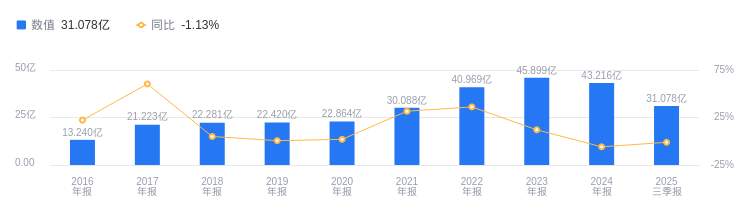
Core Viewpoint - Yingweiton is a well-known enterprise in the industrial automation and energy power sectors, focusing on the research and development of frequency converters and possessing both technical and market advantages [1] Group 1: Business Performance - In Q3 2025, Yingweiton reported revenue of 3.108 billion yuan, ranking 5th in the industry out of 30 companies, with the industry leader, Inovance Technology, generating 31.663 billion yuan [2] - The main business composition includes frequency converters at 1.153 billion yuan (56.52%), data centers at 328 million yuan (16.08%), and electric drive and vehicle power supplies at 268 million yuan (13.13%) [2] - The net profit for the same period was 136 million yuan, ranking 11th in the industry, with the industry leader's net profit at 4.317 billion yuan [2] Group 2: Financial Ratios - As of Q3 2025, Yingweiton's debt-to-asset ratio was 48.92%, higher than the previous year's 45.56% and above the industry average of 34.21%, indicating relatively high debt pressure [3] - The gross profit margin for Q3 2025 was 31.91%, slightly down from 32.17% year-on-year and below the industry average of 33.30%, suggesting lower profitability compared to peers [3] Group 3: Executive Compensation - Chairman Huang Shenli's salary for 2024 is 2.0742 million yuan, an increase of 180,800 yuan from 2023 [4] - President Tian Huachen's salary for 2024 is 1.9742 million yuan, up by 174,100 yuan from the previous year [4] Group 4: Shareholder Information - As of September 30, 2025, the number of A-share shareholders decreased by 2.97% to 82,100, while the average number of circulating A-shares held per shareholder increased by 3.06% to 8,941.81 [5] - The largest circulating shareholder is Hong Kong Central Clearing Limited, holding 26.2153 million shares, an increase of 19.2666 million shares from the previous period [5] Group 5: Market Outlook - In H1 2025, Yingweiton achieved revenue of 2.039 billion yuan, a year-on-year decrease of 3.51%, while net profit increased by 13.01% to 123 million yuan [5] - The industrial automation business showed steady growth with a revenue of 1.357 billion yuan, up 6.69% year-on-year [5] - Guotai Junan Securities has raised the profit forecast for Yingweiton for 2025-2027, expecting net profits of 319 million, 386 million, and 445 million yuan, with corresponding P/E ratios of 26, 22, and 19 times [5]

成都发布共享充电宝行业自律公约 杜绝“按小时凑整”收费
Zheng Quan Shi Bao· 2025-10-30 22:23
Core Viewpoint - The Chengdu Consumer Rights Protection Committee and other local authorities have established a self-regulatory convention for the shared power bank industry to address issues such as unclear pricing, difficulties in returning devices, and outdated equipment [1][2]. Group 1: Self-Regulatory Convention Details - The self-regulatory convention aims to eliminate "ambiguous charging" by requiring companies to clearly display pricing, billing methods, cap prices, and deposit policies [2]. - It mandates a minimum of 5 minutes of free usage time and compresses billing time units to within 15 minutes, starting charges only after the free period [2]. - The convention ensures that power banks provided have at least 50% battery life and requires prior notification if this standard cannot be met [2]. - It prohibits "unfair clauses" that may reduce company liability or increase consumer obligations [2]. - The convention includes provisions for ensuring sufficient cabinet space for returns and waiving fees in cases of equipment failure or force majeure [2]. - It emphasizes the importance of product quality, requiring sampling tests before products are released to the market [2]. Group 2: Market Coverage and Impact - The companies signing the convention cover over 95% of operational points in Chengdu, and they will update software functionalities and adjust pricing accordingly [3]. - The Chengdu Consumer Rights Protection Committee plans to conduct consumer evaluations and monitor the implementation of the self-regulatory convention [3]. - The shared power bank industry in China is transitioning from rapid growth to a phase of stock competition and refined operations, facing challenges in compliance costs and user experience optimization [3]. Group 3: Market Size and Trends - The shared power bank market in China is projected to reach approximately 15 billion yuan in 2024, with a year-on-year growth of 28% expected to exceed 38 billion yuan in 2025 [4]. - The user base is anticipated to surpass 500 million, with daily usage frequency exceeding 120 million times [4]. - The market is expanding from traditional sectors like dining and transportation to vertical fields such as tourism and rural markets, with a 42% increase in coverage in third and fourth-tier cities [4]. - The competitive landscape is characterized by four leading companies dominating the market, while smaller firms adopt differentiated strategies for survival [4]. - Major players like Monster Charging and Street Power are forming strategic partnerships to enhance user experience and operational efficiency [4].

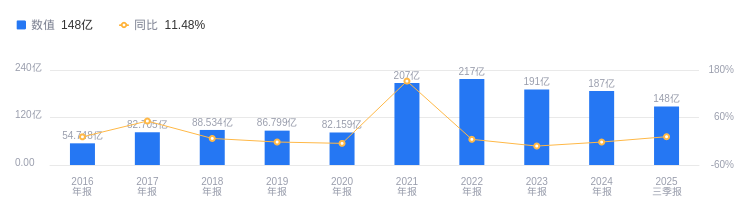
杉杉股份的前世今生:2025年三季度营收148.09亿行业排第五,净利润3.28亿行业排十五,毛利率高于行业均值
Xin Lang Zheng Quan· 2025-10-30 16:04
Core Viewpoint - Shanshan Co., Ltd. is a leading domestic lithium battery material company with a comprehensive industry chain advantage, focusing on the research, production, and sales of lithium-ion battery anode materials and electrolytes [1] Group 1: Business Performance - In Q3 2025, Shanshan's revenue reached 14.809 billion yuan, ranking 5th in the industry out of 44 companies, surpassing the industry average of 6.52 billion yuan and the median of 4.845 billion yuan [2] - The main business composition includes polarizers at 5.733 billion yuan (58.15%) and lithium battery materials at 4.118 billion yuan (41.77%), with other revenues at 930.63 thousand yuan (0.09%) [2] - The net profit for Q3 2025 was 328 million yuan, ranking 15th in the industry, above the industry average of 198 million yuan and the median of 16.084 million yuan [2] Group 2: Financial Ratios - As of Q3 2025, Shanshan's debt-to-asset ratio was 48.93%, lower than the previous year's 51.74% and below the industry average of 51.96% [3] - The gross profit margin for Q3 2025 was 16.63%, an increase from 15.09% in the previous year and higher than the industry average of 10.89% [3] Group 3: Executive Compensation - The chairman, Zhou Ting, received a salary of 749,900 yuan in 2024, a significant increase of 738,000 yuan compared to 11,900 yuan in 2023 [4] - The general manager, Li Zhihua, maintained a salary of 2.8119 million yuan in 2024, unchanged from 2023 [4] Group 4: Shareholder Information - As of September 30, 2025, the number of A-share shareholders increased by 19.08% to 179,200 [5] - The average number of circulating A-shares held per shareholder decreased by 16.02% to 9,804.42 shares [5] - Notable changes among the top ten circulating shareholders include a decrease in holdings by Hong Kong Central Clearing Limited and Southern CSI 500 ETF, while Guangfa National Certificate New Energy Vehicle Battery ETF entered as a new shareholder [5]

申华控股的前世今生:2025年三季度营收32.3亿行业排第三,高于行业中位数,净利润亏损行业垫底
Xin Lang Cai Jing· 2025-10-30 15:30
Core Viewpoint - Shenhua Holdings, established in 1992 and listed in 1990, is a significant player in the automotive consumer services sector in China, with a diversified business portfolio and investment potential [1] Business Performance - For Q3 2025, Shenhua Holdings reported revenue of 3.23 billion, ranking 3rd in the industry, above the median of 3.06 billion, but significantly lower than the top two competitors, Xiamen Xinda at 26.92 billion and Guoji Automotive at 25.43 billion [2] - The main business composition includes automotive retail at 2.27 billion (98.09%), building leasing at 22.11 million (0.96%), real estate at 12.97 million (0.56%), and photovoltaic power generation at 9.03 million (0.39%) [2] - The net profit for the same period was -102 million, ranking 6th in the industry, with the industry leader Guoji Automotive reporting a net profit of 365 million [2] Financial Ratios - As of Q3 2025, Shenhua Holdings had a debt-to-asset ratio of 70.67%, higher than the industry average of 62.32%, but down from 72.02% year-on-year [3] - The gross profit margin was 3.40%, below the industry average of 8.07%, and decreased from 6.33% year-on-year [3] Executive Compensation - The chairman and president, Gao Xinguang, has a salary of 396,000 for 2024 [4] Shareholder Information - As of September 30, 2025, the number of A-share shareholders decreased by 0.91% to 140,200, while the average number of circulating A-shares held per account increased by 0.92% to 13,900 [5]

