虚拟电厂

Search documents
关于举办虚拟电厂投资、建设与运营培训的通知丨系列培训
中国能源报· 2025-12-19 01:21
虚拟电厂是新型经营主体协同参与电力系统优化和电力市场交易的电力运行组织模式。 2025年3月《关于加快推进虚拟电厂发展的指导意见》 发布 , 意见 明确了虚拟电厂的 定义和定位,并提出到 2027年,虚拟电厂建设运行管理机制成熟规范,参与电力市场的 机制健全完善,全国虚拟电厂调节能力达到2000万千瓦以上。到2030年,虚拟电厂应 用场景进一步拓展,各类商业模式创新发展,全国虚拟电厂调节能力达到5000万千瓦以 上。 关于举 办虚拟电厂投资、建设与运营 培训的通知 各企事业单位: 1 .各类型发电公司、电网企业、售电公司、储能公司、数字化信息化服务公司、节能服 务公司以及 大型用电用 能 机构 等; 2 . 各类型科研院所、投资机构; 各地方政府相继出台文件,制订虚拟电厂参与电力市场交易的政策规范、技术标准和市场 机制。 随着新型电力系统的发展,虚拟电厂对增强电力保供能力、促进新能源消纳、完善电力市 场体系具有重要作用和广阔的发展前景。为帮助各能源企业进一步了解虚拟电厂发展相关 问题,《中国能源报》社特举办虚拟电厂投资、建设与运营培训。届时,将邀请业内专家 对相关问题进行专业解答,同时为各企业之间交流经验,相 ...


中国能建:公司在虚拟电厂领域取得多项技术突破
Zheng Quan Ri Bao Wang· 2025-12-18 11:12
Core Viewpoint - The company has made significant technological breakthroughs in the virtual power plant sector, focusing on resource aggregation, operational optimization, data integrity, and innovative business models [1] Group 1: Resource Aggregation - The company integrates distributed power sources, energy storage, and controllable loads using advanced communication and IoT technologies, achieving unified monitoring and control of diverse heterogeneous resources, thereby enhancing system flexibility [1] Group 2: Operational Optimization - The company employs intelligent scheduling algorithms to establish demand response decision models, dynamically adjusting resource output and significantly reducing operational costs of the virtual power plant [1] Group 3: Data Integrity - Utilizing blockchain and smart metering technologies, the company ensures that transaction data is immutable and implements real-time database designs for efficient processing and sharing of massive information [1] Group 4: Innovative Business Models - The company focuses on market-oriented profitability by developing aggregation and demand response models, participating in power market peak regulation services, and generating revenue through arbitrage on peak-valley price differences and government subsidies [1]

分布式储能累计装机近6年增长超5倍,商业模式多元化破局
2 1 Shi Ji Jing Ji Bao Dao· 2025-12-18 08:18
Core Viewpoint - The development of distributed energy storage is accelerating due to decreasing construction and operational costs, extensive development of distributed energy, and supportive policies, with a focus on achieving market-oriented and diversified growth through policy improvement and market reform [1][2]. Group 1: Industry Overview - Distributed energy storage refers to small storage systems located on the user side (homes, factories, shopping malls) or at distribution network nodes, becoming crucial for addressing the challenges of local renewable energy consumption [2]. - From 2019 to the third quarter of 2025, China's cumulative installed capacity of distributed energy storage increased over fivefold, from 570 MW to 3,638 MW, with six major application scenarios identified [2]. - The most mature application is commercial energy storage, which relies on time-of-use electricity price arbitrage, significantly influenced by regional price difference policies [2]. Group 2: Challenges and Development Path - Despite impressive growth, the industry faces challenges such as insufficient policy continuity, single revenue sources, inadequate safety standards and operational systems, and a lack of cost guidance mechanisms [3]. - To enhance the utilization and economic viability of distributed energy storage, a phased development path is proposed: from 2025 to 2027, focus on widening time-of-use price differences and improving demand response mechanisms; from 2028 to 2030, deepen electricity market reforms and explore the potential of distributed energy storage in green electricity and carbon markets [3]. Group 3: Virtual Power Plants - Virtual power plants, as aggregators of distributed energy storage, are gaining attention, but their current participation rate remains low due to limited aggregated resources and challenges in independent metering [3]. - Experts recommend installing separate meters for distributed energy storage and utilizing AI technology for coordinated scheduling with the grid, while expanding auxiliary service scenarios such as frequency and voltage regulation [3]. Group 4: Capacity Market Exploration - The capacity market is under exploration, with Shanxi province investigating the aggregation of distributed energy storage through virtual power plants to participate in capacity market trading, providing long-term capacity support to the power system [5].

科陆电子跌2.08%,成交额1.22亿元,主力资金净流出844.25万元
Xin Lang Cai Jing· 2025-12-18 06:08
Core Viewpoint - Kelu Electronics experienced a stock price decline of 2.08% on December 18, with a current price of 7.54 CNY per share and a total market capitalization of 12.523 billion CNY [1] Group 1: Financial Performance - For the period from January to September 2025, Kelu Electronics achieved a revenue of 3.586 billion CNY, representing a year-on-year growth of 23.42% [2] - The net profit attributable to shareholders for the same period was 232 million CNY, showing a significant year-on-year increase of 251.10% [2] Group 2: Stock Market Activity - The stock price of Kelu Electronics has increased by 73.33% year-to-date, with a slight increase of 0.27% over the last five trading days, but a decline of 5.87% over the last 20 days and 3.21% over the last 60 days [1] - The company has appeared on the "Dragon and Tiger List" twice this year, with the most recent occurrence on October 27, where it recorded a net buy of -104 million CNY [1] Group 3: Shareholder Information - As of September 30, 2025, Kelu Electronics had 75,000 shareholders, an increase of 7.23% from the previous period, with an average of 18,664 circulating shares per shareholder, a decrease of 6.74% [2] - The third-largest circulating shareholder is Hong Kong Central Clearing Limited, holding 57.6314 million shares, which is an increase of 35.0651 million shares from the previous period [3]

关于举办虚拟电厂投资、建设与运营培训的通知丨系列培训
中国能源报· 2025-12-18 02:02
虚拟电厂是新型经营主体协同参与电力系统优化和电力市场交易的电力运行组织模式。 2025年3月《关于加快推进虚拟电厂发展的指导意见》 发布 , 意见 明确了虚拟电厂的 定义和定位,并提出到 2027年,虚拟电厂建设运行管理机制成熟规范,参与电力市场的 机制健全完善,全国虚拟电厂调节能力达到2000万千瓦以上。到2030年,虚拟电厂应 用场景进一步拓展,各类商业模式创新发展,全国虚拟电厂调节能力达到5000万千瓦以 上。 关于举 办虚拟电厂投资、建设与运营 培训的通知 各企事业单位: 各地方政府相继出台文件,制订虚拟电厂参与电力市场交易的政策规范、技术标准和市场 机制。 随着新型电力系统的发展,虚拟电厂对增强电力保供能力、促进新能源消纳、完善电力市 场体系具有重要作用和广阔的发展前景。为帮助各能源企业进一步了解虚拟电厂发展相关 问题,《中国能源报》社特举办虚拟电厂投资、建设与运营培训。届时,将邀请业内专家 对相关问题进行专业解答,同时为各企业之间交流经验,相互学习提供平台。培训 完后 发放 《中国能源 报 》社 有限公司 中国 能源经济研究院 "虚拟电厂培训"结业 证书。 一 、时间及形式 时间: 2025年 1 ...

为储能等新业态提供发展空间!国家发展改革委、国家能源局建立全国统一电力市场评价制度
中关村储能产业技术联盟· 2025-12-17 11:47
Core Viewpoint - The establishment of a national unified electricity market evaluation system aims to enhance the efficiency and effectiveness of the electricity market, ensuring sustainable development and promoting competition among market participants [1][5][6]. Group 1: Overall Requirements - The evaluation system is guided by Xi Jinping's thoughts and aims to align with the goals of building a new power system, focusing on safety, green transformation, and economic efficiency [6]. - The evaluation will provide a scientific and systematic framework to assess the performance of the electricity market, supporting decision-making for market construction and regulation [6]. Group 2: Evaluation Content - The evaluation will focus on four main aspects: market operation effectiveness, market role performance, sustainable development of operating entities, and market competition adequacy [7]. Market Operation Effectiveness - The evaluation will assess the progress of market construction, including the establishment of a complete set of unified market rules and the coverage of various market types [8]. - It will also evaluate the technical standards and the operational foundation of the electricity market, ensuring efficient management and accurate information disclosure [9][10]. Market Role Performance - The evaluation will measure the efficiency of electricity factor circulation, the safety benefits of power supply, environmental benefits related to renewable energy, and the overall economic benefits of the electricity market [11][12]. Sustainable Development of Operating Entities - The evaluation will focus on the operational status of market entities, the cultivation of new business models like energy storage and virtual power plants, and the overall satisfaction of market participants [13][14]. Market Competition Adequacy - The evaluation will analyze the behavior of market participants, ensuring fair competition and monitoring market concentration levels to manage risks effectively [15][16]. Group 3: Evaluation Methods - A comprehensive evaluation indicator system will be established, combining qualitative and quantitative analysis methods to reflect the multi-dimensional aspects of the market [17][18]. - The evaluation will utilize digital technologies for real-time monitoring and enhance the predictive capabilities of market assessments [20][21]. Group 4: Implementation and Organization - The evaluation work will be organized by the National Development and Reform Commission and the National Energy Administration, with collaboration from various stakeholders [24]. - Local departments are expected to take responsibility for the evaluation, ensuring that the process is independent, professional, and comprehensive [24].

《分布式储能发展商业模式研究》重磅发布
中关村储能产业技术联盟· 2025-12-17 11:47
Core Viewpoint - The article discusses the rapid development of distributed energy storage in China, highlighting its importance in addressing the challenges of renewable energy consumption and the need for innovative business models to enhance its economic viability [2][6][10]. Summary by Sections Overview of Distributed Energy Storage - Distributed energy storage refers to small-scale storage systems located on the user side (homes, factories, shopping malls) or near distributed renewable energy sources, which are becoming crucial for local renewable energy consumption [2][6]. - From 2019 to the third quarter of 2025, China's cumulative installed capacity of distributed energy storage increased over fivefold, from 570 MW to 3,638 MW, with six major application scenarios identified [6][7]. Business Models and Challenges - The main business models for distributed energy storage include peak-valley arbitrage, virtual power plants, and demand-side response, with the peak-valley arbitrage model being the most stable [7][17]. - Current challenges include insufficient policy continuity, single revenue sources, lack of safety standards, and inadequate operational systems [7][8]. Recommendations for Development - To enhance the utilization and economic viability of distributed energy storage, recommendations include widening the peak-valley price difference, improving demand response mechanisms, and strengthening safety standards and fiscal support from 2025 to 2027 [8][10]. - From 2028 to 2030, the focus should shift to deepening electricity market reforms and exploring the potential of distributed energy storage in green electricity, green certificates, and carbon markets [8][10]. Future Trends - Experts predict that distributed energy storage will evolve towards market-oriented investment, diverse technology routes, microgrid integration, convenience, and AI applications [11][12]. - The future development will also focus on enhancing safety standards and operational norms to stimulate investment and ensure reliable power supply [12][15]. Market Participation and Policy Support - The role of distributed energy storage is shifting from a supportive role in the power system to a flexible adjustment resource, with various local policies being introduced to support its market participation [20][21]. - The aggregation of distributed energy storage into virtual power plants is seen as a necessary step to enhance market participation and improve bargaining power [14][24]. Application Scenarios - Key application scenarios for distributed energy storage include data centers and communication base stations, where it can provide backup power, reduce electricity costs, and ensure supply reliability [17][21]. - The integration of distributed energy storage with renewable energy sources is essential for achieving carbon reduction goals and enhancing energy efficiency [26][27].

新中港涨0.71%,成交额2602.04万元,近3日主力净流入-400.63万
Xin Lang Cai Jing· 2025-12-17 08:11
Core Viewpoint - The company aims to become a regional comprehensive energy supply center and carbon neutrality center, focusing on carbon reduction through efficiency improvements and coupling carbon reduction measures [2] Group 1: Company Developments - The company has set a development goal to establish a regional public utility cogeneration enterprise with scale advantages and carbon emission intensity comparable to natural gas units [2] - Specific measures for carbon reduction include efficiency improvements through new unit expansions and technological upgrades, as well as coupling carbon reduction by increasing the proportion of solid waste and biomass fuel [2] - The company has launched a "three-dimensional virtual power plant" system to enhance operational efficiency and reliability through real-time data collection and analysis [2][3] Group 2: Financial Performance - As of September 30, the company reported a revenue of 529 million yuan for the first nine months of 2025, a year-on-year decrease of 18.48%, while net profit attributable to shareholders was 91.83 million yuan, an increase of 2.51% [8] - The company has distributed a total of 344 million yuan in dividends since its A-share listing, with 204 million yuan distributed over the past three years [9] Group 3: Market Activity - On December 17, the company's stock price increased by 0.71%, with a trading volume of 26.02 million yuan and a turnover rate of 0.77%, bringing the total market capitalization to 3.405 billion yuan [1] - The main capital inflow for the day was 676,700 yuan, accounting for 0.03% of the total, indicating unclear trends in major capital movements [4][5]

自然资源保护协会:2025年分布式储能发展商业模式研究报告
Sou Hu Cai Jing· 2025-12-17 04:07
Core Insights - The report by the Natural Resources Defense Council highlights the rapid development of distributed energy storage in China, driven by the dual carbon goals, with installed capacity increasing from 570 MW in 2019 to 3,638 MW by Q3 2025, primarily using lithium-ion batteries [10][11]. Group 1: Domestic Development of Distributed Energy Storage - From 2019 to Q3 2025, China's cumulative installed capacity of distributed energy storage grew from 570 MW to 3,638 MW, with lithium-ion batteries accounting for 92.77% of the technology used [10][21]. - The primary application scenario for distributed energy storage is commercial and industrial energy storage, which constitutes 68.70% of the total, followed by grid-side storage at 8.30% and renewable energy storage at 7.09% [24][28]. - Economic development in provinces like Jiangsu, Guangdong, and Zhejiang has led to higher installed capacities due to significant price differences between peak and off-peak electricity [25][28]. Group 2: International Comparison of Business Models - In contrast to China, countries like the USA, Germany, and Australia have successfully promoted household energy storage through strong fiscal incentives, high residential electricity prices, and participation in virtual power plants [10][11]. - The USA offers investment tax credits and local subsidies, while Germany exempts energy storage from VAT and provides subsidies for solar storage systems, significantly lowering initial investment costs [29][35]. - Australia has introduced tax deductions for household battery systems, which can reduce investment costs by 25-35%, enhancing the economic viability of energy storage [40]. Group 3: Business Model Analysis - The report identifies six core business models for distributed energy storage in China, including commercial and industrial energy storage, distributed photovoltaic storage, green electricity direct connection, and virtual power plants [11][14]. - The commercial and industrial energy storage model primarily relies on contract energy management, with revenue generated from arbitrage of peak and off-peak electricity prices [2][48]. - The report suggests phased recommendations for scaling up distributed energy storage, emphasizing the need for improved demand response mechanisms and safety standards in the short term, and deeper electricity market reforms in the long term [11][14].

广州虚拟电厂以创新形态保障城市电力安全
Zhong Guo Xin Wen Wang· 2025-12-15 12:40
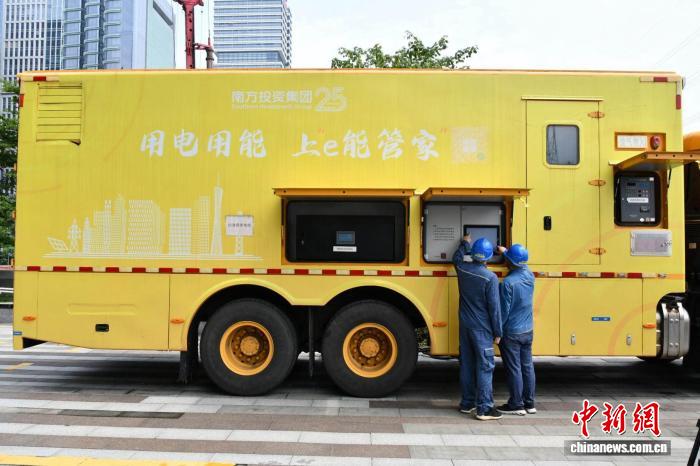
中新网广州12月15日电(王华 龚甸)十五运会和残特奥会期间,城市用电需求持续攀升,广州虚拟电厂以 创新形态,有效筑牢城市电力安全和赛事供电保障,为粤港澳大湾区能源转型贡献"广州智慧"。 从十五运会保电到日常电力调度,从用电高峰"削峰填谷"到绿色能源消纳助力,广州虚拟电厂的"云端 实践"正不断产出可复制的"广州经验"。 移动储能车响应虚拟电厂需求,缓解电网压力。(广州供电局 供图) 虚拟电厂是一种通过先进信息通信技术和软件系统,聚合分布式能源资源(如光伏、储能、可控负荷等) 并协调优化运行的智慧能源管理系统。广州供电局组建了广州市虚拟电厂管理中心,搭建高效协同的运 营管理平台。 截至目前,广州已聚合31家优质运营商,整合中央空调、储能设备、充换电设施等多元可调资源,形成 130万千瓦可调节资源储备规模,具备30万千瓦分钟级快速响应能力,全域"云端调节网络"成型。 广州虚拟电厂通过灵活调节负荷、精准调用储能及优化充换电设施运行,为电网稳定提供多维度支撑, 筑牢"十五运"电力保供防线。 目前,广州虚拟电厂已形成一套成熟的"预案制定-资源调度-应急响应"全流程机制,其"三级调节"技术 体系在多次实战中经受住考验。2 ...