AGI(通用人工智能)

Search documents
OpenAI掌门人曝GPT-6瓶颈,回答黄仁勋提问,几乎为算力“抵押未来”
3 6 Ke· 2025-08-16 04:04
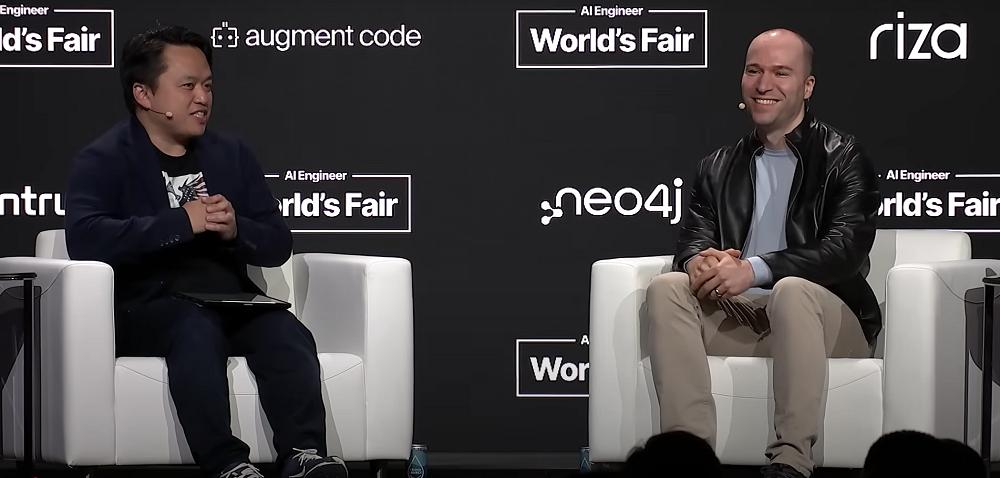
Group 1 - The core observation made by Greg Brockman is that as computational power and data scale rapidly expand, foundational research is making a comeback, and the importance of algorithms is once again highlighted as a key bottleneck for future AI development [1][21][22] - Brockman emphasizes that both engineering and research are equally important in driving AI advancements, and that OpenAI has always maintained a philosophy of treating both disciplines with equal respect [3][6][8] - OpenAI has faced challenges in resource allocation between product development and research, sometimes having to "mortgage the future" by reallocating computational resources originally intended for research to support product launches [8][9][10] Group 2 - The concept of "vibe coding" is discussed, indicating a shift towards serious software engineering practices, where AI is expected to assist in transforming existing applications rather than just creating flashy projects [11][12] - Brockman highlights the need for a robust AI infrastructure that can handle diverse workloads, including both long-term computational tasks and real-time processing demands, which is a complex design challenge [16][18][19] - The future economic landscape is anticipated to be driven by AI, with a diverse model library emerging that will create numerous opportunities for engineers to build systems that enhance productivity and efficiency [24][25][27]

商汤林达华:破解图文交错思维链技术,商汤的“两步走”路径
3 6 Ke· 2025-08-15 09:09
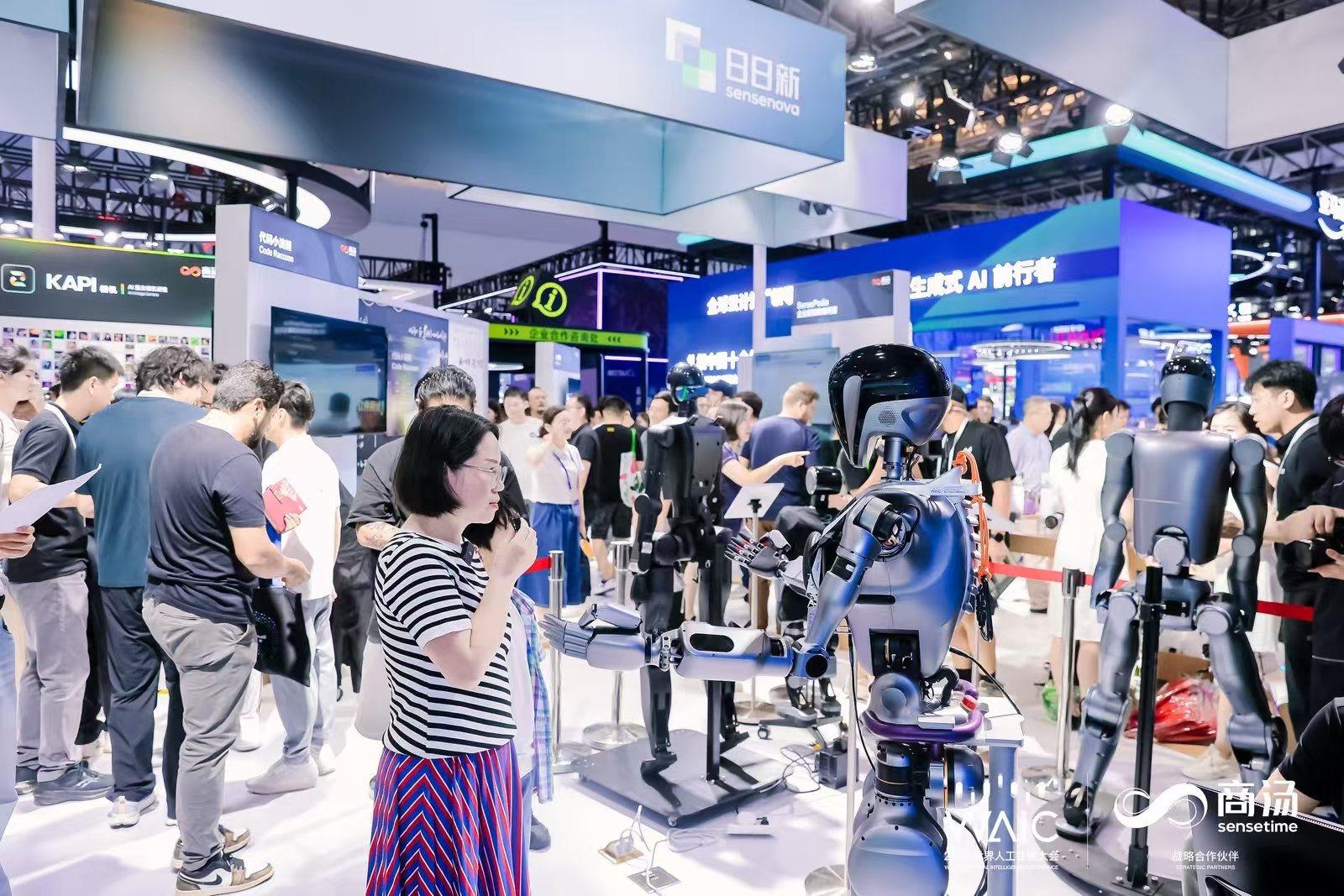
Core Insights - SenseTime has launched the Riri Xin V6.5 multimodal model, which is the first commercial-grade model in China to achieve "image-text interleaved thinking chain" technology [2] - The development of multimodal intelligence is essential for achieving Artificial General Intelligence (AGI), as it allows for the integration of various forms of information processing, similar to human sensory perception [4][5] - SenseTime's approach to building multimodal intelligence involves a progressive evolution through four key breakthroughs, culminating in the integration of digital and physical spaces [5][12] Multimodal Intelligence and AGI - Multimodal intelligence is seen as a necessary pathway to AGI, as it enables autonomous interaction with the external world beyond just language [4] - The ability to process and analyze different modalities of information is crucial for practical applications and achieving comprehensive value [4] Development Pathway - SenseTime's development strategy includes the early introduction of multimodal models and significant advancements in multimodal reasoning capabilities [5][8] - The company has achieved a significant milestone by completing the training of a billion-parameter multimodal model, which ranks first in domestic evaluations [8] Native Multimodal Training - SenseTime has opted for native multimodal training, which integrates multiple modalities from the pre-training phase, as opposed to the more common adaptive training method [7][9] - This approach allows for a deeper understanding of the relationships between language and visual modalities, leading to a more cohesive model [7] Model Architecture and Efficiency - The architecture of the Riri Xin 6.5 model has been optimized for efficiency, allowing for better processing of high-resolution images and long videos, achieving over three times the efficiency compared to previous models [11] - The design philosophy emphasizes the distinction between visual perception and language processing, leading to a more effective model structure [11] Challenges and Solutions in Embodied Intelligence - Transitioning AI from digital to physical spaces requires addressing interaction learning efficiency, which is facilitated by a virtual system that simulates real-world interactions [12] - SenseTime's "world model" leverages extensive data to enhance the simulation and generation capabilities, improving the training of intelligent driving systems [12] Balancing Technology and Commercialization - SenseTime views the pursuit of AGI as a long-term endeavor that requires a balance between technological breakthroughs and commercial viability [13] - The company has established a three-pronged strategy focusing on infrastructure, models, and applications to create a positive feedback loop between technology and business [13][14] Recent Achievements - Over the past year, SenseTime has made significant progress in its foundational technology, achieving innovations such as native fusion training and multimodal reinforcement learning [14] - The commercial landscape is rapidly expanding, with AI performance leading to increased deployment in various intelligent hardware and robotics applications [14]
GPT-5最大市场在印度?Altman最新访谈:可以聊婚姻家庭,但回答不了GPT-5为何不及预期
AI前线· 2025-08-15 06:57
Core Viewpoint - OpenAI's release of GPT-5 has generated significant attention and mixed reactions, with high expectations from the public but also notable criticisms regarding performance and user experience [2][3][4]. Group 1: User Feedback and Criticism - Some users reported dissatisfaction with GPT-5, citing slower response times and inaccuracies in answers, leading to frustration and even subscription cancellations [3][4]. - Users expressed disappointment over the removal of previous models without notice, feeling that OpenAI disregarded user feedback and preferences [3][4]. - Despite the criticisms from individual consumers, the enterprise market has shown a more favorable reception towards GPT-5, with several tech startups adopting it as their default model due to its improved deployment efficiency and cost-effectiveness [4][5]. Group 2: Enterprise Adoption and Testing - Notable companies like Box are conducting in-depth testing of GPT-5, focusing on its capabilities in processing complex documents, with positive feedback on its reasoning abilities [5]. - The rapid adoption of GPT-5 by tech startups highlights its advantages over previous models, particularly in handling complex tasks and reducing overall usage costs [4][5]. Group 3: Future Implications and AI Development - Sam Altman discussed the potential of GPT-5 to revolutionize various tasks, emphasizing its ability to assist in software development, research, and efficiency improvements [10][11]. - The conversation around GPT-5 also touched on the broader implications of AI in society, including the importance of adaptability and continuous learning in a rapidly changing technological landscape [16][19]. - Altman highlighted the significance of mastering AI tools as a critical skill for the future workforce, particularly for young entrepreneurs [15][16].

没有共识又如何?头部企业抢夺标准定义权 机器人“暗战”升级
Di Yi Cai Jing· 2025-08-14 19:31
Core Viewpoint - The development of robots that can recognize their failures and attempt to rectify them is a significant step towards achieving Artificial General Intelligence (AGI) [1][2][3] Group 1: Robot Learning and Performance - Robots are increasingly equipped with data-driven models that allow them to learn from failures and attempt new solutions, showcasing a key technological advancement in the industry [1][3] - The G0 model developed by Starry Sea enables robots to autonomously learn from their mistakes, indicating a shift from traditional robotic systems that follow pre-set instructions [2][3] - The industry is focusing on the development of Vision-Language-Action (VLA) models, which integrate visual, linguistic, and action processing capabilities [5][6] Group 2: Industry Competition and Standards - There is a lack of consensus on the best model architecture, with some companies advocating for unified models while others prefer layered designs, leading to competition over performance standards and data ownership [1][4][9] - The establishment of a benchmark for evaluating the performance of embodied intelligent models is crucial, with companies like Starry Sea releasing datasets to facilitate this [7][8] - The competition extends beyond technology to include the creation of a robust ecosystem that supports developers and enhances the overall industry landscape [8][9] Group 3: Market Opportunities - Companies are targeting specific market segments, such as commercial and public services, to demonstrate the practical applications of their models and capture significant market share [6][9] - The potential for large-scale commercialization in the robotics sector is substantial, with estimates suggesting markets could reach hundreds of billions or even trillions [6][9]

对话王小川:换个身位,做一家「医疗突出」的模型公司
Founder Park· 2025-08-14 07:48
Core Viewpoint - Baichuan Intelligent has released its medical model Baichuan-M2, which outperforms OpenAI's recent open-source models and ranks just below GPT-5 in closed-source performance [2][32]. Group 1: Company Strategy and Adjustments - The founder Wang Xiaochuan reflects on the past year, stating that the company had become fragmented into three separate entities: model development, B2B commercialization, and AI healthcare [3][7]. - The team has been reduced from 450 to under 200 members, with a focus on flattening management levels from an average of 3.6 to 2.4 [8][30]. - Wang emphasizes a return to the company's original mission of "creating doctors for humanity and modeling life," which has led to increased confidence and clarity for the future [7][10]. Group 2: Market Position and Competitive Landscape - Baichuan-M2 is positioned as a leading open-source medical model, achieving a score of 34 on the Health-Bench (Hard mode) evaluation, surpassing OpenAI's models [32][33]. - The release of Baichuan-M2 marks a strategic shift from a broad approach to a focused strategy on healthcare, aiming to contribute to China's AI innovation ecosystem [33][36]. - The company aims to maintain top-tier general capabilities while excelling in medical applications, marking a significant evolution in its positioning [36][39]. Group 3: Challenges and Future Outlook - The complexity of creating an AI doctor is highlighted, as it involves not only high intelligence but also the ability to ask questions and avoid hallucinations, which are critical in medical contexts [39][40]. - The company plans to launch products targeting both doctors and the general public, with a clear roadmap for future developments [37][48]. - Wang predicts that AI-driven personal healthcare will arrive sooner than autonomous driving, emphasizing the necessity of medical professionals in the process [42][43].
免费+广告,AI行业终究也走上了互联网圈的老路
3 6 Ke· 2025-08-13 23:46
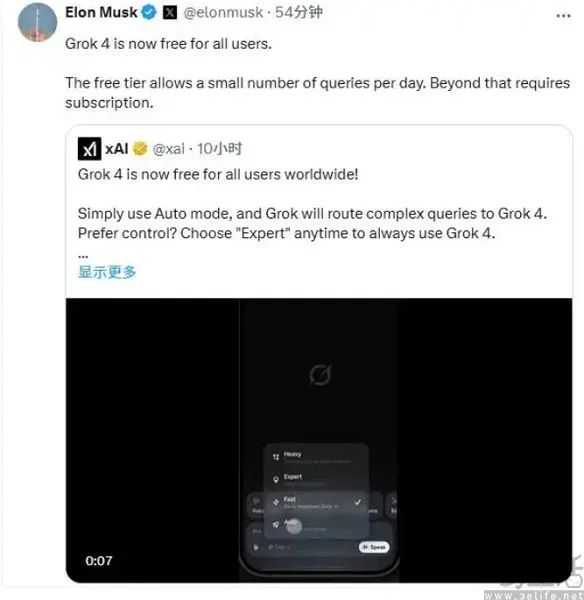
多亏各路互联网厂商孜孜不倦的教育,"免费的才是最贵的"、"天下没有免费的午餐"这类说法早已深入 人心。"免费+广告"这套组合拳更堪称是互联网厂商最有创造力的发明,也将互联网行业的网络效应和 商业公司的盈利需求有机地统一在了一起。 | Elon Musk 2 @ @elonmusk . 54分钟 | | | --- | --- | | Grok 4 is now free for all users. | | | The free tier allows a small number of queries per day. Beyond that requires | subscription. | | axai · 10小时 | | | ok 4 is now free for all users worldwide! | | | Simply use Auto mode, and Grok will route complex queries to Grok 4. | Prefer control? Choose "Expert" anytime to always use Grok 4. | | 显示更多 ...
别再空谈“模型即产品”了,AI 已经把产品经理逼到了悬崖边
AI科技大本营· 2025-08-12 09:25
Core Viewpoint - The article discusses the tension between the grand narrative of AI and the practical challenges faced by product managers in implementing AI solutions, highlighting the gap between theoretical concepts and real-world applications [1][2][9]. Group 1: AI Product Development Challenges - Product managers are overwhelmed by the rapid advancements in AI technologies, such as GPT-5 and Kimi K2, while struggling to deliver a successful AI-native product that meets user expectations [1][2]. - There is a significant divide between those discussing the ultimate forms of AGI and those working with unstable model APIs, seeking product-market fit (PMF) [2][3]. - The current AI wave is likened to a "gold rush," where not everyone will find success, and many may face challenges or be eliminated in the process [3]. Group 2: Upcoming Global Product Manager Conference - The Global Product Manager Conference scheduled for August 15-16 aims to address these challenges by bringing together industry leaders to share insights and experiences [2][4]. - Attendees will hear firsthand accounts from pioneers in the AI field, discussing the pitfalls and lessons learned in transforming AI concepts into viable products [5][6]. - The event will feature a live broadcast for those unable to attend in person, allowing broader participation and engagement with the discussions [2][11]. Group 3: Evolving Role of Product Managers - The skills traditionally relied upon by product managers, such as prototyping and documentation, are becoming less relevant due to the rapid evolution of AI technologies [9]. - Future product managers will need to adopt new roles, acting as strategists, directors, and psychologists to navigate the complexities of AI integration and user needs [9][10]. - The article emphasizes the importance of collaboration and networking in this uncertain "great maritime era" of AI development [12].

3B模型性能小钢炮,“AI下半场应该训练+验证两条腿跑步”丨上海AI Lab&澳门大学
量子位· 2025-08-08 07:23
Core Viewpoint - The article discusses the need for a balanced approach in AI development, emphasizing the importance of both training and validation processes to achieve advancements in artificial general intelligence (AGI) [1][14]. Group 1: AI Development Phases - The transition from the "first half" of AI development, focused on problem-solving, to the "second half," which emphasizes defining problems and evaluating progress, is highlighted [6][9]. - The introduction of the CompassVerifier model aims to address the validation shortcomings in AI, allowing for a more robust evaluation of AI outputs [17][21]. Group 2: Validation Challenges - Current validation methods are criticized for their reliance on rigid rules and the unreliability of general models, which can lead to inconsistent results [18][19]. - The lack of a systematic iterative framework for validation has hindered the progress of AI models, necessitating the development of new validation tools [15][16]. Group 3: CompassVerifier and VerifierBench - CompassVerifier is designed to enhance the validation capabilities of AI models across various domains, achieving superior accuracy compared to existing models [35][37]. - VerifierBench serves as a standardized benchmark for evaluating the performance of different validation methods, addressing the community's need for high-quality validation metrics [30][32]. Group 4: Performance Metrics - CompassVerifier-32B achieved an average accuracy of 90.8% and an F1 score of 87.7% on VerifierBench, outperforming larger models like GPT-4 and DeepSeek-V3 [35][36]. - The model's performance remains high even when faced with new, untrained instructions, demonstrating its robustness in complex validation scenarios [38]. Group 5: Future Implications - The article suggests that as AI progresses, models may evolve to self-verify and self-improve, potentially leading to a new paradigm in AI learning and development [45].

GPT-5王者降临,免费博士级AI全面屠榜,百万程序员不眠之夜,7亿人沸腾
3 6 Ke· 2025-08-08 07:16
GPT-5,震撼登场!距离22年11月的ChatGPT,再到23年3月的GPT-4,GPT-5竟隔了两年半之久。这次的深夜直播,国内有数万吃瓜群众在线 观看。至少按OpenAI的说法,他们离AGI又近了一步。 全球用户瞩目中,GPT-5终于震撼登场了! OpenAI用一个多小时的超长发布会,全方位展示了GPT-5的炸裂性能。 奥特曼领衔,出场人数众多,华人依旧耀眼 正值每周7亿人使用ChatGPT之际,GPT-5重磅发布了。它是对GPT-4的一次重大升级,更是标志着OpenAI在实现AGI道路上的一个重要里程碑。 OpenAI介绍说,这是我们迄今为止最优秀的AI系统,智能远超之前的所有模型,在编码、数学、写作、健康、视觉感知上都性能卓越。 这个统一的系统,包含一个能够解答大多数问题的智能高效模型、一个能够解决更复杂问题的更深层次的推理模型(GPT-5 Thinking),以及一个实时路 由器。 而GPT-5、GPT-5-mini、GPT-5-nano等多版本的分层推出,意味着OpenAI正在主动构建一个以GPT-5为底层核心的通用智能操作系统。 从现在开始,GPT-5将成为ChatGPT中的默认模型,GPT- ...

【对谈"硅谷精神之父"凯文凯利】问了凯文·凯利17个问题,我终于悟了!
老徐抓AI趋势· 2025-08-07 01:05
Group 1: Education - In the AI era, it is crucial to focus on experiential learning rather than traditional academic pressure for children, as many future job roles may not yet exist [6][7] - Parents are advised to cultivate foundational skills in children, such as curiosity, critical thinking, self-motivation, and learning ability, rather than merely accumulating knowledge [6][7] Group 2: Young Adults' Career Choices - Young adults should aim to be "unique" rather than just "better" than their peers, as the future will favor those who can solve problems in innovative ways [7] - The job market will increasingly reward specialization and differentiation over standardization, making niche expertise more valuable [7] Group 3: Artificial General Intelligence (AGI) - The realization of AGI is deemed very difficult and unlikely to occur in the near future, with AI expected to remain specialized rather than universal [8][9] - Concerns about AI replacing human jobs are mitigated by the understanding that AI will not achieve comprehensive superiority across all fields [8][9] Group 4: Medical Advancements - The primary bottleneck in drug development is clinical trials, not the discovery of new drugs, indicating that AI's role in speeding up medical breakthroughs may be limited [11][12] - The future of gene editing and brain-machine interfaces is expected to initially benefit the wealthy, but technology will eventually become more accessible to the general population [12][13] Group 5: Autonomous Driving and Robotics - Progress in autonomous driving and robotics is anticipated to be slower than public expectations, with significant uncertainty regarding timelines for widespread adoption [14][15] - Continuous observation of technological advancements is recommended rather than making premature investments [14][15] Group 6: China's AI Opportunities - China is positioned favorably in the AI landscape due to its vast data resources, high talent density, and robust infrastructure in fields like healthcare and genetic sequencing [18] - The only significant shortcoming identified is in chip technology, but this is viewed as a temporary issue that can be resolved over time [18] Group 7: Future Methodology - The emphasis is on adapting to future changes rather than attempting to predict them, with a focus on continuous observation and timely decision-making [19][25] - The ability to respond to rapid changes and maintain curiosity and learning agility is highlighted as essential for success in the evolving landscape [25]