大模型

Search documents
卓越睿新20260227
2026-03-01 17:22
Company and Industry Summary Company Overview - The company specializes in AI-driven educational solutions, focusing on higher education and has delivered hundreds of intelligent agents based on large model foundations to clients, significantly enhancing the effectiveness of teaching resources [2][4]. Core Industry Insights - The company operates in the education technology sector, specifically targeting higher education institutions, and does not currently engage in K12 education [4]. - The intelligent agents are designed to provide systematic capabilities around key teaching processes, covering multiple teaching nodes beyond simple Q&A, aimed at improving the entire teaching workflow [2][4]. Key Points and Arguments Intelligent Agent Capabilities - For teachers, the intelligent agents offer capabilities in course design, lesson preparation, and iterative teaching content, including automatic course design generation and customized course creation support [2][5]. - The system automates the assignment process from distribution to collection, allowing teachers to issue assignments using natural language commands, with the system providing statistics on submission and grading [2][6]. - For students, the AI companion facilitates guided learning, reducing the need for students to formulate questions, and supports 24/7 interaction to reinforce knowledge acquisition [2][6]. Commercialization Strategy - The company offers two commercial product forms: tool delivery for clients capable of using tools independently and result delivery, which provides usable outcomes directly [3][7]. - The result delivery model is expected to be a key growth driver in 2025, alongside tool delivery, forming a "dual-driven" growth framework [3][7]. Unique Selling Proposition - The company is the only player in its niche with self-developed large models that have achieved commercial viability, generating profit from day one of launch [3][12]. - It has established a high level of trust with clients, enabling access to extensive teaching resources and first-hand educational materials, which significantly mitigates issues related to data quality [12][13]. Market Position and Growth Potential - The average customer transaction value is in the hundreds of thousands, but the top client has reached 10 million, indicating a potential for at least a tenfold increase in scale [3][18]. - The company anticipates that the average investment from schools could reach 5 million RMB, which is manageable for any university, suggesting significant growth potential [18]. Financial Projections - The company aims to maintain a net profit margin of 20%-25% and expects gross margins to improve due to technological advancements and cost efficiencies [18][19]. - R&D investment is projected to remain around 15%-20% of revenue, supporting ongoing innovation and competitive positioning [19]. Additional Important Insights - The company has developed a medical model ahead of the market, utilizing administrative law pathways for training and leveraging extensive real medical data [10][11]. - The procurement process in higher education is characterized by a tendering system, with varying decision-making structures across institutions, impacting the sales cycle and project implementation [11][14]. - The company’s competitive advantage lies in its ability to provide tailored solutions that meet the specific needs of educational institutions, supported by a large team distributed across numerous cities for effective service delivery [12][13]. This comprehensive overview highlights the company's strategic positioning within the education technology sector, its innovative product offerings, and the potential for significant growth in the coming years.
齐心集团(002301) - 2026年2月28日投资者关系活动记录表
2026-03-01 09:38
Group 1: Company Overview - The company focuses on B2B office supplies procurement, targeting high-quality clients such as state-owned enterprises, financial institutions, and Fortune 500 companies [2] - The digital operation platform integrates automation and AI to enhance service efficiency and customer experience [2] Group 2: Business Segments - Office supplies account for nearly 50% of the company's business, while MRO industrial products have rapidly developed into a core revenue source [4] - Employee welfare products and marketing materials are growing quickly due to increased online penetration [4] Group 3: Future Development Directions - The company aims to deepen its self-owned brand strategy by collaborating with quality IPs and enhancing product structure [5] - Future growth will focus on expanding the share of self-owned brand products in B2B office procurement [5] Group 4: Client Base and Services - The MRO industrial products platform serves major clients including State Grid, China Southern Power Grid, and China National Petroleum [6] - The company plans to optimize profit margins by focusing on industry-specific products and enhancing service value through direct client engagement [8][9] Group 5: Profit Growth Drivers - Strategic focus on high-quality clients and B2B office supplies, MRO industrial products, and employee welfare will drive profitability [7] - The company will leverage digital platforms and AI models to improve operational efficiency and order acquisition rates [7] Group 6: Brand and International Expansion - The company has a stable overseas business development strategy, focusing on cross-border e-commerce in mature markets like Asia and Europe [11] - The current goodwill related to the company is reduced, with a remaining balance of 28.9 million yuan for a specific brand [10]

传媒互联网产业行业研究:恒生科技继续回调,“沪七条”企稳房市价格锚
SINOLINK SECURITIES· 2026-03-01 08:19
Investment Rating - The report indicates a neutral investment rating for the industry, with expectations of limited movement relative to the market in the next 3-6 months [53]. Core Insights - The coffee industry remains in a high-growth phase, with brands actively opening new stores and a slowdown in price competition. The decline in Arabica coffee futures prices is expected to improve cost structures [3]. - The tea beverage sector is facing some pressure, with concerns over potential "sugar tax" regulations impacting market sentiment, despite resilient data [3]. - The e-commerce sector continues to be under pressure due to the domestic consumption environment, showing lackluster performance [3]. - Music streaming platforms are seen as quality internet assets driven by domestic demand, with a focus on cost-effective consumption. NetEase Cloud Music's revenue for 2025 is slightly below expectations, but growth in subscription services is anticipated for 2026 [3]. - The virtual assets and trading platforms are experiencing pressure from geopolitical risks, with ongoing regulatory developments in Hong Kong aimed at establishing a licensing system for virtual asset service providers [3]. - In the automotive service sector, several major automotive service chains are expanding their market presence with aggressive store opening policies, while OEMs are struggling with inventory pressures in the fuel vehicle segment [3]. - The real estate sector is stabilizing with new policies in Shanghai aimed at price stabilization, suggesting a focus on companies like Beike-W [3]. - The AI and cloud sectors are facing challenges due to tightening dollar liquidity and concerns over profitability among internet giants, but the long-term outlook for AI remains positive [3]. Summary by Sections 1.1 Consumer & Internet - The Hang Seng non-essential consumer index saw a cumulative decline of 1.82%, outperforming the Hang Seng index by 2.64 percentage points [8]. - Notable stock performances include Tims (+21.35%), Bawang Tea (+5.71%), and Haidilao (+4.45%), while Luckin Coffee (-10.08%) and Mixue Ice Cream (-9.07%) faced significant declines [8][9]. 1.2 Platform & Technology 1.2.1 Streaming Platforms - The Hang Seng media index dropped by 4.14%, underperforming both the Hang Seng index and the Hang Seng technology index [17]. - Key stock performances included Netflix (+22.33%) and Spotify (+4.96%), while iQIYI (-12.09%) and Tencent Music (-3.95%) struggled [17]. 1.2.2 Virtual Assets & Trading Platforms - As of February 27, the global cryptocurrency market cap reached $240.27 billion, with Bitcoin and Ethereum prices at $65,884 and $1,931.32, respectively [25]. 1.2.3 Automotive Services - The Hang Seng composite index showed a cumulative increase of 0.42%, with notable stock performances from O'Reilly (+0.41%) and AutoZone (+0.19%) [33]. 1.2.4 O2O - The Hang Seng internet technology index declined by 2.49%, with stocks like Cao Cao Mobility (+9.77%) performing well, while major players like Didi Global (-5.17%) faced declines [39]. 1.2.5 AI & Cloud - The Nasdaq internet index increased by 0.76%, with TSMC (+1.09%) showing positive performance, while major tech companies like Alibaba (-6.69%) and Baidu (-8.41%) faced declines [46].



刚刚,庞若鸣跳槽OpenAI!放弃14亿年薪,在Meta只待了7个月
猿大侠· 2026-02-28 13:31
【导读】 不过7个月,华人AI巨星庞若明从Meta,直接跳到了OpenAI。小扎曾为他开出高达2亿 薪酬包,最终也没留住人才。 太劲爆了! 入职Meta「超级智能实验室」仅7个月,华人明星研究员庞若明(Ruoming Pang)转投OpenAI。 此前,他曾担任苹果AI/ML基础模型团队负责人,却因内部不合,转身离开。 为了挖走庞若明,小扎曾为他开出高达2亿美金薪酬包。在此期间,他主要在MSL中,担任AI基础设 施负责人。 Information爆料称,过去几个月OpenAI一直猛攻,极力挖角。 短短一年的时间,庞若明从苹果到Meta,再到OpenAI完成了三级跳。 一大批华人研究员被纷纷招入麾下,拿走高达9位数的薪酬包。 在苹果担任基础模型团队(AFM)的负责人——庞若鸣,也不例外。 2亿美金AI巨星,OpenAI抢走了 顶尖AI人才,依旧是各大巨头争相竞逐的「香饽饽」。 去年,小扎在全世界掀起的人才争夺战,足以用血腥来形容—— 去年7月,庞若鸣爆出即将入职Meta,最高薪酬记录也被刷爆,从1万美金飙升到2亿美金。 他的离开,如同一记重拳击,让苹果AI的研发蒙上了一层阴影。 在苹果任职期间,庞若鸣主要带领百 ...



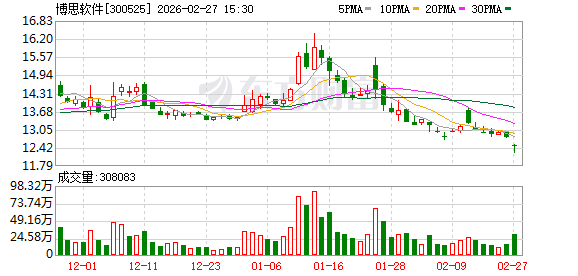
博思软件:公司自主研发了具有丰富财税知识和高价值思维分析推理能力的垂类大模型“坤元万象大模型”
Zheng Quan Ri Bao· 2026-02-27 13:35
Core Viewpoint - The company, as a leading provider of intelligent financial services in China, has developed a specialized large model named "Kun Yuan Wan Xiang" that enhances efficiency and quality in various sectors including healthcare and finance [2] Group 1: Company Overview - The company is recognized as a national leader in financial digitalization services [2] - It has independently developed a large model with extensive financial knowledge and analytical reasoning capabilities [2] Group 2: Product Applications - The model has been implemented across multiple business lines and scenarios, effectively addressing client challenges and improving operational efficiency [2] - In the budget preparation scenario, administrative units utilize intelligent assistance features to resolve issues such as unclear data sources and staff shortages [2] - In the departmental final accounts scenario, tasks that previously took two weeks have been reduced to 1-2 days, enhancing both efficiency and the quality of financial information [2]

从Kimi不急于上市说起
3 6 Ke· 2026-02-27 13:05
Core Insights - Kimi has gained significant attention recently, with a valuation exceeding $10 billion after raising $1.2 billion in funding within two months [1] - The company is facing competitive pressure from established players like Minimax and Zhizhu, which have seen substantial stock price increases since their IPOs [3] - Kimi's strategy appears to be shifting towards a potential IPO, despite previous statements indicating no rush to go public [3][8] Funding and Valuation - Kimi's recent funding round of $1.2 billion is comparable to the combined amounts raised by Minimax and Zhizhu during their IPOs [3] - The company achieved a valuation of $33 billion previously, driven by its innovative technology and market positioning [5] Competitive Landscape - Kimi has been focusing on the C-end market in China, but competition from other AI models like Doubao, Qianwen, and Yuanbao has intensified [5][9] - The company is now considering expanding its focus to the B-end market, where it lacks resources compared to larger competitors [9][10] Product Development and Market Position - Kimi's K2.5 model has shown strong performance in programming model rankings, but it has faced challenges from Minimax's M2.5, which has outperformed K2.5 in recent weeks [14] - The pricing strategy for Kimi's models is higher compared to competitors, which may hinder its market penetration [15][19] Strategic Direction - Kimi is exploring the integration of intelligent agents into its product offerings, aiming to enhance its commercial viability [11][21] - The company is also considering the timing of its IPO, recognizing the importance of market conditions and competitive dynamics [20][28] Future Outlook - Kimi's leadership acknowledges the need for significant technological advancements with the K3 model to improve its competitive position [25] - The company has sufficient cash reserves to sustain operations for several years, but the window for a favorable IPO may not remain open indefinitely [28]

印奇挂帅后,阶跃星辰要做大模型第三股?
2 1 Shi Ji Jing Ji Bao Dao· 2026-02-27 12:25
Core Viewpoint - AI model company Jumpshare is considering an IPO on the Hong Kong Stock Exchange, aiming to raise approximately $500 million, shortly after completing a record-breaking B+ round financing of over 5 billion yuan [1] Group 1: Company Developments - Jumpshare's new chairman, Yin Qi, has a strong background in technology and strategy, focusing on organizational change and commercialization [1] - The company has developed a series of models called the Step series, which cover language, multi-modal, and reasoning capabilities, and has open-sourced several leading multi-modal models [1][2] - The company plans to focus on creating AI agents for smart terminal devices, particularly in automotive, mobile, and IoT applications, with API call volume expected to grow nearly 170% over three consecutive quarters by the end of 2025 [3] Group 2: Market Context - The competition in the domestic AI model market has shifted from purely parameter scale and general capabilities to a focus on application depth and industry integration [3] - The Hong Kong stock market is experiencing an unprecedented wave of AI listings, with several companies successfully going public and achieving significant market valuations [4][5] - Jumpshare's business model combines "end + cloud" revenue streams, charging for licenses on the device side and consumption on the cloud side, which is seen as sustainable in the current market [6]
涨疯了vs跌傻了:港股这场极致分化,透露了2026年最大的赚钱密码
Sou Hu Cai Jing· 2026-02-27 10:58
Core Viewpoint - The Hong Kong stock market has experienced significant divergence in performance, with certain sectors like materials and real estate seeing substantial gains, while technology and non-essential consumer sectors have faced declines. This divergence is attributed to a fundamental shift in market pricing logic from "storytelling" to "performance" and "policy certainty" [2][3]. Group 1: Sector Performance - The Hang Seng Composite Industry Index showed extreme divergence, with materials up 23.62%, real estate up 20.02%, energy up 18.8%, and industrials up 15.87%. In contrast, information technology fell 9.74%, telecommunications dropped 2.39%, and non-essential consumer goods slightly declined by 0.65% [1]. - The real estate sector benefited from policy confirmations aimed at stabilizing the market, leading to a valuation recovery and a 20.74% increase in real estate management and development sub-sectors [3]. - The energy sector saw significant gains, with oil and gas up 15.99% and coal up 21%, driven by rising commodity prices and improved demand expectations [4]. Group 2: Drivers of Divergence - The first driver of divergence is the unexpected strength of growth-stabilizing policies, which alleviated risks in the real estate chain, leading to a recovery in the real estate sector [3]. - The second driver is the continuous rise in commodity prices, supported by domestic growth policies and a weaker dollar, which positively impacted the performance of the energy and materials sectors [4]. - The third driver is the significant pressure on the information technology sector, stemming from a restructuring of industry logic, mismatched index structures, and sensitivity to liquidity changes [5]. Group 3: Consumer Sector Insights - The consumer sector displayed internal divergence, with essential consumption rising by 5.71% while non-essential consumption fell by 0.65%, indicating a cautious consumer sentiment [6]. - Within non-essential consumption, specialized retail dropped by 10.91%, reflecting a lack of confidence in discretionary spending [6]. - Financial services, utilities, and healthcare sectors showed moderate gains, benefiting from stable cash flows but lacking strong catalysts for growth [6]. Group 4: Future Market Outlook - The current divergence in the market is expected to continue in the short term, with a focus on the upcoming national policy measures and real estate sales data [7]. - The technology sector may remain under pressure, with attention on changes in U.S. Federal Reserve interest rate expectations and the commercialization progress of AI by leading companies [7]. - Mid-term, profitability certainty is anticipated to become a core pricing anchor, with two main lines to watch: cyclical recovery in domestic economy and the growth potential of AI-related companies [7].
抢跑港股大模型第三股?阶跃星辰被传将赴港IPO,千里科技印奇一月前“挂帅”担任董事长
Jin Rong Jie· 2026-02-27 10:33
Core Viewpoint - The company Jieyue Xingchen is reportedly considering an IPO on the Hong Kong Stock Exchange, following significant recent developments and funding rounds, amidst a competitive AI landscape where it aims to establish its position as one of the "Big Six" AI model companies in China [1][2]. Group 1: Company Developments - Jieyue Xingchen has completed a record-breaking B+ round financing of over 5 billion RMB, marking the highest single financing in the Chinese AI model sector in the past 12 months [4]. - The company was founded in April 2023 by Jiang Daxin, a former global vice president at Microsoft, who has extensive experience in developing major products like Bing and Azure [3]. - The appointment of AI veteran Yin Qi as chairman is expected to enhance the company's strategic direction and commercial viability, as he has a strong background in AI and business [5][6]. Group 2: Market Context - The recent IPOs of other companies in the "Big Six" AI model group, such as Zhipu and MiniMax, have attracted significant market attention, with their stock prices reaching new highs during the Spring Festival [2]. - The competitive landscape in the AI sector is intensifying, with major players like ByteDance, Alibaba, and Tencent entering the market, leading to a potential reshuffling of industry leaders [6].

我对AI时代的一些看法
雪球· 2026-02-27 08:25
Group 1 - The core viewpoint is that AI differs from previous technological revolutions by reducing human connections and replacing labor with computational power, leading to stronger deflationary attributes [3][4]. - As AI advances, human employment and demand are expected to decrease [4]. - The barriers to entry in AI are higher than in past technological revolutions, with benefits concentrated among those with computational power and large models [5][6]. Group 2 - Computational power is identified as the most critical aspect of AI, fundamentally replacing human labor [7][8]. - The technology behind computational power is rapidly evolving, presenting ongoing opportunities [11][12]. - There is uncertainty regarding the superiority of open-source versus closed-source large models, but both require significant computational power [9][10]. Group 3 - Predictions suggest that AI devices with only voice input will replace smartphones in the coming years, although there are doubts about the feasibility of humanoid robots due to unresolved issues with AI hallucinations [13][15]. - The emergence of niche hardware beyond smartphones is anticipated, such as the popular AI recording card, which addresses specific consumer needs that smartphones cannot fulfill [19][20]. - The market for these niche hardware products is fragmented, making it challenging to establish dominant players [22][23]. Group 4 - Opportunities in application software are expected to be significantly smaller compared to the mobile internet era, as large models can cross domains and potentially threaten specialized software companies [24]. - The complexity of the AI application software landscape creates challenges in understanding investment value, with many variables at play [24]. - Despite challenges, the market for application software in China may grow due to the increasing cost-effectiveness of AI compared to human labor, although international expansion remains a concern [24]. Group 5 - The greatest opportunities in AI applications lie in the integration of software and hardware in industrial equipment [25]. - While large models face challenges in precision and understanding physical laws, there is potential for Chinese companies to leverage stronger models to surpass traditional giants in specific areas [25]. - The industrial sector presents more opportunities for significant market players compared to the consumer electronics sector, which faces challenges in achieving high market valuations [25].