
工匠精神

Search documents
《大汉工匠》:工匠精神的历史溯源
Bei Jing Ri Bao Ke Hu Duan· 2025-09-15 07:45
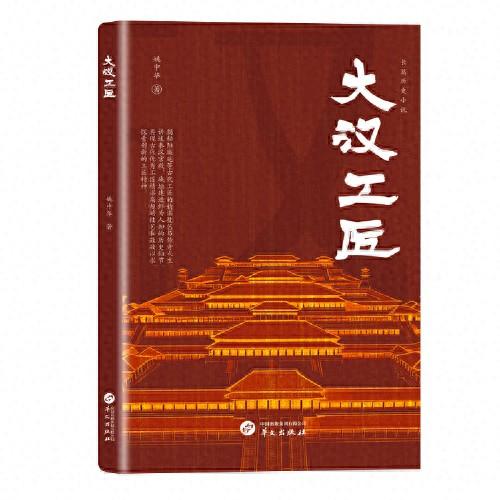
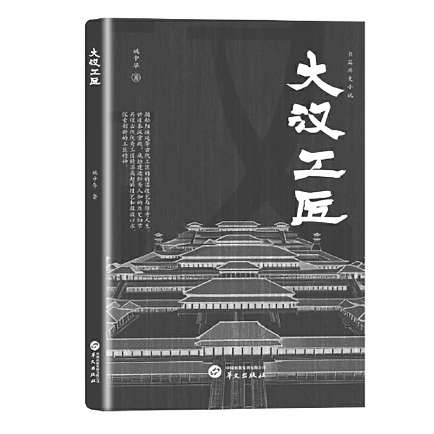
Core Perspective - The novel "The Great Han Craftsman" by Yao Zhonghua explores the historical significance and the intricate process behind the construction of the Han Dynasty's palaces and city, focusing on the life and contributions of the craftsman Yang Chengyan [2][3][4]. Group 1: Historical Context - The story is set in the early Western Han Dynasty, a time when the newly established emperor Liu Bang sought to rebuild after the destruction of the Qin Dynasty's palaces [3][4]. - Yang Chengyan, a craftsman from a family of stonemasons, played a crucial role in the construction of significant structures such as the Chang'an City, Chang Le Palace, and Wei Yang Palace [3][4]. Group 2: Construction Achievements - Yang Chengyan successfully transformed the dilapidated Xing Le Palace into the grand Chang Le Palace in two years, earning the emperor's praise and a high-ranking position [4]. - He later led the construction of Wei Yang Palace, overcoming numerous challenges to complete it within two years, significantly advancing the architectural standards of the time [4][5]. - The construction of Chang'an City, which began in 194 BC, was completed after five years, establishing it as a model for ancient capitals and leaving a lasting impact on architectural history [4][5]. Group 3: Craftsmanship and Spirit - The novel emphasizes the dedication and craftsmanship of thousands of workers under Yang Chengyan's leadership, showcasing their commitment to quality and excellence in their work [5]. - It highlights the enduring relevance of the craftsman spirit in contemporary society, encouraging readers to pursue excellence in their respective fields [5]. Group 4: Historical Narrative - The narrative incorporates rich historical details, depicting the political turmoil of the early Han Dynasty, including the struggles for power and governance [6]. - Through Yang Chengyan's perspective, the novel provides a unique lens on the challenges faced by the new Han Dynasty in establishing stability amidst chaos [6].

工匠精神的历史溯源
Bei Jing Wan Bao· 2025-09-12 08:46
Core Perspective - The novel "The Great Han Craftsman" by Yao Zhonghua explores the historical significance and the intricate process behind the construction of the Han Dynasty's palaces and city, focusing on the life and contributions of the craftsman Yang Chengyan [2][3][6] Group 1: Historical Context - The story is set in the early Western Han Dynasty, a time when the newly established emperor Liu Bang sought to rebuild after the destruction of the Qin Dynasty's palaces [3][7] - The novel highlights the challenges faced in selecting a new capital and constructing the palaces, emphasizing the strategic decisions made by key figures like Prime Minister Xiao He [3][4] Group 2: Yang Chengyan's Contributions - Yang Chengyan, a craftsman from a family of stonemasons, played a pivotal role in the construction of significant structures such as the Chang'an City, Chang Le Palace, and Wei Yang Palace [4][5] - His innovative techniques and leadership allowed for the successful completion of these monumental projects, which set new standards in ancient Chinese architecture [5][6] Group 3: Architectural Achievements - The Chang Le Palace and Wei Yang Palace are described as architectural marvels, showcasing a blend of Qin craftsmanship and Chu decorative styles, reflecting the aesthetic values of the Han Dynasty [5][6] - The construction of Chang'an City is noted for its comprehensive planning and defensive structures, marking it as a model for ancient capitals [5][6] Group 4: Cultural Significance - The novel not only recounts the architectural feats but also delves into the lives of various characters, illustrating the spirit of craftsmanship and dedication that characterized the era [6][7] - It serves as a literary representation of the importance of craftsmanship in societal progress, encouraging contemporary readers to appreciate and pursue excellence in their own fields [6][7]
“中文+职业技能”融合教育赋能中国故事传播
Xin Hua Ri Bao· 2025-09-11 23:50
Core Viewpoint - The integration of "Chinese + vocational skills" is essential for effectively telling China's story and enhancing international communication capabilities, focusing on practical skills and cultural understanding [1][7]. Group 1: Integration of Skills and Culture - The core advantage of "Chinese + vocational skills" lies in its practicality, emphasizing the need to embed Chinese story elements into skill training based on occupational scenarios [2]. - Different vocational fields require tailored story themes that align with specific skill learning needs, such as focusing on "Chinese technological innovation" in manufacturing and "Chinese agricultural modernization" in agriculture [2]. - The teaching model should shift from a fragmented approach to a cohesive one, where real work tasks guide the learning of Chinese language and cultural narratives [2][3]. Group 2: Practical Learning Approaches - The "learning by doing" approach is crucial for internalizing stories and skills, allowing learners to experience Chinese logic and cultural nuances through hands-on practice [3]. - Teachers should incorporate story details into skill demonstrations, making cultural elements visible and relatable [3]. - Designing "story-based tasks" in practical exercises encourages learners to actively engage with and convey Chinese stories [3]. Group 3: Real-World Application - Skills training should extend to real workplace environments, collaborating with overseas Chinese enterprises to allow learners to apply and share Chinese stories in authentic settings [4]. - Establishing practice bases with Chinese enterprises in Belt and Road Initiative countries enables learners to observe and participate in real work processes [4]. Group 4: Resource Integration for Sustainability - A sustainable storytelling ecosystem requires the integration of resources from government, enterprises, educational institutions, and media, creating a feedback loop for continuous improvement [5][6]. - Government policies should support the integration of "Chinese + vocational skills" with storytelling, including establishing funding for quality teaching resources and promoting mutual recognition of qualifications [6]. - A resource-sharing platform should be developed to provide access to Chinese story case studies and teaching materials for overseas learners [6]. Group 5: Future Directions - The practice of "Chinese + vocational skills" in storytelling represents a shift towards practical skills and real experiences, allowing international learners to appreciate China's cultural richness and development wisdom [7]. - Continuous exploration of deeper integration methods between "Chinese + vocational skills" and storytelling is necessary to adapt to evolving demands and audience characteristics [7].
北京派出105名选手参加第三届全国技能大赛,“00”后超六成
Xin Jing Bao· 2025-09-11 14:39
Group 1 - The third National Skills Competition will open on September 19 in Zhengzhou, with the Beijing delegation consisting of 105 participants competing in 96 projects, including mechatronics and industrial 4.0 [1] - This competition is the highest standard national vocational skills event in China, featuring 106 competition projects, including 66 for World Skills selection and 40 for national selection [1][2] - The theme of this year's competition is "Skills Illuminate the Future," highlighting the importance of skill development in the workforce [1] Group 2 - Among the participants from Beijing, 64 are students born after 2000, representing various vocational colleges, with some having prior experience in the competition [2] - The age range of the participants varies significantly, from 17 to 48 years old, showcasing a diverse skill talent pool in Beijing [2] - The Beijing Human Resources and Social Security Bureau emphasizes the contribution of over 3 million skilled workers in the city, with 1.24 million being high-skilled talents [2] Group 3 - The Beijing delegation includes not only students but also workers from enterprises and flexible employment backgrounds, such as a 48-year-old maternity nurse who has enhanced her skills through pre-competition training [3] - A systematic training program was implemented to improve the participants' competitive abilities, focusing on psychological and physical training [3] - The competition will adopt an integrated model of "competition, exhibition, performance, and conference," featuring various activities alongside the skills competition [3] Group 4 - A notable project from the Beijing delegation is "The Animated Epic on Film: The Craft of Celluloid," which combines traditional animation techniques with modern aesthetics, representing a fusion of intangible cultural heritage and vocational education [4]
传授技艺 传承匠心(记者手记)
Ren Min Ri Bao· 2025-09-10 22:13
Core Viewpoint - The article highlights the exemplary role of Bo Yiyong as both a teacher and an innovator in vocational education, emphasizing the importance of integrating craftsmanship spirit into training future talents [1] Group 1: Educational Approach - Bo Yiyong's method involves a combination of practical experience and theoretical knowledge, creating a "golden course" through industry-education integration [1] - The emphasis is placed on the idea that vocational education should not only impart skills but also instill a sense of craftsmanship [1] Group 2: Student Experience - Students share memorable experiences with Bo Yiyong, noting his dedication to their growth, such as his commitment during peak seasons like the Spring Festival [1] - His responsiveness and support for students, even at late hours, reflect his prioritization of student development [1] Group 3: Future Impact - The article suggests that under Bo Yiyong's influence, more students from Nantie University will embody the spirit of craftsmanship and contribute significantly to the railway industry [1]
齐商银行员工在山东省财贸金融系统演讲比赛中获佳绩
Qi Lu Wan Bao· 2025-09-10 09:12
Core Viewpoint - The event organized by the Shandong Provincial Financial and Trade Union highlights the importance of inheriting the spirit of labor and craftsmanship, showcasing the dedication of financial workers in serving the real economy [1] Group 1: Event Overview - The theme of the speech competition was "A Century of Labor Movement, Advancing on a New Journey," held in Tai'an [1] - Participants focused on three main themes: inheriting the original intention of a century, promoting the spirit of craftsmanship, and demonstrating the power of role models [1] Group 2: Company Participation - Qishang Bank actively organized its employees to participate in the competition [1] - Employees Li Yujia and Liu Xinzhu represented the bank, sharing inspiring stories of their commitment to the financial sector and service to the real economy [1] Group 3: Achievements - Li Yujia and Liu Xinzhu stood out among 50 participants from the provincial financial system, winning the second prize and an excellence award, respectively [1]
华东首秀!工匠精神在竞技赛场闪光
Zhong Guo Min Hang Wang· 2025-09-10 07:02
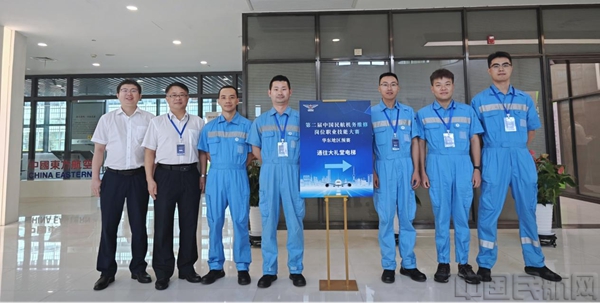
比赛以"理论+实操"全方位考察选手的维修综合能力:在理论环节,精准掌握航空原理与手册指导排 故;在实操环节,高效应对航线故障排查、发动机部件拆解、线路改装及结构修复等模拟场景。紧张激 烈的比拼中,江西航团队以严谨作风与专业素养赢得评委一致认可。 69 (44 T r 7 JIANGXI AIR 三十二 7 中国民航网 通讯员熊邦 报道:近日,第二届中国民航机务维修岗位职业技能大赛华东地区预赛在上海 圆满落幕。大赛由民航华东地区管理局主办,二十余家民航单位参赛,共110名机务精英竞技。江西航 空机务代表队首次亮相华东赛场,5名参赛队员全部荣获优秀奖。 精兵强将,蓄势而发 前期,通过江西省总工会"天工杯"航空运输行业职工职业技能竞赛层层选拔,遴选出钟强平/程文堂 (航线维护)、张岩(发动机维修)、刘新海(线路改装)、张令伶(结构修理)五名骨干。赛前,机 务工程部牵头组建专项保障团队,构建"考前精准辅导、考中实时协作、考后深度复盘"全流程体系,全 方位赋能队员,支持全面发展。 赛场砺剑,初战成锋 (本文图片均由江西航空提供) 党建引领,匠心传承 此次"首秀"不仅是技能的淬炼,更是江西航党建引领下"强技术、抓基层、控 ...
“一根绳子磨百年”的企业——见学青岛海丽雅集团有感
Sou Hu Cai Jing· 2025-09-06 18:53
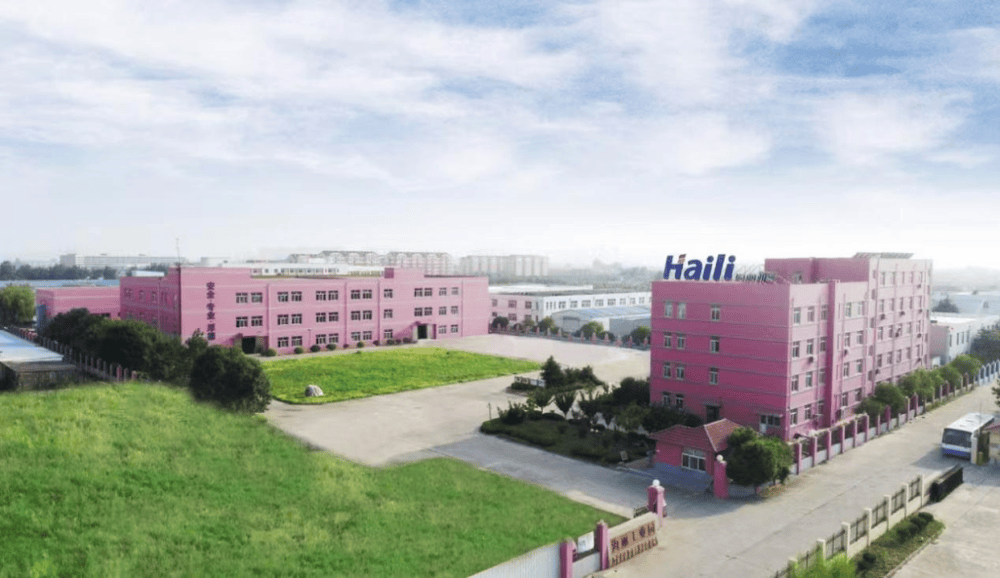
Core Viewpoint - The article highlights the evolution and significance of HaiLiYa Group, a century-old enterprise that has transformed from a small workshop producing hair ties to a leading manufacturer of specialized ropes and cables, emphasizing its commitment to safety and innovation in various critical sectors [4][9][12]. Company History and Development - HaiLiYa Group was founded in 1922, initially focusing on producing hair ties, and has undergone several transformations, including becoming a state-owned enterprise in 1956 and later a private company in 2014 [9][16]. - The company has maintained a focus on its core product—ropes and cables—demonstrating strategic determination and craftsmanship over the past century [9][10]. Innovation and Technology - HaiLiYa has developed over 1,000 innovative products and holds numerous accolades, including being among the top 50 patent applicants in China and receiving national awards for technological advancement [12][22]. - The company has achieved four national records in the rope and cable industry, including depth, strength, temperature tolerance, and precision, showcasing its technological prowess [22]. Social Responsibility and National Contribution - HaiLiYa has actively participated in national projects, such as providing specialized cables for the "Jiaolong" manned submersible, which reached a depth of 7,062 meters, replacing imported products [13][15]. - The company has established standards for public safety and emergency management, reflecting its commitment to societal safety and responsibility [13][19]. Corporate Philosophy and Culture - The company embodies a philosophy of "problem-oriented" innovation, focusing on addressing real-world challenges and needs, which has driven its product development and market positioning [20][21]. - HaiLiYa emphasizes a dual approach of "technology as the backbone and humanity as the soul," integrating technological innovation with a strong focus on employee engagement and social responsibility [22][23][27]. Community Engagement and Training - HaiLiYa has initiated various training programs, educating over a million individuals in emergency response and safety, and has established a reward fund for first responders [20][24][26]. - The company actively contributes to disaster relief efforts, providing essential rescue equipment during emergencies, demonstrating its commitment to community welfare [24].
文博日历丨殷墟国宝来天博啦!一起看3000年前的“中国制造”
Yang Shi Xin Wen· 2025-09-06 01:40

Core Viewpoint - The exhibition in Tianjin showcases national treasures from the Yin Ruins, marking the first time in nearly a century that these artifacts have been displayed in the city, and it is the first panoramic exhibition of Shang Dynasty handicrafts in the country [1] Group 1: Historical Significance - The exhibition highlights the origins of the "craftsman spirit" through artifacts such as oracle bones, which provide the earliest evidence of the character "工" (work) and its association with official craftsmen [8][10][12] - Artifacts from the Shang Dynasty demonstrate advanced craftsmanship, including intricate bone carvings and bronze works, showcasing the high level of skill and artistry present 3,000 years ago [14][16][21] Group 2: Artifacts and Craftsmanship - Notable artifacts include a turquoise-inlaid bone tiger and a bronze square zun, both exemplifying the sophisticated techniques and artistic expression of the Shang Dynasty [14][16] - The exhibition features a variety of materials used in ancient craftsmanship, such as bone, jade, pottery, and bronze, indicating a well-developed industrial capability in the region [24][27][29] Group 3: Industrial Development - The layout of the Yin Ruins indicates the presence of a state-level industrial area, with production zones centered around palatial and temple districts, connected by efficient waterways and land routes [29][35] - Artisans utilized a range of specialized tools for various crafts, reflecting a structured approach to production and the existence of workshops dedicated to different crafts [29][33]
“为祖国的强大倍感自豪!”
Guang Xi Ri Bao· 2025-09-04 03:23
Group 1 - The event commemorated the 80th anniversary of the victory in the Chinese People's Anti-Japanese War and the World Anti-Fascist War, highlighting national pride and the importance of peace [1] - Representatives from various sectors, including ethnic minorities and law enforcement, expressed their commitment to uphold the spirit of the Anti-Japanese War and contribute to national rejuvenation [1][2] - The speeches emphasized the need to cherish peace and work towards the realization of the Chinese Dream of national rejuvenation [1][2] Group 2 - Local leaders and representatives pledged to bring the spirit of the event back to their communities, focusing on rural revitalization and social responsibility [2] - The importance of craftsmanship and excellence in various professions was highlighted, with a commitment to continue pursuing high standards in their respective fields [2] - The experience of attending the event was described as life-changing, motivating attendees to fulfill their duties with a sense of honor and responsibility [2]