
一个中国

Search documents
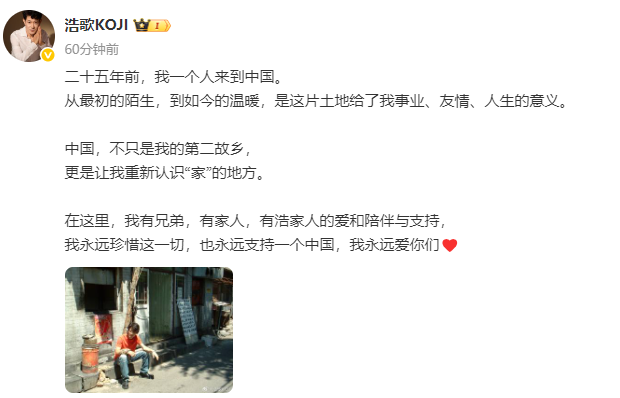
日本演员矢野浩二发文:永远支持一个中国
Huan Qiu Wang· 2025-11-18 10:06
Core Viewpoint - Japanese actor Yano Koji expresses deep appreciation for China, describing it as his second hometown and a place that has redefined his understanding of "home" [1][2] Group 1: Personal Journey - Yano Koji arrived in China 25 years ago, transitioning from feeling unfamiliar to experiencing warmth and support from the local community [2] - He acknowledges the significance of his career, friendships, and life experiences gained in China, attributing his success to the support of Chinese audiences [2] Group 2: Professional Background - Yano Koji has played various roles in Chinese films and television, often portraying Japanese military officers in productions such as "Little Soldier Zhang Ga," "Railway Guerrillas," and "Flame of the East" [2] - Since starting his acting career in China in 2000, he has gained considerable recognition and gratitude from the audience, which he credits for his development in the industry [2] Group 3: Personal Life - Yano Koji has established a family in China, with his wife being from Chongqing, further solidifying his connection to the country [2]

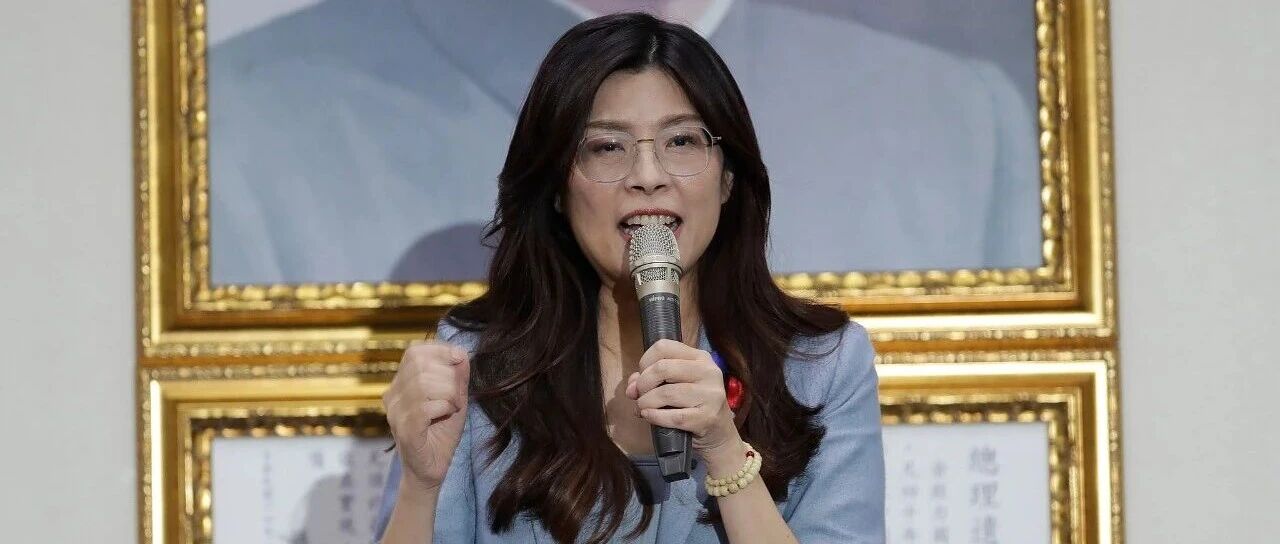
郑丽文最新表态
财联社· 2025-11-16 01:54
Core Viewpoint - The chairman of the Kuomintang, Zheng Liwen, emphasizes that accepting the "One China" principle is essential for Taiwan's survival [1][2]. Group 1: Defense Budget and Military Strategy - Zheng Liwen disagrees with Lai Ching-te's proposal to increase the defense budget to over 3% of GDP by 2026 and to 5% by 2030, stating that such a rapid increase is excessive and does not genuinely ensure security in the Taiwan Strait [1]. Group 2: Cross-Strait Relations - Zheng Liwen criticizes Lai Ching-te's implicit pro-independence stance, suggesting that dialogue can replace confrontation and advocating for the resumption of the KMT-CCP forum to ease cross-strait tensions [2]. - She believes that all differences between the two sides can be resolved peacefully [2].
双碳研究丨中国重塑全球能源话语权:从拉美锂三角到气候融资新主场
Sou Hu Cai Jing· 2025-06-19 13:27
Core Insights - China has significantly increased its trade and loan scale in Latin America, becoming a major economic partner in the region, particularly in energy and infrastructure sectors [4][5] - The shift in Latin America's alignment towards China raises political concerns, particularly regarding support for authoritarian regimes and its impact on Taiwan's diplomatic recognition [5][6] - China's investments in the "lithium triangle" in Argentina, Chile, and Bolivia highlight its progress in the clean energy supply chain, contrasting with the challenges faced by the U.S. in establishing similar agreements in South America [5][6] Trade and Economic Influence - Over the past 25 years, China's share of exports from Latin America has surged from less than 2% to becoming the second-largest trading partner in the region and the largest in South America [5] - China has emerged as a primary lender in Latin America, particularly funding energy and infrastructure projects, with Venezuela receiving nearly $60 billion in loans, almost double that of Brazil, the second-largest recipient [5] Geopolitical Implications - The growing China-Latin America relationship is perceived as supporting authoritarian governments, with concerns raised by U.S. analysts about the implications for democracy in the region [6] - The reduction of U.S. climate financing has opened opportunities for China to solidify its presence in emerging economies, allowing it to sign agreements in the energy sector [7] Clean Energy Market Dynamics - The U.S. withdrawal from clean energy policies under the Trump administration has inadvertently benefited China, positioning it to dominate the global clean energy market [7] - A study from Johns Hopkins University suggests that the repeal of the Inflation Reduction Act could create up to $80 billion in investment opportunities for China, while the U.S. would face significant losses in manufacturing, trade, and exports [7]
硬刚赖清德当局,《中国时报》宣示台湾人就是中国人
经济观察报· 2025-06-05 18:45
Group 1 - The core stance of the article emphasizes that both the China Times and the Wang Wang Group assert that Taiwanese people are Chinese, advocating for adherence to the constitution and peaceful cross-strait relations [2][12] - The article discusses the backlash from the Taiwanese Mainland Affairs Council against the Wang Wang Group's participation in a cross-strait cultural summit, accusing them of undermining Taiwan's sovereignty [2][3] - The article highlights the contrasting positions of the Taiwan authorities and the China Times, with the former being described as authoritarian and the latter standing firm on their beliefs [3][4] Group 2 - The article notes a recent trend in Taiwan where discussions about cross-strait relations are approaching a critical point, with both blue and green camps engaging in more open dialogue [5] - It mentions that Lai Ching-te's unexpected "merger theory" suggests a shift in the political landscape, indicating a potential willingness to engage with mainland China [6][7] - The article points out that the China Times has been actively publishing editorials advocating for improved cross-strait relations, reflecting a growing recognition of the need for dialogue [9][10]
台海观澜 |硬刚赖清德当局,《中国时报》宣示台湾人就是中国人
Jing Ji Guan Cha Wang· 2025-06-05 07:16
Group 1 - The core stance of Taiwan's China Times is that Taiwan and the mainland belong to one China, emphasizing the importance of adhering to the constitution and promoting cross-strait peace [2][4] - The Wang Wang Group's participation in the cross-strait cultural summit and its leadership's statements have drawn criticism from Taiwan's Mainland Affairs Council, which accused the group of undermining Taiwan's sovereignty [2][3] - The response from the Taiwan Affairs Office labeled the actions of the Democratic Progressive Party (DPP) as "terrorist politics" and warned against forgetting one's roots [3][4] Group 2 - Recent discussions in Taiwan, regardless of political affiliation, indicate a nearing of the bottom line regarding cross-strait relations, with DPP leader Lai Ching-te unexpectedly suggesting a "merger" concept [7][8] - Lai's statements are surprising given his reputation as a staunch advocate for Taiwan independence, yet they align with the current political climate within the DPP [8][9] - The China Times has been actively engaging in discussions about Taiwan's identity and cross-strait relations, publishing several editorials advocating for a more open dialogue and recognition of shared cultural ties [9][10]
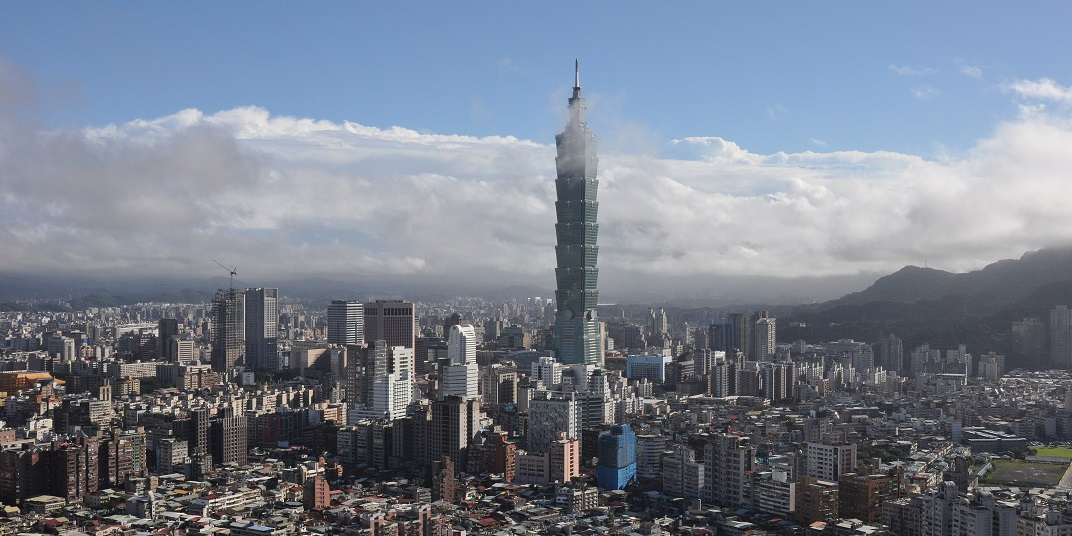
“台独家暴”升级,台陆委会威胁查处,旺中集团回应:台湾人就是中国人
Huan Qiu Wang· 2025-06-02 23:34
Core Viewpoint - The Taiwanese government, led by Lai Ching-te, has intensified its suppression of cross-strait exchanges, targeting various cultural and media interactions, which has raised concerns about the implications for Taiwan's identity and relations with mainland China [1][2][3]. Group 1: Government Actions - The Mainland Affairs Council (MAC) of Taiwan has accused the Want Want China Times Group of collaborating with mainland authorities to promote events that undermine Taiwan's sovereignty, threatening legal action against the media group [1][2]. - The MAC has expressed intentions to regulate public officials traveling to mainland China, Hong Kong, and Macau, leading to significant backlash from local civil servants who feel these measures are excessive and counterproductive [5][6]. Group 2: Cultural and Media Exchanges - The 17th Cross-Strait Forum is scheduled to take place in Xiamen, with the theme focusing on youth collaboration, but the MAC has already denied applications from public officials to attend [3][5]. - Several Taiwanese artists have been publicly named by the ruling party for their pro-mainland sentiments, with accusations that their statements align too closely with mainland narratives, which the government claims could erode Taiwan's social resilience [3][4]. Group 3: Public Response and Sentiment - Artists like Liu Leyan have publicly defended their support for the mainland, attributing their success to opportunities there and criticizing the economic conditions in Taiwan that compel many to seek better prospects in mainland China [4]. - Commentary from various Taiwanese media outlets suggests that the government's actions are driven by a lack of confidence and a desire to promote a "de-Sinicization" agenda, which is seen as detrimental to Taiwan's cultural identity and cross-strait relations [2][6].