
主权平等

Search documents
委内瑞拉代总统,最新发声!
Zhong Guo Ji Jin Bao· 2026-01-05 05:13
Group 1 - Venezuela's interim president invites the U.S. to participate in creating a cooperative agenda, emphasizing the need for peaceful coexistence and respect for sovereignty in international relations [3] - The Venezuelan government seeks to establish a balanced and respectful relationship with the U.S. and other countries in the region, highlighting the urgency of this diplomatic effort [3] - The letter to President Trump reiterates the Venezuelan people's right to peace, development, and sovereignty, advocating for dialogue over conflict [3] Group 2 - President Trump claims the U.S. is "in control" of Venezuela and is engaging with the newly sworn-in interim president, indicating a desire to access Venezuela's oil and resources for rebuilding the country [5] - Trump threatens the interim president with severe consequences if she does not comply with U.S. expectations, suggesting that the costs could be higher than those faced by Maduro [7] - Trump also implies that Venezuela may not be the last country targeted for U.S. intervention, expressing a strong interest in Greenland, which has drawn a response from Denmark's Prime Minister [8][9]
特朗普称尚未亲自与委代总统通话
Xin Lang Cai Jing· 2026-01-05 04:16
Core Viewpoint - Venezuela's interim president emphasizes the country's commitment to peace and coexistence, seeking to establish respectful international relations based on sovereignty and non-interference, particularly with the United States [1] Group 1: Venezuela's Diplomatic Stance - Venezuela reiterates its desire to live free from external threats in an environment of international respect and cooperation [1] - The Venezuelan government invites the U.S. to collaboratively develop a cooperation agenda focused on mutual development within the framework of international law [1] - The letter asserts that the Venezuelan people deserve peace and dialogue rather than war, reflecting President Maduro's long-standing position [1] Group 2: U.S. Response - U.S. President Trump claims that the U.S. is currently "in control of Venezuela" and is engaging with the newly sworn-in interim president [1] - Trump has not personally spoken with the interim president but indicates that U.S. personnel have already made contact [1] - He mentions that discussions will occur at the "appropriate time" [1]
委内瑞拉代总统:诚邀美国政府共同制定合作议程,在国际法框架内加强持久的共同体共处
Xin Jing Bao· 2026-01-05 02:15
Core Viewpoint - Venezuela reaffirms its commitment to peace and coexistence, emphasizing the need for international respect and cooperation to live free from external threats [1] Group 1: Diplomatic Relations - Venezuela stresses the urgency of establishing balanced and respectful international relations based on sovereign equality and non-interference, particularly between the U.S. and Venezuela, as well as among regional countries [1] - The Venezuelan government invites the U.S. to collaboratively develop a cooperation agenda focused on mutual development within the framework of international law [1] Group 2: National Values - The message highlights that the Venezuelan people and the region deserve peace and dialogue rather than war, which aligns with President Maduro's longstanding position [1] - Venezuela asserts its right to peace, development, sovereignty, and a future [1]
中方敦促美方 立即停止针对委内瑞拉的行动
Xin Lang Cai Jing· 2025-12-24 17:47
Group 1 - The core viewpoint of the article emphasizes the call for the U.S. to immediately cease its actions against Venezuela, highlighting the increasing military presence and sanctions imposed by the U.S. in the Caribbean region [1][2] - The U.S. has been accused of escalating tensions by deploying military forces under the pretext of combating drug trafficking, threatening Venezuela's sovereignty and security [1] - The actions of the U.S. have raised significant concerns among regional countries and the international community, with many expressing strong condemnation [1] Group 2 - Venezuela, as an independent sovereign nation, has the right to develop mutually beneficial cooperation with other countries and to protect its legitimate rights [2] - The Chinese government opposes unilateral bullying actions and supports countries in defending their sovereignty and national dignity [2] - China calls for the U.S. to respect international law and cease illegal unilateral sanctions, advocating for cooperation based on international legal frameworks to ensure regional peace and stability [2]
中方连提五个反对 敦促美方立即停止针对委内瑞拉的行动
Xin Lang Cai Jing· 2025-12-24 06:29
Core Viewpoint - China urges the United States to immediately cease its actions against Venezuela, highlighting concerns over increased military deployment and sanctions that threaten regional stability [1] Group 1: U.S. Actions Against Venezuela - The U.S. has intensified military presence near Venezuela under the pretext of combating drug trafficking, leading to heightened tensions in the region [1] - U.S. actions include sinking Venezuelan vessels, killing crew members, and seizing oil tankers, while labeling the Venezuelan government as a "foreign terrorist organization" [1] - The U.S. has threatened military action against Venezuela, claiming ownership over its territory, oil, and assets [1] Group 2: International Law and Sovereignty - China's representative emphasizes that U.S. actions violate the principles of the UN Charter, which upholds sovereignty, non-interference, and peaceful dispute resolution [1] - The U.S. approach is seen as a serious infringement on the sovereignty and legitimate rights of other nations, raising concerns among regional and international communities [1] - China advocates for respect and support for Venezuela's right to develop mutually beneficial cooperation with other countries [1] Group 3: Call for Action - China calls for the U.S. to heed the international community's calls for justice and to halt its aggressive actions to prevent further escalation of tensions [1] - The Chinese government urges the U.S. to ensure navigation safety for regional countries and to engage in lawful judicial cooperation through bilateral and multilateral frameworks [1] - China expresses its commitment to work with regional nations to maintain peace and stability in Latin America and the Caribbean [1]
中方:呼吁美方立即停止有关行动,避免加勒比地区紧张局势进一步升级
Xin Lang Cai Jing· 2025-12-24 00:16
Core Viewpoint - The Chinese government expresses strong opposition to the United States' military actions and sanctions against Venezuela, emphasizing the importance of respecting national sovereignty and international law [1][2]. Group 1: U.S. Actions and Regional Tensions - The U.S. has increased military deployments in the Caribbean near Venezuela under the pretext of combating drug trafficking, leading to heightened regional tensions and concerns from other countries [1]. - The U.S. has labeled the Venezuelan government as a "foreign terrorist organization," threatening military action and claiming ownership over Venezuelan territory, oil, and assets [1]. - The actions of the U.S. are seen as a serious violation of international law and the United Nations Charter, which could threaten peace and security in Latin America and the Caribbean [1]. Group 2: China's Position and Support for Venezuela - China emphasizes Venezuela's right as an independent sovereign nation to develop mutually beneficial cooperation with other countries and to protect its legitimate rights [2]. - The Chinese government opposes unilateral bullying actions and any use of force in international relations, calling for the U.S. to cease its aggressive actions and respect the sovereignty of regional nations [2]. - China has released a policy document reaffirming its support for peace initiatives in Latin America and the Caribbean, highlighting its commitment to regional stability and cooperation [2].
全球治理倡议对小岛屿发展中国家具有深远意义(国际论坛)
Ren Min Ri Bao· 2025-10-04 21:50
Core Viewpoint - The construction of a more just and reasonable global governance system is essential for small island developing countries like Jamaica, serving as both a diplomatic necessity and a critical strategy for survival and development [2][5]. Group 1: Global Governance Initiative - The global governance initiative emphasizes the principle of sovereign equality, which is crucial for small countries like Jamaica, as their interests are often marginalized in climate financing, debt restructuring, and trade negotiations [2][3]. - The initiative calls for enhancing the representation and voice of developing countries in the global governance system, aligning with the long-standing demands of Caribbean and Pacific island nations for substantive participation in international decision-making [2][3]. - The initiative stresses adherence to international rule of law and the elimination of double standards, addressing the selective enforcement faced by developing countries in international affairs [3]. Group 2: Multilateralism and Collective Action - The global governance initiative reaffirms the commitment to multilateralism and rejects unilateralism, which is significant for third-world countries, including Jamaica, as their development relies on a multilateral consensus [3]. - Strengthening the role of the United Nations and other multilateral institutions is seen as one of the most effective ways for small island developing countries to enhance their collective bargaining power [3]. - The initiative aims to turn the aspirations of people for a better life into reality, addressing the needs of countries facing economic inequality, climate vulnerability, and difficulties in accessing technology [3]. Group 3: Opportunities for Development - China emphasizes international cooperation in renewable energy and artificial intelligence, providing significant development opportunities for developing countries, including Jamaica [4]. - Jamaica, which has long relied on fossil fuel imports, can benefit from enhanced cooperation in photovoltaic and wind energy production [4]. - The introduction of digital economy platforms and AI technology is expected to improve key sectors such as education, agriculture, and healthcare in Jamaica [4].


多国人士高度评价中方在捍卫和平、推动完善全球治理作出的努力
Yang Shi Xin Wen Ke Hu Duan· 2025-09-26 12:29
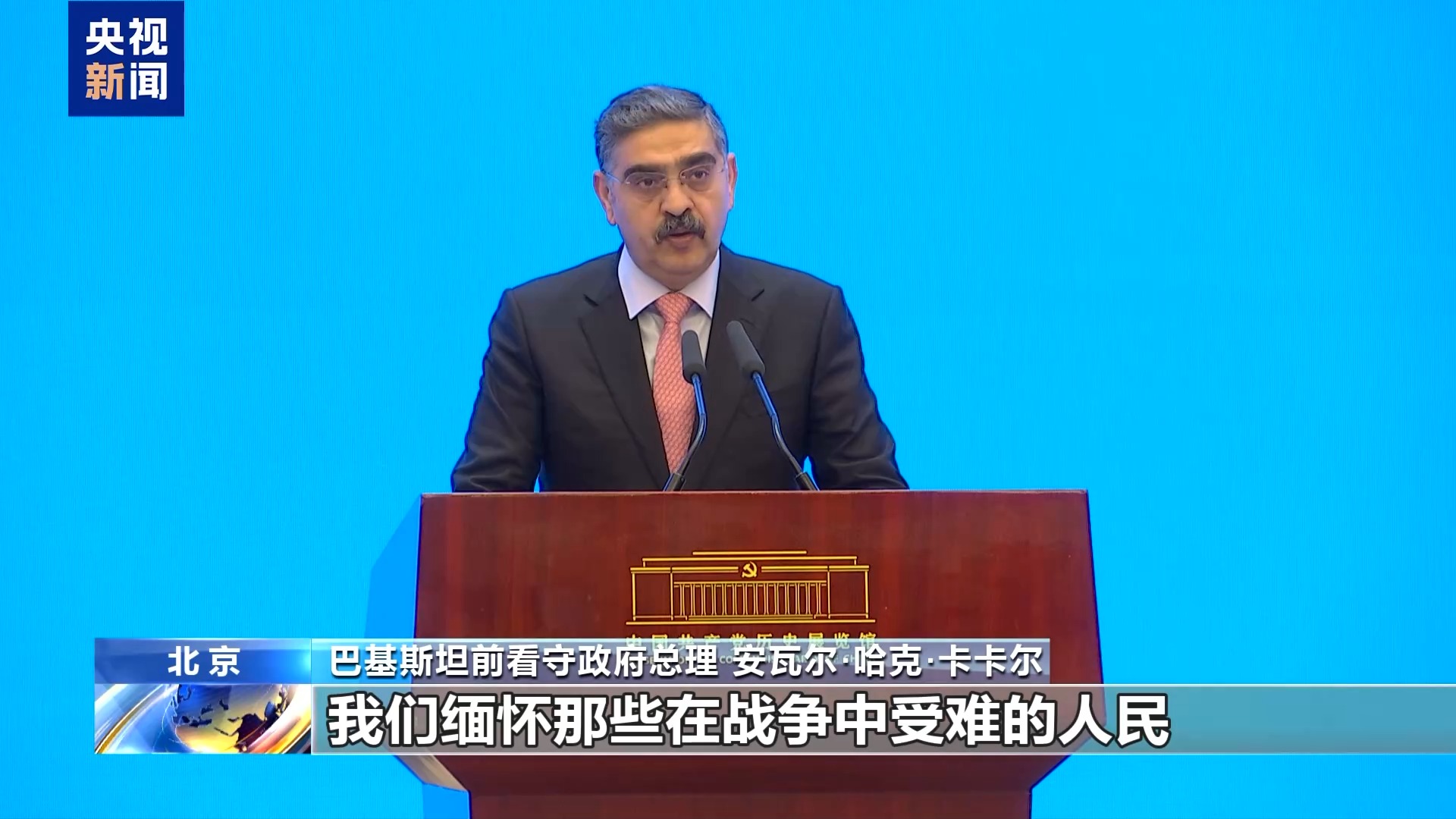
Core Viewpoint - The Peace Conference commemorating the 80th anniversary of the victory in the Chinese People's Anti-Japanese War and the World Anti-Fascist War was held in Beijing, emphasizing the importance of unity in defending peace and showcasing China's commitment to a peaceful development path [1] Group 1: Conference Objectives and Themes - The conference aimed to draw on historical wisdom and unite efforts to defend the post-war international order and promote peace [1] - It highlighted the ongoing regional conflicts and the detrimental impact of certain countries forcing others to take sides, which undermines global cooperation in addressing challenges [1] Group 2: Statements from Attendees - Former Pakistani caretaker Prime Minister Anwar Haq Kakar emphasized the need to remember the suffering of people during wars and the importance of learning from historical experiences to address current global challenges [3] - Jeffrey Green, Chairman of the US-China Aviation Heritage Foundation, stated that peace is a responsibility rather than a gift of history, and praised China's efforts in promoting global governance [5] - Former Swiss President Ueli Maurer called for broader support and discussion of President Xi Jinping's global governance initiative, emphasizing multilateralism and equal representation for all countries in international organizations [7] - Gerhard Fuchs, Chairman of the German Peace Council, noted China's consistent emphasis on peace and mutual respect among different civilizations [8] - Hassan Tariq Chowdhury, Secretary-General of the Bangladesh Peace Council, commended China's non-hegemonic approach and its role as a leading force for peace and stability in the world [10]
中国代表在人权理事会呼吁完善全球人权治理
Xin Hua Wang· 2025-09-26 01:30
Core Viewpoint - The Chinese representative at the UN Human Rights Council calls for improvements in global human rights governance, emphasizing the need for multilateralism and equal participation of all nations in decision-making processes [1] Group 1: Key Proposals - The Chinese representative, on behalf of nearly 80 countries, proposes five key initiatives to enhance global governance: 1. Upholding sovereign equality, allowing all countries, regardless of size or wealth, to participate equally in global governance [1] 2. Adhering to the rule of international law, ensuring equal application without double standards [1] 3. Promoting multilateralism, advocating for collaborative efforts against unilateralism [1] 4. Emphasizing a people-centered approach, balancing the advancement of various human rights [1] 5. Focusing on action-oriented results to effectively improve global human rights governance [1] Group 2: Context and Challenges - The representative highlights the severe impact on multilateralism and the necessity for reforms in the UN to enhance efficiency, simplify procedures, eliminate redundancy, and strengthen transparency [1]
为破解全球治理赤字贡献中国方案(国际论坛)
Ren Min Ri Bao· 2025-09-23 22:00
Core Ideas - The global governance initiative focuses on the question of what kind of global governance system to build and how to reform and improve it, addressing the common aspirations of most countries and the needs of people worldwide [1][2] - The initiative emphasizes five core principles: sovereign equality, adherence to international law, multilateralism, a people-centered approach, and action-oriented strategies, which align with the purposes and principles of the UN Charter [1][2][3] Sovereign Equality - Sovereign equality is the primary premise and important foundation of global governance, yet it is not fully realized in international relations, with some countries engaging in bullying behavior [2][3] - China advocates for a global governance perspective that emphasizes shared destiny, collective rule-making, and equal sharing of development outcomes among nations [2][3] International Rule of Law - International law is the fundamental guarantee and important guideline for global governance, with the UN Charter serving as the recognized basic principle of international relations [2][3] - China supports the authority of international law and the multilateral system based on rules, ensuring equal and unified application of international law and rules [2][3] Multilateralism - Multilateralism is the basic path and realistic choice for global governance, with China actively participating in multilateral cooperation and advocating for a multipolar world and inclusive economic globalization [3] - The initiative aims to address the underrepresentation of the Global South and promote lasting peace, universal security, and common prosperity [3] People-Centered Approach - The value orientation of global governance is people-centered, aiming to turn the aspirations of people for a better life into reality [3] - China's development is linked to the aspirations of people worldwide, exemplified by the high-quality co-construction of the Belt and Road Initiative [3] Action-Oriented Strategies - The vitality of global governance comes from practice, with a focus on action and tangible results [3] - China plays a responsible role in international organizations and proposes practical actions and measures at international meetings to deepen consensus and achieve positive outcomes in global governance [3]