人工智能模型

Search documents
港股异动 | 智谱(02513)午前涨超22% 总市值逼近1500亿港元 神秘匿名模型或为智谱...
Xin Lang Cai Jing· 2026-02-10 04:04
消息面上,2月6日,全球模型服务平台OpenRouter悄然上线一款代号为"Pony Alpha"的匿名模型,因其 强大的编码能力、超长上下文窗口及针对智能体工作流的深度优化,迅速引发开发者社区关注。市场猜 测该模型的身份可能是智谱即将发布的新一代模型GLM-5。 分析指出,GLM系列模型近年来在代码生成和智能体能力上的进步有目共睹,这与Pony Alpha的主打方 向完全一致;智谱首席科学家唐杰发微博明确表示最近智谱将发布GLM-5。目前,智谱等疑似关联方 尚未对Pony Alpha的身份作出官方回应。 来源:智通财经网 智谱(02513)午前涨超22%,高见338.2港元,较招股价116.2港元已涨近200%,总市值逼近1500亿港元。 截至发稿,涨21.17%,报335.4港元,成交额6.65亿港元。 ...
【播客】又有神秘模型海外走红 智谱股价暴拉40%
Datayes· 2026-02-09 11:52
Core Insights - The article discusses the launch of the mysterious model "Pony Alpha" by OpenRouter, which has gained significant attention due to its strong coding capabilities and optimized agent workflows, leading to a surge in search interest and developer engagement [1] - The model is positioned as a cutting-edge foundational model excelling in coding, agent workflows, reasoning, and role-playing, and is capable of completing complex project developments in a matter of hours [1] Group 1 - "Pony Alpha" has been speculated to be an advanced version of popular open-source models from global labs, potentially linked to Chinese companies like Zhiyu or DeepSeek [1] - Community tests showed that "Pony Alpha," when paired with Claude Code, generated 170KB of high-quality JavaScript code in just 2 hours for a MineCraft project, exceeding expectations [1] - The model's performance in detail tasks, such as SVG generation, was rated at a level comparable to "Claude Opus 4.5" [1] Group 2 - Following the announcement of "Pony Alpha," Zhiyu's stock price experienced a significant increase, rising over 40% during intraday trading and closing up 36% at 276.8 HKD [2]

阿里千问正式推出最新旗舰推理模型Qwen3-Max-Thinking
Mei Ri Jing Ji Xin Wen· 2026-01-26 15:41
每经AI快讯,1月26日,阿里千问官微宣布正式推出其最新旗舰推理模型Qwen3-Max-Thinking。据介 绍,Qwen3-Max-Thinking在多个关键维度上实现了显著提升,包括事实知识、复杂推理、指令遵循、 人类偏好对齐以及智能体能力。在19项权威基准测试中,其性能可媲美GPT-5.2-Thinking、Claude-Opus- 4.5和Gemini3Pro等顶尖模型。 ...

Meta新模型要来了,但Llama 4的锅谁来接?1300多位作者的联合报告来了
机器之心· 2026-01-22 08:13
Core Insights - Meta's newly established AI team has delivered its first key models internally this month, as stated by CTO Andrew Bosworth, who described the models as "very good" [1] - The company is developing a text AI model codenamed Avocado, expected to be released in Q1, and an image and video AI model codenamed Mango [1] - A technical report titled "Llama 4 Herd: Architecture, Training, Evaluation, and Deployment Notes" has been uploaded to arXiv, reviewing the data and technical achievements claimed by the Meta Llama 4 series [1][5] Summary by Sections Technical Report Overview - The report includes contributions from over 1300 authors, indicating a collaborative effort from the Llama 4 team, despite some contributors having left Meta [4] - It emphasizes that the document is an independent investigation of publicly available materials, with benchmark values attributed to model cards [4] Model Performance and Limitations - The report highlights a gap between the architectural capabilities of the models and their actual deployment performance, particularly regarding context length [4][7] - It mentions that while the architecture supports a context length of 10 million tokens, practical deployment often limits this due to hardware constraints [7] Controversies and Criticisms - The report addresses criticisms regarding the Llama 4 series, particularly the discrepancies between leaderboard performance and real-world application [8][11] - It notes that the experimental variant submitted to the LMArena leaderboard differs from the publicly released version, leading to accusations of "gaming AI benchmarks" [11] - Marketing claims made in announcements should be distinguished from rigorous model card benchmark results, as some statements are categorized as "marketing-facing claims" [11] Model Variants and Features - The report summarizes the released model variants, including Llama 4 Scout and Llama 4 Maverick, detailing their architectures, active parameters, modalities, and supported languages [9][10] - It also discusses the training disclosures and deployment limitations observed in major service environments [12]


智谱新模型也用DeepSeek的MLA,苹果M5就能跑
量子位· 2026-01-20 04:17
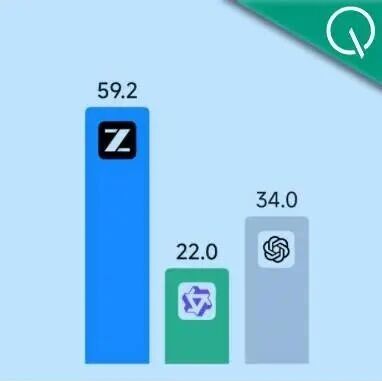
Core Viewpoint - The article discusses the launch of the new lightweight language model GLM-4.7-Flash by Zhipu AI, which aims to replace its predecessor GLM-4.5-Flash and is available for free API access. Group 1: Model Specifications - GLM-4.7-Flash features a total of 30 billion parameters, with only 3 billion activated during inference, significantly reducing computational costs while maintaining performance [4][10]. - The model is designed as a mixed expert (MoE) architecture, specifically positioned for local programming and intelligent assistant tasks [4][9]. - It achieved a score of 59.2 in the SWE-bench Verified code repair test, outperforming similar models like Qwen3-30B and GPT-OSS-20B [4]. Group 2: Performance and Applications - The model is optimized for efficiency and retains core capabilities in coding and reasoning from the GLM-4 series [7]. - Besides programming, GLM-4.7-Flash is recommended for creative writing, translation, long-context tasks, and role-playing scenarios [8]. - Initial tests on a 32GB unified memory Apple laptop showed a speed of 43 tokens per second [17]. Group 3: Technical Innovations - The introduction of the MLA (Multi-head Latent Attention) architecture marks a significant advancement, previously validated by DeepSeek-v2 [12]. - The model's structure is similar in depth to GLM-4.5 Air and Qwen3-30B-A3B, but it utilizes 64 experts, activating only 5 during inference [13]. Group 4: Market Position and Pricing - GLM-4.7-Flash is offered for free on the official API platform, with a high-speed version available at a low cost [19]. - Compared to similar models, GLM-4.7-Flash has advantages in context length support and output token pricing, although latency and throughput require further optimization [19].
他们认识香蕉也认识黄色,却不知道香蕉是黄色的
3 6 Ke· 2026-01-16 07:25
Core Insights - The research conducted by teams from Peking University and Shanxi Medical University reveals that language significantly influences visual perception and knowledge storage in the brain, particularly in individuals with certain neurological conditions [1][5][10]. Group 1: Visual and Language Interaction - Individuals with intact visual function but impaired connections between the visual cortex and language areas struggle to identify colors from grayscale images, indicating that language is crucial for extracting visual knowledge [3][4]. - Blind individuals acquire color knowledge primarily through language, as they lack visual experiences, contrasting with sighted individuals who utilize both visual and linguistic systems for color representation [2][9]. Group 2: AI and Cognitive Research - The study utilized AI models to differentiate the effects of visual and linguistic inputs on perception, demonstrating that language training in AI can mirror human brain activity related to visual processing [7][9]. - The research indicates that language can profoundly affect cognitive processes, challenging the notion that language only influences higher-level cognition and suggesting it also impacts basic sensory perception [10][12]. Group 3: Implications for Cognitive Science - The findings suggest that language is not merely a communication tool but a powerful system that shapes how humans abstract and organize information, potentially altering sensory experiences [12]. - The interplay between cognitive science and AI research is highlighted, as both fields can inform and enhance understanding of human cognition and perception [12].
智谱开源新一代旗舰模型GLM-4.7
Di Yi Cai Jing· 2025-12-23 00:49
Core Insights - The article highlights the launch of the new flagship model GLM-4.7 by Zhiyuan, which ranks first in open-source and domestically, surpassing GPT-5.2 in the authoritative coding evaluation system Code Arena [1]. Group 1 - GLM-4.7 enhances coding capabilities, long-range task planning, and tool collaboration specifically for coding scenarios [1]. - The model also improves overall performance in chat, writing, and role-playing applications [1].
小杯Gemini战胜GPT5.2,1分钟模拟Windows操作系统
量子位· 2025-12-18 04:40
Core Insights - Google has launched Gemini 3 Flash, showcasing a model that combines advanced intelligence, high speed, and lower pricing, setting a new standard in the AI industry [2][12][30] Performance and Features - Gemini 3 Flash is nearly three times faster than Gemini 2.5 Pro, demonstrating superior performance in various tests against top models like Gemini 3 Pro and GPT-5.2 [3][31] - The model excels in complex reasoning and multimodal understanding, maintaining high performance while significantly improving response speed [15][33] - It has been tested successfully in various scenarios, including generating a complete Windows operating system and creating a game, indicating its versatility [17][20][26] Pricing and Cost Efficiency - The pricing structure for Gemini 3 Flash is competitive, with input costs at $0.50 per million tokens and output costs at $3.00 per million tokens, making it more cost-effective compared to previous models [35][36] - Despite being slightly more expensive than Gemini 2.5 Flash, the performance and speed enhancements justify the price increase [36][37] Availability and Accessibility - Gemini 3 Flash is available globally for all users through various platforms, including Gemini applications and Google AI Studio, catering to both general users and professional developers [12][13] - Enterprise clients can access the model through Vertex AI and Gemini Enterprise, expanding its usability across different sectors [13] Competitive Landscape - The launch of Gemini 3 Flash positions Google favorably against competitors, as it combines speed, intelligence, and cost efficiency, potentially reshaping market dynamics in the AI sector [34][37]

GPT-5.2真身是它?OpenAI紧急端出全套「下午茶」,新一代图像模型同步泄露
机器之心· 2025-12-10 10:30
Core Viewpoint - OpenAI is preparing to release its new model, GPT-5.2, in response to the competitive pressure from Google's Gemini 3, which has prompted an internal "Code Red" alert within OpenAI [5][8]. Group 1: New Model Developments - The new model, internally codenamed "Olive Oil Cake," is expected to be a significant upgrade over the current GPT-5.1, with speculation that it will be launched on December 11 [7][8]. - Alongside GPT-5.2, OpenAI is also set to introduce a new image generation model, referred to as "Chestnut and Hazelnut," which aims to address previous shortcomings and compete directly with Google's offerings [10][11]. Group 2: Competitive Landscape - Google's Gemini 3 has demonstrated impressive performance, leading to heightened urgency for OpenAI to accelerate the release of its new models, which were initially planned for a later date [8][16]. - Despite some advantages held by Google's Nano Banana 2 in specific scenarios, OpenAI's new models are believed to have significantly narrowed the technological gap, potentially allowing them to compete effectively in the market [16]. Group 3: Model Features and Improvements - The new image generation models are expected to resolve previous issues such as color bias and improve detail and fidelity, making them more competitive against existing models [11]. - Key upgrades include enhanced color accuracy, improved texture detail, and the ability to generate precise code snippets within images, which have been positively received by testers [11].

上市公司数字技术风险暴露数据(2007-2024年)
Sou Hu Cai Jing· 2025-12-10 07:57
Group 1 - The article discusses the exposure of listed companies to digital technology risks from 2007 to 2024, utilizing FinBERT, a large language model, to analyze the Management Discussion and Analysis (MD&A) sections of annual reports for sentiment related to digital technology security [2][3] - The methodology involves identifying relevant text on digital technology risks, constructing a keyword list based on existing guidelines, and extracting sentences that reflect these risks [3][4] - A training dataset is created by annotating a sample of sentences to determine whether they indicate risk exposure or preventive measures, using a combination of AI models for accuracy [4][5] Group 2 - The final exposure level of digital technology risk is defined as the difference between the maximum negative sentiment probability of disclosed risks and the average positive sentiment probability of preventive measures, leading to the creation of specific indicators for data security and cyber risk exposure [6] - The effectiveness of the digital technology risk exposure indicators is validated by examining their correlation with other types of risks, revealing a significant positive relationship with financial and operational risks [7][8] - The model's accuracy in sentiment analysis related to digital technology risks is confirmed through random sampling and manual review, demonstrating high performance, especially in clearly biased sentences [8]