人形机器人产业发展

Search documents
中国人形机器人正在“超进化”
日经中文网· 2025-08-12 08:00
Core Viewpoint - The humanoid robot industry in China is rapidly developing, showcasing significant advancements at the World Robot Conference, with Chinese companies gaining a competitive edge over their American and Japanese counterparts [2][5]. Group 1: Industry Growth and Competition - The World Robot Conference, held in Beijing, highlighted the presence of advanced humanoid robots, with 50 companies exhibiting humanoid robots, marking a notable increase in interest compared to previous years [4]. - As of the end of 2024, over 220 companies globally have released prototypes and related products of humanoid robots, with Chinese companies accounting for half of this number, significantly outpacing the 20% share of American companies [5]. - The Chinese government has been providing strong support for the humanoid robot industry, aiming for global leadership by 2035, similar to achievements in shipbuilding, solar panels, and electric vehicles [5]. Group 2: Technological Advancements and Supply Chain - Chinese companies are leveraging technology accumulated in the electric vehicle (EV) sector to enhance humanoid robot development, with components like joint modules being developed by companies such as Ningbo Top Group [6]. - Utilizing Chinese components can reduce the cost of humanoid robots to one-third, providing a significant cost advantage in the market [8]. - A report by Morgan Stanley identified 100 global publicly listed companies involved in humanoid robot development, with 21 Chinese companies in the supply chain for critical components, surpassing the 18 American companies [5][8]. Group 3: Global Market Projections - Research from Bank of America predicts that global shipments of humanoid robots will reach approximately 18,000 units by 2025 and increase to 1 million units by 2030, with a projected total of 3 billion units by 2060 [11]. - The United Nations forecasts that by 2060, the global population will approach 10 billion, leading to a ratio of 3 humanoid robots for every human [11]. Group 4: Societal Impact and Data Privacy Concerns - As humanoid robots become more integrated into daily life, concerns arise regarding their potential role as data collection tools due to their extensive use of cameras and sensors, highlighting the need for international data protection standards [13].

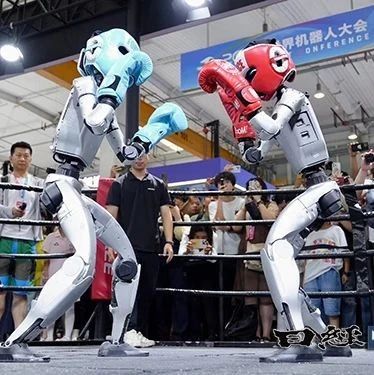
【新华财经调查】从“跑马”到“打拳” 赛场上的人形机器人何时走进家庭?
Xin Hua Cai Jing· 2025-07-03 09:24
Core Insights - The humanoid robot industry in China is experiencing significant growth and technological breakthroughs, as evidenced by recent events like marathons and combat competitions showcasing their capabilities [1] - However, the widespread adoption of humanoid robots in various scenarios faces challenges, particularly in data bottlenecks and cost control [1] Data Challenges - The evolution of humanoid robots heavily relies on data, with a current shortage of high-quality data hindering their intelligent capabilities [2] - Experts highlight that the existing data sets are limited and do not cover critical skills needed for real-world applications, such as recovering from falls and navigating unstructured terrains [2] - The cost of data acquisition for humanoid robots is significantly higher than for traditional industrial robots, with costs per data point ranging from 50 to 500 yuan compared to less than 1 yuan for industrial robots [3] Cost and Pricing Issues - The high prices of humanoid robots, such as the Unitree G1 at 99,000 yuan and the PM01 at 88,000 yuan, are seen as a barrier to consumer adoption due to their limited practical applications [4] - The high costs are attributed to expensive data collection and the reliance on imported components for key parts, which increases overall production costs [4] Future Outlook - Industry leaders predict that humanoid robots will see widespread application in household services within the next five years, with potential price reductions through technological advancements and data accumulation [5] - The humanoid robot industry is expected to transition from the experimental phase to practical applications, with predictions of significant market penetration by 2025 [7] - Investment in the humanoid robot sector is increasing, with a reported 71 financing cases in 2024 amounting to 8.45 billion yuan, reflecting a substantial year-on-year growth [7] Investment Landscape - Investment firms are actively engaging in the humanoid robot sector, focusing on high-tech projects across various applications, including industrial and medical robots [8] - Despite the optimism, some experts caution that the actual application effectiveness of humanoid robots may not meet expectations in the short term, suggesting a need for careful investment strategies [8]

宁波政策加码为人形机器人产业发展蓄力
Ren Min Wang· 2025-06-15 01:55
Group 1 - The core viewpoint of the article is that Ningbo is implementing a series of policy measures to promote the development of the humanoid robot industry, indicating a strong governmental commitment to this sector [1][2][3] - The policies include support for the establishment of innovation centers and technology engineering centers for humanoid robot manufacturers, aiming to enhance technological innovation [1][2] - Financial incentives are provided, such as subsidies for insurance premiums and rewards for companies that meet specific criteria, to stimulate investment and innovation in the humanoid robot sector [1][2][3] Group 2 - Ningbo will offer significant financial support for the creation of national and provincial technology innovation centers, with funding amounts reaching up to 1 billion yuan for national centers and 10 million yuan for provincial centers [1][2] - The city encourages collaboration among leading enterprises, academic institutions, and research organizations to form innovation consortia, with financial rewards for successful projects [2] - A specialized fund for the humanoid robot industry will be established, with government and state-owned funds co-investing in eligible startups at a ratio of up to 1:1 [3]
武汉出台人形机器人产业新政 聚焦三类场景应用
Zhong Guo Xin Wen Wang· 2025-06-13 15:36
Group 1 - The Wuhan municipal government has officially announced a three-year action plan and policy measures to promote the humanoid robot industry, focusing on applications in hazardous industries, manufacturing, and public services [1] - Currently, Wuhan has seven humanoid robot manufacturers and has established the Hubei Humanoid Robot Innovation Center, which offers one-stop services including data collection, technical validation, and scenario testing [1] - The action plan outlines a "roadmap" for the humanoid robot industry, emphasizing five key actions: platform synergy, scenario demonstration, complete machine leadership, component foundation, and ecosystem cultivation [1] Group 2 - The application scenarios will prioritize humanoid robots in hazardous material handling, bomb disposal, rescue operations, automotive, 3C manufacturing, and public service sectors such as healthcare and education [1] - For successful scenario applications, Wuhan will implement a bilateral reward system, offering up to 1 million RMB for project investments and 6000 million RMB for leading complete machine enterprises establishing city-level innovation laboratories [1] - The city will also build training grounds for robot enterprises to enhance production efficiency and training levels in sectors like automotive and smart home appliances [2] Group 3 - Experts suggest that the humanoid robot industry in Wuhan has already shown effectiveness in elderly care and special environments, and there is a need to bridge gaps between upstream supply chains and downstream applications [2] - The government is encouraged to conduct regular roadshows to gather market feedback on humanoid robots, enhancing the market competitiveness of research and development outcomes [2]
四问人形机器人(“融”观中国)
Ren Min Ri Bao Hai Wai Ban· 2025-06-08 22:50
Core Insights - The year 2023 marks a significant breakthrough for humanoid robots in China, with various events and competitions highlighting their development and increasing public interest [4] - KPMG reports that China has filed nearly 6,000 patents in humanoid robot technology over the past five years, making it the leading country in patent applications [4] - The financing scale of the humanoid robot industry in China is projected to grow from 1.58 billion yuan in 2020 to 7.23 billion yuan by 2024, with a compound annual growth rate of 35.6% [4] Group 1: China's Advantages - China possesses a robust and comprehensive supply chain, being the only country with all 41 major industrial categories recognized by the UN [5] - The extensive industrial ecosystem allows for rapid assembly and integration of components, providing a unique advantage in producing humanoid robots [5] - China has the largest application scenarios globally, particularly in smart manufacturing, which generates valuable data for training humanoid robots [5][6] Group 2: Reasons for Industry Explosion - The decline in hardware costs and advancements in intelligent capabilities are driving the explosive growth of the humanoid robot industry [7] - Breakthroughs in hardware production have led to cost-effective and high-quality solutions, enabling mass production of humanoid robots [7][8] - The development of artificial intelligence and machine learning has significantly reduced the costs associated with training robots, enhancing their capabilities [9] Group 3: China's Position in the Global Market - China is positioned in the first tier of the humanoid robot industry, excelling in hardware production while relying on North America for advanced AI development [10] - Over 80% of components for leading international robot companies are sourced from China, indicating a strong foothold in the hardware sector [10] - However, challenges remain in high-precision components and intelligent computing, where China still lags behind [10][11] Group 4: Future Development Trends - The initial focus for humanoid robots will be on industrial applications, followed by commercial and eventually household uses [12] - Achieving practical applications in household settings will require significant advancements in task understanding and cost-effectiveness [12][13] - The industry must prioritize creating robots that deliver tangible productivity value in various environments to gain public acceptance [13]
市政府召开第148次常务会议:研究加快人形机器人产业发展、推进以科技为支撑的高校师生创新创业等工作
Chang Jiang Ri Bao· 2025-05-17 00:50
Core Viewpoint - The government meeting emphasizes the importance of developing the humanoid robot industry as a new engine for economic growth and a key area of technological competition, aiming to establish Wuhan as a national innovation hub in this sector [1][2]. Group 1: Humanoid Robot Industry Development - The humanoid robot sector is identified as a new high ground for technological competition and a future industrial track [2]. - The meeting outlines a three-year action plan focusing on five major initiatives: platform aggregation, scenario demonstration, whole machine leadership, component foundation, and ecosystem cultivation [2]. - Key areas for policy support include building public service platforms, tackling core technology challenges, enabling large models, expanding application scenarios, industrializing advantageous products, nurturing enterprises, and providing financial and talent support [2]. Group 2: Integration of Education, Technology, and Talent - The meeting stresses the need to leverage Wuhan's educational and talent advantages to promote integrated development of education, technology, and talent [2]. - It aims to enhance the deep integration of technological innovation and industrial innovation, addressing key issues such as entrepreneurship support and platform establishment [2]. - The initiative includes strengthening the supply of technology finance, building public service platforms, and creating a high-level innovation development zone around universities [2].
从应用侧看人形机器人的发展变化
2025-05-06 02:27
Summary of Conference Call Records Industry Overview - The humanoid robot industry in China is entering a critical development phase, with expected production and sales reaching over 10,000 units by 2025, primarily for self-research, data collection, scientific research, and commercial display applications. However, bulk terminal market applications remain limited, such as factory handling and power inspection [1][7] - The demand for inspection robots in coal mines is significant, with nearly 400,000 units needed nationwide, leading to a market scale in the hundreds of billions. The government encourages the replacement of manual labor with intelligent equipment to enhance safety and reduce personnel [3][15] Key Insights and Arguments - Humanoid robots face bottlenecks in dexterous hands, flexible connections, motion flow training, and generalization capabilities. The lack of model iteration and data limits their performance in complex application scenarios, necessitating a shift from core components to functional perspectives for mass production and widespread application [1][6][10] - Government support has increased significantly, with multiple humanoid robot funds established totaling hundreds of billions, aimed at supporting the core component supply chain and downstream applications, thus injecting momentum into industry development [1][9] - The future of humanoid robots lies in factory auxiliary production tasks (e.g., short-distance handling and flexible connection tasks) and standardized scenarios (e.g., wheeled or special robots), which can enhance efficiency and optimize costs for large-scale applications [1][11][12] Potential Leaders in the Industry - Future leaders in the humanoid robot industry may include companies from the electric vehicle sector, such as Xiaopeng and BYD, due to their robust supply chains and the potential to transfer smart driving technologies to humanoid robot brains. Other potential leaders include manufacturers like Leju, Zhiyuan, and Ubtech, which have clear humanoid robot products focused on specific applications [4] Application Scenarios and Development Bottlenecks - Key application scenarios for humanoid robots include factory auxiliary production, flexible connection tasks, and standardized scene expansion. However, challenges such as insufficient motion flow training and lack of data hinder their widespread application [10][11][12] - The traditional power inspection relies heavily on manual labor, but humanoid robots can enhance efficiency and reduce errors through their dexterous hands and hand-eye coordination capabilities. Demonstration projects are expected to emerge in this field [13][19] Market Dynamics and Future Trends - The domestic humanoid robot market is projected to see continuous growth, especially with government guidance encouraging manufacturers to implement terminal applications. As more scenarios are realized, data collection will increase, accelerating model iteration and enhancing application capabilities [2] - The coal mining industry is expected to see significant growth in the adoption of humanoid and special robots, with a national goal of achieving at least 60% automation in coal mining by 2026 [15][19] - Special robots are anticipated to play a crucial role in mining and factory handling, replacing manual labor and improving efficiency while reducing costs [16][17] Conclusion - The humanoid robot industry is poised for significant growth driven by government support, technological advancements, and increasing application scenarios. The focus will shift from core components to functional capabilities to meet the demands of various industries, including power inspection and coal mining, where the need for automation and efficiency is paramount [1][9][19]
每经热评︱从“半马”到“千家万户”产业稳人形机器人才能“跑得快”
Mei Ri Jing Ji Xin Wen· 2025-04-21 12:48
Group 1 - The first humanoid robot half marathon was held, with "Tiangong Ultra" from Beijing Yizhuang winning with a time of 2 hours 40 minutes and 42 seconds, highlighting the growing interest in the humanoid robot industry [1] - The humanoid robot industry is experiencing a surge in popularity, as evidenced by various events such as the performance of Yushu Robot at the Spring Festival Gala and the upcoming humanoid robot fighting competition [1][2] - The recent half marathon serves as a significant milestone for the humanoid robot sector, providing practical scenarios for technology validation and laying the groundwork for industry standards [1][3] Group 2 - According to the "2025 Humanoid Robot Industry Development Blue Book," global humanoid robot market sales are expected to reach 12,400 units with a market size of 6.339 billion yuan by 2025, indicating a shift from R&D to mass production and commercialization [2] - The stability of the humanoid robot industry relies on solidifying technological research and development, with a focus on enhancing the self-controllability of core technologies to improve competitiveness in the global market [2] - Despite advancements, challenges such as high manufacturing costs and limited application scenarios hinder commercialization, necessitating deeper collaboration across industries to explore user needs and targeted product development [2]
从“练兵”到“用兵” 这场人形机器人跑马不一般
Zheng Quan Shi Bao· 2025-04-20 18:36
Core Insights - The marathon featuring humanoid robots marks a milestone for China's humanoid robot industry, transitioning from "catching up" to "leading" [1] - The event serves as a practical test for humanoid robots' motion control, sensing technology, energy endurance, and environmental adaptability [1][2] - The competition highlights the importance of advanced algorithms and dynamic adjustments in joint torque for effective motion control in humanoid robots [1] Group 1: Technological Advancements - Motion control technology is a critical challenge for humanoid robots, requiring precise coordination of joints during activities like running [1] - Sensing technologies such as 3D vision, distance perception, and obstacle avoidance are essential for ensuring the robots' safety and performance [2] - The marathon serves as a "magnifying glass" to expose various issues in humanoid robots' capabilities, guiding targeted technological improvements [2] Group 2: Industry Implications - The event is designed to enhance the application of humanoid robots across various sectors, including industrial manufacturing, healthcare, retail, and household tasks [2] - Successfully completing the marathon is seen as a step towards overcoming the final challenges for the practical deployment of humanoid robots in real-world scenarios [2]
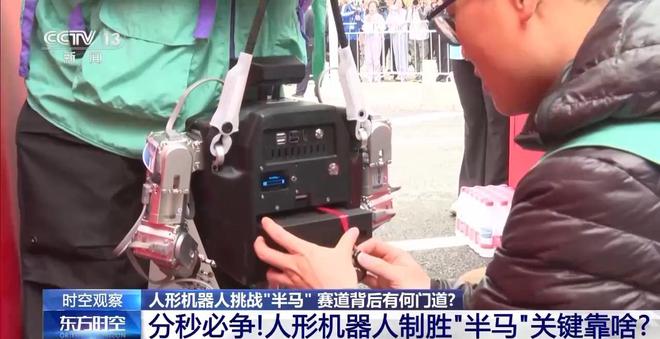
人形机器人挑战“半马” 冠军靠什么赢得比赛?
Huan Qiu Wang Zi Xun· 2025-04-19 23:15
Core Insights - The event marked the world's first humanoid robot half marathon, showcasing the capabilities and advancements in humanoid robotics [1][18] - The competition involved diverse humanoid robots with varying designs and sizes, raising questions about fair performance measurement [2][4] - The race highlighted the essential differences between humanoid robots and traditional industrial and service robots, particularly in terms of structure, control complexity, and application scenarios [11][13][15] Group 1: Competition Details - The race route spanned approximately 21 kilometers, requiring humanoid robots to perform around 250,000 precise joint movements [1] - The competition featured 20 teams, with robots of different heights and designs, including a 1.8-meter tall robot and a 75 cm tall robot [2] - The rules for battery replacement were established, allowing for continuous timing during battery swaps, but imposing penalties for robot changes [4] Group 2: Performance and Results - The TianGong humanoid robot won the race, completing it in 2 hours and 38 minutes while changing batteries three times without switching robots [8] - The competition included various awards, such as best gait and best endurance, encouraging diverse performance metrics beyond just speed [6] Group 3: Industry Implications - The event serves as a platform for technology validation, pushing advancements in key areas like efficient actuators and flexible joints [18] - It provides a unified testing ground for establishing industry standards and performance evaluation systems, promoting healthy industry development [18][19] - The participation of humanoid robots in such events enhances public awareness and cultivates market demand, facilitating the commercialization of robotic products [18][19]