传统产业转型升级

Search documents
知名分析师张忆东履新!
Zhong Guo Ji Jin Bao· 2026-02-05 07:12
Group 1 - Zhang Yidong has officially joined Haitong International Securities as a committee member, head of the equity research department, and chief economist, focusing on cross-border integration of research business [1][2] - Zhang has over 20 years of experience in sell-side research, covering A-shares, Hong Kong stocks, and US stocks, and has received multiple awards for his strategic research [2] - The Hong Kong market is seen as a key platform for Chinese companies to expand internationally, with a focus on cross-border financing, wealth management, and asset management [3] Group 2 - Zhang Yidong is optimistic about Chinese equity assets, predicting a "super long bull market" for A-shares and Hong Kong stocks over the next two decades due to China's shift to high-quality economic development [4] - Investment opportunities for 2026 include technology sectors like aerospace and artificial intelligence, domestic consumption, and the transformation of traditional industries [5] - There is a notable trend of foreign capital returning to China, particularly in passive ETFs and active management, with an increase in foreign investment allocation as the RMB appreciates [5]
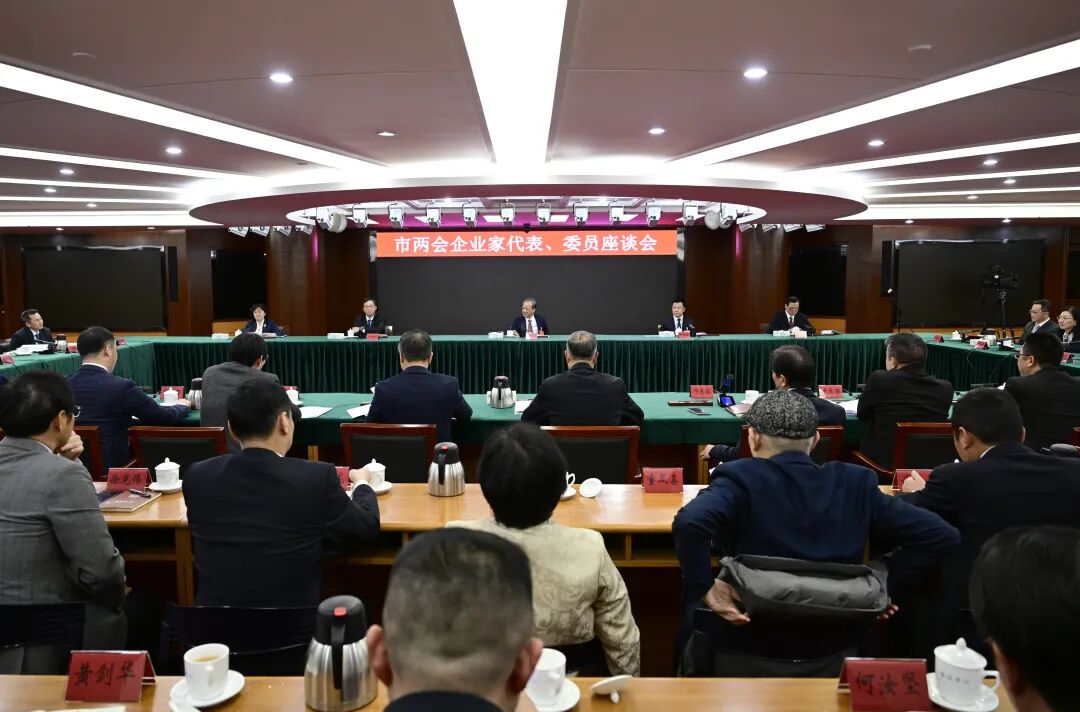
郭文海尹念红与市两会企业家代表、委员座谈:凝聚政企同心拼经济强大动力 以愚公移山之志攻坚克难争先进位
Xin Lang Cai Jing· 2026-02-04 17:28
Core Viewpoint - The meeting emphasized the importance of collaboration between government and enterprises to drive economic growth and ensure a strong start to the "14th Five-Year Plan" period [1][6]. Group 1: Government Support and Initiatives - The city government is committed to supporting traditional manufacturing industries, which are considered the foundation of the local economy, by promoting digital and intelligent transformation policies [5]. - The government encourages enterprises to leverage the "industrial transformation" policy to optimize and upgrade their operations, with a focus on sectors like lighting, furniture, home appliances, clothing, and hardware [5]. - The city plans to continue hosting promotional events, such as "Guangdong Goods Going Global," to enhance the visibility of local products and facilitate market expansion [5]. Group 2: Business Engagement and Feedback - Business leaders expressed their appreciation for the favorable business environment and efficient government workforce, sharing successful examples of collaboration between government and enterprises [3]. - Entrepreneurs are encouraged to submit leads for investment opportunities that align with their supply chains to assist in the city's high-quality development [3]. - The government is tasked with actively addressing business concerns and ensuring that all suggestions are acknowledged and acted upon [3][6]. Group 3: Future Goals and Economic Development - The city aims to create a first-class business environment that fosters innovation and growth, with a focus on overcoming challenges and achieving significant results in key areas such as industrial transformation and environmental management [6]. - The leadership calls for a collective effort from entrepreneurs and government to achieve the economic and social development goals set for the year, emphasizing the need for proactive market exploration and collaboration [6].

税收数据显示:2025年高技术产业销售收入同比增长13.9%
Zhong Guo Zheng Quan Bao· 2026-01-28 00:03
Group 1 - The core viewpoint of the articles highlights the accelerated integration of technological innovation and industrial innovation in China by 2025, with significant growth in strategic emerging industries and enhanced conversion of scientific achievements [1][2] Group 2 - In terms of strategic emerging industries, sales revenue in high-tech industries is projected to grow by 13.9% year-on-year in 2025, with high-tech manufacturing and high-tech services increasing by 10.1% and 16.6% respectively [1] - Key sectors such as lithium-ion battery manufacturing, service robots, industrial robots, and biopharmaceuticals are expected to see remarkable sales revenue growth of 25.1%, 60.7%, 17.4%, and 7.7% year-on-year respectively [1] Group 3 - The sales revenue of the scientific and technological service industry is anticipated to increase by 20.4% year-on-year in 2025, indicating a stronger application of scientific achievements [1] - The sales revenue of knowledge-intensive industries, particularly those focused on intellectual property (patents), is projected to grow by 10.7% year-on-year [1] - The national technology contract transaction amount is expected to rise by 19.1% year-on-year, reflecting active innovation elements [1] Group 4 - The core industries of the digital economy are expected to see a sales revenue increase of 9.4% year-on-year in 2025, with digital product manufacturing and digital technology application industries growing by 9.4% and 13.8% respectively [2] - The amount spent by enterprises on digital technology is projected to increase by 9.6% year-on-year, with manufacturing sector spending rising by 10.4% [2] Group 5 - Traditional industries are accelerating their transformation and upgrading, with automation being a key focus area; spending on automation equipment in sectors like petrochemicals, steelmaking, and ironmaking is expected to grow by 17.3%, 11.7%, and 12.7% year-on-year respectively [2] - The data reflects significant achievements in China's technological self-reliance and the cultivation of new productive forces, contributing to high-quality development [2]
2025年我国科技创新与产业创新融合加快
Zheng Quan Ri Bao· 2026-01-27 23:08
Group 1 - The core viewpoint of the news is that by 2025, China's integration of technological innovation and industrial innovation is accelerating, showcasing significant growth in strategic emerging industries and enhanced technology transfer [1][2][3] Group 2 - Strategic emerging industries are becoming a new engine for economic growth, with high-tech industry sales expected to increase by 13.9% year-on-year, driven by sectors like lithium battery manufacturing, service robots, industrial robots, and biopharmaceuticals, which are projected to grow by 25.1%, 60.7%, 17.4%, and 7.7% respectively [1] - The sales revenue of the scientific and technological service industry is anticipated to rise by 20.4% year-on-year, indicating a stronger emphasis on the application of scientific achievements [2] - The digital economy's core industries are expected to see a sales revenue increase of 9.4%, with manufacturing and application of digital technologies growing by 9.4% and 13.8% respectively, reflecting rapid development in digital industrialization [2] - Traditional industries are accelerating their transformation, particularly in automation, with significant increases in procurement of automation equipment in sectors like petrochemicals, steelmaking, and ironmaking, which are expected to grow by 17.3%, 11.7%, and 12.7% respectively [2] Group 3 - The acceleration of the integration of technological and industrial innovation is expected to enhance total factor productivity, promote high-quality economic development, optimize industrial structure, and boost employment and investment, contributing to a virtuous cycle of economic growth [3] - The data reflects solid achievements in China's self-reliance in technology and the cultivation of new productive forces, supported by precise policy measures that facilitate the gathering of innovative elements [3]
以大学生创新创业赋能中国式现代化高质量发展
Xin Lang Cai Jing· 2026-01-27 22:08
(来源:中国改革报) 在政策协同层面,应强化政策供给的精准性与实效性,高校要立足实际,配套支持大学生创新创业工 作。 在资源整合层面,一方面,推动创新资源向大学生创新创业团队倾斜,鼓励高校、科研院所开放仪器设 备、实验室等科技基础设施,建立共享机制。另一方面,完善多元化投融资体系,为不同阶段的创新创 业项目提供全链条金融支持。党的二十届四中全会提出"强化企业科技创新主体地位",可通过支持企业 牵头组建创新联合体,吸纳大学生创新创业项目参与技术攻关,实现创新链产业链资金链人才链深度融 合。 在服务优化层面,需提升创业服务的专业化水平。通过整合政府、高校、社会机构资源,为大学生创业 提供政策咨询、技术指导、市场对接等全流程服务;加强创新创业导师队伍建设,吸纳企业家、科技专 家、投资人等担任兼职导师,提升大学生创新创业项目的市场化、专业化水平,为大学生创新创业营造 良好环境,使其成为高质量发展的"孵化器"。 深化创新创业教育改革,激活大学生创新创业核心动能 高校作为人才培养主阵地,深化创新创业教育改革是提升大学生创新能力、培育高质量创新创业人才的 核心引擎。党的二十届四中全会提出"围绕科技创新、产业发展和国家战略需 ...

我国科技创新与产业创新融合发展加快
Xin Lang Cai Jing· 2026-01-27 22:08
Group 1: Strategic Emerging Industries - In 2025, China's high-tech industry sales revenue is expected to grow by 13.9% year-on-year, with high-tech manufacturing and high-tech services increasing by 10.1% and 16.6% respectively [1] - Key sectors such as lithium-ion battery manufacturing, service robots manufacturing, industrial robots manufacturing, and biopharmaceutical manufacturing are projected to see significant sales revenue growth of 25.1%, 60.7%, 17.4%, and 7.7% respectively [1] Group 2: Technology Transformation - The sales revenue of China's scientific and technological service industry is anticipated to increase by 20.4% year-on-year, indicating a stronger application of technological achievements [1] - The sales revenue of knowledge-intensive industries, particularly those focused on intellectual property (patents), is expected to grow by 10.7% [1] - The national technology contract transaction amount is projected to rise by 19.1% in 2025, reflecting active innovation elements [1] Group 3: Digital Economy Integration - In 2025, the sales revenue of the core digital economy industries is expected to grow by 9.4%, with digital product manufacturing and digital technology application industries increasing by 9.4% and 13.8% respectively [2] - The amount spent by enterprises on digital technology is projected to increase by 9.6%, with manufacturing sector spending on digital technology rising by 10.4% [2] Group 4: Traditional Industry Upgrading - Traditional industries are accelerating their transformation, with automation being a key focus area [2] - The procurement of automation equipment in traditional sectors such as petrochemicals, steelmaking, and ironmaking is expected to grow by 17.3%, 11.7%, and 12.7% respectively [2]
税收数据显示 2025年高技术产业销售收入同比增长13.9%
Zhong Guo Zheng Quan Bao· 2026-01-27 21:00
Group 1 - The core viewpoint of the news is that by 2025, China's strategic emerging industries will experience significant growth, with a focus on the integration of technological innovation and industrial development, leading to a robust performance in high-tech sectors [1][2] - In 2025, sales revenue in China's high-tech industries is projected to grow by 13.9% year-on-year, with high-tech manufacturing and high-tech services increasing by 10.1% and 16.6% respectively [1] - Key sectors such as lithium-ion battery manufacturing, service robots, industrial robots, and biopharmaceuticals are expected to see remarkable sales growth, with increases of 25.1%, 60.7%, 17.4%, and 7.7% respectively [1] Group 2 - The sales revenue of China's scientific and technological service industry is anticipated to rise by 20.4% year-on-year in 2025, indicating a stronger application of technological achievements [1] - The sales revenue of knowledge-intensive industries, particularly those focused on intellectual property, is expected to grow by 10.7% year-on-year, reflecting an increase in the conversion of scientific achievements [1] - The total transaction amount of technology contracts nationwide is projected to increase by 19.1% year-on-year in 2025, showcasing the active aggregation of innovative elements [1] Group 3 - The digital economy's core industries are expected to see a sales revenue increase of 9.4% year-on-year in 2025, with related digital product manufacturing and digital technology application industries growing by 9.4% and 13.8% respectively [2] - The amount spent by enterprises on digital technology is projected to grow by 9.6% year-on-year, with manufacturing sector spending increasing by 10.4%, indicating a significant upgrade in industrial digitalization [2] - Traditional industries are accelerating their transformation, with notable increases in the procurement of automation equipment in sectors like petrochemicals, steelmaking, and ironmaking, with growth rates of 17.3%, 11.7%, and 12.7% respectively [2] Group 4 - The tax data reflects a strong performance in high-tech industries and improved efficiency in the conversion of scientific achievements, indicating solid progress in China's technological self-reliance and the cultivation of new productive forces [2] - Under precise policy support, the accelerated aggregation of innovative elements is driving the upgrade of industrial structures towards higher-end development, providing strong and sustainable internal momentum for high-quality growth [2]
国家税务总局税收大数据发布 2025年我国科技创新与产业创新融合加快
Zheng Quan Ri Bao· 2026-01-27 16:25
Group 1 - The core viewpoint of the news is that by 2025, the integration of technological innovation and industrial innovation in China is accelerating, showcasing significant growth in strategic emerging industries and enhanced technology transfer [1][2][3] Group 2 - Strategic emerging industries are becoming a new engine for economic growth, with high-tech industry sales expected to increase by 13.9% year-on-year in 2025, driven by sectors like lithium-ion battery manufacturing, service robots, industrial robots, and biopharmaceuticals, which are projected to grow by 25.1%, 60.7%, 17.4%, and 7.7% respectively [1] - The sales revenue of the scientific and technological service industry is anticipated to grow by 20.4% year-on-year in 2025, indicating a stronger emphasis on the application of scientific achievements [2] - The digital economy's core industries are expected to see a sales revenue increase of 9.4% year-on-year in 2025, reflecting rapid development in digital industrialization [2] - Traditional industries are accelerating their transformation and upgrading, with significant increases in the procurement of automation equipment in sectors like petrochemicals and steel production, with year-on-year growth rates of 17.3%, 11.7%, and 12.7% respectively [2] Group 3 - The acceleration of the integration of technological and industrial innovation is expected to enhance total factor productivity, promote high-quality economic development, optimize industrial structure, and foster a virtuous cycle of employment and investment [3] - The data reflects solid achievements in China's self-reliance in technology and the cultivation of new productive forces, supported by precise policy empowerment [3]
税收数据显示2025年我国科技创新与产业创新融合发展加快
Zhong Guo Xin Wen Wang· 2026-01-27 09:32
Group 1 - The core viewpoint of the articles highlights the accelerated integration of technological innovation and industrial innovation in China by 2025, showcasing significant growth in strategic emerging industries and improved efficiency in technology transfer [1][2] Group 2 - Strategic emerging industries are experiencing robust growth, with high-tech industry sales revenue projected to increase by 13.9% year-on-year in 2025. Specifically, high-tech manufacturing and high-tech services are expected to grow by 10.1% and 16.6%, respectively. Notable sectors include lithium-ion battery manufacturing, service robots, industrial robots, and biopharmaceuticals, with sales revenue growth rates of 25.1%, 60.7%, 17.4%, and 7.7% respectively [1] - The conversion of scientific and technological achievements is continuously improving, with sales revenue in the scientific research and technical service industry expected to rise by 20.4% year-on-year in 2025. Knowledge-intensive industries are also projected to see a 10.7% increase in sales revenue, indicating a stronger application of technological achievements. The national technology contract transaction amount is expected to grow by 19.1% [1] - The integration of digital technology with the real economy is deepening, with core digital economy industries projected to see a 9.4% increase in sales revenue in 2025. Related sectors such as digital product manufacturing and digital technology application are expected to grow by 9.4% and 13.8%, respectively. Additionally, enterprise procurement of digital technology is anticipated to rise by 9.6%, with manufacturing sector procurement increasing by 10.4% [2] - Traditional industries are accelerating their transformation and upgrading, particularly in automation. The procurement of automation equipment in traditional sectors such as petrochemicals, steelmaking, and ironmaking is expected to increase by 17.3%, 11.7%, and 12.7% year-on-year, respectively [2] - The data reflects solid achievements in China's technological self-reliance and the cultivation of new productive forces, indicating a strong and sustainable internal momentum for high-quality development [2]
大连高质量发展再上新台阶
Jing Ji Ri Bao· 2026-01-26 22:17
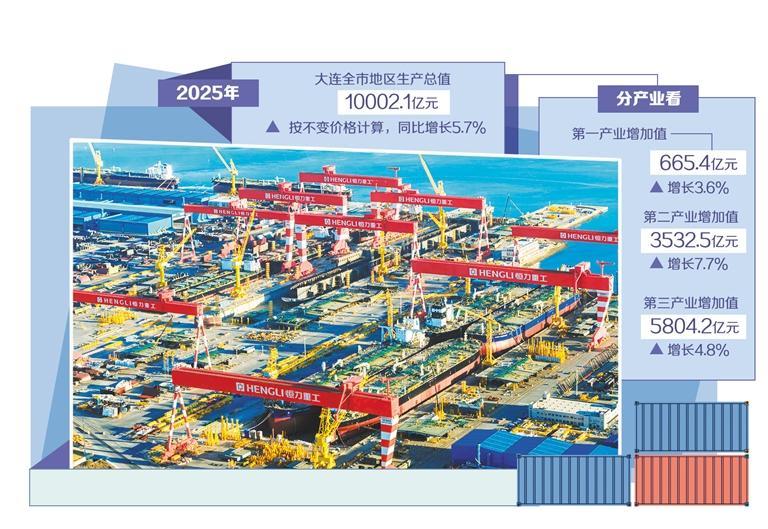
位于大连长兴岛的恒力重工船坞造船现场。 孙鹏伟摄(中经视觉) 日前,辽宁省大连市政府新闻办公室举行新闻发布会,发布了2025年全市经济运行情况。根据辽宁省地区生 产总值统一核算结果:2025年,大连全市地区生产总值10002.1亿元,按不变价格计算,同比增长5.7%。由 此,大连成为东北首座GDP破万亿元城市。分产业看,第一产业增加值665.4亿元,增长3.6%;第二产业增加 值3532.5亿元,增长7.7%;第三产业增加值5804.2亿元,增长4.8%。船舶制造等传统产业转型升级,半导体 等新兴产业突破重围,文体旅商融合带动,成为大连地区生产总值突破万亿元的核心驱动力。同时,大连依 然存在着发展中的瓶颈和不足,亟待进一步突破,更好地推动经济高质量发展。 提供转型样本 1月6日,在大连长兴岛,由恒力重工3号船坞建造的6艘8.2万载重吨散货船同日出坞,该吨级散货船同坞建 造、同日出坞。2025年12月22日,位于大连市西岗区的中船大连造船为招商轮船建造的全球首制甲醇双燃料 动力智能VLCC"凯拓"轮提前合同期4个月成功交付。该船具有适航性强、适港性佳、低排放和智慧运营等优 异的综合性能。 船舶制造是大连的优势传 ...